

The E-Myth Revisited by Michael Gerber: A Review
Our honest E-Myth Revisited review: Michael Gerber's classic on why small businesses fail, working on it not in it, and how it applies to Australian owners.
 By Timothy Hirou GaschereauPublished
 9 min read
If you've ever started a business because you were good at something, only to find yourself drowning in admin, customer calls and tasks you never signed up for, this book was written for you. The E-Myth Revisited is one of the most recommended small business books of the past three decades, and for good reason. It's also repetitive, US-centric, and built around a fictional narrative that will either charm you or make you want to throw the book across the room. Here's the honest take, part of our personal finance book reviews on Snowball Invest.
Quick answer
A genuinely foundational read for anyone running or starting a small business, let down by padding and a love-it-or-hate-it storytelling format. Best for sole traders, tradies, freelancers and service business owners who feel trapped doing everything themselves. Skip it if you already run a well-systemised business, or you want modern digital tactics and Australian-specific mechanics. Our rating: 4 out of 5.
Want to read The E-Myth Revisited?
The small-business classic on why being great at your craft doesn't mean you can run a business built on it. Work on it, not in it.
In this guide
- →What the book is about: the E-Myth, the three personalities and the franchise prototype
- →The genuine strengths and the honest weaknesses
- →Who it's for, and who's already past it
- →What critics and r/smallbusiness readers say
- →The Australian angle: universal lesson, no local mechanics
📖 What is The E-Myth Revisited about?
The central argument is deceptively simple: being brilliant at your craft does not mean you know how to run a business built around that craft. Gerber calls this the "entrepreneurial myth" (the E-Myth), and it's why he argues most small businesses fail. The book is structured partly as a narrative, working through the ideas via conversations with a fictional character named Sarah, who runs a pie shop and is slowly being crushed by it. Some readers love the device; many find it contrived and padded. Either way, the underlying ideas are solid. The core concepts:
- The entrepreneurial myth: most people who start businesses aren't entrepreneurs, they're skilled technicians who had an "entrepreneurial seizure" and went it alone. Running a business needs a completely different skill set to doing the work inside it.
- The three personalities: every owner contains an Entrepreneur (vision, the future), a Manager (order, systems) and a Technician (just wants to do the work), and most owners are dominated by the Technician. The goal is to develop all three in balance.
- Working on it, not in it: working in your business means the day-to-day tasks; working on it means designing the systems and structure that let the business run without you in the middle of everything. Obvious once you hear it, but a genuine revelation for most owners.
- The franchise prototype: systematise everything as if you were going to hand the business to a stranger to run tomorrow (standard procedures, checklists, clear roles), so the system runs the business and people run the system.
It's a short book at around 268 pages, and the core ideas could honestly fit in a long essay, but the lessons themselves are timeless. Just note it was written in the 1990s and it's US-flavoured.
⚖️ Strengths and weaknesses
What it gets right
- ✓The core lesson is genuinely valuable: 'work on your business not in it' changes how you see everything.
- ✓Systems thinking made accessible, in plain language, no MBA required.
- ✓The franchise-prototype concept is practical discipline even if you never want to scale.
- ✓Quick enough to read in a weekend at around 268 pages.
- ✓The narrative makes abstract ideas concrete for readers who like the storytelling device.
Where it falls short
- ✕Repetitive and padded: the same ideas restated across chapters, where a tighter edit would help.
- ✕The Sarah narrative is polarising: a helpful teaching tool or an annoying distraction, depending on taste.
- ✕No Australian context at all: no ABNs, GST, the ATO or Fair Work.
- ✕Light on digital and modern business: e-commerce, SaaS, content and the gig economy don't feature.
- ✕Assumes you want to scale, which not every owner does.
👤 Who should read it, and who can skip it?
Read it if you
- ✓Are a sole trader, tradie or freelancer who feels the business runs you rather than the other way around.
- ✓Are starting a service business and want to think about structure from day one.
- ✓Have never thought deliberately about systems and processes.
- ✓Are curious why so many small businesses stall or burn their owners out.
You can probably skip it if you
- ✕Already have strong systems, documented processes and reliable delegation.
- ✕Want modern tactics around digital marketing, e-commerce or online business models.
- ✕Are an experienced operator who's moved past the technician trap.
- ✕Want Australian-specific guidance on tax, compliance or business structure.
🔍 What do critics say?
The E-Myth Revisited has been recognised as a foundational small-business text for decades, regularly appearing on recommended reading lists for new owners, with its core concepts widely influencing business coaching and consulting. The criticism that surfaces most isn't about the ideas, it's about the execution: the book is widely acknowledged as overlong for the content it delivers, the narrative device is often described as clunky and unnecessary, and some readers find the tone self-important. The ideas themselves, though, are rarely disputed, and even critics tend to concede the core message is correct and worth hearing.
💬 What do readers say? Goodreads and Reddit
On Goodreads it holds around 4.1 out of 5 from tens of thousands of ratings, a strong result for a business book with that volume. On Reddit (r/smallbusiness, r/Entrepreneur) the systems message is consistently praised as the real value, and readers running trades or service businesses (where they're doing everything themselves) tend to find it especially eye-opening.
The criticisms cluster: the book is called repetitive and wordy, the pie-shop narrative is described variously as charming, unnecessary and awkward, and a recurring point is that the franchise-prototype assumption doesn't fit every business, especially those built around one person's expertise or creative output. The consensus: read it for the concepts, not the prose.
🇦🇺 The Australian angle
The core lessons translate directly. Australian sole traders, tradies and service business owners face exactly the trap Gerber describes: starting a business because you're skilled at something, then finding yourself buried in work with no time to think about the bigger picture. But the book has zero Australian-specific mechanics: no ABNs, GST registration, ATO obligations for sole traders, or Fair Work requirements. For that grounding, pair it with resources like the Australian Government's business portal, the ATO's guidance for sole traders, and the Australian Small Business and Family Enterprise Ombudsman.
There's a broader personal finance angle too: building a systemised business that doesn't depend entirely on you frees up time and mental bandwidth, which you can redirect toward your own financial goals (an investment portfolio, extra super, or simply not being too exhausted to think about money). The book won't tell you how to invest, but the mindset shift is a useful foundation. For the entrepreneurship-and-wealth angle, our Millionaire Fastlane review and Zero to One review are useful companions.
💰 The verdict
The E-Myth Revisited earns its reputation for a reason. The core idea, that most small business owners are trapped technicians who need to build systems and learn to work on their business rather than in it, is genuinely important, the kind of insight that reframes how you see your work. Is it perfect? No: it's repetitive, the narrative device is clunky, and it has nothing useful to say about running a business in Australia specifically. But the ideas are solid, the franchise-prototype concept is practical, and you can read the whole thing in a weekend. If you're running a small business or side hustle and have never thought deliberately about systems and delegation, read it. If you already live and breathe this stuff, move on to something more advanced. Recommended, with realistic expectations. Our rating: 4 out of 5.
Want to read The E-Myth Revisited?
Feel like your business runs you? Grab a copy and start building the systems that let it run without you.
SnowLetter
Australia's money news and our best reads, once a week.
❓ Frequently asked questions
Is The E-Myth Revisited still worth reading?
+
Yes, with caveats. The core ideas about systems thinking and working on your business rather than in it are as relevant as ever. The book's age shows in its lack of coverage of digital business models, and it has no Australian-specific content. But the foundational mindset shift is still valuable for anyone running or starting a small business.
What is the main message?
+
That most small business owners are skilled technicians who got trapped doing the work of the business rather than building the business itself. Gerber argues that to succeed you need to create documented, repeatable systems so the business can run without depending entirely on you.
What's the difference between working on your business and working in it?
+
Working in your business means doing the day-to-day tasks: serving customers, completing jobs, handling admin. Working on your business means stepping back to design the systems, processes and structure that let it run consistently and grow. That distinction is the central practical takeaway.
Is it relevant for Australian small business owners?
+
The mindset and systems concepts apply directly to Australian sole traders, tradies and service business owners. But the book has no Australian-specific content: no ABNs, GST, ATO or Fair Work. Supplement it with local resources for the practical mechanics of running a business here.
How long does it take to read?
+
It's around 268 pages, so most people finish it in roughly four to five hours, comfortably over a weekend. It's one of the shorter books in the small-business canon.
What should I read after it?
+
Good follow-ups include Built to Sell by John Warrillow (which takes the systemisation idea further), Traction by Gino Wickman (a practical operating system for small businesses), and The 4-Hour Work Week by Tim Ferriss (a more modern take on building a business that doesn't consume your life). For Australian specifics, business.gov.au is a practical starting point.
📚 Get the book (and two companions)
The E-Myth Revisited
Michael E. Gerber
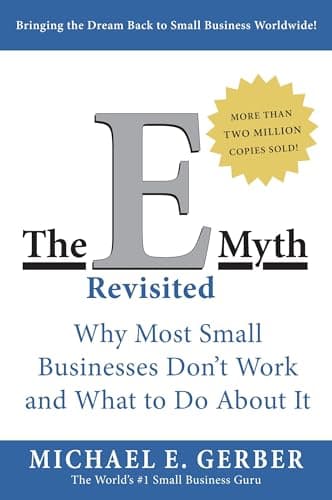
The E-Myth Revisited
The small-business classic on why being great at your craft doesn't mean you can run a business built on it. Work on it, not in it. Repetitive, but the systems lesson is timeless.
Zero to One
Peter Thiel
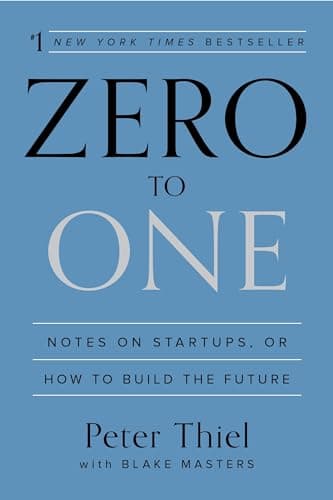
Zero to One
Peter Thiel's short, sharp startup manifesto on building something genuinely new instead of copying what works. A stimulating mindset read for aspiring founders, not a personal finance guide.
The Millionaire Fastlane
MJ DeMarco
The Millionaire Fastlane
DeMarco torches the slow-and-steady retirement dream and argues for building wealth through business instead. Loud, opinionated, and genuinely motivating.
Some links above are affiliate links. If you buy through them, Snowball Invest may earn a small commission at no extra cost to you. We only recommend books we'd suggest anyway.
Sources
Was this article useful?
Put it to your own numbers
Every calculator runs entirely in your browser, with nothing stored. See what these numbers look like for your own situation.
Explore the calculators →General information only. This article is educational and does not constitute personal financial advice. It does not account for your circumstances. Consider your own situation and seek advice from a licensed adviser before acting. Read our full disclaimer.

Timothy Hirou Gaschereau
Founder of Snowball Invest, not a financial adviser.
I write about what I'm learning myself, because nobody ever taught us how to take control of our own money. It's a skill, not a mystery, and it's never too late to learn it. The best day to start was yesterday, the second best is today.
LinkedIn →Related articles

Buy Back Your Time by Dan Martell: An Honest Review
Our honest Buy Back Your Time review for Australians: Dan Martell's Buyback Rate, DRIP Matrix and delegation playbook, and what to know before you hire here.

The 4-Hour Work Week by Tim Ferriss: An Honest Review
Our honest 4-Hour Work Week review for Australians: Tim Ferriss's DEAL framework and mini-retirements, what's dated, and how the mindset applies here.

Profit First by Mike Michalowicz: An Honest Review
Our honest Profit First review for Australians: Mike Michalowicz's take-profit-first bank-account system, what it skips, and how to adapt it for GST and the ATO.