

Zero to One by Peter Thiel: An Honest Review
Our honest Zero to One review: Peter Thiel's contrarian startup manifesto, the monopoly and 'secrets' ideas, and how relevant it is for Australian founders.
 By Timothy Hirou GaschereauPublished
 9 min read
Here's the straight story: Zero to One is a genuinely stimulating read, but it's a startup philosophy book, not a personal finance guide. If you're an Australian thinking about building something new, or you just want to understand how the world's most ambitious companies get built, it's worth a weekend. If you want budgeting tips or a side-hustle playbook, look elsewhere. It's part of our personal finance book reviews on Snowball Invest.
Quick answer
A short, idea-dense manifesto that will change how you think about value creation, even if you never start a company. Best for ambitious Australians thinking about a business or side hustle, investors wanting to understand how VCs think, or anyone curious how breakthrough companies are built. Skip it if you want practical personal finance mechanics or a step-by-step small-business guide. Our rating: 4 out of 5.
Want to read Zero to One?
Peter Thiel's short, sharp startup manifesto on building something genuinely new instead of copying what works.
In this guide
- →What the book is about: zero-to-one, monopoly and 'secrets'
- →The genuine strengths and the honest weaknesses
- →Who it's for, and who wants the mechanics instead
- →What critics and r/startups readers say
- →The Australian angle: a great mindset, but venture-scale, not personal finance
📖 What is Zero to One about?
Zero to One (2014) is co-written by Peter Thiel (PayPal co-founder, early Facebook investor, Palantir founder) and Blake Masters, who took notes during Thiel's startup course at Stanford and polished them into a book. The central idea is simple but sharp: going from zero to one means creating something genuinely new, while going from one to n means copying what already works (one more coffee shop, one more online store). Thiel argues real value and real progress only come from the first kind of move. A few other ideas sit at the core:
- Build a monopoly, not a competitor. Successful startups aim to dominate a small market completely before expanding; competition destroys profits and forces companies to fight over scraps.
- The contrarian question: "What important truth do very few people agree with you on?" Great businesses are built on insights most people haven't seen yet.
- Secrets: the world still contains valuable truths not yet discovered or acted on, and the best founders find one and build around it.
- The power law: in venture capital a tiny number of investments return almost everything, which shapes how VCs (and founders) should think.
- Definite optimism: plan boldly for a specific future rather than hedging indefinitely.
- Founding team and culture: the early team and the culture they build matter enormously, and getting it wrong is hard to fix.
Be upfront: this is a startup and business book, not personal finance. It's written from a US Silicon Valley perspective, it's short (around 224 pages, readable in a few hours), and it's idea-dense rather than step-by-step. Thiel himself is a polarising figure, which is worth knowing going in.
⚖️ Strengths and weaknesses
What it gets right
- ✓Genuinely thought-provoking: the zero-to-one framing is memorable and becomes a mental model you reach for elsewhere.
- ✓Concise and idea-dense: at ~224 pages it earns its length, unlike most padded business books.
- ✓Challenges conventional wisdom usefully, a real corrective to 'just hustle harder' startup content.
- ✓Influential in startup and investor circles, close to required reading for understanding how founders and VCs think.
- ✓Forces you to articulate why you agree or disagree, which is valuable in itself.
Where it falls short
- ✕Written for venture-scale startups, not typical businesses: the 'build a monopoly' framing barely applies to a tradie business, café or freelance practice.
- ✕Some ideas are abstract or contrarian for the sake of it.
- ✕Heavy US and Silicon Valley framing, with almost exclusively American tech examples.
- ✕Thiel is a politically divisive figure, which some readers factor in.
- ✕The monopoly framing can feel disconnected from most readers' reality.
👤 Who should read it, and who should skip it?
Read it if you
- ✓Are thinking about starting a business or a tech startup.
- ✓Are an investor who wants to understand how VCs evaluate companies.
- ✓Are curious how breakthrough companies like PayPal or Palantir were conceived.
- ✓Enjoy big-picture ideas and don't mind a bit of philosophy with your business reading.
Skip it (for now) if you
- ✕Are looking for personal finance mechanics, budgeting or investing basics.
- ✕Want a practical guide to starting a small business or side hustle in Australia.
- ✕Are after something more grounded and actionable, like a step-by-step operational playbook.
🔍 What do critics say?
When Zero to One landed in 2014, the tech and business press largely praised it as concise, intellectually stimulating, and a refreshing departure from the usual startup-advice genre, with some reviewers calling it among the best business books they'd read. Not everyone was convinced: some critics argued the discussion was too abstract to offer much practical help, and that Thiel made fairly conventional advice sound more contrarian than it actually was. The broader pattern: enthusiastic praise for the intellectual ambition and readability, tempered by fair criticism that the ideas suit Silicon Valley venture-backed startups better than most business contexts. More recently, Thiel's political views and associations have become part of how some readers engage with the book.
💬 What do readers say? Goodreads and Reddit
On Goodreads it holds around 4.2 out of 5 from hundreds of thousands of ratings, making it one of the most-rated business books on the platform. On Reddit, r/startups and r/Entrepreneur consistently describe it as thought-provoking and a quick read that challenges your assumptions, with the zero-to-one framing singled out repeatedly as genuinely useful and memorable.
The common criticisms mirror the professional critics: it feels more like philosophy than an actionable playbook, and some find Thiel's style a touch smug. A recurring thread is readers feeling simultaneously inspired and slightly deflated, because the bar he sets for what counts as a "real" startup is very high. It pairs well with more operational books like The Lean Startup.
🇦🇺 The Australian angle
The core ideas travel well: thinking about genuine value creation rather than copying what exists is useful whether you're in San Francisco or Surry Hills, and the contrarian question ("what do you believe that most people don't?") is a solid prompt for anyone with a business idea. But let's be honest about the fit. Most Australians who want to build wealth aren't founding the next PayPal; they're building small businesses, running side hustles, and investing steadily through ETFs and super. The venture-scale world Thiel describes is a specific context, and the book contains no personal finance mechanics at all, no super strategy, no tax, no investing frameworks.
The most transferable takeaway is the mindset shift: before you start something, ask whether you're creating genuine value or just adding noise to a crowded market. For the entrepreneurship-and-wealth angle grounded a little closer to home, our Cashflow Quadrant review and Millionaire Fastlane review are useful companions.
💰 The verdict
Zero to One is a short, sharp, genuinely stimulating read. It's not a personal finance book, it's not a how-to guide, and it won't tell you how to register an ABN or set up a brokerage account. What it will do is make you think harder about what it actually means to create something valuable. If you're curious how breakthrough companies are built, or you're at the early stages of a business idea, read it: it'll take you a weekend and it'll stick with you. Just pair it with something more practical for the Australian context, because Thiel's world and yours are probably further apart than the book acknowledges. Punchy, provocative and worth your time. Our rating: 4 out of 5.
Want to read Zero to One?
Thinking about building something new? Grab a copy for the mindset, then pair it with a practical playbook.
SnowLetter
Australia's money news and our best reads, once a week.
❓ Frequently asked questions
Is Zero to One worth reading if I'm not planning to start a startup?
+
Yes, with realistic expectations. The ideas about value creation, monopoly thinking and finding 'secrets' are useful mental models even if you're not building a tech company. It's a short read and the core framework is genuinely memorable. Just don't expect personal finance advice or a practical business guide.
What is the main idea?
+
That real progress and business value come from creating something genuinely new (going from zero to one) rather than copying what already exists (going from one to n). Thiel argues the best companies build a kind of monopoly through a genuine breakthrough, not by competing in crowded markets.
How long does it take to read?
+
It's around 224 pages, so most people finish it in three to four hours, though many spread it over a few days to sit with the ideas. It's one of the shorter entries in the startup-book category, which is part of its appeal.
Is it relevant to Australian entrepreneurs?
+
The mindset and frameworks are relevant anywhere. The examples and cultural context are very American, and the book is squarely aimed at venture-backed tech startups rather than the small businesses and side hustles most Australians actually build. Take the ideas seriously, but apply them with local context in mind.
What should I read alongside it?
+
The Lean Startup by Eric Ries is the obvious companion, offering a much more practical, operational framework, and The Hard Thing About Hard Things by Ben Horowitz covers the messy reality of running a startup. For the wealth-building side relevant to Australians, pair it with resources focused on investing, super and the local financial system.
Does it give practical business advice?
+
Not really. It's a philosophy of startups more than a how-to guide, and critics fairly note the discussion is often too abstract to offer step-by-step help. If you want practical mechanics, this isn't the book. If you want a framework for thinking about what kind of business is worth building, it delivers.
📚 Get the book (and two companions)
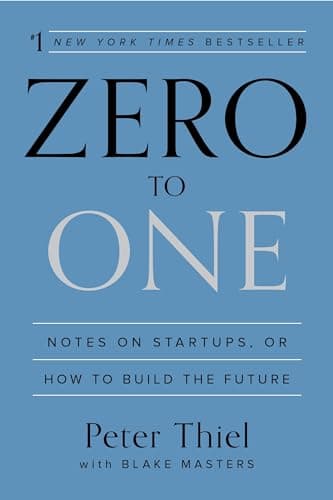
Zero to One
Peter Thiel
Zero to One
Peter Thiel's short, sharp startup manifesto on building something genuinely new instead of copying what works. A stimulating mindset read for aspiring founders, not a personal finance guide.
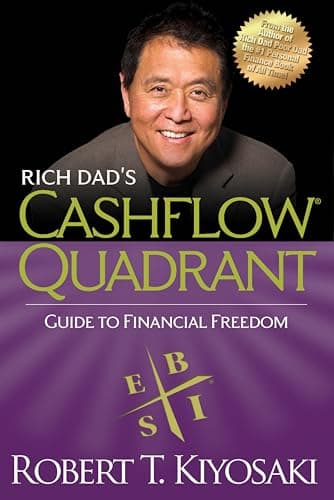
Rich Dad's Cashflow Quadrant
Robert Kiyosaki
Rich Dad's Cashflow Quadrant
The Rich Dad Poor Dad follow-up built around the E-S-B-I quadrant: the four ways people earn, and why real freedom lives on the business-and-investor side. A useful mental model, read critically.
The Millionaire Fastlane
MJ DeMarco
The Millionaire Fastlane
DeMarco torches the slow-and-steady retirement dream and argues for building wealth through business instead. Loud, opinionated, and genuinely motivating.
Some links above are affiliate links. If you buy through them, Snowball Invest may earn a small commission at no extra cost to you. We only recommend books we'd suggest anyway.
Sources
Was this article useful?
Put it to your own numbers
Every calculator runs entirely in your browser, with nothing stored. See what these numbers look like for your own situation.
Explore the calculators →General information only. This article is educational and does not constitute personal financial advice. It does not account for your circumstances. Consider your own situation and seek advice from a licensed adviser before acting. Read our full disclaimer.

Timothy Hirou Gaschereau
Founder of Snowball Invest, not a financial adviser.
I write about what I'm learning myself, because nobody ever taught us how to take control of our own money. It's a skill, not a mystery, and it's never too late to learn it. The best day to start was yesterday, the second best is today.
LinkedIn →Related articles

The Millionaire Fastlane by MJ DeMarco: An Honest Review
Our honest Millionaire Fastlane review: MJ DeMarco's entrepreneurship manifesto and CENTS framework, its blind spots on index investing, and the Australian angle.

Buy Back Your Time by Dan Martell: An Honest Review
Our honest Buy Back Your Time review for Australians: Dan Martell's Buyback Rate, DRIP Matrix and delegation playbook, and what to know before you hire here.

The 4-Hour Work Week by Tim Ferriss: An Honest Review
Our honest 4-Hour Work Week review for Australians: Tim Ferriss's DEAL framework and mini-retirements, what's dated, and how the mindset applies here.