

Buy Back Your Time by Dan Martell: An Honest Review
Our honest Buy Back Your Time review for Australians: Dan Martell's Buyback Rate, DRIP Matrix and delegation playbook, and what to know before you hire here.
 By Timothy Hirou GaschereauPublished
 10 min read
If you're a business owner who feels like your business owns you rather than the other way around, this book was written for you. Buy Back Your Time by Dan Martell is one of the most practical delegation and time-leverage books of recent years, and it earns its bestseller badge. That said, it's not for everyone, and it's worth knowing exactly who gets the most out of it before you buy. Here's the honest take, part of our personal finance book reviews on Snowball Invest.
Quick answer
A genuinely useful, framework-heavy playbook for overwhelmed founders. Best for business owners and side-hustle operators who feel trapped in their own business and have at least some capacity to hire or outsource. Skip it if you're a solo employee with no team or budget to delegate to. Some ideas are familiar if you've read widely, but the way Martell packages and sequences them is worth it. Our rating: 4 out of 5.
Want to read Buy Back Your Time?
Feel like the bottleneck in your own business? Martell's Buyback Rate and DRIP Matrix turn delegation into a clear financial decision.
In this guide
- →What the book is about: the Buyback Principle, Buyback Rate and DRIP Matrix
- →The genuine strengths and the honest weaknesses
- →Who it's for, and who should bookmark it for later
- →What critics and Reddit founders say
- →The Australian angle: super, PAYG and payroll before you hire
📖 What is Buy Back Your Time about?
Published in January 2023, this is the debut book from Dan Martell, a Canadian serial entrepreneur, angel investor and founder of SaaS Academy, one of the largest coaching programmes for software founders. The central argument is simple and a little counterintuitive: don't hire to grow your business, hire to buy back your time. That reframe is the engine of the whole book. The key frameworks:
- The Buyback Principle: stop spending your hours on draining tasks someone else could do; every hour you reclaim goes back into the high-value work only you can do.
- The Buyback Rate: your personal hourly value. Any task that costs less to outsource than your rate should be offloaded. A clean way to decide what to keep and what to hand off.
- The DRIP Matrix: sort tasks by how much they drain or energise you and how much they produce, into Delegation, Replacement, Investment and Production quadrants. Offload the draining, low-value work first.
- The 1-3-1 Rule: team members bring you 1 problem, 3 possible solutions and 1 recommendation, so you stop being the answer machine.
- Playbooks: if you can do it, you can document it, and if you can document it, someone else can do it. Written systems are how delegation actually sticks.
- The Perfect Week and 10-80-10: design your ideal week and work backwards, and delegate by handling the first 10% (vision) and last 10% (review) while your team runs the middle 80%.
He also doesn't dodge the hardest part: letting go. Most founders are control freaks by nature, and handing off work feels risky. Addressing that emotional side directly gives the book more depth than a standard productivity manual.
⚖️ Strengths and weaknesses
What it gets right
- ✓Genuinely practical and immediately actionable: the Buyback Rate, DRIP Matrix and playbook approach are things you can apply in a spreadsheet today.
- ✓Well-structured and motivating: it moves logically from 'you're the bottleneck' to a step-by-step fix.
- ✓Broader than just founders: side hustlers, freelancers scaling up and busy professionals get real value too.
- ✓The 10-80-10 method is a standout, solving the classic micromanage-or-abdicate trap.
- ✓The emphasis on building playbooks is underrated: most books say delegate, this one shows how to make it stick.
Where it falls short
- ✕It assumes you already have money and people, so early-stage or zero-budget readers can't act on much of it yet.
- ✕Heavy on the author's own success stories, which tips into self-promotional by the halfway mark.
- ✕Familiar territory if you've read The E-Myth Revisited or The 4-Hour Work Week: an evolution, not a revolution.
- ✕The 'build your empire' hustle framing won't suit readers chasing a calm lifestyle business.
👤 Who should read it, and who can skip it?
Read it if you
- ✓Are a founder or business owner doing too much yourself and you know it.
- ✓Run a side hustle and want to systematise and scale without burning out.
- ✓Have never had a clear framework for deciding what to delegate.
- ✓Are a manager who wants a better structure for empowering a team.
You can probably skip it if you
- ✕Are a solo employee with no hiring budget or authority.
- ✕Are very early-stage with no revenue yet (bookmark it for later).
- ✕Have already read deeply on delegation and systems and want genuinely new ideas.
- ✕Want a calm lifestyle business and find scale-and-hustle framing off-putting.
🔍 What do critics say?
The book landed on the Wall Street Journal bestseller list, and across professional reviews and business media the consensus is broadly positive: it's praised for clear, actionable frameworks and for reframing delegation as a financial decision rather than a management chore. The most common criticism is that it assumes the reader already has resources to hire, which limits its relevance for very early-stage founders. A secondary critique is that Martell leans heavily on his own success stories, giving parts of the book a self-promotional feel. Some reviewers also note it's stronger on the why of delegation than the granular how of running a time audit or sequencing your first hires. None of these are fatal, and for the right reader they're minor friction points in an otherwise well-executed book.
💬 What do readers say? Goodreads and Reddit
On Goodreads it holds a strong rating of around 4.4 out of 5 from several thousand ratings, skewing heavily positive with very few low scores. On Reddit, discussions in r/Entrepreneur and r/productivity consistently describe it as practical and actionable, especially for founders stuck in the weeds of their own operations. The recurring theme is that the frameworks make delegation feel concrete and achievable rather than vague.
The most common pushback from readers mirrors the critics: if you've already absorbed The E-Myth Revisited or similar, the core ideas will feel familiar, even if Martell's packaging is fresher. Read it for the operational frameworks and the sequencing, not for a brand-new thesis on delegation.
🇦🇺 The Australian angle
The delegation and time-value principles are universal, and they translate directly whether you run a tradie business in Brisbane, a digital agency in Melbourne or an online store anywhere in the country. A few things worth knowing before you put the buyback principle into practice here:
- Hiring employees comes with real obligations. The superannuation guarantee, PAYG withholding, and payroll tax thresholds (which vary by state) all apply when you take on staff. Understand what you're signing up for first; the ATO's guidance on hiring and paying workers is the right starting point. This is general awareness, not advice.
- Virtual assistants and outsourcing are popular here too. For tasks below your buyback rate, a VA can be a cost-effective first step that doesn't trigger the same obligations as a local employee hire.
- The buyback rate concept works as-is. Australian owners can apply the same hourly-value logic: work out what your time is genuinely worth, then ruthlessly compare it against the cost of outsourcing the tasks below that line.
- Freeing time creates capacity to build wealth. Buying back your time so you can reinvest it in higher-leverage work pairs naturally with building long-term financial resilience. Reclaiming one finite resource often creates room to grow the other. General observation, not financial advice.
If you want the small-business systems foundation underneath all this, our E-Myth Revisited review is the natural companion, and for the lifestyle-design cousin of the same idea, see our 4-Hour Work Week review.
💰 The verdict
Yes, for the right reader. If you're a founder or business owner who is the bottleneck in your own business, this is one of the more useful books you'll read this year, and the Buyback Rate, the DRIP Matrix and the 10-80-10 method alone are worth the price of admission. If you're a solo employee or very early-stage with no hiring budget, hold off and come back when you have the resources to act on it, because the frameworks only work when you can actually deploy them. And if you've already read every delegation and systems book on the shelf, you'll still get value from how Martell sequences the ideas, just go in with realistic expectations. A great book, not a groundbreaking one. Our rating: 4 out of 5.
Want to read Buy Back Your Time?
Ready to stop being the bottleneck? Grab a copy, work out your Buyback Rate, and start handing off the draining work.
SnowLetter
Australia's money news and our best reads, once a week.
❓ Frequently asked questions
What is the Buyback Principle?
+
The central idea of the book: instead of hiring people to grow your business, you hire to reclaim your own time. Your highest-value contribution is the work only you can do, so every hour spent on low-value tasks is stolen from that. Systematically buying back those hours through delegation and outsourcing creates the space to actually grow.
What is the DRIP Matrix?
+
A task-sorting framework that plots your tasks on two axes: how energising or draining they are, and how much value they produce. The four quadrants are Delegation (draining, low-value), Replacement (draining, high-value), Investment (energising, low-value) and Production (energising, high-value). The goal is to offload the Delegation tasks first, then work through the rest.
What is the Buyback Rate and how do you calculate it?
+
It's your personal hourly value as a business owner. Martell's formula works backwards from your target income to a per-hour figure. The decision rule is then simple: any task that costs less to outsource than your buyback rate should be delegated. It turns delegation from an emotional decision into a financial one.
Is it worth reading for Australian business owners?
+
Yes, for most. The frameworks are universal and apply just as well here. The caveat is that if you act on the hiring advice, you'll want to understand your local obligations first (superannuation, PAYG withholding, payroll tax), because the book doesn't cover Australian employment rules. Treat it as the strategy and layer local knowledge on top.
How is it different from The 4-Hour Work Week?
+
Both say to stop doing low-value work and leverage other people's time. Ferriss aims broadly at anyone wanting to escape the 9-5, heavy on lifestyle design. Martell aims squarely at founders who want to scale their business rather than escape it, and his frameworks (DRIP Matrix, 10-80-10, playbooks) go deeper on the mechanics of delegating inside a business.
Who is Dan Martell?
+
A Canadian entrepreneur, angel investor and business coach who built and exited several software companies before founding SaaS Academy, a coaching programme for software founders. Buy Back Your Time, published in January 2023, is his first book and became a Wall Street Journal bestseller.
📚 Get the book (and two companions)
Buy Back Your Time
Dan Martell
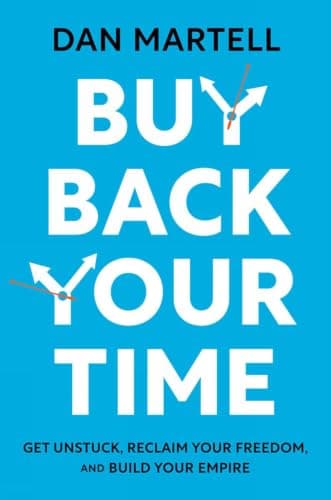
Buy Back Your Time
A framework-heavy playbook for founders drowning in their own business: know your Buyback Rate, sort tasks with the DRIP Matrix, and delegate the draining work first. Practical, if a touch self-promotional.
The E-Myth Revisited
Michael E. Gerber
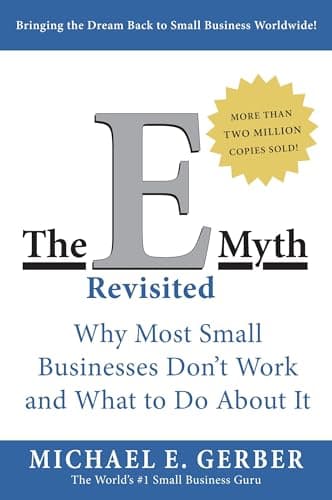
The E-Myth Revisited
The small-business classic on why being great at your craft doesn't mean you can run a business built on it. Work on it, not in it. Repetitive, but the systems lesson is timeless.
The 4-Hour Work Week
Tim Ferriss
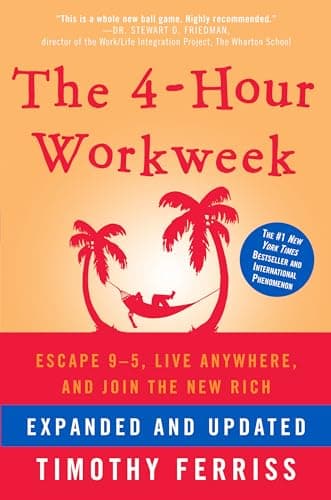
The 4-Hour Work Week
The lifestyle-design cult classic: question the work-till-65 default, cut low-value work with 80/20, and design freedom around time. Read it for the mindset, not the dated 2007 tactics.
Some links above are affiliate links. If you buy through them, Snowball Invest may earn a small commission at no extra cost to you. We only recommend books we'd suggest anyway.
Sources
Was this article useful?
Put it to your own numbers
Every calculator runs entirely in your browser, with nothing stored. See what these numbers look like for your own situation.
Explore the calculators →General information only. This article is educational and does not constitute personal financial advice. It does not account for your circumstances. Consider your own situation and seek advice from a licensed adviser before acting. Read our full disclaimer.

Timothy Hirou Gaschereau
Founder of Snowball Invest, not a financial adviser.
I write about what I'm learning myself, because nobody ever taught us how to take control of our own money. It's a skill, not a mystery, and it's never too late to learn it. The best day to start was yesterday, the second best is today.
LinkedIn →Related articles

The 4-Hour Work Week by Tim Ferriss: An Honest Review
Our honest 4-Hour Work Week review for Australians: Tim Ferriss's DEAL framework and mini-retirements, what's dated, and how the mindset applies here.

Profit First by Mike Michalowicz: An Honest Review
Our honest Profit First review for Australians: Mike Michalowicz's take-profit-first bank-account system, what it skips, and how to adapt it for GST and the ATO.

The $100 Startup by Chris Guillebeau: An Honest Review
Our honest $100 Startup review for Australians: Chris Guillebeau's lean side-hustle playbook and 'convergence' idea, what it skips, and how it applies here.