

The Millionaire Real Estate Investor by Gary Keller: A Review
Our honest Millionaire Real Estate Investor review for Australians: Gary Keller's Four Models and mindset, what's US-only, and how it applies to property here.
 By Timothy Hirou GaschereauPublished
 10 min read
Property is basically a national sport in Australia, so a book that promises to teach you how the millionaires do it is always going to get attention. The Millionaire Real Estate Investor has a real strength most books in this genre lack (it's built on research, not one lucky person's story), but it comes with one very large asterisk: almost everything in it is American. Here's the honest take, part of our personal finance book reviews on Snowball Invest.
Quick answer
A genuinely useful thinking tool for beginners, as long as you treat it as a mindset primer rather than an Australian how-to. Strong on mindset, criteria-based buying and cash-flow discipline. Skip it if you want Australian tax, financing or legal guidance, or you already have a solid investing framework. Our rating: 3.5 out of 5.
Want to read The Millionaire Real Estate Investor?
Gary Keller's research-backed framework for building property wealth. Great for the mindset, just translate the US financing and tax for the Australian market.
In this guide
- →What the book is about: the Four Models and criteria-based buying
- →The genuine strengths and the honest weaknesses
- →Who it's for, and who's already past it
- →What critics and Reddit investors say
- →The Australian angle: what translates, and what definitely doesn't
📖 What is The Millionaire Real Estate Investor about?
Published in 2005, the book is written by Gary Keller (co-founder of Keller Williams Realty) with Dave Jenks and Jay Papasan. Its selling point is the research base: it draws on interviews with more than 100 millionaire real estate investors across the US and tries to distil their shared habits and strategies into repeatable models. The central idea is what Keller calls the Four Models:
- Think a Million: mindset, financial literacy, and the "MythUnderstandings" that stop ordinary people building wealth through property.
- Buy a Million: criteria-based buying, the "Criteria, Terms, Network" approach, and finding deals below market value.
- Own a Million: holding, managing and systematically growing a portfolio over time.
- Receive a Million: building towards cash flow and, eventually, financial freedom.
The two non-negotiables running through it: buy below market value, and buy for cash flow. Keller is clear that chasing capital growth without a cash-flow foundation is fragile. He backs this with practical tools like "Red Light, Green Light" decision filters and net-worth tracking worksheets. The tone is one part motivation, one part framework. The caveat: the whole book is written for a US audience (US financing, US tax, US market), and it was published pre-GFC, so some of its market assumptions have aged.
⚖️ Strengths and weaknesses
What it gets right
- ✓The mindset section is genuinely good, tackling the myths (too risky, need a lot of money, never the right time) that stop people investing.
- ✓Criteria-based buying is transferable: buy below value and buy for cash flow works in Brisbane or Perth as well as Dallas.
- ✓The Four Models give beginners a mental map of the wealth stages, not just a pile of tactics.
- ✓It's research-backed: patterns from 100+ investors, not one memoir dressed up as universal truth.
- ✓It's readable, no finance degree required.
Where it falls short
- ✕It's entirely US-centric: 30-year fixed mortgages, US tax strategies, a US market structure that doesn't exist here.
- ✕It's showing its age (2005, pre-GFC), and some market assumptions haven't aged well.
- ✕The 'anyone can do it' tone is heavy on survivorship bias, profiling the ones who made it.
- ✕It's light on execution: how you actually find a below-value deal or run the numbers is mostly left to you.
- ✕The motivational sections repeat the same ideas across chapters.
👤 Who should read it, and who can skip it?
Read it if you
- ✓Are a beginner Australian property investor who wants to understand how experienced investors think first.
- ✓Haven't yet developed a framework for evaluating deals and building a portfolio.
- ✓Can filter out the US-specific content and extract the transferable principles.
You can probably skip it if you
- ✕Want Australian-specific guidance on tax, financing or legal structures.
- ✕Are an experienced investor who already has a clear framework.
- ✕Find motivational business books repetitive or light on detail.
🔍 What do critics say?
It's widely cited as one of the more credible property investing books in its category, largely because of that research base. Drawing on a broad sample of real investors gives the conclusions more weight than most books in the genre, which lean on a single success story. The most consistent criticism from non-US readers is exactly what you'd expect: the US-centric content limits its practical usefulness outside America. Reviewers also flag the survivorship bias baked into the "anyone can do it" framing. Profiling success stories is inspiring, but the book doesn't engage seriously with the structural advantages (timing, access to capital, market conditions) that shaped those stories.
💬 What do readers say? Goodreads and Reddit
On Goodreads it holds a solid rating in the low fours, respectable for the genre. On Reddit, across r/realestateinvesting and r/RealEstate, the general view is that this is one of the more well-rounded real estate books for beginners: readers value the high-level framework and the research-backed approach, and the way it gives you a mental model before your first deal. The common criticism mirrors ours, that it's strong on philosophy but light on hands-on tactical detail.
There's also a recurring thread of scepticism about any book with "millionaire" in the title, with some readers noting the branding is more inspirational than practical. The fair read: take the framework, leave the hype, and get your actual tactics from sources built for your market.
🇦🇺 The Australian angle
Property is a national obsession here, so the appeal is obvious. But before you buy it, be clear about what crosses the Pacific and what doesn't.
What translates well: the mindset work, the discipline of criteria-based buying, the "buy below value, buy for cash flow" principle, the net-worth and cash-flow tracking habits, and the framework for thinking about portfolio stages.
What does not translate:
- US financing. The book assumes 30-year fixed-rate mortgages, which are standard in the US but simply don't exist here. Australian investors typically use variable-rate loans or short fixed terms, with different LVR rules and lender mortgage insurance (LMI) thresholds. The financing mechanics don't apply.
- US tax strategies. The book references US tax concepts with no direct Australian equivalent. Don't try to apply them here.
- Negative gearing. In Australia, if your investment property's expenses exceed its rental income, you can offset that loss against your other income (like your salary). It shapes how many local investors structure their portfolios, and the book doesn't mention it.
- The 50% CGT discount. Hold a property longer than 12 months and you're generally eligible for a 50% discount on the capital gains tax. That's a meaningful incentive for long-term holding the book naturally ignores.
- Stamp duty. A significant upfront cost in every state and territory that materially changes deal economics. Keller's models don't account for it.
For the Australian mechanics the book skips, our Armchair Guide to Property Investing review and Rethink Property Investing review are far more useful companions. Nothing here is financial, tax or investment advice, so speak with a licensed adviser, mortgage broker and accountant before making any property decisions.
💰 The verdict
The Millionaire Real Estate Investor is worth reading if you go in with clear expectations. It's a thinking tool, not a how-to manual for the Australian market. The mindset work is solid, the research base is credible, and the Four Models give you a useful framework for the wealth stages. But the US focus is pervasive, the age is showing, and the practical execution detail is thin. Read it early in your property journey, treat it as a foundation for your thinking, then do the hard work of learning the Australian-specific rules that will actually govern your decisions. The framework is the gift; the tactics you'll need to find elsewhere. Our rating: 3.5 out of 5.
Want to read The Millionaire Real Estate Investor?
Building a property mindset? Grab a copy for the framework, then layer the Australian tax and financing rules on top.
SnowLetter
Australia's money news and our best reads, once a week.
❓ Frequently asked questions
Is The Millionaire Real Estate Investor worth reading for Australians?
+
Yes, with caveats. The mindset framework and the criteria-based buying principles transfer well. The problem is that the financing, tax and market mechanics are entirely US-specific. Read it as a thinking primer, not a practical Australian guide, and you'll get real value from it.
What are the Four Models in the book?
+
Think a Million (mindset and financial literacy), Buy a Million (criteria-based buying and finding deals below market value), Own a Million (building and managing a growing portfolio), and Receive a Million (building towards cash flow and financial independence). Each represents a stage of building wealth through property.
Is the book still relevant today?
+
Partly. The mindset principles and the core disciplines around cash flow and buying below market value are timeless. The market assumptions and some tactical content feel dated, especially given how much property markets changed after the GFC. Treat the framework as durable and the specifics as a product of 2005.
Does the book apply to the Australian property market?
+
The principles apply; the specifics don't. Negative gearing, the 50% CGT discount, stamp duty and Australian lending rules are entirely absent from the book. Australian investors need to layer those local realities on top of whatever framework they take from it.
Who wrote The Millionaire Real Estate Investor?
+
Gary Keller, co-founder of Keller Williams Realty, with co-authors Dave Jenks and Jay Papasan. It was published by McGraw-Hill in 2005 and is based on interviews with more than 100 millionaire real estate investors across the United States.
What other property books are recommended for Australians?
+
For local mechanics, Australian property books cover negative gearing, CGT, lending and stamp duty in a way a US book can't. We've reviewed several, including The Armchair Guide to Property Investing and Rethink Property Investing. For general money foundations, The Barefoot Investor is the usual starting point. None of this is financial advice.
📚 Get the book (and two Australian companions)
The Millionaire Real Estate Investor
Gary Keller
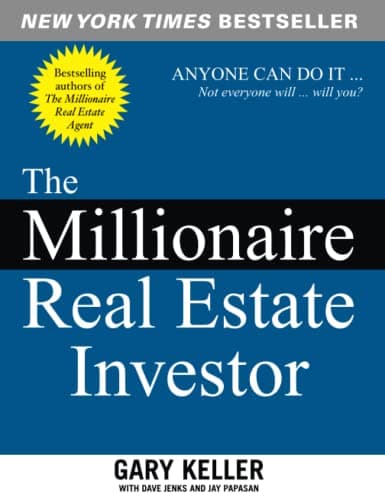
The Millionaire Real Estate Investor
A research-backed mindset and framework for property investing, distilled from 100+ millionaire investors. Great for the thinking, but the financing and tax are pure US, so translate it for negative gearing, CGT and stamp duty here.
The Armchair Guide to Property Investing
Ben Kingsley & Bryce Holdaway
The Armchair Guide to Property Investing
Two of Australia's most trusted property voices lay out a plain-English roadmap to building a portfolio on an average income. Practical, local, and refreshingly free of get-rich-quick hype.
Rethink Property Investing
Scott O'Neill & Mina O'Neill
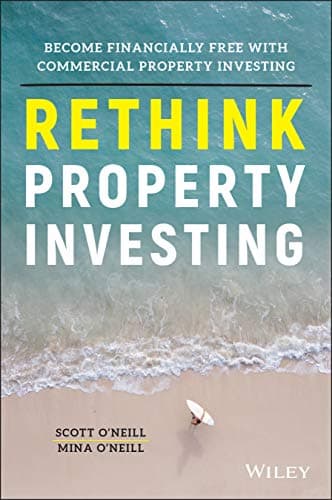
Rethink Property Investing
A practical playbook for building a commercial and residential portfolio that actually pays you cashflow, written by two Aussies who retired in their early 30s. Straight talk, real numbers, no fluff.
Some links above are affiliate links. If you buy through them, Snowball Invest may earn a small commission at no extra cost to you. We only recommend books we'd suggest anyway.
Sources
Was this article useful?
Put it to your own numbers
Every calculator runs entirely in your browser, with nothing stored. See what these numbers look like for your own situation.
Explore the calculators →General information only. This article is educational and does not constitute personal financial advice. It does not account for your circumstances. Consider your own situation and seek advice from a licensed adviser before acting. Read our full disclaimer.

Timothy Hirou Gaschereau
Founder of Snowball Invest, not a financial adviser.
I write about what I'm learning myself, because nobody ever taught us how to take control of our own money. It's a skill, not a mystery, and it's never too late to learn it. The best day to start was yesterday, the second best is today.
LinkedIn →Related articles

Investopoly by Stuart Wemyss: An Honest Review
Our honest Investopoly review: Stuart Wemyss's 8 golden rules for building wealth in Australia, the strengths, the caveats, and who should read it.

Make Money Simple Again by Holdaway & Kingsley: An Honest Review
Our honest Make Money Simple Again review: the Money SMARTS offset-account system from the Property Couch hosts, its strengths, its limits, and who it's for.

The Armchair Guide to Property Investing: An Honest Review
Our honest Armchair Guide to Property Investing review: Kingsley and Holdaway's buy-and-hold Aussie property framework, its strengths, the dated numbers, and who it's for.