

Rethink Property Investing by the O'Neills: An Honest Review
Our honest Rethink Property Investing review: Scott and Mina O'Neill's case for Australian commercial property, net leases, the real risks, and who it's for.
 By Timothy Hirou GaschereauPublished
 10 min read
If you've ever wondered whether commercial property is the cash-flow cheat code that residential just can't match, this is the book people keep pointing to. It's the best Australian book on commercial property investing available right now, with a conflict of interest worth knowing about but not a dealbreaker. It's part of our personal finance book reviews on Snowball Invest.
Quick answer
The most practical Australian guide to commercial property investing, arguing that commercial can deliver higher net cash flow than residential thanks to higher yields and net-lease structures. Best for existing property investors who want cash flow, not just capital growth, and are ready for the higher capital requirements. Property investing carries real risk. Our rating: 4 out of 5.
Want to read Rethink Property Investing?
A practical playbook for a portfolio that actually pays you cashflow, from two Aussies who retired young. Straight talk, real numbers.
In this guide
- →What the book is about: commercial property, net leases and cash flow
- →The genuine strengths and the honest weaknesses (including the conflict of interest)
- →Who it's for, and who should start with residential first
- →What critics and r/AusProperty readers say
- →The Australian angle: commercial vs residential, yields, financing and vacancy risk
📖 What is Rethink Property Investing about?
Rethink Property Investing is Scott and Mina O'Neill's case for why Australian commercial property can beat residential for passive income. The core argument is simple: commercial properties typically deliver higher rental yields, and the lease structures mean more of that rent actually lands in your pocket. Scott has an engineering background and Mina a background in media and finance; they started investing around 2010, built a large portfolio, retired young, and in 2015 founded Rethink Investing, a buyers' agency focused on commercial property.
It's a different pitch to the FIRE crowd's usual index-fund path, if you're weighing this against a more conventional FIRE strategy, commercial property is a genuinely different route to the same destination: passive income that doesn't depend on a payslip.
The book is part personal story, part practical how-to. It covers:
- Why commercial delivers higher gross yields than residential (often in the mid-single-digit to high-single-digit range, though this varies a lot by location, asset type and market).
- Net leases, the structural reason commercial can outperform residential on net yield.
- Due diligence on commercial assets, including tenant quality, lease terms and location risk.
- Financing commercial property, including how lenders assess deals differently to residential.
- Finding and managing tenants, and what to do when a property sits vacant.
- Selling a commercial asset and understanding how yield drives pricing.
It's not a dense academic text; it reads like advice from someone who's actually done it, broken into clear steps. The updated edition adds substantial new content over the original, making it considerably more relevant to today's market.
⚖️ Strengths and weaknesses
What it gets right
- ✓Genuinely Australian from start to finish: local lease structures, financing and examples, not a US import with a gloss.
- ✓The net-lease explanation is excellent and worth the read on its own, clarifying why a 6% commercial yield can beat a 4% residential one by more than the numbers suggest.
- ✓Grounded and practical writing (Scott's engineering background shows), structured and methodical rather than hand-wavy.
- ✓The updated edition is a proper refresh reflecting current rates and financing conditions.
- ✓Full-lifecycle coverage: finding, financing, tenanting, managing and selling, not just acquisition.
- ✓The personal story gives credibility, backed with specifics on what they bought and what went wrong.
Where it falls short
- ✕Commercial property is not a beginner strategy: it needs a much larger deposit and different lending, which the book is upfront about.
- ✕There's an inherent conflict of interest: the authors run a buyers' agency and the book is partly a marketing vehicle for it.
- ✕Portfolio-value claims vary across sources, which can feel jarring if you're verifying their track record.
- ✕It assumes you already understand LVR, yield, negative gearing and basic due diligence.
- ✕Light on the psychology side: it's almost entirely strategic and practical.
👤 Who should read it, and who should skip it?
Read it if you
- ✓Are a residential investor with a property or two who wants to understand how commercial fits a broader portfolio.
- ✓Are cash-flow focused and tired of negatively geared residential eating into your income.
- ✓Have hit a borrowing ceiling on residential and want to understand how commercial financing works differently.
- ✓Are FIRE-minded and want passive income that doesn't require a salaried job to service.
Skip it if you
- ✕Are a complete beginner with no property experience (start with residential basics first).
- ✕Want a mindset or psychology book rather than a strategy and how-to guide.
- ✕Aren't yet in a position for the capital requirements (think a substantial deposit or significant equity).
🔍 What do critics say?
It's widely described as Australia's bestselling commercial property book, and reviewers praise its clear, straightforward, step-by-step approach. The recurring critical note, a fair one, is the potential for bias given the authors run a buyers' agency. Published by Wiley, a credible mainstream publisher, it carries an editorial layer some property books in this space lack. The consensus: genuinely useful and practical, read with awareness of the commercial interest behind it.
💬 What do readers say? Goodreads and Reddit
On Goodreads it holds around 4.1 out of 5 from over a hundred ratings, a strong positive skew. Reviewers describe it as well-written, easy to understand, and a good introduction to commercial property for investors coming from a residential background, with at least one noting the potential for bias given the buyers'-agency business.
On Reddit (r/AusFinance, r/AusProperty, r/fiaustralia) sentiment is generally positive, with readers praising Scott O'Neill's genuine grasp of his craft and recommending the book. The buyers'-agency conflict does get raised occasionally, which is healthy.
🇦🇺 The Australian angle
Commercial property investing in Australia has specific quirks that overseas books simply don't cover:
- Yields are genuinely different. Australian commercial property typically delivers higher gross yields than residential in major cities. These are approximate and vary a lot by location, asset type and market, and are not guaranteed, but the structural gap is real.
- Net leases change the maths. It's common for commercial tenants to pay council rates, water, building insurance and maintenance, so the landlord's net yield is much closer to the gross yield than in residential.
- Financing is harder. Commercial lenders typically require a larger deposit and assess serviceability differently, weighing the quality of the lease and tenant heavily rather than just the borrower's income. Our guide to how much deposit you need covers the residential baseline you'd be scaling up from.
- Vacancy risk is real and can be severe. A residential property empty for a month is painful; a commercial property empty for six months or more is a genuine financial stress test, especially in secondary locations or downturns.
If you're serious about commercial property in Australia, this is the most practical starting point in book form, and worth reading alongside our explainer on how negative gearing actually works so you can compare the cash-flow-positive commercial approach against the negatively geared residential path most Australians default to. For the cash-flow-first residential angle, our Positively Geared review is a natural companion, and for a broader property framework, our Armchair Guide to Property Investing review covers the fundamentals.
💰 The verdict
Rethink Property Investing is the best Australian book on commercial property investing available right now: practical, accessible, and genuinely useful for investors ready to move beyond residential. The conflict of interest is real (the authors run a buyers' agency and the book is partly a lead-generation tool), so know that going in and treat the more promotional elements with appropriate scepticism. The updated edition is the one to buy. Best for intermediate-to-advanced investors who want cash flow, understand the higher capital requirements, and are ready to seriously explore commercial property. Not for complete beginners, mindset seekers, or anyone not yet in a financial position to access commercial property. Property investing carries real risk, so always seek independent advice before acting. Our rating: 4 out of 5.
Want to read Rethink Property Investing?
Ready to look past residential for cash flow? Grab the updated edition and read the net-lease chapter closely.
SnowLetter
Australia's money news and our best reads, once a week.
❓ Frequently asked questions
Who are Scott and Mina O'Neill?
+
Scott and Mina O'Neill are Australian property investors and co-founders of Rethink Investing, a buyers' agency focused on commercial property. Scott has an engineering background; Mina has a background in media and finance. The couple started investing around 2010, built a large portfolio, retired young, and founded Rethink Investing in 2015.
Is Rethink Property Investing suitable for beginners?
+
Not really. It assumes you already understand concepts like rental yield, LVR and due diligence. If you've never bought an investment property, you'll likely find it steep. The authors themselves acknowledge commercial property is an advanced strategy. Start with the basics of residential investing first, then come back once you have some experience and equity behind you.
What is a net lease and why does it matter?
+
A net lease is a commercial lease where the tenant pays the outgoings: council rates, water rates, building insurance and often maintenance. In residential property those costs come out of your rent; in commercial with a net lease, the landlord keeps more of the gross rent as actual income. That's why the gap between gross and net yield is much smaller in commercial, and a key reason the O'Neills argue commercial can outperform residential for cash flow.
How does commercial property financing differ from residential in Australia?
+
Commercial financing typically requires a larger deposit (commonly around 30-40% of the price versus 10-20% for residential), with lower loan-to-value ratios. Lenders also weigh the quality of the lease and the tenant's financial strength heavily, not just your income. That makes commercial financing more complex and less accessible, though a strong lease with a quality tenant can make it easier to obtain.
Is there a conflict of interest given the authors run a buyers' agency?
+
Yes, and it's worth acknowledging. The O'Neills founded Rethink Investing, a buyers' agency that charges fees to help clients acquire commercial properties, so the book is partly a marketing tool for that business. Some readers have flagged this. It doesn't mean the content is inaccurate, but read it with that context in mind and seek independent advice before any decision.
Which edition should I buy?
+
The fully updated and revised edition (2023, 336 pages, Wiley). The original 2021 edition (224 pages) is now fairly dated given how much the market and interest rate environment have shifted. The updated edition adds substantial new content and is the version you'll find at most Australian retailers.
📚 Get the book (and two property companions)
Rethink Property Investing
Scott O'Neill & Mina O'Neill
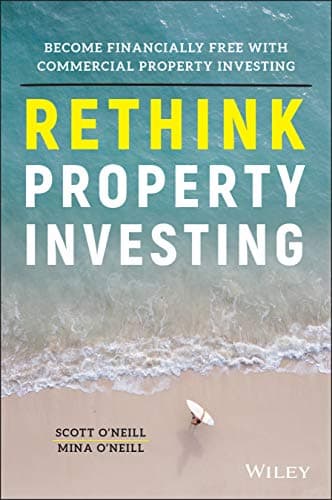
Rethink Property Investing
A practical playbook for building a commercial and residential portfolio that actually pays you cashflow, written by two Aussies who retired in their early 30s. Straight talk, real numbers, no fluff.
Positively Geared
Lloyd Edge
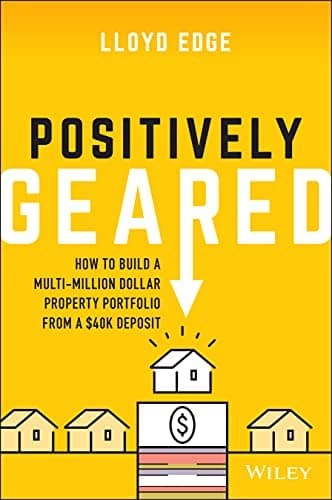
Positively Geared
How to build a positive cashflow property portfolio that funds the life you want, not just a mountain of debt. Lloyd Edge went from music teacher to property strategist, so the advice is grounded in the real Aussie market.
The Armchair Guide to Property Investing
Ben Kingsley & Bryce Holdaway
The Armchair Guide to Property Investing
Two of Australia's most trusted property voices lay out a plain-English roadmap to building a portfolio on an average income. Practical, local, and refreshingly free of get-rich-quick hype.
Some links above are affiliate links. If you buy through them, Snowball Invest may earn a small commission at no extra cost to you. We only recommend books we'd suggest anyway.
Sources
Was this article useful?
Put it to your own numbers
Every calculator runs entirely in your browser, with nothing stored. See what these numbers look like for your own situation.
Explore the calculators →General information only. This article is educational and does not constitute personal financial advice. It does not account for your circumstances. Consider your own situation and seek advice from a licensed adviser before acting. Read our full disclaimer.

Timothy Hirou Gaschereau
Founder of Snowball Invest, not a financial adviser.
I write about what I'm learning myself, because nobody ever taught us how to take control of our own money. It's a skill, not a mystery, and it's never too late to learn it. The best day to start was yesterday, the second best is today.
LinkedIn →Related articles

The Millionaire Real Estate Investor by Gary Keller: A Review
Our honest Millionaire Real Estate Investor review for Australians: Gary Keller's Four Models and mindset, what's US-only, and how it applies to property here.

Investopoly by Stuart Wemyss: An Honest Review
Our honest Investopoly review: Stuart Wemyss's 8 golden rules for building wealth in Australia, the strengths, the caveats, and who should read it.

Make Money Simple Again by Holdaway & Kingsley: An Honest Review
Our honest Make Money Simple Again review: the Money SMARTS offset-account system from the Property Couch hosts, its strengths, its limits, and who it's for.