

Investopoly by Stuart Wemyss: An Honest Review
Our honest Investopoly review: Stuart Wemyss's 8 golden rules for building wealth in Australia, the strengths, the caveats, and who should read it.
 By Timothy Hirou GaschereauPublished
 9 min read
Investopoly might be the best Australian investing book most people haven't heard of. It's a rigorous, evidence-based framework for building long-term wealth, written specifically for the Australian market, and it holds up. If you've read The Barefoot Investor and want the next level up, this is a strong pick. It's part of our personal finance book reviews on Snowball Invest.
Quick answer
A rigorous, evidence-based framework for building long-term wealth, written specifically for Australia and structured around 8 golden rules. Best for intermediate investors who've read The Barefoot Investor and want a clear, repeatable system. Skip it if you're a complete beginner with no investing knowledge, or you've ruled out property entirely and want a shares-only deep dive. Our rating: 4 out of 5.
Want to read Investopoly?
Stuart Wemyss's calm, evidence-based playbook: 8 clear rules across property, shares and super, built for Australians.
In this guide
- →What the book is about: the 8 golden rules for building wealth
- →The genuine strengths and the honest weaknesses
- →Who it's for, and who should start simpler
- →What critics and r/AusFinance readers say
- →The Australian angle: super, franking, negative gearing and the ASX
📖 What is Investopoly about?
Investopoly: The 8 Golden Rules for Mastering the Game of Building Wealth was published by Major Street Publishing in 2018. Stuart Wemyss is a Melbourne-based independent financial adviser and Chartered Accountant with more than 20 years in financial services, founder of ProSolution Private Clients, and co-host of the Investopoly podcast. The book's premise is simple: building wealth isn't about luck or hot tips, it's about applying a rules-based, evidence-backed framework consistently over a long time. Wemyss frames it like a game of Monopoly: the rules are known, and the players who win are the ones who follow them.
Each chapter is built around one rule:
- Play the long game. Most financial mistakes come from impatience, not ignorance.
- Know how much income you need and by when. Set a clear retirement income target.
- Spend less than you earn and invest the difference regularly. The foundation nothing works without.
- Grow your asset base, then tilt towards income. Growth in accumulation, income near retirement.
- Set your asset allocation to reduce risk and maximise returns. How you split matters more than what you pick, our guide to building a simple portfolio covers the mechanics.
- Invest in the share market using low-cost passive investments. The case for passive, index-style investing in Australia.
- Only invest in investment-grade property. Not all property is created equal.
- Protect your investments from expected and unexpected risks. Insurance and estate planning aren't optional.
⚖️ Strengths and weaknesses
What it gets right
- ✓Genuinely Australian: the ASX, super, negative gearing and franking credits are first-class topics, no mental translation required.
- ✓Evidence-based, not speculative: every rule is grounded in logic and simple maths, no hot tips or market timing.
- ✓Balanced on property AND shares: honest, rigorous treatment of both, rare in a market of one-lane books.
- ✓Practical structure: the 8-rule format gives you a clear, repeatable system you can actually apply.
- ✓Accessible depth: more rigorous than Barefoot, still readable for non-experts.
- ✓Independent adviser perspective: fee-for-service, no commissions, so no product-flogging.
Where it falls short
- ✕Published in 2018: the framework is timeless but the specific super caps and tax figures are dated.
- ✕Intermediate focus: total beginners may find it a step up and want a basics primer first.
- ✕Property-heavy for some: Rule 7 gets detailed treatment that feels less relevant if you've ruled property out.
- ✕Relatively short: the asset allocation and portfolio-construction sections could go deeper.
👤 Who should read it, and who should skip it?
Read it if you
- ✓Have the basics sorted and want a proper framework for building long-term wealth.
- ✓Are an Australian investor tired of translating US-centric advice.
- ✓Want a book that covers both property and shares honestly.
- ✓Prefer evidence-based principles over market tips.
- ✓Have read The Barefoot Investor and want to go deeper.
Skip it if you
- ✕Are a complete beginner with no foundation yet (start somewhere simpler).
- ✕Want a deep technical guide to portfolio construction and factor investing.
- ✕Have ruled out property entirely and want a shares-only framework.
- ✕Need current figures on super caps and tax thresholds (check the ATO directly).
🔍 What do critics say?
There are no major newspaper reviews of Investopoly on record, which isn't unusual for a specialist Australian finance title and says nothing about its quality. What exists is strong word-of-mouth: it's frequently described by readers as one of the best all-round investment books they've read, and the general tone of its reception has been warm and respectful. It simply never chased the mainstream media attention that a title like The Barefoot Investor did.
💬 What do readers say? Goodreads and Reddit
On Goodreads it holds around 4.3 out of 5, with the majority of reviewers giving it four or five stars. The recurring praise: the Australian focus (refreshing not to need constant mental translation), the no-fluff structure (each chapter dives straight into its rule), and the balanced treatment of property and shares. Several readers single out the investment-grade property section as worth the price on its own, and many describe it as the next level up from The Barefoot Investor.
On Reddit, Wemyss's broader work (including the Investopoly podcast) gets positive mentions on both r/AusFinance and r/fiaustralia, often praised for its fundamentals focus. Discussions of his views on super strategy and index-ETF concentration risk tend to be engaged and respectful rather than dismissive.
🇦🇺 The Australian angle
This is where Investopoly earns its place. Most of the personal finance books that dominate global reading lists (Rich Dad Poor Dad, I Will Teach You to Be Rich, even The Psychology of Money) are written from a US perspective, with a different tax system, different vehicles and different property dynamics. Investopoly needs none of that translation. Superannuation is treated as the primary tax-advantaged vehicle it is for Australians, franking credits and negative gearing are covered as the genuinely distinctive Australian tools they are, the ASX's concentration in financials and resources gets proper attention, and the investment-grade property framework is built around the realities of the Australian market.
For an Australian investor in their 30s or 40s trying to build a serious wealth strategy, that local specificity isn't a nice-to-have, it's the whole point. If you're working up to it, our Barefoot Investor review covers the natural starting point before this one.
💰 The verdict
This is a 4 out of 5 book. The framework is sound, the evidence-based approach is refreshing, and the Australian focus makes it genuinely useful in a way most competing titles aren't. It's the go-to evidence-based framework book for intermediate Australian investors: not a beginner's primer, not a technical deep-dive, but the right book for someone ready to build a serious, repeatable wealth strategy who wants a local expert's framework to do it. Our rating: 4 out of 5.
Want to read Investopoly?
Ready for a proper wealth framework? Grab a copy and work through the 8 rules.
SnowLetter
Australia's money news and our best reads, once a week.
❓ Frequently asked questions
Is Investopoly suitable for beginners?
+
It's best suited to intermediate investors who already have a basic understanding of how investing works. Complete beginners may find it a step up. If you've never thought about asset allocation or the difference between growth and income assets, consider reading a basics primer first, then come back to Investopoly.
How does Investopoly compare to The Barefoot Investor?
+
The Barefoot Investor is a great starting point for getting your finances in order. Investopoly picks up where it leaves off: more rigorous, more evidence-based, and deeper on investment strategy, asset allocation and the Australian tax environment. Plenty of readers describe it as the next level up from Barefoot, which is a fair characterisation.
Is the book still relevant today?
+
The framework is. The 8 golden rules are based on principles that don't expire. Some specific figures, such as super contribution caps and tax thresholds, will be out of date, so verify those independently. ASIC's MoneySmart is a reliable starting point for current numbers.
What are the 8 golden rules in Investopoly?
+
They are: (1) play the long game, (2) know how much income you need and by when, (3) spend less than you earn and invest the difference regularly, (4) grow your asset base then tilt towards income, (5) set your asset allocation to reduce risk and maximise returns, (6) invest in the share market using low-cost passive investments, (7) only invest in investment-grade property, and (8) protect your investments from expected and unexpected risks.
Does Stuart Wemyss have a podcast?
+
Yes. The Investopoly podcast publishes regularly and covers investing, property, superannuation, tax and portfolio strategy, often using real listener case studies. It's available on Apple Podcasts, Spotify and most major platforms.
Is there a newer version of Investopoly?
+
Wemyss has since released an updated, rewritten version of the framework drawing on further years of experience and research. If you want the most current version of his thinking, look for the newer title; if you're happy with the original, the 2018 Investopoly remains a solid choice.
📚 Get the book (and two Aussie companions)
Investopoly
Stuart Wemyss
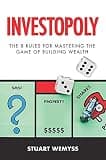
Investopoly
Melbourne financial adviser Stuart Wemyss boils wealth-building down to 8 clear rules across property, shares and super. A calm, evidence-based playbook for Aussies who want freedom without the guesswork.
The Barefoot Investor
Scott Pape
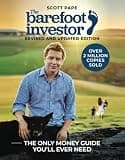
The Barefoot Investor
Australia's best-selling money book ever. A simple system for accounts, budgeting, debt and a real emergency fund in one.
Motivated Money
Peter Thornhill
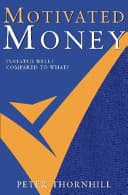
Motivated Money
Peter Thornhill's cult-favourite case for living off fully franked dividends instead of chasing capital gains. A calm, contrarian Aussie take that has quietly built a big following of long-term investors.
Some links above are affiliate links. If you buy through them, Snowball Invest may earn a small commission at no extra cost to you. We only recommend books we'd suggest anyway.
Sources
Was this article useful?
Put it to your own numbers
Every calculator runs entirely in your browser, with nothing stored. See what these numbers look like for your own situation.
Explore the calculators →General information only. This article is educational and does not constitute personal financial advice. It does not account for your circumstances. Consider your own situation and seek advice from a licensed adviser before acting. Read our full disclaimer.

Timothy Hirou Gaschereau
Founder of Snowball Invest, not a financial adviser.
I write about what I'm learning myself, because nobody ever taught us how to take control of our own money. It's a skill, not a mystery, and it's never too late to learn it. The best day to start was yesterday, the second best is today.
LinkedIn →Related articles

Money Magnet by Steve McKnight: An Honest Review
Our honest Money Magnet review: Steve McKnight's holistic, values-driven Aussie wealth book, its strengths, its limits, and who should read it.

Smashed Avocado by Nicole Haddow: An Honest Review
Our honest Smashed Avocado review: Nicole Haddow's relatable Aussie first-home-buyer memoir, the smashed avocado debate, its strengths, and who it's for.

The Millionaire Real Estate Investor by Gary Keller: A Review
Our honest Millionaire Real Estate Investor review for Australians: Gary Keller's Four Models and mindset, what's US-only, and how it applies to property here.