

The Barefoot Investor Review: Honest, Unfiltered, Australian
Our honest Barefoot Investor review covers the bucket system, the 9 steps, the real criticisms, and whether Scott Pape's book is still worth it for Australians.
 By Timothy Hirou GaschereauPublished
 9 min read
The Barefoot Investor is probably the most well-known money book in Australia, and it has both die-hard fans and loud critics. This is an honest look at what Scott Pape actually gets right, where the advice has dated, and whether it's still worth your time. It's part of our personal finance book reviews on Snowball Invest.
Quick answer
The Barefoot Investor is the best personal finance starting point for most Australians. The core system is genuinely brilliant. Some specific product recommendations are past their use-by date, and the super advice is more conservative than many index-fund advocates would like. Read it, apply the framework, then cross-check the product specifics. Our rating: 4 out of 5.
Want to read The Barefoot Investor?
It's around $20 to $25 and one of the highest-return reads for anyone who hasn't sorted their money yet.
In this guide
- →What the book is actually about, and the three-stage journey
- →The bucket system and the 9 steps, explained plainly
- →Genuine strengths and the real criticisms, side by side
- →What finance reviewers and r/AusFinance actually say
- →Whether it's still relevant, who should read it, and who should skip it
📖 What The Barefoot Investor is actually about
Scott Pape's The Barefoot Investor is a nine-step money system written specifically for Australians. First published in 2016 and updated as the Classic Edition in 2019, it has sold well over 2 million copies and sits at a Goodreads rating of about 4.37 out of 5 from more than 20,000 ratings. That's not an accident.
The core argument is simple: you don't need a financial planner, a complicated spreadsheet, or a finance degree to get your money sorted. You need a clear system, a few bank accounts, and the discipline to follow through. Pape structures the journey across three stages.
| Stage | What you do |
|---|---|
| Plant | Get the foundations right: sort your bank accounts, kill bad debt, build an emergency fund. |
| Grow | Build real wealth: boost your super, invest consistently, buy a home if that's your goal. |
| Harvest | Protect what you've built: set up retirement income, look after your family, and enjoy it. |
The Barefoot Investor summary in one sentence: spend less than you earn, automate everything, and get out of debt before you try to get rich.
🪣 What are the Barefoot Investor buckets and steps?
The bucket system is the heart of the whole method. Pape divides your money into three buckets, each with a different job.
| Bucket | What it's for |
|---|---|
| Blow | Everyday spending: bills, groceries, petrol, plus your guilt-free fun money. |
| Mojo | Your safety money, an emergency fund of about three months of expenses in a separate high-interest account. |
| Grow | Long-term wealth: extra super, investments and eventually property. |
Every pay splits three ways
💳
Blow
Everyday spending, bills and guilt-free fun money
🛟
Mojo
Safety money, about 3 months of expenses set aside
🌱
Grow
Long-term wealth, extra super, investing, property
Within the Blow bucket, Pape carves out sub-accounts: roughly 60% for your actual living costs, 10% for Splurge (guilt-free fun money), 10% for Smile (bigger treats and goals) and 20% for the Fire Extinguisher (used to attack debt or accelerate a savings goal).
The 9 Barefoot steps, in order:
- Schedule a monthly Barefoot Date Night to review your money, with your partner or solo.
- Set up your buckets and automate your money splits from the moment your pay lands.
- Domino your debts: list them smallest to largest and attack them one at a time.
- Buy your home, with a framework for saving a deposit and avoiding mortgage traps.
- Increase your super to 15% to build real retirement wealth.
- Boost your Mojo to three months of expenses once the debts are gone.
- Get the right insurance (life, income protection, TPD), ideally held inside super.
- Nail your numbers: work out the lump sum you need to retire comfortably.
- Leave a legacy: wills, estate planning, and making sure your wealth goes where you want.
These steps are deliberately sequenced. You're not supposed to jump to Step 5 while you're still drowning in credit card debt. If Step 3 (domino your debts) is where you're stuck, our guide to debt snowball vs avalanche walks through both methods with a worked example. And once you reach Step 6, our guide to building an emergency fund covers exactly how much to save and where to keep it.
⚖️ Strengths and weaknesses
A fair review has to hold both sides up at once. Here's what Pape genuinely nails, and where the book has real gaps.
What Pape genuinely nails
- ✓Jargon-free language: he writes like he's talking to a mate, not lecturing a class.
- ✓Built for Australia: super, franking credits, the Big Four banks, the ATO, not a US book repainted.
- ✓Actionable from day one: you can set up the buckets in a single weekend.
- ✓The Date Night idea normalises talking about money as a couple, which is genuinely powerful.
- ✓Domino your debts is psychologically smart, small wins build the momentum people actually need.
- ✓Emotional resonance: his own story makes it feel human rather than preachy.
Where it falls short
- ✕The super advice leans conservative, many argue a high-growth or index option suits younger investors.
- ✕Named bank products (ING, Ubank) date quickly as rates, fees and features change.
- ✕Assumes a stable, regular income, the percentage splits are hard for freelancers and gig workers.
- ✕Thin on investing beyond super, little depth on ETFs or building a share portfolio.
- ✕The Mojo account logic was written in a very different interest rate environment.
- ✕Some readers find the blokey, folksy tone tips into condescension.
🔍 What do critics say about The Barefoot Investor?
The professional planning community has a mixed but broadly positive view. Many planners appreciate that the book gets people to take action at all, which is more than most advice achieves. The criticism tends to centre on the super section, where the lean toward a balanced fund is seen as too conservative for most working-age Australians. A balanced fund typically holds around 60 to 70% in growth assets. A high-growth or index option might hold 85 to 100%, and over a 30-year career that difference compounds into a meaningfully larger retirement balance.
The index-fund community is more pointed: the method doesn't engage deeply with passive investing, low-cost ETFs, or the evidence-based case for index funds over actively managed options. Pape has acknowledged in his columns that some specific recommendations have dated, but he hasn't released a full updated edition since 2019. If the super basics themselves feel shaky, our plain-English guide to how superannuation works is a good place to start before you weigh up fund options.
On r/AusFinance the verdict is positive with clear caveats. Threads praise the book for getting beginners moving, while flagging the super fund lean and the specific bank product names as the two things most in need of a refresh. The Goodreads rating of 4.37 out of 5 tells you the vast majority of readers find real value in it, even if the finance-savvy minority has reservations.
🕐 Is The Barefoot Investor still relevant?
The core philosophy is timeless: spend less than you earn, automate your savings, destroy consumer debt before you try to build wealth, and invest consistently over a long horizon. None of that has an expiry date.
Treat the book as a starting point, not a finishing line. The bucket system, the debt-destruction sequence and the Date Night habit are as useful as ever. The specific bank accounts, the interest rate assumptions and the balanced-super lean are the parts to double-check against current sources.
👤 Who should (and shouldn't) read The Barefoot Investor?
Read it if
- ✓You're a complete beginner who has never had a budget or a savings plan.
- ✓You've got consumer debt and you're not sure where to start.
- ✓You want a simple system you can set up in a weekend, not a 12-week course.
- ✓You're in a couple that argues about money, or avoids talking about it.
- ✓You've never looked at your super fund or what you're paying in fees.
Skip it or supplement it if
- ✕You already have a solid foundation and want deeper investing strategy.
- ✕You want specifics on ETFs, index funds or a share portfolio outside super.
- ✕You're a freelancer or gig worker, the bucket percentages won't map neatly.
- ✕You're across the basics and want to go further into tax, property or FIRE planning.
💰 Is The Barefoot Investor worth it?
Yes. For most Australians who haven't properly sorted their finances, this is the book to start with. The method gives you a complete framework you can implement immediately, in plain English, designed for the Australian context. That combination is rarer than it sounds. If you're setting up the Blow bucket splits from scratch, our how to budget guide is a handy companion.
The caveat is real but manageable: treat the specific product recommendations as a research prompt, not a prescription. When Pape names a bank account or a super option, use that as a starting point to check current rates and fees on ASIC's Moneysmart or the ATO's super tools. The framework is solid. The specific products need a current lens applied to them.
Once you've set up your buckets and knocked out your consumer debt, you'll be ready to go deeper. The natural next step is learning how to actually invest, so have a read of our guide to passive investing in Australia.
Want to read The Barefoot Investor?
Ready to set up your buckets this weekend? Grab the Classic Edition and get started.
SnowLetter
Australia's money news and our best reads, once a week.
❓ Frequently asked questions
What is the Barefoot Investor bucket system?
+
The Barefoot buckets are three accounts that divide your money by purpose: Blow (everyday spending), Mojo (emergency fund) and Grow (long-term wealth). Your pay lands in the Blow bucket, and from there you split it across sub-accounts: roughly 60% for living costs, 10% for Splurge (guilt-free spending), 10% for Smile (bigger goals) and 20% for the Fire Extinguisher (debt repayment or savings). It works because it automates your money decisions so you don't have to make them every week.
Is The Barefoot Investor suitable for beginners?
+
Yes, it's arguably the best personal finance book for Australian beginners specifically. Pape avoids jargon, explains every concept from scratch and gives you a concrete action plan rather than vague advice. If you've never had a budget, never thought about your super fund, or feel overwhelmed by money, this is the right place to start. More experienced readers may find it too basic.
Has The Barefoot Investor been updated recently?
+
The most recent edition is the 2019 Classic Edition, and as of 2026 Pape has not released a full updated version. He does publish a free weekly newsletter where he addresses current questions. For the most current product recommendations, particularly bank accounts and super options, cross-check with current sources rather than relying solely on the 2019 text.
What do people on Reddit think of The Barefoot Investor?
+
The r/AusFinance community is broadly positive, particularly for beginners. The recurring criticism is the superannuation advice: Pape leans toward a balanced fund option, and many in the index-fund-aware crowd argue a high-growth or international index option suits younger Australians better. The specific bank product names also get flagged as dated. The general consensus: read it, use the framework, but don't treat the specific products as gospel.
Is the super advice in The Barefoot Investor still good?
+
The principle is sound: consolidate your super, check your fees and make sure you're in a fund that actually performs. The specific lean toward a balanced option is where many commentators disagree. For a 25 or 35 year old with decades until retirement, a high-growth or index-based option within super may produce meaningfully better long-term outcomes. Use ASIC's MoneySmart super calculator to model your own situation.
Where can I buy or borrow The Barefoot Investor in Australia?
+
It's on Amazon.com.au for around $20 to $25, at most major bookshops, and through Booktopia. If you'd rather not spend the money upfront, virtually every public library in Australia stocks it, so check your local library or the Libby app. An audiobook version is also available if you prefer to listen.
📚 Get the book (and two worthy next reads)
The Barefoot Investor
Scott Pape
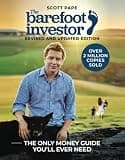
The Barefoot Investor
Australia's best-selling money book ever. A simple system for accounts, budgeting, debt and a real emergency fund in one.
Sort Your Money Out and Get Invested
Glen James
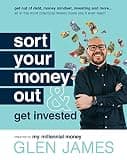
Sort Your Money Out and Get Invested
From the host of the my millennial money podcast, a step-by-step Aussie plan to fix your spending, clear debt and actually start investing. Practical and refreshingly free of finance-bro nonsense.
She's on the Money
Victoria Devine
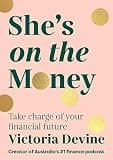
She's on the Money
Written for millennials, walks through budgeting, clearing debt, saving, investing and buying property with real stories.
Some links above are affiliate links. If you buy through them, Snowball Invest may earn a small commission at no extra cost to you. We only recommend books we'd suggest anyway.
Sources
Was this article useful?
Put it to your own numbers
Every calculator runs entirely in your browser, with nothing stored. See what these numbers look like for your own situation.
Explore the calculators →General information only. This article is educational and does not constitute personal financial advice. It does not account for your circumstances. Consider your own situation and seek advice from a licensed adviser before acting. Read our full disclaimer.

Timothy Hirou Gaschereau
Founder of Snowball Invest, not a financial adviser.
I write about what I'm learning myself, because nobody ever taught us how to take control of our own money. It's a skill, not a mystery, and it's never too late to learn it. The best day to start was yesterday, the second best is today.
LinkedIn →Related articles

She's on the Money Review: Honest and Actually Useful
Our honest She's on the Money book review: what Victoria Devine gets right, where it falls short, and whether it's worth your time as an Australian reader.

Rich Dad Poor Dad Review: The Good, the Bad, and the Australian Reality
Our honest Rich Dad Poor Dad review: what Robert Kiyosaki gets right, the real criticisms, and why Australians need to read it with a very specific filter.
The Simple Path to Wealth Review: JL Collins for Australians
Our honest Simple Path to Wealth review for Australians: what JL Collins gets right, what doesn't apply here, and how to use the philosophy with local ETFs and super.