

She's on the Money Review: Honest and Actually Useful
Our honest She's on the Money book review: what Victoria Devine gets right, where it falls short, and whether it's worth your time as an Australian reader.
 By Timothy Hirou GaschereauPublished
 10 min read
She's on the Money is one of the best-selling personal finance books ever written for Australians, and it comes with a stack of awards. But does it actually deliver, or is it riding the podcast's popularity? This is an honest, unsponsored look at what Victoria Devine's book gets right, where it falls short, and who it's really for. It's part of our personal finance book reviews on Snowball Invest.
Quick answer
One of the best entry-level personal finance books written specifically for an Australian audience, and the awards back that up. It's genuinely useful on money mindset, super and investing basics, but it stays introductory and leans on "see a financial adviser" for the harder questions. If you already know your way around a brokerage account, you'll find it too basic. Our rating: 4 out of 5.
Want to read She's on the Money?
Award-winning, jargon-free, and built for Australians. A solid first money book.
In this guide
- →What the book actually covers, chapter by chapter
- →Genuine strengths and the real criticisms, side by side
- →Who it's for, and who should skip it
- →What the awards and reviewers say, and what readers say on Goodreads and Reddit
- →The Australian angle on super, tax and property, with the caveats
📖 What is She's on the Money actually about?
Victoria Devine is a former financial adviser with an MBA in Finance and Leadership, a Bachelor of Psychological Science, and the founder of the She's on the Money podcast, which she launched in 2016 and grew into Australia's most popular finance podcast. The book, published in June 2021, is the natural companion to it.
It runs to 320 pages across 13 chapters and covers a lot of ground, from money mindset to a deep dive on shares, property, ethical investing, super and tax, finishing with a 12-month money plan you actually work through.
| Chapter | What it covers |
|---|---|
| Money mindset (Ch 2) | The money stories you inherit from childhood and how to reset them. |
| Get savvy about super (Ch 9) | Consolidating accounts, duplicate fees, and why super matters early. |
| Making tax less taxing (Ch 12) | CGT, negative vs positive gearing, and record-keeping. |
| Your investment plan (Ch 13) | A 12-month plan with templates and activities, not just theory. |
The tone is conversational throughout. Devine writes like she's explaining money over coffee with a friend, not lecturing from a podium, and for the target audience that works. The super chapter alone is worth the price of admission if you've never looked closely at how superannuation actually works, and the tax chapter's coverage of negative and positive gearing pairs well with our own guide to what negative gearing actually means.
Devine builds mindset first, then the mechanics, then a plan you actually work through.
⚖️ Strengths and weaknesses
A fair review holds both sides up at once. Here's what the book nails, and where it genuinely falls short.
What it gets right
- ✓The money mindset chapter tackles the psychology most finance books skip entirely.
- ✓Australian-first throughout: super, CGT, negative gearing and EOFY, not a US book repainted.
- ✓The super chapter alone is worth the cover price for a lot of readers in their 20s.
- ✓Real community case studies rather than hypothetical scenarios.
- ✓A 12-month plan with templates gives you something concrete to actually do.
- ✓A rare full chapter on ethical and ESG investing, where a lot of younger investors are.
Where it falls short
- ✕The investing chapters are introductory only, no depth on portfolio construction or ETF mechanics.
- ✕"See a financial adviser" appears a lot, which can feel like a cop-out when you paid for answers.
- ✕It's closely tied to the She's on the Money brand and at times reads like a funnel to courses.
- ✕Best if you're starting from scratch, the early chapters drag if you have some foundations.
- ✕The property chapter mentions the affordability crisis but doesn't seriously grapple with it.
- ✕Online sentiment about the author's public persona is mixed, separate from the book's quality.
👤 Who is She's on the Money for, and who should skip it?
Read it if
- ✓You're a complete beginner who wants an Australian-specific starting point.
- ✓You want money conversations that feel relatable rather than intimidating.
- ✓You've been avoiding money topics because they feel overwhelming.
- ✓You listen to the podcast and want the ideas in a structured, written format.
- ✓You want to understand super and basic investing without a finance degree.
Skip it or supplement it if
- ✕You already have a solid foundation and want advanced investing strategy.
- ✕You want deep property analysis that grapples with real affordability constraints.
- ✕You want a purely numbers-driven approach with no lifestyle framing.
- ✕You're after a gender-neutral resource, the book is explicitly written for women.
🔍 What do critics say about She's on the Money?
The formal recognition is hard to argue with. It won the ABIA General Non-fiction Book of the Year 2022 and the Business Book Awards Best Personal Finance and Investment Book 2021, both credible awards in Australian publishing.
Reviewers consistently describe it as honest, relatable and motivating, easy-reading and practical, with most of the advice applying well beyond Australia even though the tax and super specifics are local. The book's success reflects a genuine market gap: there simply wasn't a widely available, Australian-specific personal finance book aimed at women in this age group before it arrived.
💬 What do readers say? Goodreads and Reddit reviewed
On Goodreads, She's on the Money holds a 4.0 out of 5 from around 4,495 ratings and 346 written reviews, with roughly 72% of readers giving it 4 or 5 stars and under 1% giving it a single star. That's a strong skew toward positive.
Common praise: accessible, relatable, practical, and finally an Australian book. Common criticism: some topics feel simplified, and the book leans on professional referrals when questions get harder. On Reddit the picture is more nuanced. In r/AusFinance the book itself doesn't get a huge amount of direct discussion, though her course has been described as good value for beginners. In snark-oriented communities, sentiment about the author's public persona is more critical.
Separate the content from the personality. The book stands on its own merits as a beginner resource regardless of how you feel about the broader brand.
🇦🇺 The Australian angle: does the advice fit our market?
This is where the book genuinely stands out versus US or UK alternatives. The super content is real and specific: the Super Guarantee rate, the concessional and non-concessional contribution caps, and practical advice on consolidating accounts to reduce duplicate fees and insurance premiums. The tax chapter covers the 50% CGT discount for assets held 12 months or longer, the difference between negative and positive gearing, and EOFY planning.
One important caveat: some figures, particularly contribution caps and the Super Guarantee rate, change with legislation. The book was published in 2021 and some numbers have moved since, so always verify current figures directly with the ATO before acting on them. The property chapter is Australian in context but doesn't deeply address the affordability reality in Sydney and Melbourne, which is a real gap for younger readers in the big cities.
💰 She's on the Money: the verdict
Our rating is 4 out of 5, and it's the best entry-level Australian personal finance book currently available. It's not a replacement for a financial adviser and it's not an advanced investing guide, but it's an excellent starting point that covers the psychological and practical foundations most Australians genuinely need, in plain language, with Australian tax and super rules baked in.
If you've been meaning to sort your finances and keep putting it off, this is a great book to start with. When you're ready to go deeper on the investing side, our guide to passive investing in Australia picks up where the book leaves off. And before you start the 12-month plan, our guide to how to set financial goals is a useful way to make sure the plan actually points somewhere.
Want to read She's on the Money?
Ready to start? Grab a copy and work through the 12-month money plan.
SnowLetter
Australia's money news and our best reads, once a week.
❓ Frequently asked questions
Is She's on the Money suitable for complete beginners?
+
Yes. It's specifically written for people who feel intimidated by money, and no prior finance knowledge is needed. Devine builds from the ground up, starting with mindset before moving to the mechanics of super and investing.
Is She's on the Money only for women?
+
The book is explicitly written for women and uses female-focused framing throughout. Men can absolutely read it and get value from the content, but the tone and examples are directed at women. If you want a gender-neutral resource, this isn't it.
Is the financial advice in She's on the Money still current?
+
The book was published in June 2021. Most of the foundational advice holds up well, but specific figures like super contribution caps and the Super Guarantee rate have been updated since. Always check current ATO figures before acting on any numbers in the book.
How does She's on the Money compare to The Barefoot Investor?
+
Both are accessible, Australian-specific personal finance books aimed at beginners. The Barefoot Investor is more prescriptive, built around a step-by-step bucket system. She's on the Money spends more time on money psychology and investing fundamentals. They complement each other well, and neither replaces professional advice for complex situations.
Is She's on the Money worth buying?
+
If you're new to personal finance and want an Australian-specific starting point that covers super, investing basics and money mindset, yes. If you already have a solid financial foundation, you'll likely find it too introductory.
Does She's on the Money cover superannuation?
+
Yes, Chapter 9 is dedicated to super. It covers consolidating accounts, avoiding duplicate fees and insurance premiums, understanding the Super Guarantee rate, and contribution caps. It's one of the more practically useful chapters in the book.
📚 Get the book (and two worthy next reads)
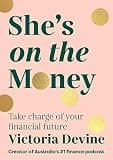
She's on the Money
Victoria Devine
She's on the Money
Written for millennials, walks through budgeting, clearing debt, saving, investing and buying property with real stories.
Investing with She's on the Money
Victoria Devine
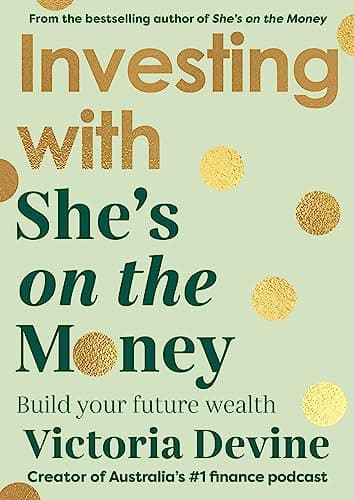
Investing with She's on the Money
Victoria Devine breaks down shares, ETFs and super in plain English so investing stops feeling scary. Built for Australians, it is the nudge you need to actually get started.
Girls That Invest
Simran Kaur
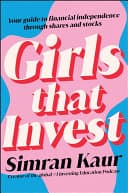
Girls That Invest
A no-jargon crash course from the podcaster behind Girls That Invest that makes the sharemarket feel doable, written especially for women starting out. The perfect first step before you buy your first ETF.
Some links above are affiliate links. If you buy through them, Snowball Invest may earn a small commission at no extra cost to you. We only recommend books we'd suggest anyway.
Sources
Was this article useful?
Put it to your own numbers
Every calculator runs entirely in your browser, with nothing stored. See what these numbers look like for your own situation.
Explore the calculators →General information only. This article is educational and does not constitute personal financial advice. It does not account for your circumstances. Consider your own situation and seek advice from a licensed adviser before acting. Read our full disclaimer.

Timothy Hirou Gaschereau
Founder of Snowball Invest, not a financial adviser.
I write about what I'm learning myself, because nobody ever taught us how to take control of our own money. It's a skill, not a mystery, and it's never too late to learn it. The best day to start was yesterday, the second best is today.
LinkedIn →Related articles

Girls That Invest Book Review: An Honest Australian Take
Our honest Girls That Invest book review: what Simran Kaur's beginner guide does well, where it falls short, and what Australian readers need to know first.
Investing with She's on the Money: An Honest Review
Our honest Investing with She's on the Money review: Victoria Devine's beginner-friendly Aussie investing guide, its strengths, its ceiling, and who it's for.

Money Magnet by Steve McKnight: An Honest Review
Our honest Money Magnet review: Steve McKnight's holistic, values-driven Aussie wealth book, its strengths, its limits, and who should read it.