

The Armchair Guide to Property Investing: An Honest Review
Our honest Armchair Guide to Property Investing review: Kingsley and Holdaway's buy-and-hold Aussie property framework, its strengths, the dated numbers, and who it's for.
 By Timothy Hirou GaschereauPublished
 10 min read
Short version: this is the best beginner-friendly Australian property book on the market, but it was published in 2016 and the numbers show it. Treat the case-study figures as illustrative, not gospel, and you'll get a lot out of it. It's part of our personal finance book reviews on Snowball Invest.
Quick answer
A solid, no-hype framework for first-time Australian property investors, let down only by dated 2016 modelling assumptions. Best for beginners who want a structured framework before they buy anything. Not the book for experienced investors or anyone chasing current market data. Property investing carries real risk, including the risk of loss. Our rating: 3.5 out of 5.
Want to read The Armchair Guide to Property Investing?
Two of Australia's most trusted property voices lay out a plain-English roadmap, refreshingly free of get-rich-quick hype.
In this guide
- →What the book is about: buy-and-hold property and its core frameworks
- →The genuine strengths and the honest weaknesses (including dated numbers)
- →Who it's for, and who should read something else
- →What critics and r/AusProperty readers say
- →The Australian angle, and the real risks of leveraged property
📖 What is The Armchair Guide to Property Investing about?
The premise is refreshingly simple: you probably don't need a 10-property portfolio to fund a comfortable retirement. According to Ben Kingsley and Bryce Holdaway, a smaller, well-chosen portfolio can generate around $2,000 a week in passive income (roughly $104,000 a year in 2016 dollars). The strategy is buy-and-hold Australian residential property. No flipping, no development, no US-style tactics that don't translate here. The whole book is built around the Australian lending environment, Australian tax law and Australian capital city fundamentals.
The book teaches a handful of core frameworks:
- Money SMARTS, a cash-flow system using a three-account structure (a primary/offset account where income lands and surplus is captured, a payments account for automated bills, and a living account for day-to-day spending) to stop money leaking out of your life.
- The Four Foundation Levers (income, expenditure, time and target), the planning variables that determine what portfolio you actually need to hit your goal.
- The Buyers' Decision Quadrant, a filter for evaluating any property across price, location, land proportion and quality of the dwelling.
- 18 investment strategies grouped into growth and yield approaches, from the "Ugly Duckling" (the worst house on a good street) to scarcity and land-value plays.
- Investment-grade property, defined by scarcity, strong owner-occupier demand, a high land component and solid location fundamentals.
| Profile | Scenario |
|---|---|
| Rentvestor | Single person renting where they want to live, investing elsewhere. |
| DINKS | Double income, no kids, mid-30s couple. |
| Couple with young kids | Unlocking home equity and putting it to work. |
| Older couple, older kids | Late starters trying to catch up. |
| Empty nesters | Making up for lost time. |
| Divorcee | Single-income parent protecting themselves while pursuing growth. |
These aren't weekend investors with a blog. Ben Kingsley is the founding director of Empower Wealth and a former Chair of PIPA (Property Investment Professionals of Australia), and chairs PICA (Property Investors Council of Australia). Bryce Holdaway is a qualified buyers advocate and financial planner. Both co-host The Property Couch, one of Australia's most-listened-to property podcasts.
⚖️ Strengths and weaknesses
What it gets right
- ✓Written for Australians, full stop: negative gearing, local lending and capital city fundamentals, no US advice to translate.
- ✓The Money SMARTS cash-flow system is genuinely useful and you can set it up at your bank this week.
- ✓The case studies cover a wide range of investor profiles, so most readers find a scenario that fits.
- ✓Refreshingly calm tone: no hype, no 'get rich while you sleep', they acknowledge risk and vacancy.
- ✓Genuinely beginner-friendly: plain language, logically building concepts and usable mental models.
- ✓Pairs with The Property Couch podcast for hundreds of free episodes if you want to go deeper.
Where it falls short
- ✕The numbers are from 2016: interest rate, tax and yield assumptions are dated, and the $2,000/week target is in 2016 dollars.
- ✕It's property only: no shares, ETFs or super, and no view on how property fits a broader plan.
- ✕Limited depth for intermediate and advanced investors; it's explicitly an introduction.
- ✕Some find the early money-mindset chapters slow before the property content kicks in.
- ✕The case-study mortgage maths can be hard to follow, and harder to replicate since serviceability buffers tightened.
👤 Who should read it, and who should skip it?
Read it if you
- ✓Are a first-time property investor who wants a structured framework before you buy.
- ✓Are considering rentvesting and want to see how the strategy actually works.
- ✓Have been meaning to get into property but don't know where to start.
- ✓Are a Property Couch listener who wants the foundational book behind it.
Skip it (or pair it) if you
- ✕Are experienced and already building a portfolio, and want advanced strategy.
- ✕Are primarily interested in shares, ETFs or super-focused wealth building.
- ✕Want current market data, suburb analysis or up-to-date yield and growth figures.
- ✕Need precise, current mortgage modelling rather than illustrative scenarios.
The "Rentvestor" case study is worth reading closely if that's your situation. Our own guide to rentvesting walks through the trade-offs in more detail, including the tax and lifestyle considerations the book only touches on. And the "Couple with young kids" scenario, which leans on unlocking home equity, is worth reading alongside our guide to using equity to buy an investment property.
🔍 What do critics say?
The book is widely regarded as one of the better beginner property books produced in Australia, praised for its structured, no-hype approach and its genuinely local focus. The consistent critical note is the same one we'd flag: it's an introduction, not an advanced manual, and the 2016 modelling has dated. That's only a problem if you buy it expecting something it was never designed to be.
💬 What do readers say? Goodreads and Reddit
On Goodreads it holds around 3.9 out of 5, with a solid skew toward four stars. That matches the general sentiment: useful, practical and good for beginners, not revelatory for people who already know the basics. The frameworks-heavy writing also translates well to audio, which is a reasonable way to absorb it.
On Reddit, it's regularly recommended in r/AusFinance and r/AusProperty as a strong starting point for Australian property beginners, with commenters pointing to the Kingsley and Holdaway framework as a useful foundation. The recurring caveat in the more critical reviews is simply that it's an introduction, not an advanced manual.
🇦🇺 The Australian angle
This matters more than it sounds. Most property investing books in circulation were written for the US or UK market, assuming different tax structures, lending environments and legal frameworks. The Armchair Guide was written specifically for Australian residential property: negative gearing and how it interacts with your tax position, capital city fundamentals, leverage via Australian lending, and the professional-standards context of bodies like PIPA and PICA.
Crucially, it doesn't pretend property is risk-free. Leverage amplifies losses just as readily as gains, interest rate rises directly hit serviceability, which is why it's worth understanding interest-only versus principal and interest repayments before you commit (as millions of Australian borrowers rediscovered between 2022 and 2024), and vacancy risk is real. This isn't personalised advice: anyone using the book as a starting point should also speak to a licensed adviser and a qualified buyers agent before committing to a purchase. For the cash-flow system in more depth, the authors' companion book, covered in our Make Money Simple Again review, focuses entirely on Money SMARTS.
💰 The verdict
The Armchair Guide to Property Investing is the best starting point we've found for Australians who want to understand residential property investing before they buy. The Money SMARTS system is practical, the case studies are relatable, and the no-hype tone is a genuine relief in a space full of spruikers. But it's a 2016 book: the interest rate assumptions, the tax settings, the $2,000/week figure in 2016 dollars and the mortgage scenarios all need to be read as illustrative frameworks rather than current projections. Go in knowing that and you'll get a lot of value; expect current market guidance and you'll be disappointed. Pair it with current MoneySmart and ATO guidance, and ideally a conversation with a qualified adviser, before you act on anything. Our rating: 3.5 out of 5.
Want to read The Armchair Guide to Property Investing?
Thinking about your first investment property? Grab a copy and learn the framework before you buy.
SnowLetter
Australia's money news and our best reads, once a week.
❓ Frequently asked questions
Is The Armchair Guide to Property Investing still relevant today?
+
The frameworks are still sound. The Money SMARTS system, the Four Foundation Levers, the investment-grade property concept and the Buyers' Decision Quadrant all hold up as mental models. What's dated is the specific numbers: the interest rate assumptions, the 2015-16 tax settings, and the $2,000-a-week figure in 2016 dollars. Use the frameworks, but run your own numbers with current rates and tax advice.
Is it suitable for complete beginners?
+
Yes, this is where the book shines. It assumes no prior knowledge and builds logically from cash flow management through to asset selection and portfolio strategy. If you've never bought an investment property and want a structured introduction, it's one of the best places to start.
Does the book cover negative gearing?
+
Yes. Negative gearing is discussed in the context of Australian tax settings and how it interacts with a buy-and-hold strategy. The book doesn't push it as a strategy in itself, but it explains how it works and how it fits the broader picture for Australian property investors.
Do you need multiple properties to reach the $2,000-a-week target?
+
Not necessarily, and that's one of the book's key points. The case studies show that in some scenarios, around four quality investment properties can be enough, depending on your income, expenditure, time horizon and asset quality. The number of properties is an output of the Four Foundation Levers model, not a fixed rule.
Is it better than The Barefoot Investor for property?
+
They serve different purposes. The Barefoot Investor is a broader personal finance book covering budgeting, super, insurance and shares. The Armchair Guide goes much deeper on property specifically. For a property-focused framework, this book is more useful; for a complete personal finance picture, read both.
Where can I buy The Armchair Guide to Property Investing?
+
It's available on Amazon AU and through major Australian booksellers, in both paperback and audiobook formats. The Property Couch website also sells it directly.
📚 Get the book (and two companions)
The Armchair Guide to Property Investing
Ben Kingsley & Bryce Holdaway
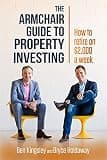
The Armchair Guide to Property Investing
Two of Australia's most trusted property voices lay out a plain-English roadmap to building a portfolio on an average income. Practical, local, and refreshingly free of get-rich-quick hype.
Make Money Simple Again
Bryce Holdaway & Ben Kingsley

Make Money Simple Again
The Property Couch guys turn cash-flow chaos into one simple money management system you can actually stick to. Perfect if budgeting apps have never quite worked for you.
Investopoly
Stuart Wemyss
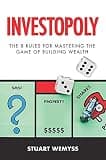
Investopoly
Melbourne financial adviser Stuart Wemyss boils wealth-building down to 8 clear rules across property, shares and super. A calm, evidence-based playbook for Aussies who want freedom without the guesswork.
Some links above are affiliate links. If you buy through them, Snowball Invest may earn a small commission at no extra cost to you. We only recommend books we'd suggest anyway.
Sources
Was this article useful?
Put it to your own numbers
Every calculator runs entirely in your browser, with nothing stored. See what these numbers look like for your own situation.
Explore the calculators →General information only. This article is educational and does not constitute personal financial advice. It does not account for your circumstances. Consider your own situation and seek advice from a licensed adviser before acting. Read our full disclaimer.

Timothy Hirou Gaschereau
Founder of Snowball Invest, not a financial adviser.
I write about what I'm learning myself, because nobody ever taught us how to take control of our own money. It's a skill, not a mystery, and it's never too late to learn it. The best day to start was yesterday, the second best is today.
LinkedIn →Related articles

The Millionaire Real Estate Investor by Gary Keller: A Review
Our honest Millionaire Real Estate Investor review for Australians: Gary Keller's Four Models and mindset, what's US-only, and how it applies to property here.

Investopoly by Stuart Wemyss: An Honest Review
Our honest Investopoly review: Stuart Wemyss's 8 golden rules for building wealth in Australia, the strengths, the caveats, and who should read it.

Make Money Simple Again by Holdaway & Kingsley: An Honest Review
Our honest Make Money Simple Again review: the Money SMARTS offset-account system from the Property Couch hosts, its strengths, its limits, and who it's for.