

Make Money Simple Again by Holdaway & Kingsley: An Honest Review
Our honest Make Money Simple Again review: the Money SMARTS offset-account system from the Property Couch hosts, its strengths, its limits, and who it's for.
 By Timothy Hirou GaschereauPublished
 9 min read
Short answer: it's a genuinely useful, Australian-specific money management book built around one clever central idea. It's not for everyone, but for the right reader it's one of the better personal finance books published in this country. It's part of our personal finance book reviews on Snowball Invest.
Quick answer
A practical, no-budget money management system built specifically for Australians who want their finances on autopilot. Best for people who own or plan to buy property, who hate spreadsheets, or whose money seems to vanish each month. Skip it if you have no interest in property, you're already an experienced investor with a solid system, or you want deep coverage of shares, ETFs or super. Our rating: 4 out of 5.
Want to read Make Money Simple Again?
The Property Couch guys turn cash-flow chaos into one simple money system you can actually stick to.
In this guide
- →What the book is about: the flour jar philosophy and the Money SMARTS system
- →The genuine strengths and the honest weaknesses
- →Who it's for, and who should skip it
- →What critics and r/AusFinance readers say
- →The Australian angle: offset accounts and local banking
📖 What is Make Money Simple Again about?
Make Money Simple Again is a personal finance book by Bryce Holdaway and Ben Kingsley, published by Major Street Publishing in 2018. Holdaway and Kingsley are the co-founders of Empower Wealth, an Australian property advisory firm, and the original hosts of The Property Couch, one of Australia's most popular property and personal finance podcasts. These aren't armchair commentators: they've spent close to two decades working directly with Australian investors.
The book's central promise is bold: manage your money in less than 10 minutes a month. No detailed budgets, no tracking every coffee, just a system that runs in the background. The core idea draws on what the authors call the "flour jar philosophy." Our grandparents received cash in a paper pay packet and physically divided it into jars labelled rent, food and savings. It was simple and it worked, and it's not far off the modern cash envelope method some budgeters still swear by. Holdaway and Kingsley argue we've lost that clarity in a world of tap-and-go and invisible digital money, and their answer is to recreate the flour jars using modern bank accounts, automated transfers and offset accounts. That system is called Money SMARTS.
Money SMARTS uses multiple accounts, each with a specific purpose, so money flows automatically to where it needs to go. Your salary lands in a primary account (ideally an offset account linked to your mortgage), and automated transfers send money to separate accounts for living expenses, bills, short-term savings and longer-term goals. The beauty is that it removes willpower from the equation: the accounts make the decision for you, which is exactly why the authors can credibly promise under 10 minutes of maintenance a month. It's rules-based rather than budget-based: you manage flows, not individual transactions.
⚖️ Strengths and weaknesses
What it gets right
- ✓Genuinely practical and Australian-specific: built around offset accounts, a product that barely exists outside Australia.
- ✓The no-budget philosophy is psychologically smart: it automates good behaviour instead of relying on willpower.
- ✓Written for property investors and aspiring ones: it feels like advice from someone who knows your situation.
- ✓Accessible, plain-English writing, just like the podcast: conversational, clear and jargon-free.
- ✓Short and readable: you can finish it over a weekend and sketch out a system before Monday.
- ✓Pairs naturally with The Property Couch podcast as the written companion.
Where it falls short
- ✕Heavily property-focused: the back half leans hard into property strategy and loses relevance if that's not your thing.
- ✕The system leans on a mortgage and offset account; renters can adapt it but it's clearly written for mortgage holders.
- ✕Published in 2018: the low-rate examples feel dated now that rates have moved substantially higher.
- ✕Limited depth on shares, ETFs or super: this is firmly a property-world book.
- ✕A niche book: well-liked by its target audience, but readers wanting broader coverage rate it lower.
👤 Who should read it, and who should skip it?
Read it if you
- ✓Own or are planning to buy property in Australia.
- ✓Feel like your money disappears each month with nothing to show for it.
- ✓Hate budgets and have failed at them before.
- ✓Listen to The Property Couch and want the written framework.
- ✓Want a money system you can set up once and mostly forget about.
Skip it if you
- ✕Have no interest in property investing.
- ✕Already have a solid cash-flow system in place.
- ✕Want serious depth on shares, ETFs, index funds or super strategy.
- ✕Want a book that covers the full spectrum of Australian personal finance.
If a rules-based system doesn't click for you, it's worth trying a more traditional approach first. Our guide to how to budget covers a few different methods, and if the "short-term savings" account in Money SMARTS is really just an emergency buffer, our guide to how big your emergency fund should be fills in the number the book leaves open.
🔍 What do critics say?
There aren't many formal critical reviews of this book, and we'll be honest about that. The coverage that does exist is broadly positive, praising it as a simple, different approach that gives readers a way to take control of their money and find some financial peace in very little time each month. The consistent theme: the book doesn't try to do everything, it does one thing well, and it offers clarity and structure for readers at various life stages, whether they've just entered the workforce, are saving for a deposit, or are managing existing debt.
💬 What do readers say? Goodreads and Reddit
On Goodreads it holds around 3.9 out of 5, with roughly seven in ten readers giving it four or five stars. That's a solid result for a deliberately niche book. The three-star cluster tends to come from readers who found the system useful but felt the book was too short on depth, or too property-heavy for what they wanted.
On r/AusFinance, the Money SMARTS system gets referenced in budgeting threads as a recommended approach for people who want to avoid constantly filling in spreadsheets. The appeal there mirrors the book: reduce set expenses, automate bill payments, give yourself a weekly spending allowance, and put the remainder to work.
🇦🇺 The Australian angle
This is where the book really earns its place. Offset accounts are a distinctly Australian banking product, rare or non-existent in most other countries, and they're central to how Money SMARTS works. A book built around them is, by definition, a book written for Australians. Every dollar sitting in your offset account reduces the interest charged on your home loan, so your money works even while it waits to be spent.
Beyond the banking mechanics, the property context, the case studies and the tax references are all Australian too. This is not a US personal finance book with a kangaroo on the cover. If you want a broader system-first Aussie money book to compare it with, our Barefoot Investor review covers Scott Pape's bucket approach, which shares some DNA with Money SMARTS.
💰 The verdict
Make Money Simple Again is a practical, no-nonsense money management book that suits property-minded Australians who want a system rather than a budget. The Money SMARTS system is the book's real contribution: clever, automatable, and grounded in how Australian banking actually works. The flour jar philosophy is a useful mental model, the writing is clear, and the book is short enough to actually finish. The limitations are real (it's property-centric, the 2018 rate context is dated, and it doesn't touch shares, ETFs or super in any meaningful way), but within its lane it delivers. If you're a Property Couch listener who's been meaning to get the finances sorted, or a first-time property buyer trying to get cash flow under control, it's well worth a read. Our rating: 4 out of 5.
Want to read Make Money Simple Again?
Tired of budgets that never stick? Grab a copy and set up a system that runs itself.
SnowLetter
Australia's money news and our best reads, once a week.
❓ Frequently asked questions
Is Make Money Simple Again worth reading?
+
Yes, for the right reader. If you're an Australian with a mortgage or property ambitions and you want a simple, automated money management system, it's one of the most practical books available. If you want broad coverage including shares, ETFs and super, you'll need to supplement it with other reading.
Who are Bryce Holdaway and Ben Kingsley?
+
They're Australian property and finance experts, co-founders of Empower Wealth (a Melbourne-based property advisory firm), and the original hosts of The Property Couch podcast. They've worked with thousands of Australian investors and co-authored multiple books, including The Armchair Guide to Property Investing.
What is the Money SMARTS system?
+
It's a rules-based money management framework that uses multiple bank accounts (including an offset account) to automatically allocate your income to different purposes: living expenses, bills, savings and investing. The goal is to make good financial behaviour automatic, so you don't need willpower or a detailed budget. Once set up, the authors claim it takes less than 10 minutes a month to maintain.
Do I need a mortgage to use the system?
+
Not strictly, but the system works best with a mortgage and offset account, which is how the authors designed it. If you're renting or don't yet have a mortgage, you can adapt the approach using high-interest savings accounts to replicate the multi-account structure. The core logic still applies, you just won't get the interest-saving benefit of an offset account.
Is the book still relevant today?
+
The system is. Automating your finances, trapping surplus cash and allocating money with purpose are timeless ideas. What has changed is the interest rate environment: the book was written when rates were low and heading lower. With rates substantially higher since, some specific rate examples feel dated. Read the system, apply current rate context yourself.
Where can I buy Make Money Simple Again?
+
It's available in paperback and eBook from Amazon AU and major Australian booksellers. The Property Couch website has also offered a free eBook version at times, so it's worth checking there too.
📚 Get the book (and two Aussie companions)
Make Money Simple Again
Bryce Holdaway & Ben Kingsley

Make Money Simple Again
The Property Couch guys turn cash-flow chaos into one simple money management system you can actually stick to. Perfect if budgeting apps have never quite worked for you.
The Barefoot Investor
Scott Pape
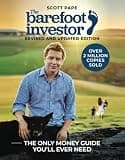
The Barefoot Investor
Australia's best-selling money book ever. A simple system for accounts, budgeting, debt and a real emergency fund in one.
Investopoly
Stuart Wemyss
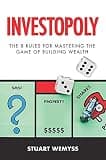
Investopoly
Melbourne financial adviser Stuart Wemyss boils wealth-building down to 8 clear rules across property, shares and super. A calm, evidence-based playbook for Aussies who want freedom without the guesswork.
Some links above are affiliate links. If you buy through them, Snowball Invest may earn a small commission at no extra cost to you. We only recommend books we'd suggest anyway.
Sources
Was this article useful?
Put it to your own numbers
Every calculator runs entirely in your browser, with nothing stored. See what these numbers look like for your own situation.
Explore the calculators →General information only. This article is educational and does not constitute personal financial advice. It does not account for your circumstances. Consider your own situation and seek advice from a licensed adviser before acting. Read our full disclaimer.

Timothy Hirou Gaschereau
Founder of Snowball Invest, not a financial adviser.
I write about what I'm learning myself, because nobody ever taught us how to take control of our own money. It's a skill, not a mystery, and it's never too late to learn it. The best day to start was yesterday, the second best is today.
LinkedIn →Related articles

The Millionaire Real Estate Investor by Gary Keller: A Review
Our honest Millionaire Real Estate Investor review for Australians: Gary Keller's Four Models and mindset, what's US-only, and how it applies to property here.

Investopoly by Stuart Wemyss: An Honest Review
Our honest Investopoly review: Stuart Wemyss's 8 golden rules for building wealth in Australia, the strengths, the caveats, and who should read it.

The Armchair Guide to Property Investing: An Honest Review
Our honest Armchair Guide to Property Investing review: Kingsley and Holdaway's buy-and-hold Aussie property framework, its strengths, the dated numbers, and who it's for.