

Positively Geared by Lloyd Edge: An Honest Review
Our honest Positively Geared review: Lloyd Edge's cash-flow-first Australian property strategy, the strengths, the real risks of leverage, and who it's for.
 By Timothy Hirou GaschereauPublished
 10 min read
A practical, Australian-specific playbook for cash-flow-focused property investing. Useful if you're willing to do the work, though it's not a neutral overview and it shows. This is a practitioner's guide with a clear point of view (and a clear commercial interest), so read it critically. It's part of our personal finance book reviews on Snowball Invest.
Quick answer
A hands-on guide to building an Australian property portfolio using positive cash flow rather than the negative gearing most Australians default to. Part memoir, part how-to, and it reads like advice from someone who's done it. The self-promotion is noticeable but doesn't sink the content. Best for intermediate investors ready to go beyond simple buy-and-hold. Property investing carries real risk. Our rating: 3.5 out of 5.
Want to read Positively Geared?
How to build a positive-cashflow property portfolio that funds the life you want, not just a mountain of debt.
In this guide
- →What the book is about: positive cash flow, equity manufacturing and rentvesting
- →The genuine strengths and the honest weaknesses (including leverage risk)
- →Who it's for, and who should start elsewhere
- →What critics and r/AusProperty readers say
- →The Australian angle: positive vs negative gearing, and the real risks
📖 What is Positively Geared about?
This is the book that made Lloyd Edge a recognisable name in Australian property circles. Edge spent years as a high school music teacher before building a multi-million-dollar portfolio and founding the buyers' agency Aus Property Professionals. The central argument is simple: stop chasing tax deductions through negative gearing and start buying properties that generate income from day one. A property is positively geared when the rental income exceeds the mortgage repayments and holding costs. Most Australian investors have historically done the opposite, accepting a cash shortfall in the hope of capital growth and a tax break.
Edge's framework covers a lot of ground:
- Positive cash flow from day one: finding properties where rent covers costs, rather than subsidising the shortfall from your salary.
- Manufacturing equity: using renovation, subdivision and small development to create value rather than waiting for the market.
- Dual-occupancy and granny flats: adding a second dwelling to lift rental yield.
- Rentvesting: renting where you want to live while owning investment properties in more affordable markets.
- Borrowing-capacity management: structuring purchases so each property strengthens rather than kills your ability to buy the next one.
- Building toward passive income: a portfolio that pays you, not one that costs you every month.
It's part memoir, part how-to. Edge shares his own story throughout, which makes the strategies feel grounded rather than theoretical. Whether you find that inspiring or a bit much depends on your tolerance for the genre.
⚖️ Strengths and weaknesses
What it gets right
- ✓It's actually Australian: the strategies, tax context and market dynamics are written for Australian investors from the ground up.
- ✓The positive-cash-flow framing is genuinely useful, pushing back on the negative-gearing-by-default orthodoxy.
- ✓Clear step-by-step structure with real-life case studies and worked examples.
- ✓Advanced strategies (dual-occupancy, granny flats, subdivision, small development) are covered in useful detail for intermediate investors.
- ✓The memoir elements work: an ex-teacher building a portfolio makes the strategies feel achievable.
- ✓The updated edition addresses current interest rate and supply conditions, so it's not a stale 2020 book.
Where it falls short
- ✕The self-promotion is hard to miss: the book frequently points readers toward the author's buyers' agency.
- ✕Subdivision and development aren't beginner territory: they need capital, experience and council knowledge.
- ✕Positive gearing is hard to find in expensive markets, close to impossible in Sydney and Melbourne at current prices.
- ✕Leverage risk doesn't get enough airtime: debt amplifies losses just as readily as gains.
- ✕Some strategies are market-dependent, and the book doesn't always make that caveat loud enough.
👤 Who should read it, and who should skip it?
Read it if you
- ✓Are an aspiring Australian property investor who wants a cash-flow-first approach.
- ✓Are interested in rentvesting, especially if you live in an expensive city but want to invest more affordably.
- ✓Want to understand dual-occupancy, granny flat and subdivision strategies at a practical level.
- ✓Are an intermediate investor looking to scale without destroying your borrowing capacity.
- ✓Want a genuinely local book, no US translation required.
Skip it if you
- ✕Are a complete beginner with no property knowledge (start somewhere more foundational first).
- ✕Are investing primarily in Sydney or Melbourne inner-ring markets where positive gearing is almost impossible at current prices.
- ✕Want a neutral, balanced academic overview rather than a practitioner's playbook with a commercial interest.
🔍 What do critics say?
Most media coverage of Lloyd Edge is promotional or interview-format rather than independent critical review, and the updated-edition launch was framed as a complete overhaul for the current market, which is accurate given the content changes. The book is published by Wiley, a credible mainstream publisher, which adds an editorial layer of credibility some property books in this space lack. There aren't major independent critical reviews from Australian finance media, partly because the property-book genre is niche here and partly because the book sits in a promotional ecosystem that doesn't invite much pushback. Take that for what it is.
💬 What do readers say? Goodreads and Reddit
On Goodreads it holds around 3.7 out of 5 from a few hundred ratings, with most readers landing in the three-to-four-star range, suggesting most found it useful but not exceptional. On r/AusFinance the sentiment is mixed: some describe it as a worthwhile read for Australian property context, particularly for those wanting a local framework.
The recurring criticism, consistent enough to flag, is that the book plugs the author's buyers' agency heavily throughout. The overall reader picture: useful, practical and Australian, but read it knowing the author has a commercial interest in the strategies he's recommending.
🇦🇺 The Australian angle
This is where the book earns its keep. Positive versus negative gearing is a genuinely important distinction in the Australian context that most mainstream personal finance content glosses over. Negative gearing means your rental expenses (including mortgage interest) exceed your rental income, producing a loss you can offset against other income for tax. Positive gearing flips that: the property generates more income than it costs to hold, so it's cash-flow positive from the start. Edge argues the positive approach is more sustainable for building a large portfolio, because each property adds to your cash flow rather than draining it, preserving your borrowing capacity for the next purchase.
The tension is real: high-growth cities tend to have low rental yields, making positive gearing hard to achieve, while regional areas offer better yields but potentially lower growth. Edge's answer is to manufacture equity through renovation and development, a reasonable response that nonetheless needs skills, time and capital. A few things to weigh independently: leverage amplifies both gains and losses (a 10% fall on a highly geared portfolio is a much bigger problem than it looks); positive-gearing calculations can flip to negative quickly if rates rise, as many investors discovered from 2022 onward, which is exactly why choosing between fixed, variable and split home loans matters so much for the maths; and location risk is real. For a broader, framework-first property read, our Armchair Guide to Property Investing review is a good companion, and the positive-cash-flow philosophy also runs through our Money Magnet review.
💰 The verdict
Positively Geared is a practical, Australian-specific guide to cash-flow-focused property investing, genuinely useful for intermediate investors who want a framework built on positive cash flow rather than negative gearing. The self-promotion is noticeable and worth keeping in mind: this is a practitioner's guide with a clear point of view and a commercial interest in the strategies it recommends, so read it critically and verify everything against your own situation and independent advice. For complete beginners there are better starting points; for investors comfortable with the basics who want to think differently about cash flow, yield and portfolio structure, it's worth the read, and the updated edition makes it more relevant for current conditions. Property investing carries real risk, and leverage amplifies both gains and losses, so always seek independent financial advice before acting. Our rating: 3.5 out of 5.
Want to read Positively Geared?
Ready to think cash-flow-first about property? Grab a copy, and stress-test every strategy against your own numbers.
SnowLetter
Australia's money news and our best reads, once a week.
❓ Frequently asked questions
Who is Lloyd Edge?
+
Lloyd Edge is an Australian property investor, buyers' agent and author. He spent years as a high school music teacher before building a multi-million-dollar property portfolio, then founded the buyers' agency Aus Property Professionals. Positively Geared was first published in 2020, with an updated second edition since.
What is positive gearing and how does it differ from negative gearing?
+
A property is positively geared when the rental income exceeds the costs of holding it (mortgage repayments, rates, insurance, management fees). It's negatively geared when those costs exceed the income, producing a loss that can be offset against other income for tax purposes. Positive gearing gives you cash flow from day one; negative gearing bets on capital growth and a tax offset to make the numbers work over time.
Is Positively Geared suitable for beginners?
+
Partly. The early sections on strategy and mindset are accessible. The advanced content on subdivision, dual-occupancy development and portfolio scaling assumes some existing knowledge and financial capacity, so complete beginners with no property knowledge may find some sections overwhelming. It's better suited to people who understand the basics and want to think more strategically about cash flow and portfolio structure.
Does the book cover rentvesting?
+
Yes. Rentvesting (renting where you want to live while owning investment properties in more affordable markets) is covered as a practical strategy for people priced out of expensive cities. It's one of the more useful sections for younger Australian investors.
Is the second edition worth reading if you have the first?
+
Probably yes, if you found the first edition useful. The updated edition is described as a substantial overhaul rather than a light touch-up, addressing current market and interest rate conditions and revised strategies reflecting how the market has shifted.
Is property investing right for everyone?
+
No. Property investing involves significant financial risk, high entry costs and ongoing obligations. Leverage amplifies both gains and losses: values can fall, tenants can leave, interest rates can rise, and unexpected costs can blow out your budget. ASIC's MoneySmart is a good starting point for the risks, and independent financial advice from a qualified professional is essential before any investment decision.
📚 Get the book (and two property companions)
Positively Geared
Lloyd Edge
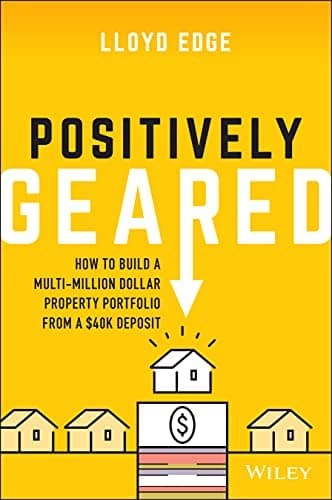
Positively Geared
How to build a positive cashflow property portfolio that funds the life you want, not just a mountain of debt. Lloyd Edge went from music teacher to property strategist, so the advice is grounded in the real Aussie market.
The Armchair Guide to Property Investing
Ben Kingsley & Bryce Holdaway
The Armchair Guide to Property Investing
Two of Australia's most trusted property voices lay out a plain-English roadmap to building a portfolio on an average income. Practical, local, and refreshingly free of get-rich-quick hype.
Money Magnet
Steve McKnight
Money Magnet
Steve McKnight, one of Australia's best-known investors, walks through the mindset and money habits that build lasting wealth. A motivating, no-nonsense read for anyone ready to get serious about their fortune.
Some links above are affiliate links. If you buy through them, Snowball Invest may earn a small commission at no extra cost to you. We only recommend books we'd suggest anyway.
Sources
Was this article useful?
Put it to your own numbers
Every calculator runs entirely in your browser, with nothing stored. See what these numbers look like for your own situation.
Explore the calculators →General information only. This article is educational and does not constitute personal financial advice. It does not account for your circumstances. Consider your own situation and seek advice from a licensed adviser before acting. Read our full disclaimer.

Timothy Hirou Gaschereau
Founder of Snowball Invest, not a financial adviser.
I write about what I'm learning myself, because nobody ever taught us how to take control of our own money. It's a skill, not a mystery, and it's never too late to learn it. The best day to start was yesterday, the second best is today.
LinkedIn →Related articles

How to Grow a Multi-Million Dollar Property Portfolio: A Review
Our honest review of Michael Yardney's How to Grow a Multi-Million Dollar Property Portfolio: the capital-growth strategy, the leverage risks, and who it's for.

The Millionaire Real Estate Investor by Gary Keller: A Review
Our honest Millionaire Real Estate Investor review for Australians: Gary Keller's Four Models and mindset, what's US-only, and how it applies to property here.

Investopoly by Stuart Wemyss: An Honest Review
Our honest Investopoly review: Stuart Wemyss's 8 golden rules for building wealth in Australia, the strengths, the caveats, and who should read it.