

How to Grow a Multi-Million Dollar Property Portfolio: A Review
Our honest review of Michael Yardney's How to Grow a Multi-Million Dollar Property Portfolio: the capital-growth strategy, the leverage risks, and who it's for.
 By Timothy Hirou GaschereauPublished
 10 min read
A solid starting point for Australian property beginners, but go in with your eyes open. This is a capital-growth playbook built for a specific type of investor, and it's not for everyone. Michael Yardney has been one of Australia's most prominent property commentators for decades, and this flagship book has been updated across many editions since it first appeared in 2007. It's part of our personal finance book reviews on Snowball Invest.
Quick answer
A clear, locally relevant capital-growth framework for Australians new to property investing: buy investment-grade properties in high-demand locations, hold for the long term, and use rising equity to keep growing your portfolio. Best read alongside other perspectives, especially if you're sensitive to leverage risk or focused on cash flow. Property investing carries real risk. Our rating: 3.5 out of 5.
Want to read How to Grow a Multi-Million Dollar Property Portfolio?
Australia's most quoted property commentator on the strategy and mindset behind serious portfolio growth. Big-picture, long-game thinking.
In this guide
- →What the book is about: the capital-growth, buy-and-hold framework
- →The genuine strengths and the honest weaknesses (including leverage risk)
- →Who it's for, and who should look elsewhere
- →What critics and r/AusProperty readers say
- →The Australian angle: capital growth vs cash flow, demographics and APRA
📖 What is the book about?
At its heart, this is a capital-growth manifesto. Yardney's argument is straightforward: buy the right properties in the right locations, hold them for the long term, let compounding capital growth do the heavy lifting, and use the equity you build to fund your next purchase. Yardney is the founder of Metropole Property Strategists, a buyers' agency and advisory firm, and one of the most recognised names in Australian property education. That local pedigree matters: unlike a lot of investing books awkwardly translated from a US or UK context, this one is written squarely for the Australian market.
The book covers a lot of ground:
- Location selection, leaning heavily on demographics, gentrification signals and infrastructure investment to find suburbs with above-average growth potential.
- Buying below intrinsic value, then adding value through renovation to create instant equity.
- Finance and borrowing strategy, including how to structure loans and use equity to keep acquiring.
- Investor mindset, a significant chunk on the psychology of long-term investing, patience and avoiding emotional decisions.
- Tax and legal basics, including the tax advantages available to property investors such as negative gearing.
The first edition came out in 2007, and the fact it's been revised across many editions since tells you something about its staying power as one of the go-to Australian property books.
⚖️ Strengths and weaknesses
What it gets right
- ✓Genuinely Australian: the examples, tax references and suburb logic are all local, no awkward overseas translation.
- ✓A clear capital-growth framework: a repeatable process for identifying investment-grade properties, not vague inspiration.
- ✓Strong on location selection: the demographic and gentrification lens teaches you to think about who's moving into an area, not just current prices.
- ✓Accessible writing that builds logically, so beginners won't feel lost.
- ✓Updated across editions to reflect more recent conditions, ahead of property books untouched since the pre-GFC era.
- ✓Good on mindset: the long-term, patient framing helps anyone tempted to panic-sell or chase trends.
Where it falls short
- ✕Capital growth only, not cash flow: if your priority is rental yield, this book will frustrate you.
- ✕Self-promotion of Metropole Property Strategists: not overwhelming, but you'll notice it.
- ✕Property risk can feel underplayed: a first-timer could finish more confident about leverage than the numbers warrant.
- ✕Capital-city bias toward established Sydney, Melbourne and Brisbane suburbs, which can feel tone-deaf if you're priced out.
- ✕Leverage deserves more scrutiny: borrowing against equity to keep buying works beautifully in a rising market and is far more stressful when rates rise or values fall.
- ✕Some content feels dated, carrying the flavour of an earlier era of Australian lending.
👤 Who should read it, and who should skip it?
Read it if you
- ✓Are new to property investing and want a structured, Australian-specific introduction.
- ✓Are interested in a long-term, buy-and-hold capital-growth strategy.
- ✓Want to understand how experienced investors think about location, demographics and equity.
- ✓Are comfortable with the idea of using leverage and want to understand how it works in practice.
Skip it if you
- ✕Are primarily interested in cash-flow investing or high-yield regional markets.
- ✕Are already an experienced investor with multiple properties (the fundamentals won't be new).
- ✕Want a balanced, risk-first introduction (this book is an advocate, not a neutral guide).
- ✕Are on a tight budget and find the capital-city focus discouraging.
If the capital-city price reality is the sticking point, it's worth understanding the bigger picture first. Our guide to housing affordability in Australia covers why capital-city entry costs have moved the way they have, and whether a regional or rentvesting strategy might suit you better.
🔍 What do critics say?
There aren't mainstream Australian press reviews of this specific title, which is worth noting honestly. What retailers consistently say is that it's a perennial bestseller and an Australian investment classic, a reputation that has held across nearly two decades of editions. For a property book in a niche category, that longevity is meaningful: it suggests the book has genuinely resonated with readers rather than riding a single marketing wave.
💬 What do readers say? Goodreads and Reddit
On Goodreads it sits at around 3.9 out of 5 from a couple hundred ratings, a solid if not glowing result. Most readers find genuine value; the minority who rate it poorly tend to flag the promotional elements or find the strategy too narrow. On Reddit it comes up regularly in r/AusFinance, r/AusProperty and r/fiaustralia as a good starting point, particularly for people who want a local framework rather than a generic "rich dad" style book.
The more critical Reddit commentary lands in the same place: the strategy can feel like an earlier-era approach in the post-APRA environment. Readers who came to the book after the 2021 to 2023 interest rate cycle note that its confidence around leverage reads differently when your mortgage repayments have just jumped. That's context worth having, not a dismissal.
🇦🇺 The Australian angle
Australian property is its own beast, and Yardney knows it well. A few things worth understanding:
- Capital growth vs cash flow. Australian investors historically split into two camps: capital growth in major cities, and rental yield in regional or outer markets. Yardney is firmly capital-growth, a legitimate strategy but not the only one, and one with higher entry costs and a longer road to a self-funding portfolio.
- Demographics and location. A genuine strength is the framework for reading gentrification, infrastructure investment, population growth and the "ripple effect" from expensive suburbs into adjacent ones, real signals experienced investors use.
- Negative gearing. If your rental income doesn't cover your mortgage and costs, you can offset that loss against other income for tax. It's legal and common in Australia, but it requires you to be earning enough to benefit, and it doesn't make a bad property a good one. Our guide to how negative gearing actually works has the worked example.
- Leverage in the current environment. APRA raised the mortgage serviceability buffer to 3 percentage points above the loan rate in October 2021 and has maintained it since, so lenders assess your repayments at your actual rate plus 3%. For investors stacking multiple properties, that has meaningfully reduced borrowing capacity versus the pre-2021 era. The equity-recycling model still works in principle, but it's harder to execute at pace.
Metropole operates as a buyers' agency in this space, so Yardney is both educator and service provider, useful context when reading his recommendations. For a cash-flow-first contrast, our Positively Geared review takes the opposite tack, and for a balanced framework our Armchair Guide to Property Investing review is a good companion.
💰 The verdict
How to Grow a Multi-Million Dollar Property Portfolio earns its place among the better Australian property books. It's clear, locally relevant, and gives beginners a genuine framework rather than just motivation. The weaknesses are real, though: the capital-growth focus is a feature for some and a bug for others; the leverage optimism needs to be read against the current lending environment, where APRA's serviceability buffer and a full interest rate cycle have made the "keep borrowing against your equity" model more complicated than the book sometimes implies; and the capital-city price reality means a meaningful chunk of readers will find the strategy aspirational rather than immediately actionable. Worth reading if you're curious about Australian property, but pair it with something covering cash-flow strategies, index-fund alternatives and the real costs of leverage. No single book should be your entire education on this. Our rating: 3.5 out of 5.
Want to read How to Grow a Multi-Million Dollar Property Portfolio?
Curious about a capital-growth property strategy? Grab a copy, and read the finance chapters against today's lending rules.
SnowLetter
Australia's money news and our best reads, once a week.
❓ Frequently asked questions
Who is Michael Yardney?
+
Michael Yardney is an Australian property investor, commentator and educator who founded Metropole Property Strategists, a buyers' agency and advisory firm, in 1979. A prolific author and one of the most widely recognised names in Australian property education, he also runs the Property Update blog and hosts a popular property podcast.
What is the book's core strategy?
+
Long-term, capital-growth-focused property investment in Australian residential markets: buy investment-grade properties in high-demand locations, hold them for the long term, and use the equity built through capital growth to fund additional purchases. It relies on leverage and patience rather than short-term trading or high rental yields.
Is it suitable for beginners?
+
Yes, it's one of the more accessible Australian property books for beginners. The writing is plain, the concepts build logically, and the Australian focus means you don't have to translate US or UK examples. That said, read it critically, particularly the borrowing and leverage sections, and pair it with independent financial advice.
How does it compare to The Barefoot Investor for property content?
+
The Barefoot Investor covers property briefly as part of a broader personal finance framework, focused on paying down your home loan and avoiding complexity. Yardney's book is entirely focused on building an investment portfolio through leverage and capital growth. They're complementary: Barefoot for foundational habits, Yardney for a specific property strategy. Neither replaces independent advice.
Is the strategy still relevant after APRA's lending reforms?
+
The core principles (buy well-located properties, hold long term, think about demographics) remain sound. What has changed is the ease of executing the equity-recycling model at pace: APRA's 3 percentage point serviceability buffer, introduced in October 2021 and maintained since, has reduced borrowing capacity for investors compared to earlier eras. The strategy still works, but requires more patience and stronger financial foundations than some editions imply.
Does the book cover negative gearing and tax?
+
Yes. It covers negative gearing as part of its broader finance and tax strategy, explaining how rental losses can be offset against other income, and touches on other tax considerations. For detailed, personalised tax advice, the ATO's rental property guidance and a qualified accountant are your best resources.
📚 Get the book (and two property companions)
How to Grow a Multi-Million Dollar Property Portfolio
Michael Yardney
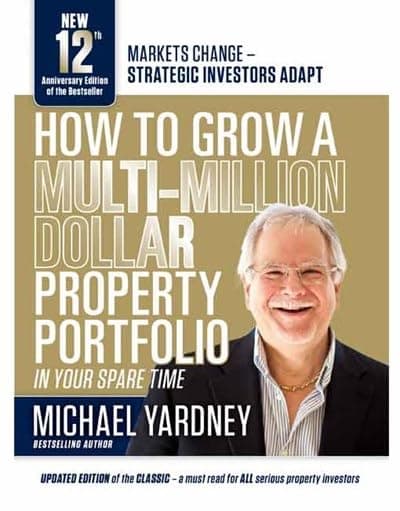
How to Grow a Multi-Million Dollar Property Portfolio
Michael Yardney, Australia's most quoted property commentator, shares the strategy and mindset behind serious portfolio growth. Big-picture thinking for investors who want to play the long game.
Positively Geared
Lloyd Edge
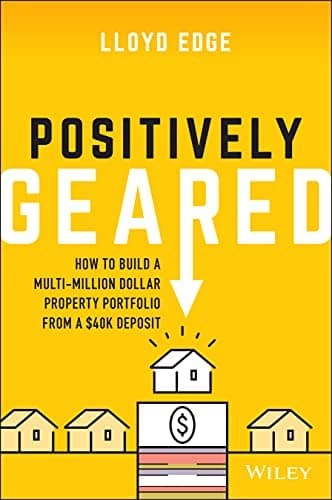
Positively Geared
How to build a positive cashflow property portfolio that funds the life you want, not just a mountain of debt. Lloyd Edge went from music teacher to property strategist, so the advice is grounded in the real Aussie market.
The Armchair Guide to Property Investing
Ben Kingsley & Bryce Holdaway
The Armchair Guide to Property Investing
Two of Australia's most trusted property voices lay out a plain-English roadmap to building a portfolio on an average income. Practical, local, and refreshingly free of get-rich-quick hype.
Some links above are affiliate links. If you buy through them, Snowball Invest may earn a small commission at no extra cost to you. We only recommend books we'd suggest anyway.
Sources
Was this article useful?
Put it to your own numbers
Every calculator runs entirely in your browser, with nothing stored. See what these numbers look like for your own situation.
Explore the calculators →General information only. This article is educational and does not constitute personal financial advice. It does not account for your circumstances. Consider your own situation and seek advice from a licensed adviser before acting. Read our full disclaimer.

Timothy Hirou Gaschereau
Founder of Snowball Invest, not a financial adviser.
I write about what I'm learning myself, because nobody ever taught us how to take control of our own money. It's a skill, not a mystery, and it's never too late to learn it. The best day to start was yesterday, the second best is today.
LinkedIn →Related articles

Positively Geared by Lloyd Edge: An Honest Review
Our honest Positively Geared review: Lloyd Edge's cash-flow-first Australian property strategy, the strengths, the real risks of leverage, and who it's for.

The Millionaire Real Estate Investor by Gary Keller: A Review
Our honest Millionaire Real Estate Investor review for Australians: Gary Keller's Four Models and mindset, what's US-only, and how it applies to property here.

Investopoly by Stuart Wemyss: An Honest Review
Our honest Investopoly review: Stuart Wemyss's 8 golden rules for building wealth in Australia, the strengths, the caveats, and who should read it.