

Rich Dad's Cashflow Quadrant by Robert Kiyosaki: A Review
Our honest Rich Dad's Cashflow Quadrant review for Australians: the E-S-B-I framework explained, what critics say, and how much of it actually applies here.
 By Timothy Hirou GaschereauPublished
 9 min read
If you loved Rich Dad Poor Dad and want to go deeper on the framework, Cashflow Quadrant is the natural next step. It introduces one genuinely useful mental model, but it's also repetitive, light on specifics, and built around a US tax system that doesn't map cleanly to Australia. Worth reading once; don't quit your job based on it. It's part of our personal finance book reviews on Snowball Invest.
Quick answer
A useful mindset shift wrapped in a lot of padding, and the E-S-B-I framework is the real gem. Best for people who feel stuck in the employee mindset and want a new way to think about income and time. Skip it if you want a concrete, step-by-step plan or Australian-specific tax and investing guidance. Our rating: 3.5 out of 5.
Want to read Rich Dad's Cashflow Quadrant?
The Rich Dad Poor Dad follow-up built around the four ways people earn income. A useful mental model, best read critically.
In this guide
- →What the book is about: the E-S-B-I cashflow quadrant
- →The genuine strengths and the honest weaknesses
- →Who it's for, and who should skip it
- →What critics say, including Kiyosaki's complicated track record
- →The Australian angle: a great model, but US-framed advice
📖 What is Rich Dad's Cashflow Quadrant about?
The follow-up to Rich Dad Poor Dad builds directly on that book's core argument, that financial education matters more than a high salary. The central idea is a simple diagram dividing all income earners into four groups:
| Quadrant | How you earn | Side |
|---|---|---|
| E, Employee | You work for someone else; income depends on your time and labour. | Left (time for money) |
| S, Self-employed | You work for yourself (tradies, freelancers, solo pros); stop working and the income stops. | Left (time for money) |
| B, Business owner | You own a system that works without you (teams, scalable businesses, franchises). | Right (owns systems) |
| I, Investor | Your money works for you through shares, property and other assets. | Right (owns assets) |
The left side (E and S) trades time for money; the right side (B and I) builds systems and assets that generate income independently. Kiyosaki's argument is that true financial freedom lives on the right side, and that most people are stuck on the left without realising it. He also argues that B and I earners enjoy more favourable tax treatment because governments incentivise investment and job creation, which is broadly true in many countries (including Australia), though the specifics are very different from his US examples. The tone is motivational and mindset-focused: no spreadsheets, no checklists, no specific strategies. It's a lens, not a map.
⚖️ Strengths and weaknesses
What it gets right
- ✓The E-S-B-I framework is genuinely useful: once you've seen it, you can't unsee it, and it reframes how you think about income, time and risk.
- ✓Accessible and easy to read, conversational, and finishable in a weekend.
- ✓A good motivational spark for anyone who has never questioned the employee path.
- ✓Builds on Rich Dad Poor Dad well, giving more structure to the ideas.
Where it falls short
- ✕Light on actionable specifics: it tells you what to think about, not how to actually move quadrants.
- ✕US tax framing doesn't translate to Australia (401(k)s, US tax code, American structures throughout).
- ✕Repetitive and self-promotional, nudging you toward Kiyosaki's board game, courses and seminars.
- ✕Glosses over real risk: the 'move to the B quadrant' message barely mentions that most small businesses fail.
- ✕A big chunk promotes network marketing (MLM) as a path from S to B, which many readers find unconvincing.
- ✕Kiyosaki is a polarising figure with a complicated track record (more below).
👤 Who should read it, and who should skip it?
Read it if you
- ✓Feel stuck in the employee mindset and want a new lens for money and time.
- ✓Read Rich Dad Poor Dad and want to go deeper on the framework.
- ✓Are an aspiring entrepreneur who wants a conceptual foundation first.
Skip it if you
- ✕Want a concrete, actionable financial plan with real steps to follow.
- ✕Need Australian-specific tax and investing guidance.
- ✕Already understand the E-S-B-I concept (the book doesn't add much beyond the quadrant itself).
🔍 What do critics say?
The criticisms are consistent: the book is repetitive, leans on anecdotes and slogans rather than rigorous evidence, and is less actionable than Rich Dad Poor Dad. Critics also flag that a significant portion promotes network marketing as the path from the S quadrant to the B quadrant, which many readers find unconvincing. Kiyosaki's broader reputation adds another layer: a Kiyosaki company filed for bankruptcy in 2012 following a large court judgment, he has publicly said he carries an enormous amount of debt (framing it as strategic leverage rather than personal failure), and he has faced legal action related to his seminars. None of this necessarily invalidates the E-S-B-I framework as a thinking tool, but it's worth knowing who you're taking advice from, and reading with your critical thinking hat firmly on.
💬 What do readers say? Goodreads and Reddit
On Goodreads it holds around 4.2 out of 5 from tens of thousands of ratings, and the split is revealing: nearly half give it five stars, while a small but vocal minority give it one or two. Polarising, in other words. The positive camp calls it an eye-opener, especially for readers who'd never thought about income sources in this structured way; the critical camp calls it overrated, repetitive and a thinner version of the first book.
On Reddit (r/personalfinance, r/financialindependence, r/AusFinance) the themes are consistent: the E-S-B-I framework is widely seen as a useful conceptual tool, but the criticisms cluster around repetition, over-simplification and the MLM promotion. The r/AusFinance consensus is roughly: the quadrant is a decent map, but don't follow Kiyosaki's directions blindly.
🇦🇺 The Australian angle
The honest truth for Australian readers: the quadrant mental model is universal and genuinely useful, but the specific advice is not. Kiyosaki's tax arguments are built around the US tax code, so references to 401(k)s, US depreciation rules and American structures don't translate directly. The broad principle (that business owners and investors often access more tax-efficient structures than employees) does hold here, but the details are completely different. Australia has its own genuine B and I advantages: franking credits, concessional super contributions, negative gearing and trust structures can all reduce tax, but they need proper professional advice, not a US-written book.
The entrepreneurship message also needs a reality check. Moving to the B quadrant sounds straightforward; it isn't, and most small businesses don't survive their first few years. For most Australians, the most reliable path to the I quadrant runs through maximising super and investing regularly in low-cost, diversified ETFs. Less exciting than "build a business empire," but it works. Use the quadrant as a mindset prompt, and use Australian resources for the actual plan. Our Rich Dad Poor Dad review covers the original, and our Barefoot Investor review points to the practical, local follow-up.
💰 The verdict
Cashflow Quadrant is worth reading once, especially if you enjoyed Rich Dad Poor Dad. The E-S-B-I framework is a genuinely useful mental model that can shift how you think about money, time and the difference between active and passive income, and that alone makes it worth a few hours. But treat it as a spark, not a blueprint: it's light on actionable specifics, US-centric in its tax framing, and written by someone whose own financial track record is complicated. Read it critically, pair it with practical Australian resources, and don't let the "quit your job and build a business" energy override your common sense. A good book to read once, not a guide to follow literally. Our rating: 3.5 out of 5.
Want to read Rich Dad's Cashflow Quadrant?
Want the mental model for active versus passive income? Grab a copy, take the quadrant, and leave the seminar pitch.
SnowLetter
Australia's money news and our best reads, once a week.
❓ Frequently asked questions
Is Rich Dad's Cashflow Quadrant worth reading?
+
Yes, once. The E-S-B-I framework is a useful mental model for thinking about income and financial independence, the book is easy to read, and it can be a genuine mindset shift for people stuck on the employee track. Just don't expect a step-by-step plan.
What's the difference between the four quadrants?
+
E (Employee) earns a wage working for someone else. S (Self-employed) earns through their own labour, often as a sole trader or specialist. B (Business owner) owns a system or company that generates income without their direct involvement. I (Investor) puts money to work through assets like shares or property. The left side (E and S) trades time for money; the right side (B and I) builds income that doesn't depend on your hours.
Is the Cashflow Quadrant relevant in Australia?
+
The framework itself is relevant anywhere. The specific tax and investment advice is US-centric and doesn't map directly to Australia. Pair the book's mindset ideas with local resources like MoneySmart and advice from a licensed Australian financial adviser.
How does it differ from Rich Dad Poor Dad?
+
Rich Dad Poor Dad introduces the core philosophy: assets versus liabilities, financial education and making money work for you. Cashflow Quadrant builds on that by categorising income earners into four groups and arguing that financial freedom requires moving from the left side to the right. It's more structured, but also more repetitive and less impactful than the first book.
Is Robert Kiyosaki's advice trustworthy?
+
Kiyosaki is a polarising figure. His core ideas about financial education, assets and passive income have resonated with millions, but his broader track record is complicated (a Kiyosaki company filed for bankruptcy in 2012, he has faced legal action related to his seminars, and some specific claims lack rigorous evidence). Read him as a source of ideas to think about, not instructions to follow.
What should I read after it?
+
For Australians, The Barefoot Investor by Scott Pape is a natural follow-up: practical, local and actionable. ASIC MoneySmart is the best free resource for Australian-specific guidance on investing, super and budgeting.
📚 Get the book (and two companions)
Rich Dad's Cashflow Quadrant
Robert Kiyosaki
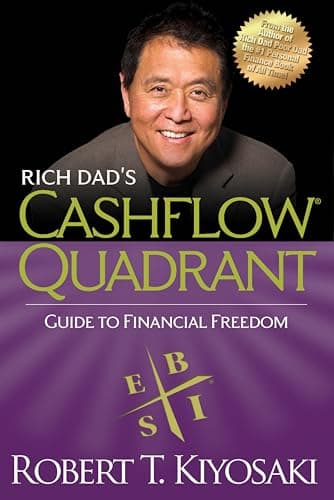
Rich Dad's Cashflow Quadrant
The Rich Dad Poor Dad follow-up built around the E-S-B-I quadrant: the four ways people earn, and why real freedom lives on the business-and-investor side. A useful mental model, read critically.
Rich Dad Poor Dad
Robert Kiyosaki
Rich Dad Poor Dad
The book that got millions of people thinking differently about assets, income and building wealth.
The Barefoot Investor
Scott Pape
The Barefoot Investor
Australia's best-selling money book ever. A simple system for accounts, budgeting, debt and a real emergency fund in one.
Some links above are affiliate links. If you buy through them, Snowball Invest may earn a small commission at no extra cost to you. We only recommend books we'd suggest anyway.
Sources
Was this article useful?
Put it to your own numbers
Every calculator runs entirely in your browser, with nothing stored. See what these numbers look like for your own situation.
Explore the calculators →General information only. This article is educational and does not constitute personal financial advice. It does not account for your circumstances. Consider your own situation and seek advice from a licensed adviser before acting. Read our full disclaimer.

Timothy Hirou Gaschereau
Founder of Snowball Invest, not a financial adviser.
I write about what I'm learning myself, because nobody ever taught us how to take control of our own money. It's a skill, not a mystery, and it's never too late to learn it. The best day to start was yesterday, the second best is today.
LinkedIn →Related articles

Rich Dad's Guide to Investing Review: Read It Critically
The reframe is genuinely useful: investing is a plan, not a product. The structures, the tax and the investor categories are American, and a lot of it does not cross the Pacific.

Buy Back Your Time by Dan Martell: An Honest Review
Our honest Buy Back Your Time review for Australians: Dan Martell's Buyback Rate, DRIP Matrix and delegation playbook, and what to know before you hire here.

The 4-Hour Work Week by Tim Ferriss: An Honest Review
Our honest 4-Hour Work Week review for Australians: Tim Ferriss's DEAL framework and mini-retirements, what's dated, and how the mindset applies here.