

One Up On Wall Street by Peter Lynch: An Honest Review
Our honest One Up On Wall Street review for Australians: Peter Lynch's stock-picking classic, the strengths, the caveats versus index investing, and who it's for.
 By Timothy Hirou GaschereauPublished
 9 min read
One Up On Wall Street is one of the best investing books ever written, and also one of the most misunderstood. Peter Lynch wrote it after running the Fidelity Magellan Fund from 1977 to 1990 and delivering roughly a 29% average annual return, the best-performing mutual fund in the world over that period. He knows what he's talking about, but the book was published in 1989 and the world has changed. Here's our honest take, part of our personal finance book reviews on Snowball Invest.
Quick answer
A genuinely fun, readable classic that teaches you to think like a business analyst, not a gambler, even if the examples are showing their age. Best for curious beginners, value investors, and anyone who wants to understand how a legendary fund manager thinks about businesses. Skip it if you're already happy with a low-cost ETF portfolio and have no interest in picking stocks. Our rating: 4 out of 5.
Want to read One Up On Wall Street?
Peter Lynch ran one of the greatest funds ever, and his big idea is simple: invest in what you actually understand from everyday life.
In this guide
- →What the book is about: 'invest in what you know', six stock categories and the tenbagger
- →The genuine strengths and the honest weaknesses
- →Who it's for, and who's better off in index ETFs
- →What critics and r/investing readers say
- →The Australian angle: ASX concentration, super and CHESS
📖 What is One Up On Wall Street about?
The core idea is simple: ordinary people have a real edge over professional investors because they encounter great businesses in everyday life before Wall Street does. You notice a new restaurant chain before the analysts do, or a product flying off shelves before it shows up in a fund manager's portfolio. Lynch's argument is that this firsthand consumer knowledge, combined with basic financial analysis, gives individual investors a genuine head start. He calls this "invest in what you know", the phrase that launched a thousand misquotes.
The book introduces his famous six categories of stocks (slow growers, stalwarts, fast growers, cyclicals, turnarounds and asset plays), each of which behaves differently and needs a different approach. He popularises the tenbagger (a stock that rises to ten times its price), and explains the PEG ratio (price-to-earnings divided by earnings growth) in plain English, where a PEG below 1 suggests a stock might be undervalued relative to its growth. The broader philosophy is patient and long-term: Lynch isn't a trader or a market-timer, he's looking for fundamentally strong businesses at a sensible price, then holding on. Be upfront, though: this is a stock-picking book, and it runs directly counter to the pure index-investing philosophy that a lot of the evidence favours.
⚖️ Strengths and weaknesses
What it gets right
- ✓Accessible from page one: Lynch writes like he's explaining things to a smart friend, conversational and never condescending.
- ✓The six stock categories are genuinely useful mental models that change how you read business news, even if you never pick a stock.
- ✓The PEG ratio explained clearly, with the logic behind the metric, not just the formula.
- ✓It pushes you to do your own research and to be sceptical of hot tips and broker recommendations.
- ✓It builds genuine financial curiosity about how businesses actually work.
- ✓Entertaining writing with dry wit, a surprisingly easy read for a book about financial statements.
Where it falls short
- ✕Most individual investors underperform index funds when stock-picking, a well-established finding the book doesn't really grapple with.
- ✕'Invest in what you know' is widely misunderstood: loving a product doesn't make the company a good investment, and Lynch's actual process involved deep analysis.
- ✕The examples are dated: mostly 1980s and early-1990s US companies, many long gone.
- ✕Heavily US-centric in market structure, brokerage and regulation.
- ✕It can feel repetitive, making the same points across multiple chapters.
- ✕The information edge is harder to sustain today, with faster, more efficient markets.
👤 Who should read it, and who should skip it?
Read it if you
- ✓Are a curious beginner who wants to understand how investing actually works, not just which buttons to press.
- ✓Are interested in how to analyse companies, even at a basic level.
- ✓Are a value investor or drawn to finding undervalued businesses.
- ✓Want to understand how one of history's greatest fund managers actually thought.
Skip or deprioritise it if you
- ✕Are a pure index investor happy with your VAS and VGS ETFs and not looking to complicate things.
- ✕Want a modern Australian-specific investing guide.
- ✕Are expecting a get-rich-quick system (Lynch is the patient, methodical opposite).
🔍 What do critics say?
Critical reception has been consistently positive. The book was a New York Times bestseller and is widely described as one of the best introductory investing books ever written, praised for Lynch's clear writing and his memorable framework for thinking about businesses. Reviewers note some tactics are era-specific, but the core ideas remain strong. The general consensus: a foundational text, not the last word on investing and not to be treated as gospel, but as an introduction to business-focused thinking about markets, it's hard to beat.
💬 What do readers say? Goodreads and Reddit
On Goodreads it holds around 4.3 out of 5 from tens of thousands of ratings, an unusually strong distribution for a finance book. Common praise: accessible, timeless, entertaining, beginner-friendly. Common criticism: the examples are dated, some chapters feel repetitive, and the anecdotal style can ramble.
On Reddit (r/investing, r/stocks, r/Bogleheads, r/ValueInvesting) it's widely praised as one of the best investing books readers have encountered, and often called more accessible than The Intelligent Investor. The stock-picking-versus-index-funds tension comes up constantly, with the typical Boglehead-adjacent take: great for learning how to think about businesses, but for most people broad index funds are simpler and more reliable. A fair summary Lynch himself would probably respect.
🇦🇺 The Australian angle
Lynch's research mindset and business-analysis framework absolutely apply to ASX stocks: the six categories, the PEG ratio and the focus on fundamentals over market noise all translate. But the practical context differs here. If Lynch's individual-stock approach isn't for you, our guide to how to buy shares in Australia covers the mechanics either way. The ASX is far more concentrated than the US market (financials and resources dominate), which makes diversification via low-cost index ETFs like VAS and VGS even more important than in the US. Picking individual ASX stocks means taking on meaningful concentration risk in a market already heavily weighted to a handful of sectors.
Most Australians are also better served by maximising their super contributions before worrying about individual stock selection, and the mechanics differ too ( choosing a broker, CHESS sponsorship and a different regulatory environment). The principles transfer; the specifics don't. Concentrated stock-picking carries real risks (volatility, timing, and the genuine difficulty of sustaining an information edge), so go in with clear eyes. Reading this book and then choosing to invest in ETFs is a completely legitimate outcome, you'll understand what you own better for having read it. For the value-investing classic it's often compared to, see our Intelligent Investor review, and for the index counterpoint, our Little Book of Common Sense Investing review.
💰 The verdict
Yes, read it. Not because it will turn you into Peter Lynch (it won't), and not because stock-picking is the right strategy for most Australians (it probably isn't). But because understanding how a brilliant investor thinks about businesses makes you a better investor, full stop, even if your portfolio is 100% index funds. The book teaches you to look past the share price to the underlying business, to ignore short-term noise, and to be sceptical of hot tips and do your own thinking. Those lessons are timeless. The dated examples, US-centric framing and occasional repetition are real limitations, but they don't undermine the core value. Read it critically and apply it to your own context. Our rating: 4 out of 5.
Want to read One Up On Wall Street?
Curious how a legendary fund manager thinks about businesses? Grab a copy, even if you end up an index investor.
SnowLetter
Australia's money news and our best reads, once a week.
❓ Frequently asked questions
Is One Up On Wall Street still relevant today?
+
The core principles (understanding businesses, ignoring short-term noise, looking for undervalued companies) are as relevant as ever. The specific examples are dated (1980s and 1990s US companies), and the information edge Lynch describes is harder to sustain in today's faster, more efficient markets. Read it for the framework, not the specific stock picks.
What is the 'invest in what you know' rule?
+
Peter Lynch's idea that ordinary consumers often notice great businesses before professional analysts do. If you see a product flying off shelves, that's a signal worth investigating. Crucially, it's a starting point for research, not a reason to buy. Lynch himself has clarified that liking a product is not the same as understanding the investment case for the company behind it.
What is a tenbagger?
+
A stock that rises to ten times its original purchase price. Lynch popularised the term at the Fidelity Magellan Fund, finding dozens by identifying fundamentally strong businesses early and holding them patiently through volatility. It's a reminder that a few exceptional winners can transform a portfolio, part of Lynch's argument for individual stock selection.
Is it suitable for Australian investors?
+
Yes, with caveats. The research mindset and business-analysis framework apply directly to ASX stocks. But the specific examples, market structure and brokerage context are all American. Australians also need to factor in the concentration of the ASX (heavy financials and resources), the importance of super, and the availability of low-cost index ETFs like VAS and VGS. Worth reading; just apply it to your local context.
Should I stock-pick or just buy index ETFs?
+
This is the central tension the book raises. The well-established finding in investment research is that most individual investors underperform broad index funds over the long term, especially after fees and taxes. Index ETFs are simpler, cheaper and more reliable for most people. That said, Lynch's approach isn't gambling, it's disciplined, research-based investing. If you're genuinely interested in analysing businesses and have the time, there's a case for a small allocation to individual stocks alongside a core index portfolio. This is not financial advice.
How does it compare to other investing books?
+
It's more accessible and entertaining than Benjamin Graham's The Intelligent Investor, which is denser. It's more focused on stock-picking than The Little Book of Common Sense Investing by John Bogle, which makes the case for index funds. For Australians it complements rather than replaces local books like The Barefoot Investor. Its irreplaceable value is a direct window into how one of history's greatest active fund managers actually thought.
📚 Get the book (and two companions)
One Up On Wall Street
Peter Lynch
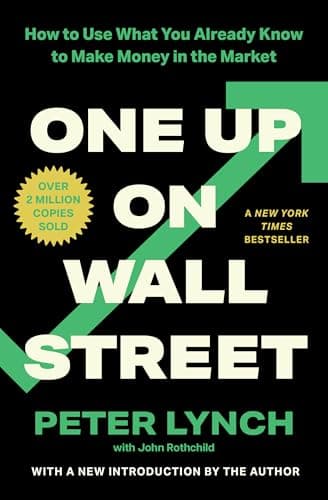
One Up On Wall Street
Peter Lynch ran one of the greatest funds ever, and his big idea is simple: invest in what you actually understand from everyday life. A timeless nudge to do your homework before you buy a single share.
Some links above are affiliate links. If you buy through them, Snowball Invest may earn a small commission at no extra cost to you. We only recommend books we'd suggest anyway.
Sources
Was this article useful?
Put it to your own numbers
Every calculator runs entirely in your browser, with nothing stored. See what these numbers look like for your own situation.
Explore the calculators →General information only. This article is educational and does not constitute personal financial advice. It does not account for your circumstances. Consider your own situation and seek advice from a licensed adviser before acting. Read our full disclaimer.

Timothy Hirou Gaschereau
Founder of Snowball Invest, not a financial adviser.
I write about what I'm learning myself, because nobody ever taught us how to take control of our own money. It's a skill, not a mystery, and it's never too late to learn it. The best day to start was yesterday, the second best is today.
LinkedIn →Related articles

The Intelligent Investor Review: Is Graham's Classic Worth It?
Our honest Intelligent Investor review: what Benjamin Graham's classic teaches, its real strengths and weaknesses, and what Australian investors should know first.

The Little Book That Still Beats the Market: A Review
Our honest review of Joel Greenblatt's The Little Book That Still Beats the Market: the Magic Formula, why discipline is the hard part, and the ASX angle.

Atomic Habits Summary: The Four Laws, Explained Properly
The four laws of behaviour change, habit stacking, the two minute rule and identity based habits, distilled. Plus what each one looks like applied to your money.