

The Little Book That Still Beats the Market: A Review
Our honest review of Joel Greenblatt's The Little Book That Still Beats the Market: the Magic Formula, why discipline is the hard part, and the ASX angle.
 By Timothy Hirou GaschereauPublished
 9 min read
Joel Greenblatt's The Little Book That Still Beats the Market is one of the most quoted investing books of the past two decades, and for good reason. The promise is seductive: a simple two-metric formula that systematically finds good companies at cheap prices, beats the market, and needs almost no financial expertise. The catch, as we'll get into, is that the hardest part has nothing to do with maths. It's part of our personal finance book reviews on Snowball Invest.
Quick answer
A short, plain-English guide to the "Magic Formula" for value investing: rank stocks by return on capital and earnings yield, buy a basket of the top-ranked names, hold for a year, repeat. Elegant in theory, but the hard part is behavioural: most investors bail during the inevitable multi-year stretches of underperformance, which is exactly when the formula needs you to stay the course. Our rating: 3.5 out of 5.
Want to read The Little Book That Still Beats the Market?
Joel Greenblatt boils value investing down to a plain formula: buy good companies when they're cheap. Short, cheeky and a great primer.
In this guide
- →What the book is about: the Magic Formula and why it works
- →The genuine strengths and the honest weaknesses
- →Who it's for, and who's better off in index funds
- →What critics and r/ValueInvesting readers say
- →The Australian angle: the ASX, franking and why the tools are US-only
📖 What is the book about?
It's Joel Greenblatt's attempt to distil value investing into something a teenager could follow, and he mostly succeeds. The core idea is Magic Formula investing: rank every stock on two metrics, buy a basket of the top-ranked names, hold for roughly a year, then repeat. The two metrics are return on capital (how efficiently a company uses its assets to generate profit, signalling a quality business) and earnings yield (how cheap the stock is relative to its earnings, signalling a bargain price). You combine the rankings rather than picking one, buy 20 to 30 of the top names, and rebalance annually.
Greenblatt wrote the original in 2005; the "still" edition (2010) updated the research with data through the 2008 crisis, and the original backtest covered 17 years of US market data. This is not a random blogger with a hot take: Greenblatt founded Gotham Capital in 1985 and reportedly ran it to around 50% annualised returns before fees between 1985 and 1994, one of the most remarkable track records in hedge fund history, and has taught value investing at Columbia Business School since 1996. The book is written deliberately simply, simple enough for his own kids, which is both its greatest strength and, for experienced investors, occasionally its weakness.
⚖️ Strengths and weaknesses
What it gets right
- ✓A brilliantly simple idea: two metrics, one formula, no gut feel or macro forecasting.
- ✓Written for everyone, explaining compounding with a gum factory and analogies that never talk down to you.
- ✓Backed by real data: the original 17-year backtest showed meaningful outperformance, with the methodology explained.
- ✓A genuine behavioural insight: the most valuable part is the explanation of why the formula works, exploiting the pricing inefficiencies short-term investors create.
Where it falls short
- ✕The discipline required is brutal: the formula can underperform for one to three years, and most investors bail exactly when they shouldn't.
- ✕US-centric by design: the official screener, data, tools and tax discussion all assume US-listed stocks.
- ✕Harder to apply on the ASX, a smaller, more concentrated market dominated by banks and miners.
- ✕Pure index investing is simpler for most Australians, with overwhelming evidence for the passive path.
- ✕Fraud and balance-sheet risk are ignored: the formula is a screen, not a complete due-diligence process.
- ✕The outperformance claim is hard to verify independently, with mixed real-world results since publication.
👤 Who should read it, and who should skip it?
Read it if you
- ✓Are a value-investing enthusiast wanting a rigorous, systematic framework and prepared to do the ASX screening manually.
- ✓Are comfortable with index funds and curious about factor investing and the academic case for value.
- ✓Are interested in quantitative approaches and how mechanical rules remove emotion from investing.
Skip it if you
- ✕Are a complete beginner (understand index funds, ETFs and super first).
- ✕Can't stomach multi-year underperformance without selling everything.
- ✕Are hoping for ASX-ready tools: the book won't give you a screener, stock list or local implementation guide.
🔍 What do critics say?
The critical reception was warm, with major financial publications praising it as one of the clearest guides to value investing available and among the best books on the subject in years. Those endorsements hold up: as an introduction to the logic of value investing and the behavioural reasons it works, the book is excellent. The more measured criticism comes from the investing community rather than book reviewers: the formula's real-world performance since publication has been inconsistent, the strategy requires more emotional discipline than most investors have, and the US-only implementation limits its usefulness for non-American readers. Some later analysis has even questioned whether the formula still works as well as the backtests suggested.
💬 What do readers say? Goodreads and Reddit
On Goodreads it holds around 4 out of 5 from thousands of ratings, with the majority giving it four or five stars. The praise is consistent: readers love the accessibility, the clarity of the core idea, and that Greenblatt explains the why behind the formula. Many describe it as the book that finally made value investing click. The criticism is equally consistent: the US-centricity, the fact the formula ignores balance-sheet risk and fraud, and the discipline required to stick with it.
On Reddit, r/ValueInvesting regularly recommends it as a solid introduction, while the same threads often conclude that passive index investing is more practical for most people and that the Magic Formula works better as a broad filter than a standalone strategy. r/Bogleheads treats it as an interesting alternative perspective rather than a core recommendation, which tells you where it sits on the spectrum.
🇦🇺 The Australian angle
The value-investing logic is universal, buying quality businesses at cheap prices works in principle on any market, including the ASX. But the practical implementation is a different story:
- The tools don't exist for Australia. The official Magic Formula screener is US-only, so applying it to Australian stocks means pulling the data yourself, ranking manually and building your own process, doable for experienced investors but a significant lift.
- The market is too concentrated for easy diversification. The ASX has around 2,000-plus listed companies, but the top 20 account for the bulk of market capitalisation, so a formula-based portfolio will inevitably be heavy on banks and miners.
- Franking credits change the maths. Imputation credits on fully franked dividends boost after-tax returns in ways the formula doesn't account for, so read up on how franking credits actually work before you assume a stock's earnings yield tells the whole story.
- For most Australians, the simpler path wins. A low-cost ETF tracking the broad ASX or global equities, plus maximising super, will outperform most active strategies over the long run.
That said, experienced ASX investors genuinely interested in quantitative value investing, and willing to do the screening manually, may find the framework useful, the ideas translate even if the tools don't. For the value-investing classic it descends from, see our Intelligent Investor review, and for another practitioner's take on stock-picking, our One Up On Wall Street review.
💰 The verdict
Yes, read it, with clear eyes. This is a genuinely good book: the Magic Formula is elegant, the behavioural argument is compelling, and Greenblatt's writing makes complex ideas feel simple without dumbing them down. For anyone curious about how value investing actually works, it's one of the clearest explanations available. But "worth reading" and "worth implementing" are two different things: the real-world discipline required to stick with the formula through multi-year underperformance is harder than the book suggests, the tools are built for US markets, and for most Australian investors a simple passive investing strategy will deliver better outcomes with less effort and less stress. Read it for the ideas, and be honest with yourself about whether you'll actually implement it. Our rating: 3.5 out of 5.
Want to read The Little Book That Still Beats the Market?
Curious how systematic value investing works? Grab a copy, it's a three-hour read that makes the logic click.
SnowLetter
Australia's money news and our best reads, once a week.
❓ Frequently asked questions
What is the Magic Formula?
+
A systematic stock-selection process from Joel Greenblatt. It ranks stocks on two metrics: return on capital (how efficiently a company uses its assets) and earnings yield (how cheap the stock is relative to its earnings). You buy a basket of the top-ranked stocks across both metrics, typically 20 to 30 names, hold for roughly a year, then rebalance and repeat. The idea is to systematically buy good businesses at bargain prices, removing emotion from the process.
Does the Magic Formula actually work?
+
The original backtest over 17 years of US data showed meaningful outperformance. Post-publication results have been more mixed, with several independent backtests finding some outperformance but generally by a smaller margin than claimed. The strategy also requires holding through underperformance that can last one to three years, which most investors find very difficult. The honest answer: it has worked historically, but real-world results depend heavily on your ability to stick with it.
Can Australian investors use the Magic Formula on the ASX?
+
In principle, yes, the value-investing logic applies to any market. In practice, the official Magic Formula screener is US-only, so you'd need to source ASX data yourself and build your own ranking process. Australia's market is also smaller and more concentrated, which makes diversifying across 20 to 30 formula-selected stocks harder. Franking credits also change the dividend maths in ways the formula doesn't account for.
How does it compare to a passive index approach?
+
The book advocates active stock selection via a systematic formula; passive index investing means buying a low-cost ETF that tracks the whole market and accepting the market return. The evidence strongly favours passive for most retail investors over the long run. The formula may outperform in some periods, but it requires more work, more discipline and more tolerance for underperformance. For most Australians, a simple ETF strategy is the more practical choice.
Is Joel Greenblatt a credible author?
+
Very much so. Greenblatt founded Gotham Capital in 1985 and reportedly generated around 50% annualised returns before fees between 1985 and 1994, one of the best long-term track records in hedge fund history, and has been an adjunct professor at Columbia Business School since 1996. He's a genuine practitioner with a real track record, not just a theorist.
Is this book suitable for beginners?
+
It's accessible enough for beginners to read and understand. But get comfortable with the basics of passive investing first (how index funds, ETFs and super work) before exploring formula-based stock picking. The Magic Formula requires a level of emotional discipline and market understanding that's easier to develop once you have a solid foundation.
📚 Get the book (and two companions)
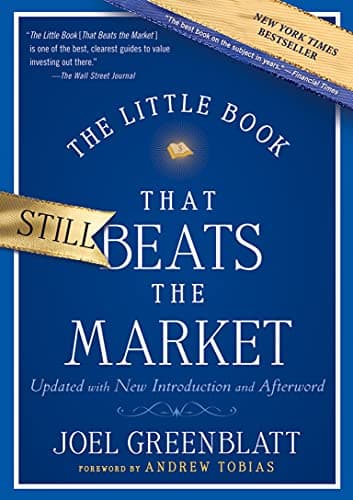
The Little Book That Still Beats the Market
Joel Greenblatt
The Little Book That Still Beats the Market
Joel Greenblatt boils value investing down to a plain formula: buy good companies when they are cheap. It is short, cheeky, and a great primer before you go anywhere near picking your own shares.
One Up On Wall Street
Peter Lynch
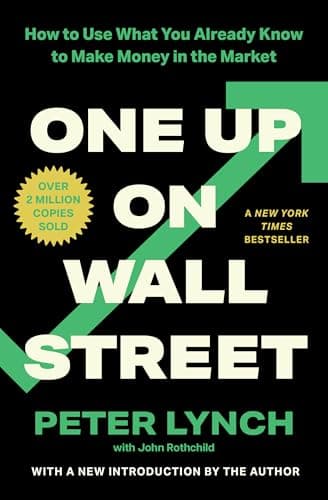
One Up On Wall Street
Peter Lynch ran one of the greatest funds ever, and his big idea is simple: invest in what you actually understand from everyday life. A timeless nudge to do your homework before you buy a single share.
Some links above are affiliate links. If you buy through them, Snowball Invest may earn a small commission at no extra cost to you. We only recommend books we'd suggest anyway.
Sources
Was this article useful?
Put it to your own numbers
Every calculator runs entirely in your browser, with nothing stored. See what these numbers look like for your own situation.
Explore the calculators →General information only. This article is educational and does not constitute personal financial advice. It does not account for your circumstances. Consider your own situation and seek advice from a licensed adviser before acting. Read our full disclaimer.

Timothy Hirou Gaschereau
Founder of Snowball Invest, not a financial adviser.
I write about what I'm learning myself, because nobody ever taught us how to take control of our own money. It's a skill, not a mystery, and it's never too late to learn it. The best day to start was yesterday, the second best is today.
LinkedIn →Related articles

The Intelligent Investor Review: Is Graham's Classic Worth It?
Our honest Intelligent Investor review: what Benjamin Graham's classic teaches, its real strengths and weaknesses, and what Australian investors should know first.

One Up On Wall Street by Peter Lynch: An Honest Review
Our honest One Up On Wall Street review for Australians: Peter Lynch's stock-picking classic, the strengths, the caveats versus index investing, and who it's for.

Atomic Habits Summary: The Four Laws, Explained Properly
The four laws of behaviour change, habit stacking, the two minute rule and identity based habits, distilled. Plus what each one looks like applied to your money.