

The Little Book of Common Sense Investing: Honest Review
Our honest review of John Bogle's The Little Book of Common Sense Investing: its real strengths, genuine weaknesses, and what Australian investors should take from it.
 By Timothy Hirou GaschereauPublished
 10 min read
John Bogle invented the index fund and spent decades arguing that ordinary investors should stop trying to beat the market and simply own it. This little book is that argument, distilled. Here's an honest look at what it gets right, where it drags, and exactly what an Australian investor should take from it. It's part of our personal finance book reviews on Snowball Invest.
Quick answer
The best single-sitting argument for passive investing ever written. It's also repetitive, US-centric, and light on practical guidance for anyone outside America. Read it for the philosophy, then do your Australian homework separately. Our rating: 4 out of 5.
Want to read The Little Book of Common Sense Investing?
The clearest case for low-cost index investing there is, and a short weekend read.
In this guide
- →What the book is actually about: Bogle, Vanguard and the cost matters hypothesis
- →Genuine strengths and the real criticisms, side by side
- →Who it's for, and who should skip it
- →What Buffett says, and what readers say on Goodreads and Reddit
- →The Australian angle: what translates (costs, active management) and what doesn't
📖 What this John Bogle book is actually about
Bogle founded Vanguard in 1974 and launched the first retail index fund in 1976. Critics called it "Bogle's Folly." They were wrong. The book is his distilled case for why ordinary investors should stop trying to beat the market and simply own it. The core idea is what he called the cost matters hypothesis: every dollar paid in fees, taxes and trading costs is a dollar that doesn't compound, and over decades that drag is enormous.
Same market, same years. The shaded wedge is what costs quietly skim off the top.
The logic is airtight. In aggregate, investors as a group must earn the market return before costs, and less after costs. So the investor who minimises costs wins by definition, and a low-cost index fund is the only reliable way to capture what the market actually delivers. It's a short book: the core argument is made in the first few chapters, and the rest is evidence, repetition and reinforcement.
⚖️ Strengths and weaknesses
A genuinely important book, and an honestly flawed one. Both are true.
What it gets right
- ✓The evidence is real: decades of data show most active funds trail their benchmark after fees.
- ✓Bogle is a genuine insider who built Vanguard and knew exactly how the fund business works.
- ✓It's genuinely accessible: plain language, concrete examples, no finance degree needed.
- ✓The philosophy is timeless, even though the specific funds have changed.
- ✓It's short and focused, it doesn't pad one idea across 400 pages.
- ✓It's the document that helped shift trillions from high-fee active funds into index products.
Where it falls short
- ✕It's repetitive: the same point comes back, with slight variations, across most chapters.
- ✕It's deeply US-centric: the funds, tax rules and market data are almost all American.
- ✕It preaches to the choir and doesn't seriously engage the best case for active management.
- ✕Practical guidance is thin: no real help on portfolio construction or asset allocation.
- ✕The bond allocation rule of thumb reflects a different interest rate era.
👤 Who should read it, and who should skip it?
Read it if you
- ✓Are new to investing and want a clear, evidence-based case for low-cost index investing.
- ✓Want to understand the intellectual foundations of the passive investing movement.
- ✓Have a friend or relative paying high fees on an active fund and want something persuasive to hand them.
Skip it or read it last if you
- ✕Already understand the index-fund argument and want portfolio construction guidance.
- ✕Want practical, step-by-step instructions for investing in Australia.
- ✕Want a book that covers superannuation, franking credits or the ASX, this covers none of that.
🔍 What do critics say about the book?
Warren Buffett, arguably the most famous active investor alive, put it plainly: "If a statue is ever erected to honour the person who has done the most for American investors, the hands-down choice should be Jack Bogle." Coming from a man who built his career on active stock selection, that's a remarkable tribute. Beyond Buffett, Bogle's influence is hard to overstate: the industry-wide shift toward low-cost index products over the past two decades is, in large part, a consequence of the argument he made and the institution he built. The book appears on virtually every credible list of essential personal finance reading.
💬 What do readers say? Goodreads and Reddit
On Goodreads the book holds around 4.1 out of 5 from more than 25,000 ratings, a strong result for a finance book. The pattern is consistent: readers new to investing rate it very highly, while those who already understand index investing find it repetitive but still valuable as a reference.
On r/AusFinance and r/personalfinance it comes up regularly as a recommended starting point, with the usual caveat: Australian readers need extra reading to understand how the philosophy applies locally, since the book itself is entirely US-framed.
🇦🇺 The Australian angle
Bogle's core philosophy applies perfectly here. Low costs matter in Australia just as much as in the US, broad diversification matters, and long time horizons matter. The case for passive investing isn't an American idea, it's a mathematical reality that applies to any market. The scepticism about active management travels too: Australian active funds face the same structural challenge as American ones, most don't consistently outperform after fees.
But the specifics don't translate, and some matter a lot. The US funds Bogle recommends aren't available here in the same form, and US tax rules differ, though the closest equivalent is a broad-market ETF listed on the ASX. He never mentions franking credits, which attach to dividends from Australian shares and represent a genuine tax advantage that can meaningfully improve after-tax returns. And he doesn't touch superannuation, which is Australia's most tax-efficient vehicle for long-term index investing, and almost certainly your most powerful long-term tool if you're in your 20s, 30s or 40s. For the local how-to, start with our guide to passive investing in Australia, then read it for the philosophy.
💰 The verdict
The Little Book of Common Sense Investing is the clearest, most credible argument for passive investing you'll find in a single short book. It's repetitive and US-centric, and Australian readers will need extra reading to apply the philosophy locally. Read it for the philosophy, do your Australian homework separately. If you're new to investing, read this first. If you're already a convert, you may not learn much new, but you'll enjoy the reminder.
Want to read The Little Book of Common Sense Investing?
Ready for the case that shifted trillions into index funds? Grab a copy.
SnowLetter
Australia's money news and our best reads, once a week.
❓ Frequently asked questions
Is The Little Book of Common Sense Investing still relevant?
+
Yes. The core argument, that costs compound against investors and most active funds underperform their benchmark after fees over long periods, hasn't changed. The specific funds and tax rules Bogle references are dated, but the philosophy is as sound now as when the book first appeared. The 10th anniversary edition adds some material on more recent market conditions.
How long does it take to read?
+
Most readers finish it in three to five hours. It's a short book in plain language, and the argument isn't complicated. You could read it over a weekend without any difficulty, and the audiobook runs to around four hours.
Is it suitable for Australian investors?
+
Partly. The philosophy is entirely applicable in Australia. The specifics (the funds Bogle recommends, the US tax rules, and the absence of any coverage of superannuation or franking credits) are not relevant here. Treat it as a foundation for your thinking, then use Australian resources to apply the ideas locally.
What is the main argument of the book?
+
Investors as a group must earn the market return before costs, and less than that after costs. So the investor who minimises costs captures the most of what the market delivers. A broad, low-cost index fund is the most reliable way to do that, and trying to beat the market through stock picking or timing is a losing strategy for most people over the long run.
How does it compare to other investing books?
+
It's more focused and readable than most. A Random Walk Down Wall Street covers similar ground with more academic depth. The Psychology of Money covers the behavioural side Bogle largely ignores. The Barefoot Investor is more practically useful for Australians but less rigorous on philosophy. Bogle's book is the best single-sitting case for passive investing, best read as part of a broader list rather than as a standalone guide.
📚 Get the book (and two worthy next reads)
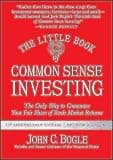
The Little Book of Common Sense Investing
John C. Bogle
The Little Book of Common Sense Investing
From the man who invented the index fund, this is the short, sharp case for low-cost investing that has aged like fine wine. The maths on fees is universal, just think ETFs and super instead of his US funds.
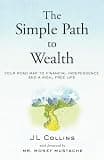
The Simple Path to Wealth
JL Collins
The Simple Path to Wealth
The friendliest on-ramp to index investing there is, born from letters a dad wrote his daughter. It makes 'buy the whole market and chill' feel obvious, just map his US fund picks onto Aussie equivalents and super.
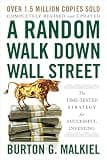
A Random Walk Down Wall Street
Burton G. Malkiel
A Random Walk Down Wall Street
The classic that quietly demolishes stock-picking and market-timing with fifty years of evidence. Dense in spots but worth it, and the passive-beats-active lesson travels perfectly to the ASX.
Some links above are affiliate links. If you buy through them, Snowball Invest may earn a small commission at no extra cost to you. We only recommend books we'd suggest anyway.
Sources
Was this article useful?
Put it to your own numbers
Every calculator runs entirely in your browser, with nothing stored. See what these numbers look like for your own situation.
Explore the calculators →General information only. This article is educational and does not constitute personal financial advice. It does not account for your circumstances. Consider your own situation and seek advice from a licensed adviser before acting. Read our full disclaimer.

Timothy Hirou Gaschereau
Founder of Snowball Invest, not a financial adviser.
I write about what I'm learning myself, because nobody ever taught us how to take control of our own money. It's a skill, not a mystery, and it's never too late to learn it. The best day to start was yesterday, the second best is today.
LinkedIn →Related articles

Money Master the Game by Tony Robbins: An Honest Review
Our honest Money Master the Game review for Australians: Tony Robbins's 7-step plan, the sound core message on fees and index funds, and the US-heavy padding.

The Simple Path to Wealth Review: JL Collins for Australians
Our honest Simple Path to Wealth review for Australians: what JL Collins gets right, what doesn't apply here, and how to use the philosophy with local ETFs and super.
A Random Walk Down Wall Street Review: Malkiel for Aussies
Our honest A Random Walk Down Wall Street review: what Burton Malkiel's classic gets right, where it falls short, and whether it applies to Australian investors.