
How to Buy Shares in Australia: A Step-by-Step Guide for First-Time Investors
The exact step-by-step process for buying shares in Australia: choosing a broker, placing an order, T+2 settlement, and the HIN vs SRN basics of holding shares.
 By Timothy Hirou GaschereauPublished
 11 min read
Try it yourself
This is the action-oriented follow-up to what is a share and how to start investing. If you already know why you're investing, here's exactly how the mechanics work.
Quick answer
Pick an online broker, open and verify your account, deposit at least $500, and place a buy order using the company's ASX ticker code. Your trade settles two business days later (T+2) through CHESS, and you'll receive a Holder Identification Number (HIN) confirming you own the shares. That's the whole thing, the rest is detail.
In this guide
- →What you need sorted before you open a brokerage account
- →What actually matters when choosing a broker
- →Opening your account, step by step
- →Placing your first order and understanding order types
- →What T+2 settlement, HINs and SRNs actually mean
- →Keeping records for tax once you're holding shares
🧰 What you need before you start
🎯 The essential: No minimum income, no experience, no financial adviser required. Just a handful of things sorted first.
- Your Tax File Number (TFN). Not legally required, but without it the broker withholds tax on investment income at the highest marginal tax rate.
- A valid Australian bank account, to fund trades and receive sale proceeds.
- At least $500 to invest. The ASX has a minimum marketable parcel rule, your first purchase of any given share must be worth at least $500 excluding brokerage. Budget a little extra on top for brokerage fees.
- ID documents for verification, your Australian driver's licence or passport. Most platforms verify digitally in minutes.
🏦 Choosing a broker: the real decision
Online (execution-only) vs full-service. Online brokers let you place your own buy and sell orders without personal advice, and charge low fees, this is what most self-directed investors use. Full-service brokers provide personalised advice and research, and charge significantly more. Unless you have a complex portfolio or genuinely want hand-holding, full-service is overkill for most people starting out.
CHESS-sponsored vs custodian model, this actually matters. When you buy through a CHESS-sponsored broker, your ownership is recorded directly in your name on the ASX's CHESS subregister, you get a HIN and are the legal owner. If the broker goes bust, the shares are yours, not the broker's asset. With a custodian model, the broker holds the shares on your behalf in a pooled account, you're a beneficial owner, not the legal registered owner, and your name doesn't appear on the share register. Neither model is illegal or inherently dangerous, but CHESS sponsorship gives you cleaner, more direct ownership. Check which model a broker uses before signing up, it's usually stated clearly in their FAQ or PDS.
Brokerage fees. Every broker charges a fee per trade, or a flat rate, or a percentage, or some combination, and these change often enough that any specific figures here would be stale within months. Compare current fee schedules directly on each broker's website before choosing, and pay attention to how the fee scales with your typical trade size. On a $1,000 trade, even a $10 fee is 1% of your investment, the smaller your trade size, the more brokerage eats into your returns, which is part of why the $500 minimum parcel rule exists.
There's more to compare than fees and ownership structure alone, FX fees on international shares, product range, and account minimums all matter too. Our broker checklist walks through the full decision if you want to weigh up your options properly before signing up.
📋 Opening your account
Once you've picked a broker, opening an account takes 10 to 30 minutes online.
- Fill in your personal details: name, address, date of birth, TFN, email.
- ID verification: most brokers verify your driver's licence or passport digitally against government records, usually under five minutes.
- Link your bank account: your BSB and account number, so the broker can debit funds for trades and credit sale proceeds.
- Sign the CHESS sponsorship agreement (for CHESS-sponsored brokers), standard paperwork that gives you a HIN.
- Deposit funds before you can trade. Some brokers let you trade on a linked account immediately, others require funds to clear first.
Account approval is usually instant or same-day, occasionally 24 to 48 hours if manual review is needed.
🖱️ Placing your first order, step by step
- Search for the company by its ASX code, a three to six letter ticker. BHP is BHP, Commonwealth Bank is CBA, Telstra is TLS. We walk through one of those end to end in how to buy CBA shares.
- Click "Buy" to open the order screen.
- Choose your order type. A market order executes immediately at the best available price, simple and fast, though the price can move slightly between submission and fill. A limit order sets a maximum price you're willing to pay, more control, but might not fill if the price never gets there. For large, liquid ASX stocks a market order is usually fine, for smaller companies or ETFs with wider spreads a limit order gives more price certainty. Our market order vs limit order guide works through when each one costs you.
- Enter the number of units, not dollars. If a stock trades at $45 and you want to invest $900, enter 20 units.
- Review and confirm: ticker, units, order type, estimated price and brokerage.
- Wait for execution. Market orders on liquid stocks typically fill within seconds during ASX trading hours (10am to 4pm AEST, Monday to Friday).
Once your order executes, you'll receive a contract note (trade confirmation). Keep it, you'll need it for tax purposes.
⏱️ What happens after you click buy
Australia settles on T+2: the actual exchange of cash and legal ownership happens two business days after your trade date. Buy on Monday, settlement is Wednesday. CHESS handles this automatically via delivery versus payment (DvP), transferring cash from buyer to seller and ownership from seller to buyer simultaneously. You don't need to do anything.
Trade date
Order fills, e.g. Monday
T+1
One business day later
Settlement
Cash and ownership swap, e.g. Wednesday
CHESS handles the whole handover automatically, you do not need to do a thing.
After your first trade with a CHESS-sponsored broker, you'll receive a CHESS holding statement confirming your shareholding, including your Holder Identification Number (HIN). It starts with the letter X and covers all your CHESS-sponsored holdings with that broker, one HIN regardless of how many companies or ETFs you hold. Write it down and keep it somewhere safe. If you are not sure whether your broker is CHESS-sponsored at all, our HIN, SRN and custodian guide shows how to check, and what rides on the answer.
You might also encounter a Security Reference Number (SRN) if you receive shares outside a broker transaction, such as through an employee share scheme or a company float. SRNs start with the letter I and are issuer-sponsored, registered directly with the company's share registry, one SRN per company. To sell issuer-sponsored shares, your broker must first convert them to CHESS. If you use a CHESS-sponsored broker for all your purchases, you'll deal almost exclusively with your HIN.
📊 Holding your shares
Your broker's platform shows your live portfolio: holdings, current prices, total value, and unrealised gains or losses. If the companies you hold pay dividends, cash lands in your nominated bank account within a few days of the payment date, alongside a dividend statement showing the amount, any franking credits, and tax withheld if applicable. See our what is a dividend guide for how franking credits actually work.
Keep every contract note. When you sell shares for more than you paid, the profit is a capital gain added to your assessable income. Held for more than 12 months, you're eligible for a 50% CGT discount, our capital gains tax guide covers the full mechanics. Neither stamp duty nor GST applies to buying or selling ASX-listed shares, though brokerage fees do include GST.
🧱 How to Build a Simple Portfolio
You've bought your first shares. Here's how to think about building a proper portfolio around them.
Once you're comfortable with the ASX basics, the natural next question is whether to look beyond it. Our guide to buying international shares from Australia covers what changes when you buy shares listed overseas.
What I actually use
Pearler
This is the broker I personally use. Do your own research and form your own opinion, but I genuinely recommend it, it's built for long-term investors rather than day traders, and makes it easy to automate regular investing. Sign up through my link or with the code TIMOTHY269825 and you'll both get a $20 cash bonus once you make your first investment (Pearler's current offer, T&Cs apply).
Sign up to Pearler →This is a referral link. If you sign up through it, I get a bonus too, at no extra cost to you.
SnowLetter
Australia's money news and our best reads, once a week.
❓ Frequently asked questions
What is the minimum amount to buy shares in Australia?
+
The ASX requires a minimum marketable parcel of $500 for your first purchase of any given share. After that initial buy, there's no minimum for top-up purchases of the same holding.
Is it safe to buy shares online in Australia?
+
Yes, provided you use a licensed Australian broker. All Australian brokers must hold an Australian Financial Services (AFS) licence, regulated by ASIC. CHESS-sponsored brokers register your shares in your name, so your holdings are protected even if the broker goes out of business. You can verify any broker's licence on ASIC's financial services register.
What is a HIN number?
+
A HIN is your Holder Identification Number, a unique identifier starting with the letter X that records all your CHESS-sponsored shareholdings with a given broker. Think of it as your share portfolio's account number. You get one HIN per broker.
What is CHESS?
+
CHESS stands for Clearing House Electronic Subregister System. It's the ASX's electronic system that records ownership of shares and automatically settles trades two business days after they occur. When you buy through a CHESS-sponsored broker, CHESS records you as the legal owner.
Do I need a financial adviser to buy shares?
+
No. Online share trading is execution-only, you make your own investment decisions and the broker just executes your orders. That said, if you're unsure about your overall financial situation or strategy, a licensed financial adviser can add value.
How long does it take to buy shares?
+
The order itself takes seconds to minutes once your account is set up and funded. Setting up the account takes 10 to 30 minutes online, plus up to 24 to 48 hours for verification and funding to clear.
What happens if my broker goes broke?
+
For CHESS-sponsored brokers, your shares are registered in your name on the ASX's CHESS subregister, they're not the broker's assets, so they can't be used to pay the broker's creditors. You'd need to transfer your HIN to a new broker, but your shares remain yours. The National Guarantee Fund also provides limited compensation for certain losses arising from broker failure in specific circumstances.
What's the difference between a market order and a limit order?
+
A market order buys at the best available price right now. A limit order only buys if the price reaches the level you set. Market orders are faster and simpler, limit orders give you price certainty but may not fill. For large, liquid ASX stocks, most beginners use market orders without issue.
Where to next
📚 Recommended reading
Girls That Invest
Simran Kaur
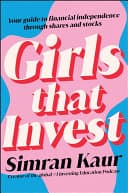
Girls That Invest
A no-jargon crash course from the podcaster behind Girls That Invest that makes the sharemarket feel doable, written especially for women starting out. The perfect first step before you buy your first ETF.
Sort Your Money Out and Get Invested
Glen James
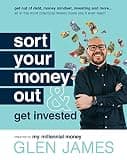
Sort Your Money Out and Get Invested
From the host of the my millennial money podcast, a step-by-step Aussie plan to fix your spending, clear debt and actually start investing. Practical and refreshingly free of finance-bro nonsense.
Girls Just Wanna Have Funds
Molly Benjamin

Girls Just Wanna Have Funds
Molly Benjamin, founder of Australia's Ladies Finance Club, makes money feel fun and doable, covering budgeting, investing and confidence in one friendly package. Perfect if you want to sort your finances without the jargon or the guilt.
Some links above are affiliate links. If you buy through them, Snowball Invest may earn a small commission at no extra cost to you. We only recommend books we'd suggest anyway.
Sources
- 1. How to buy and sell shares, Moneysmart, Australian Securities and Investments Commission
- 2. Shares, Moneysmart
- 3. How to buy and sell investments, Australian Securities Exchange
- 4. Settlement services and CHESS, Australian Securities Exchange
- 5. CHESS-sponsored and issuer-sponsored holdings fact sheet, Australian Securities Exchange
Was this article useful?
Put it to your own numbers
Every calculator runs entirely in your browser, with nothing stored. See what these numbers look like for your own situation.
Try the Compound Interest calculator →General information only. This article is educational and does not constitute personal financial advice. It does not account for your circumstances. Consider your own situation and seek advice from a licensed adviser before acting. Read our full disclaimer.

Timothy Hirou Gaschereau
Founder of Snowball Invest, not a financial adviser.
I write about what I'm learning myself, because nobody ever taught us how to take control of our own money. It's a skill, not a mystery, and it's never too late to learn it. The best day to start was yesterday, the second best is today.
LinkedIn →Related articles
CommSec Pocket Fees: What It Costs and How It Compares
A$2 a trade up to A$1,000, then 0.20%, on buys and sells. Plus the separate HIN nobody mentions, and the order size where Pocket costs more than main CommSec.

CHESS Sponsorship: HIN, SRN, and Why Your Broker Model Matters
A number starting with X means the shares are in your name. No number at all means someone else holds them for you. What that difference costs if your broker fails.
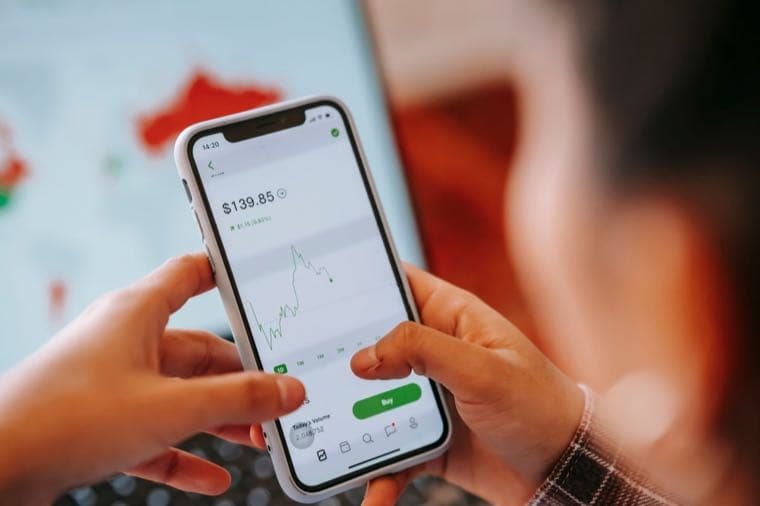
How to Buy Shares on CommSec
Want to buy shares on CommSec? A step-by-step guide to opening an account, placing your first order, and understanding the fees in Australia.