

What Is a Share? The Absolute Basics
What owning a share actually means, how prices are set, and how shares make you money, explained before you buy your first one.
 By Timothy Hirou GaschereauPublished
 8 min read
Try it yourself
Before ETFs, before brokers, before any of it, there's a more basic question worth actually answering: what is a share, really? Most explanations skip straight to how to buy one. This is the part before that. This is part of a wider guide to getting started with investing on Snowball Invest.
Quick answer
A share is a unit of ownership in a company. Buy one, and you genuinely own a small slice of that business, with a proportional claim on its profits and, in most cases, a vote on major company decisions. Companies issue shares to raise money to grow, and once issued, those shares trade between investors on a stock exchange.
In this guide
- →What owning a share actually means, in plain terms
- →The legal rights it gives you under Australian corporate law
- →How many Australians actually own shares, and how that's changed
- →How share prices are set, and why the company itself isn't involved
- →The two ways a share can make you money
- →Shares vs ETFs, and the risk that's specific to owning a single company
🔖 What a share actually is
🎯 The essential: A share is literal, legal ownership of a fraction of a company, not a loan to it and not a side bet on it.
Companies need money to operate and grow, and one way to raise it is to sell small pieces of ownership to the public. Each piece is a share. A company might issue, say, 500 million shares in total, and from that point, owning shares is literally owning a fraction of the business, not a loan to it, not a bet on it, actual ownership.
If a company has 500 million shares on issue and you own 5,000 of them, you own 0.001% of that company. Small, but real: you have a proportional claim on its profits and, in most cases, voting rights at shareholder meetings.
⚖️ What owning a share legally entitles you to
This isn't just a figure of speech, it's set out in law. Under the Corporations Act 2001 (Cth), shareholders in a public company hold a defined set of legal rights: a right to vote at general meetings on matters like electing directors (Part 2G.2), a right to receive dividends declared by the board on the same terms as every other shareholder in that class of shares (section 254W), and a right to access certain company records. ASIC's own guidance summarises these as falling into four groups: economic rights, voting rights, information rights, and protection against oppressive conduct by those running the company.
💰
Economic rights
A share of the profits, paid out as dividends
🗳️
Voting rights
A say on directors and big company decisions
📄
Information rights
Access to certain company records
🛡️
Protection
A legal shield against oppressive conduct
None of this is a courtesy extended by the company, it's a statutory entitlement that comes with the share itself, which is exactly why owning even a handful of shares in a company gives you a genuine, enforceable stake in how it's run, not just exposure to its share price.
📊 How common share ownership actually is in Australia
🎯 The essential: Direct share ownership has grown to a decade high, and ETFs are the fastest-growing way Australians are doing it.
The ASX's Australian Investor Study, run every few years, found that 7.7 million Australians held on-exchange investments in 2023, up from 6.6 million in the previous study, the highest proportion of the adult population invested this way in over ten years. Direct Australian shares remain the single most popular on-exchange holding, but ETFs are growing fastest: 20% of investors held an ETF in 2023, up from 15% just three years earlier.
💹 How share prices are actually set
Nobody, not the company, not the exchange, sets a share's price directly. It's whatever a buyer and a seller agree to trade at, right now, on the exchange. If more people want to buy than sell at a given price, the price rises until it finds a new balance. If more want to sell than buy, it falls. That's it, that's the whole mechanism, happening continuously throughout the trading day.
The company itself doesn't receive anything when you buy a share on the exchange, that money goes to whoever sold it to you. The company only raises money directly the first time it issues new shares.
📈 How owning a share makes you money
Two ways, and they're genuinely different. Capital growth is the share itself becoming worth more, if the company grows and becomes more valuable, more people want to own a piece of it, and the price rises. Dividends are the company directly paying out a portion of its profit to shareholders, usually a couple of times a year.
Not every company pays dividends, some reinvest every dollar of profit back into growing the business instead. Neither approach is automatically better, it depends on what stage the company is at and what it can do with the money.
🧺 Shares vs ETFs
Buying individual shares means picking specific companies, one at a time, and building diversification yourself, trade by trade. An ETF does that spreading for you in a single trade, bundling many companies into one fund you can buy as easily as a single share. Neither is wrong, but for a beginner, buying one broad-market ETF is a much faster way to get properly diversified than trying to build the same spread one company at a time.
⚠️ The risk that's specific to single shares
🎯 The essential: A single company can be hit hard by something the rest of the market shrugs off, spreading your money is what protects against that.
This is the part worth sitting with before buying your first individual share: your investment is tied to that one company's fortunes, specifically. A bad year, a failed product, a scandal, a new competitor, any of it can hit the share price hard, in a way that has nothing to do with how the broader market is doing. Spreading money across many companies, whether by picking several yourself or buying an ETF, is what actually reduces this company-specific risk.
Understanding what a share is gets you halfway there. The other half is knowing exactly what happens when you actually buy one.
🚀 How to Start Investing in Australia
The practical, step-by-step version: opening an account and placing your first order.
What I actually use
Pearler
This is the broker I personally use. Do your own research and form your own opinion, but I genuinely recommend it, it's built for long-term investors rather than day traders, and makes it easy to automate regular investing. Sign up through my link or with the code TIMOTHY269825 and you'll both get a $20 cash bonus once you make your first investment (Pearler's current offer, T&Cs apply).
Sign up to Pearler →This is a referral link. If you sign up through it, I get a bonus too, at no extra cost to you.
SnowLetter
Australia's money news and our best reads, once a week.
❓ Frequently asked questions
If I own one share, do I actually own part of the company?
+
Yes, literally. If a company has 10 million shares on issue and you own 100 of them, you own 0.001% of that company, with the same proportional rights as any other shareholder, just a much smaller slice.
Who sets the price of a share?
+
Nobody sets it directly, it's whatever price a buyer and seller agree to trade at on the exchange at that moment, constantly updating as new buyers and sellers show up throughout the trading day.
Do all shares pay dividends?
+
No. Some companies, especially younger or fast-growing ones, reinvest all their profit back into the business instead of paying it out, so their shares may offer no dividend at all, just the potential for the share price itself to grow.
Is buying one share risky?
+
Riskier than spreading the same money across many companies, yes. A single company can be hit by problems, a bad year, a scandal, a failed product, that don't affect the broader market at all, and your investment lives or dies with that one company.
What's the difference between a share and a stock?
+
Nothing meaningful, they're used interchangeably. "Shares" is more common in Australian and British English, "stocks" more common in American English, both refer to the same thing: a unit of ownership in a company.
Where to next
📚 Recommended reading
The Intelligent Investor
Benjamin Graham
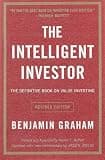
The Intelligent Investor
The value-investing bible Warren Buffett calls the best book on investing ever written. It is old-school and US-flavoured, so read it for the timeless mindset on risk and 'Mr Market', not the specific stock tips.
Girls That Invest
Simran Kaur
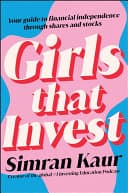
Girls That Invest
A no-jargon crash course from the podcaster behind Girls That Invest that makes the sharemarket feel doable, written especially for women starting out. The perfect first step before you buy your first ETF.
Sort Your Money Out and Get Invested
Glen James
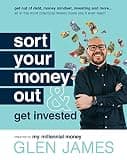
Sort Your Money Out and Get Invested
From the host of the my millennial money podcast, a step-by-step Aussie plan to fix your spending, clear debt and actually start investing. Practical and refreshingly free of finance-bro nonsense.
Some links above are affiliate links. If you buy through them, Snowball Invest may earn a small commission at no extra cost to you. We only recommend books we'd suggest anyway.
Sources
- 1. Share, Moneysmart glossary, Australian Securities and Investments Commission
- 2. Start investing, Australian Securities Exchange
- 3. Shareholder rights and responsibilities, Australian Securities and Investments Commission
- 4. Corporations Act 2001 (Cth), section 254W (dividend rights), Federal Register of Legislation
- 5. Australian Investor Study 2023, Australian Securities Exchange
Was this article useful?
Put it to your own numbers
Every calculator runs entirely in your browser, with nothing stored. See what these numbers look like for your own situation.
Try the Compound Interest calculator →General information only. This article is educational and does not constitute personal financial advice. It does not account for your circumstances. Consider your own situation and seek advice from a licensed adviser before acting. Read our full disclaimer.

Timothy Hirou Gaschereau
Founder of Snowball Invest, not a financial adviser.
I write about what I'm learning myself, because nobody ever taught us how to take control of our own money. It's a skill, not a mystery, and it's never too late to learn it. The best day to start was yesterday, the second best is today.
LinkedIn →Related articles

Ex-Dividend Date Explained
What is the ex-dividend date in Australia? How it works, why the share price drops, and exactly what you need to do to receive your dividend.
How Often Are Dividends Paid in Australia?
Most ASX companies pay dividends twice a year, but ETFs and some shares differ. How dividend timing works and how to find your own schedule.
Dividend Yield Explained: The Complete Australian Guide
What dividend yield means, how to calculate it, and the crucial Australian grossed-up yield (with franking). Plus the yield trap and what counts as a good yield.