

Penny Stocks Australia: The Honest Guide for Beginners
Tempted by cheap ASX shares that could 10x? Here is the honest truth about penny stocks in Australia: the real risks, the survivorship bias, and what to do instead.
 By Timothy Hirou GaschereauPublished
 12 min read
Try it yourself
You have seen the posts: someone turned $500 into $8,000 in three weeks on a tiny ASX mining stock, and now you are wondering whether you should be buying penny stocks. The appeal is real. But so are the losses, and those stories do not go viral.
This is the honest guide: what penny stocks are, why they are so tempting, what the risks really look like, and the smarter path most people should take. Not to kill your curiosity, but to make sure you go in with your eyes open.
🎯 The essential: Penny stocks are low-priced ASX shares (usually under $1), typically small, speculative mining, biotech or early-stage tech companies. A cheap share price does not mean cheap value: market cap is what matters. The risks are severe (extreme volatility, low liquidity, dilution, pump-and-dump schemes, a high failure rate), and survivorship bias makes them look far better than they are. For almost everyone, a low-cost diversified ETF builds wealth far more reliably. If you speculate at all, treat it as tiny, quarantined "fun money" you can lose entirely.
What are penny stocks?
In Australia, a penny stock is generally any share trading under $1 on the ASX (there is no legal definition), often stretched to include any small or micro-cap company with a highly speculative profile. They cluster in three sectors: mining and mineral exploration, biotech, and early-stage tech, industries where companies list long before they have revenue, a product, or proof the idea works.
The point beginners miss most: a low share price tells you almost nothing. A stock at $0.04 is not automatically "cheap". What matters is market capitalisation (share price times the number of shares on issue). A company with 2 billion shares at $0.04 is an $80 million company, which may be perfectly reasonable or wildly inflated for a business with no revenue. You cannot tell from the price alone.
Why penny stocks are so tempting (the honest version)
When you are starting out with $500, a $40 blue-chip share feels slow, but a $0.05 stock feels accessible: you can buy 10,000 shares, and if it hits $0.50 that is a 10x. Then there are the stories, and some are real: a tiny explorer that hit a discovery and made someone a fortune. The catch is survivorship bias. You hear about the one that ran 900% because that person is telling everyone; you never hear about the nine in their portfolio that went to zero. The hype cycle is made almost entirely of winners, which paints a completely distorted picture of the real outcomes.
The brutal reality: risks you need to understand
This is the part that matters most. Read it properly.
- Extreme volatility: 30% to 50% moves in a day, sometimes on no news. A single large sell order on a thin stock can crater the price.
- Low liquidity and wide spreads: you may not find buyers when you want to sell, and the gap between buy and sell prices can cost you 5% to 10% the moment you buy.
- No analyst coverage: your main information source is company-written ASX announcements, so you know far less than you think.
- High failure and dilution: pre-revenue explorers burn cash and raise more by issuing new shares, diluting your slice repeatedly. Many never make a dollar and are eventually wound up. This is common, not rare.
- Pump-and-dump schemes: a group buys, hypes the stock online, then sells into the latecomers. ASIC has explicitly warned about this on ASX small-caps. If someone online is very excited about a specific penny stock, ask who benefits from you buying.
- Information asymmetry: insiders and institutions know far more than a retail investor with limited time. It is not a level playing field.
The base rate is simple: most penny stocks underperform or fail. A few succeed spectacularly, and you have no reliable way to pick them in advance. Buying a speculative penny stock is not investing in a business, it is placing a bet on a future outcome that may never arrive. If betting against a company is what tempts you instead, read short selling in Australia first, because that one has no ceiling on the loss at all.
The ASX speculative reality
A large share of ASX penny stocks are pre-revenue explorers or concept-stage companies: an idea, a licence or a tenement, but no product, customer or income. Two concepts decide whether they survive. Cash burn rate is how much they spend each month (a company with $3m and $300k/month burn has about 10 months of runway). Dilution happens when they raise capital by issuing new shares, shrinking your stake, often at a discount that drops the price immediately. Many cycle through this endlessly: raise, burn, raise, dilute. Some eventually hit a milestone that justifies the journey. Most do not.
Penny stocks vs a diversified ETF
| Penny stock | Broad ETF (VAS/VGS/VDHG) | |
|---|---|---|
| What you own | One tiny, often pre-revenue company | Hundreds to thousands of companies |
| Risk | Very high (can go to zero) | Moderate (diversified) |
| Liquidity | Often low; hard to sell fairly | High; sell any trading day |
| Information | Minimal (company announcements) | Audited financials, coverage |
| Expected outcome | Most underperform or fail | Tracks long-run market growth |
| Role | Speculative satellite, if at all | Core wealth-building holding |
Build a core of low-cost diversified index funds first (see our best ETFs guide and simple portfolio guide). That is the engine. A speculative satellite, if you want one at all, is 5% or less of the total, and the satellite never becomes the core.
If you still want to try: a harm-reduction guide
We will not tell you what to do, but if you are going to do this, do it with less damage:
- Only money you can lose entirely. Not rent, not your emergency fund, not borrowed money.
- Call it speculation, not investing. It matters for your mindset and your records.
- Do real research: read the announcements, understand the cash burn and runway, check for actual revenue. If you cannot explain how the company will make money, do not buy it.
- Ignore tips from social media, Discord, Reddit and YouTube, especially the very enthusiastic ones who do not disclose their own holdings.
- Position-size tiny and spread across a few names rather than one.
- Have an exit plan before you buy: your take-profit and your stop-loss, written down.
- Watch for scams. Aggressive online promotion is a red flag, not a green one. Check the ASIC Moneysmart investor alert list first.
How to buy them, and the tax
Any ASX broker (Pearler, Stake, SelfWealth, CommSec) gives you access, but always use a limit order (not a market order) on thin stocks, or you can pay far more than the last price. Watch brokerage as a percentage of small trades ($10 on a $200 buy is 5% before the stock moves). On tax: any profit is subject to CGT, with the 50% discount if held 12 months or more, and capital losses can offset gains. Our CGT on shares guide covers it.
The honest verdict: are penny stocks worth it?
For the vast majority of people, no, not as a wealth-building strategy. Most penny stocks underperform, many go to zero, the winners are very hard to pick in advance, and your information disadvantage is real. A boring, low-cost, diversified portfolio of index funds builds wealth far more reliably over decades. It will not make a great party story, but it works. The exciting path is exciting because it is risky; the wealth-building path is boring because it is reliable. If you want a tiny speculative slice with money you can genuinely afford to lose, that is your call, just be honest that it is a bet, not a strategy.
Frequently asked questions
Are penny stocks worth it?
+
For most beginners, no. The failure rate is high, the risks are severe, and a low-cost diversified ETF will build wealth more reliably for the vast majority of investors. Speculating with a small amount you can afford to lose is a personal choice, but it should never be your core strategy.
Can you get rich from penny stocks?
+
Some people have, but survivorship bias means you hear those stories far more than the common outcome: losing most or all of the money invested. The people who made a fortune are a small minority of everyone who tried, and there is no reliable way to pick the winners in advance.
How much should I invest in penny stocks?
+
Only money you can genuinely afford to lose entirely, with zero impact on your financial life. Many who speculate cap it at 5% or less of their total portfolio. If you are just starting out, the answer is probably zero until you have a solid diversified core in place first.
Are penny stocks a scam?
+
Not all of them, but the space attracts a disproportionate number of scams and pump-and-dump schemes. ASIC has repeatedly warned about coordinated price manipulation targeting small-cap ASX stocks. Always check the ASIC Moneysmart investor alert list before investing in any unfamiliar company.
What are the best penny stocks in Australia right now?
+
We do not give stock tips, and be wary of any site that does: 'best penny stocks' lists are often written by people who already hold those stocks. Instead of chasing tips, understand the company: read its ASX announcements, check its cash position and burn rate, and assess whether the valuation makes sense.
What is the difference between a penny stock and a blue-chip share?
+
A blue-chip share is a large, well-established company with a long track record of profitability, strong financials and analyst coverage. A penny stock is typically a small or micro-cap company, often pre-revenue, with high uncertainty and limited reliable information. Blue chips are not risk-free, but they differ fundamentally in scale, stability and information quality.
Keep reading
Books worth reading
📚 Recommended reading
The Barefoot Investor
Scott Pape

The Barefoot Investor
Australia's best-selling money book ever. A simple system for accounts, budgeting, debt and a real emergency fund in one.
The Bogleheads' Guide to Investing
Taylor Larimore, Mel Lindauer & Michael LeBoeuf
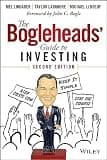
The Bogleheads' Guide to Investing
The friendly community bible of low-cost, buy-and-hold index investing, written by everyday investors rather than salespeople. The core philosophy is timeless for Aussies, just read the tax-advantaged account bits as super.
The Little Book of Common Sense Investing
John C. Bogle
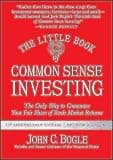
The Little Book of Common Sense Investing
From the man who invented the index fund, this is the short, sharp case for low-cost investing that has aged like fine wine. The maths on fees is universal, just think ETFs and super instead of his US funds.
Some links above are affiliate links. If you buy through them, Snowball Invest may earn a small commission at no extra cost to you. We only recommend books we'd suggest anyway.
Sources
- ASIC Moneysmart, shares
- ASIC Moneysmart, investor alert list
- ASIC Moneysmart, choosing your investments
- ATO, capital gains tax
General information only, not personal financial advice, and no specific stock recommendations. Investing in speculative shares carries a high risk of loss, including the total loss of your capital. Consider your own circumstances and a licensed financial adviser before investing. Past performance is not a reliable indicator of future performance.
Was this article useful?
Put it to your own numbers
Every calculator runs entirely in your browser, with nothing stored. See what these numbers look like for your own situation.
Try the Compound Interest calculator →General information only. This article is educational and does not constitute personal financial advice. It does not account for your circumstances. Consider your own situation and seek advice from a licensed adviser before acting. Read our full disclaimer.

Timothy Hirou Gaschereau
Founder of Snowball Invest, not a financial adviser.
I write about what I'm learning myself, because nobody ever taught us how to take control of our own money. It's a skill, not a mystery, and it's never too late to learn it. The best day to start was yesterday, the second best is today.
LinkedIn →Related articles

How to Sell Shares in Australia
A plain-English guide to selling ASX shares in Australia: through a broker or an SRN, settlement (T+2), capital gains tax and the mistakes to avoid.

Blue Chip Shares Australia: The Beginner's Honest Guide
What are blue chip shares in Australia? What they are, why investors like them, their real risks, franking credits, and whether a broad ASX ETF might suit you better.
Geared ETFs in Australia: How They Work (and Why They're Not for Everyone)
What is a geared ETF and is it right for you? A plain-English guide to how internally geared ETFs like GEAR, GGUS and GHHF work in Australia, the real risks, and who they suit.