

Best ETFs in Australia: A Plain-English Guide by Portfolio Role
The best ETFs for Australian investors, organised by the job they do in a portfolio: VAS, VGS, VDHG, DHHF and more, plus how to judge any ETF and build a simple portfolio.
 By Timothy Hirou GaschereauPublished
 14 min read
Try it yourself
Most “best ETF Australia” articles are just a list of tickers with no context. You read them, feel vaguely informed, then have no idea whether NDQ belongs next to VAS, or whether VDHG and DHHF are interchangeable. They are not, and the difference matters.
This guide does something more useful: it organises the most widely-held ETFs by the job they do in a portfolio, so you can judge whether any given fund actually belongs in yours. It is a way of thinking, not a shopping list. These are popular, commonly-discussed funds, not personal recommendations. General information only, not financial advice.
🎯 The essential: There is no single “best” ETF, only the best ETF for a job. For a one-fund portfolio, VDHG and DHHF are the most-used. For a low-cost DIY core, VAS (Australian shares) + VGS (international) is the classic pairing. Judge any ETF on fee, diversification, index-tracking, fund size, domicile and franking. And remember: fewer, cheaper, broader beats a pile of overlapping funds.
How to judge an ETF (the quick checklist)
Before you look at a single ticker, know what you are evaluating. Six things actually matter:
| What to check | What good looks like |
|---|---|
| Management fee (MER) | Lower is better. 0.1% saved compounds into tens of thousands over decades. |
| Index tracking | Tracks a broad, rules-based index rather than trying to beat the market. |
| Diversification | Hundreds or thousands of holdings, not 20 stocks. |
| Fund size and liquidity | Larger funds are more stable; check the bid-ask spread when trading. |
| Domicile | Australian-domiciled avoids US estate tax and the W-8BEN form. |
| Franking credits | Australian share ETFs pass these through, a real after-tax boost. |
If a fund fails two or more of these, ask why you would hold it. New to the basics? Start with what is an ETF and how to choose an ETF.
Australian shares core
The job: anchor the portfolio in Australian shares, capture franking credits, and get AUD-denominated exposure. Australia is about 2% of the world market, so you do not need a huge allocation, but the franking benefit is real.
| Ticker | Tracks | MER | Notes |
|---|---|---|---|
| VAS | ASX 300 | ~0.07% | Vanguard. Broad, strong franking, huge fund. One of the most-held ETFs in Australia. |
| A200 | ASX 200 | ~0.04% | Betashares. Slightly narrower, currently the lowest-cost AU shares ETF. |
VAS vs A200 is genuinely close: A200 is cheaper, VAS is slightly broader. Both are solid. Our full VAS guide and A200 guide both dig into the concentration in banks and miners. And if you would rather pick a house than a ticker, our Betashares vs Vanguard comparison weighs the two issuers on fees, range and platforms.
International and global shares core
The job: diversify beyond Australia's small slice of the world, into US tech, European industrials and hundreds of companies that do not exist on the ASX. Usually the largest allocation in a growth portfolio.
| Ticker | Tracks | MER | Notes |
|---|---|---|---|
| VGS | Developed ex-Australia (~1,500 cos) | ~0.18% | Vanguard. AU-domiciled, excludes Australia so pairs cleanly with VAS. |
| BGBL | Developed world | ~0.08% | Betashares. Very low cost. Includes some Australian companies, watch overlap with VAS. |
| IVV | S&P 500 (US large cap) | ~0.04% | iShares. Extremely cheap, but US-only, not global diversification. |
| NDQ | Nasdaq 100 (US tech-heavy) | ~0.48% | Betashares. High cost, concentrated in US tech. A tilt, not a core. |
For the broad international slice, VGS and BGBL are the usual picks. See our VGS guide and the S&P 500 ETF guide for the detail. Want a US tech tilt on top? Our NDQ guide covers the Nasdaq 100 option and its higher fee.
Emerging markets (optional)
The job: extend coverage to China, India, Brazil, Taiwan and South Korea, which developed-market funds exclude. An optional add-on, higher risk and cost.
| Ticker | Tracks | MER | Notes |
|---|---|---|---|
| VGE | MSCI Emerging Markets | ~0.48% | Vanguard. 24 countries, higher volatility. For long-horizon investors wanting fuller global coverage. |
All-in-one (one-ticket) ETFs
The job: an entire globally diversified portfolio in a single fund, rebalanced for you. Genuinely excellent for beginners and busy people, for a slightly higher fee than DIY.
| Ticker | What it is | MER | Notes |
|---|---|---|---|
| VDHG | 90% shares / 10% bonds | ~0.27% | Vanguard. A small defensive buffer smooths the ride. |
| DHHF | 100% shares | ~0.19% | Betashares. Cheaper, no bonds, higher volatility. |
Neither is objectively better. Read our VDHG vs DHHF comparison, or the full VDHG and DHHF guides.
Bonds and defensive assets
The job: reduce volatility. Bonds tend to hold value (or rise) when shares fall hard. With a 20 to 30 year horizon a big bond allocation often is not needed, but it matters more as retirement nears.
| Ticker | Tracks | MER | Notes |
|---|---|---|---|
| VAF | AU fixed interest (govt + corporate) | ~0.16% | Vanguard. Broad Australian bond exposure. |
| VGB | AU government bonds | ~0.16% | Vanguard. Government only, lower credit risk than VAF. |
For how bond ETFs actually behave (duration, interest-rate risk) and the other ways to hold fixed income, see our guide to investing in bonds. You can also get property exposure through REIT ETFs.
Dividend and income tilt
The job: tilt toward higher-dividend Australian stocks for investors who want income. A legitimate strategy, with real trade-offs.
| Ticker | Tracks | MER | Notes |
|---|---|---|---|
| VHY | FTSE Australia High Dividend Yield | ~0.25% | Vanguard. Strong franking, but concentrated in banks and resources (sector risk). |
The honest note on yield-chasing: high dividend yield usually means sector concentration (banks and resources), and income-focused funds can lag a simple total-return approach over long periods. Chasing yield is one of the most common mistakes Australian investors make. Know why you hold it before you buy.
If income is your goal, weigh the options in our best dividend ETFs guide and get clear on what the headline number means in dividend yield explained.
Ethical and ESG ETFs
For investors who want environmental, social and governance screening, ethical ETFs exist, such as VETH (Vanguard Ethically Conscious International Shares) and FAIR (Betashares Australian Sustainability Leaders). They typically carry slightly higher fees and different sector weights (often underweight fossil fuels, overweight tech). Whether the trade-offs suit you depends on your values and your view on how screening affects long-run returns. A legitimate choice, not a fringe one.
How to build a simple portfolio from these
Three popular frameworks Australians commonly use (not recommendations, just widely-discussed):
| Approach | Funds | Blended MER | Complexity |
|---|---|---|---|
| 1-ETF | VDHG or DHHF | ~0.19% to 0.27% | Very low: buy, hold, done |
| 2-ETF core | VAS + VGS | ~0.10% to 0.14% | Low: pick a split, rebalance occasionally |
| 3-ETF | VAS + VGS + VGE (or a bond ETF) | ~0.15% to 0.22% | Moderate: more control, more parts |
The 2-ETF core (VAS + VGS) covers roughly 98% of global market cap; common splits are 30/70 or 40/60 VAS/VGS. Our VAS vs VGS guide walks through choosing the ratio. There is no universally correct answer; the right approach is the one you will actually stick with when markets drop 30%.
Best ETF for beginners: the honest answer
For most beginners, VDHG or DHHF does the job: one fund, globally diversified across thousands of companies, automatically rebalanced, on any Australian broker. No decisions about splits, ratios or overlaps. The case for DIY (VAS + VGS) is lower cost and more control, and over 30 years the fee gap does compound, but so does the risk of poor decisions when you have more moving parts. The best ETF for a beginner is the one you will hold through a 30% drawdown without panic-selling. Simplicity helps with that more than most people expect.
Common mistakes to avoid
- Chasing last year's performance. The fund that returned 40% last year is not the one that returns 40% next year. Performance chasing is how people buy high and sell low.
- Buying overlapping ETFs. VAS + A200 + VGS + BGBL + IVV is not diversification, it is duplication with extra fees. You are often buying the same companies several times.
- Thematic and hot-sector ETFs. Crypto, AI, cannabis, space: high fees, high concentration, usually bought near the top of the hype. Not core building blocks.
- Ignoring fees. 0.07% vs 0.50% sounds trivial; on $100,000 over 30 years it is tens of thousands of dollars. Fees compound like returns. Our fee calculator shows the drag.
- Mistaking complexity for sophistication. A 10-ETF portfolio is not smarter than a 2-ETF one. Simple, low-cost and consistent beats clever and complicated over the long run.
❓ Frequently asked questions
What is the best ETF in Australia?
+
There is no single answer, because the best ETF depends on the role it fills in your portfolio. For broad Australian shares, VAS and A200 are among the most widely held. For international shares, VGS and BGBL are popular. For a one-fund solution, VDHG and DHHF are the two most commonly used. The best ETF is the one that fits your goals, time horizon and cost tolerance.
What is the difference between VDHG and DHHF?
+
Both are all-in-one diversified ETFs holding a global mix of shares. VDHG includes a 10% defensive (bond) allocation and costs about 0.27%; DHHF is 100% equities and costs about 0.19%. If you want full equity exposure and lower cost, DHHF is popular with younger investors; if you want a small defensive buffer, VDHG provides it.
How many ETFs do I need?
+
Fewer than you think. One well-chosen all-in-one like VDHG or DHHF gives you a globally diversified portfolio. Two (VAS + VGS) covers the same ground with more control and lower cost. Beyond three, you are usually adding complexity without meaningfully improving diversification.
Are ETFs safe?
+
ETFs are not risk-free. They hold shares, bonds or other assets that can fall in value. What they do well is spread your money across many holdings, which removes single-company risk. The risk you cannot diversify away is market risk, the whole market falling, which happens periodically and is normal. That is why time in the market matters.
What is a good MER for an ETF?
+
For broad index ETFs, anything under 0.20% a year is competitive; the cheapest broad-market ETFs sit at 0.04% to 0.07%. All-in-one funds like VDHG and DHHF at 0.19% to 0.27% are reasonable given the built-in diversification and rebalancing. Be cautious of anything above 0.50% unless it has a very specific role.
Do Australian ETFs pay dividends?
+
Most Australian ETFs distribute income (dividends and interest), usually quarterly or half-yearly. Australian share ETFs also pass through franking credits, which can reduce the tax on those distributions. Amounts vary by fund and year; check the provider's distribution history for a sense of what to expect.
What is the best ETF for beginners in Australia?
+
VDHG and DHHF are the two most commonly used starting points: global diversification in a single fund with automatic rebalancing. DHHF is slightly cheaper and 100% equities; VDHG adds a small bond allocation. Either is a solid foundation. The most important thing is to start, stay consistent and not tinker.
Keep reading
- VAS vs VGS: how to combine them and in what ratio
- VDHG vs DHHF: which all-in-one ETF wins?
- How to choose an ETF: a beginner's checklist
- How to build a simple index portfolio
- How much should you invest in ETFs each month?
- ETF vs managed fund: which structure suits you?
- Geared ETFs: how they work and the real risks
- Raiz review: is the micro-investing app worth it?
- VGE: Vanguard's emerging markets ETF, reviewed
- QUAL: the VanEck MSCI international quality ETF
- ETHI: the ethical global shares option
📚 Recommended reading
The Barefoot Investor
Scott Pape
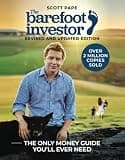
The Barefoot Investor
Australia's best-selling money book ever. A simple system for accounts, budgeting, debt and a real emergency fund in one.
Girls That Invest
Simran Kaur
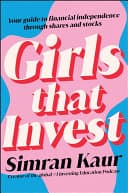
Girls That Invest
A no-jargon crash course from the podcaster behind Girls That Invest that makes the sharemarket feel doable, written especially for women starting out. The perfect first step before you buy your first ETF.
The Bogleheads' Guide to Investing
Taylor Larimore, Mel Lindauer & Michael LeBoeuf
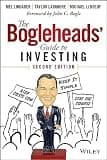
The Bogleheads' Guide to Investing
The friendly community bible of low-cost, buy-and-hold index investing, written by everyday investors rather than salespeople. The core philosophy is timeless for Aussies, just read the tax-advantaged account bits as super.
Some links above are affiliate links. If you buy through them, Snowball Invest may earn a small commission at no extra cost to you. We only recommend books we'd suggest anyway.
Sources
This article is general information only, not financial advice. It does not take your circumstances into account. ETF fees and details change, and figures here are indicative as of mid-2026. Always read the product disclosure statement, verify the current MER on the provider's website, and consider a licensed adviser before investing. Past performance is not a reliable indicator of future performance.
Was this article useful?
Put it to your own numbers
Every calculator runs entirely in your browser, with nothing stored. See what these numbers look like for your own situation.
Try the Compound Interest calculator →General information only. This article is educational and does not constitute personal financial advice. It does not account for your circumstances. Consider your own situation and seek advice from a licensed adviser before acting. Read our full disclaimer.

Timothy Hirou Gaschereau
Founder of Snowball Invest, not a financial adviser.
I write about what I'm learning myself, because nobody ever taught us how to take control of our own money. It's a skill, not a mystery, and it's never too late to learn it. The best day to start was yesterday, the second best is today.
LinkedIn →Related articles

The Three-Fund Portfolio in Australia
Three ETFs, thousands of companies, one simple structure. How to build a three-fund portfolio in Australia with VAS, VGS and VAF, and choose your split.

BGBL ETF Australia: Betashares' Global Shares Fund Explained
BGBL is Betashares' ultra low cost global shares ETF tracking around 1,000 companies. What it holds, its 0.08% fee, BGBL vs VGS, dividends and tax.
U100 ETF Australia: Global X's US Giants ETF Explained
U100 is Global X's low cost US 100 ETF on the ASX, holding 100 US giants. What it holds, its 0.18% fee, currency risk, and how U100 compares to NDQ.