

A200 ETF: Australia's Cheapest Way to Own the ASX?
A200, the Betashares Australia 200 ETF, charges just 0.04%. What it holds, the franked dividends, and how it compares to VAS and IOZ for your Australian shares core.
 By Timothy Hirou GaschereauPublished
 12 min read
Try it yourself
A200 charges 0.04% a year. That is not a typo: on a $10,000 holding you pay $4 in fees. Betashares built it to be the cheapest way to own Australian shares, and it has become a go-to core holding for Aussie index investors who want simple, low-cost, franked exposure to the local market.
This guide assumes you already know what an ETF is. Here we cover what A200 holds, how the rock-bottom fee is possible, the franked dividends, and the question everyone asks: A200 or VAS? If that question is really about the two issuers behind them, we put them head to head in Betashares vs Vanguard. General information only, not financial advice.
🎯 The essential: A200 is the Betashares Australia 200 ETF (ASX: A200), tracking the ~200 largest ASX companies for about 0.04%, currently the cheapest Australian shares ETF. It is Australian-domiciled (no W-8BEN), pays largely franked quarterly dividends, and like the whole ASX is concentrated in banks and miners. A200 vs VAS is a coin toss (about $15 a year apart on $50,000). Great as your Australian core, paired with a global ETF like VGS for the rest of the world.
What A200 actually is
A200 is the Betashares Australia 200 ETF, listed on the ASX since 2018. It tracks the Solactive Australia 200 Index, roughly the 200 largest ASX companies by size, so one trade buys you a slice of every major Australian business: CBA, BHP, CSL, Wesfarmers and the rest. It is Australian-domiciled, so no W-8BEN form and no US estate tax exposure, and it trades on the ASX like any share.
The 0.04% fee that makes everyone talk
A200's fee is about 0.04% a year. Betashares cut it from 0.07% to 0.04% in February 2023, and it did so with a clever move: it switched from the S&P/ASX 200 index (which S&P charges a premium to license) to the Solactive Australia 200 index, a cheaper-to- license benchmark holding essentially the same companies. Same exposure, lower cost.
| Holding | Annual fee at 0.04% |
|---|---|
| $10,000 | $4 |
| $50,000 | $20 |
| $100,000 | $40 |
| $250,000 | $100 |
What it holds
The Australian market is famously concentrated, and A200 reflects that honestly. Financials (the big four banks plus Macquarie) and materials (BHP, Rio, Fortescue) together make up roughly 50% to 55% of the fund. If banks or miners have a bad year, A200 feels it, there is no hiding from that sector risk. The flip side: those same companies pay the highest franked dividends on the ASX. The rest of the fund spreads across healthcare (CSL), consumer staples (Woolworths, Coles), property and energy. This is not a quirk of A200, it is simply what the Australian economy looks like.
Dividends and franking credits
A200 pays quarterly distributions, historically yielding somewhere in the 3% to 5% range (not guaranteed, and it varies with what the companies pay). The standout is franking credits: Australian companies pay 30% tax before paying dividends, and attach a credit for that tax so you are not taxed twice. You use it to offset your own tax, or receive it as a cash refund. Because banks and miners dominate A200, its distributions are largely franked, a real, quantifiable benefit that international ETFs cannot offer. Our guide to franking credits explains the mechanics. A DRP is available to reinvest automatically.
A200 vs VAS: the big question
The comparison every Australian index investor wrestles with. Here is the honest version.
| Feature | A200 | VAS |
|---|---|---|
| Issuer | Betashares | Vanguard |
| Index | Solactive Australia 200 | S&P/ASX 300 |
| Holdings | ~200 | ~300 |
| MER | 0.04% | 0.07% |
| Franking | Largely franked | Largely franked |
The fee gap is 0.03% a year, about $15 on a $50,000 holding, one decent lunch. VAS adds ~100 small-caps, but their weight is so tiny the long-run return difference has been negligible. VAS carries the Vanguard brand and mutual structure, which some value. Bottom line: either is fine. Do not agonise, pick one, set up a regular plan, and move on. Our VAS vs A200 comparison goes through the actual holdings and yields, and the VAS guide has the full picture on that fund.
A200 vs IOZ
IOZ is the iShares Core S&P/ASX 200 ETF from BlackRock, at about 0.05%. It tracks the S&P/ASX 200, the same index A200 used to track before the Solactive switch, so the two hold essentially the same companies. A200 wins on price (0.04% vs 0.05%); IOZ wins on brand recognition (the S&P/ASX 200 is the benchmark most Australians know) and BlackRock's scale. The difference is even smaller than A200 vs VAS. If you already hold IOZ and are happy, there is no compelling reason to switch.
Using A200 as your Australian core
Most A200 holders pair it with a global ETF for diversification beyond the ASX's bank-and-miner concentration. Common pairings are A200 + VGS or A200 + BGBL: A200 gives franked Australian income and home exposure, the global fund gives the other 98% of the world's listed companies. Common Australian/global splits start around 30/70 or 40/60, but there is no single right answer, see our guide to choosing the split. If you would rather hold one fund, an all-in-one like VDHG or DHHF bundles it all for a slightly higher fee.
How to buy A200
A200 trades on the ASX under the ticker A200, like any share. Open a broker (CommSec, SelfWealth, Pearler, Stake, Superhero), search “A200” and place a buy order. New to this? See how to buy shares in Australia. One tip: on small, frequent buys, brokerage matters far more than the tiny MER gap, $9.50 on a $500 buy is 1.9% off the top, so low-flat-fee brokers help. SMSFs can hold A200 directly.
Common mistakes with A200
- Going A200-only and calling it diversified. The ASX is about 2% of global markets. A200 is a great building block, not a complete portfolio. Add global exposure.
- Agonising over A200 vs VAS. The gap is ~$15 a year on $50,000. The cost of sitting on the sidelines while you deliberate dwarfs it. Pick one and invest.
- Ignoring brokerage. On small, frequent buys, brokerage is a far bigger drag than the MER difference between A200 and VAS.
- Confusing distributions with returns. Total return (price growth plus dividends reinvested) is what grows your wealth, not the size of the quarterly cheque.
- Panic-selling in a downturn. A200 falls when the ASX falls. That is how markets work. Those who held through 2020 and 2022 came out ahead; those who sold locked in the loss.
❓ Frequently asked questions
Is A200 a good ETF?
+
For low-cost Australian shares exposure, yes. At about 0.04% it is one of the cheapest options on the ASX. Pair it with a global ETF like VGS or BGBL and you have a solid, simple long-term portfolio.
What index does A200 track?
+
The Solactive Australia 200 Index, which covers roughly the 200 largest ASX-listed companies by market capitalisation.
Why did A200 change its index?
+
Betashares switched from the S&P/ASX 200 to the Solactive Australia 200 index to cut index-licensing costs, and passed the saving on as a lower fee (from 0.07% to 0.04% in February 2023). The underlying companies are essentially the same.
Are A200 dividends franked?
+
Largely, yes. The big banks and miners that dominate A200 pay heavily franked dividends, which is a genuine tax benefit for Australian investors: you can use the franking credits to offset your personal tax bill.
What is the difference between A200 and VAS?
+
A200 tracks about 200 companies at 0.04%; VAS tracks about 300 (including more small-caps) at 0.07%. The practical return difference over time has been negligible. Both are solid; the fee gap is about $15 a year on $50,000.
Do I need to fill in a W-8BEN for A200?
+
No. A200 is Australian-domiciled, so there is no US tax paperwork, and no US estate tax exposure. That is an advantage over US-domiciled ETFs some investors consider.
Can I hold A200 in super?
+
Yes, if your super fund allows direct ETF investing. SMSFs can hold A200 directly, and some industry-fund platforms with member-direct options allow it too.
Keep reading
📚 Recommended reading
The Barefoot Investor
Scott Pape
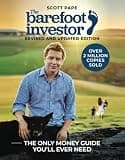
The Barefoot Investor
Australia's best-selling money book ever. A simple system for accounts, budgeting, debt and a real emergency fund in one.
Girls That Invest
Simran Kaur
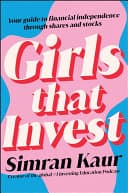
Girls That Invest
A no-jargon crash course from the podcaster behind Girls That Invest that makes the sharemarket feel doable, written especially for women starting out. The perfect first step before you buy your first ETF.
The Bogleheads' Guide to Investing
Taylor Larimore, Mel Lindauer & Michael LeBoeuf
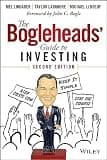
The Bogleheads' Guide to Investing
The friendly community bible of low-cost, buy-and-hold index investing, written by everyday investors rather than salespeople. The core philosophy is timeless for Aussies, just read the tax-advantaged account bits as super.
Some links above are affiliate links. If you buy through them, Snowball Invest may earn a small commission at no extra cost to you. We only recommend books we'd suggest anyway.
Sources
This article is general information only, not financial or tax advice. It does not take your circumstances into account. ETF fees, holdings, yields and franking levels change, and figures here are indicative as of mid-2026. Check Betashares' current product disclosure statement, the ATO, or a licensed adviser before investing. Past performance is not a reliable indicator of future performance.
Was this article useful?
Put it to your own numbers
Every calculator runs entirely in your browser, with nothing stored. See what these numbers look like for your own situation.
Try the Compound Interest calculator →General information only. This article is educational and does not constitute personal financial advice. It does not account for your circumstances. Consider your own situation and seek advice from a licensed adviser before acting. Read our full disclaimer.

Timothy Hirou Gaschereau
Founder of Snowball Invest, not a financial adviser.
I write about what I'm learning myself, because nobody ever taught us how to take control of our own money. It's a skill, not a mystery, and it's never too late to learn it. The best day to start was yesterday, the second best is today.
LinkedIn →Related articles

VAS ETF: The Complete Australian Investor's Guide
A plain-English deep dive into VAS, Vanguard's Australian shares ETF: what it holds, the 0.07% fee, franking credits, and how it compares to A200 and VGS.

BGBL ETF Australia: Betashares' Global Shares Fund Explained
BGBL is Betashares' ultra low cost global shares ETF tracking around 1,000 companies. What it holds, its 0.08% fee, BGBL vs VGS, dividends and tax.
VHY ETF Australia: Vanguard's High Yield Fund Explained
VHY is Vanguard's high-yield Australian shares ETF. What it holds, the fees, the franking credits, and how it stacks up against VAS for income investors.