

Vanguard vs Betashares: Which ETF Provider Should You Choose?
Betashares vs Vanguard, compared on fees, fund range, platforms and safety. Which of Australia's two biggest ETF issuers deserves your money, and when to hold both.
 By Timothy Hirou GaschereauPublished
 12 min read
Vanguard and Betashares. Walk into any corner of the Australian personal finance internet and you will find these two names everywhere, because between them they manage the lion's share of Australian ETF assets. So which one should you use? The honest answer is: probably both. But that is not a cop-out, because there are real differences in fees, range, philosophy and platform that genuinely shape how you build a portfolio.
🎯 The essential: Vanguard is the global giant: an investor-owned ethos, a focused range of excellent core funds, and "just buy the market" simplicity. Betashares is the Australian-owned innovator: a much broader menu (core index plus thematic, geared and cash ETFs) and aggressively low fees on its cheapest core funds (A200 ~0.04%, BGBL ~0.08%). Most Aussie portfolios end up holding funds from both. Pick funds by role, index and cost, not by brand loyalty. The two head-to-heads that matter are BGBL vs VGS for the global slice and VAS vs A200 for the Australian one.
Quick background: who are they?
Vanguard was founded in the US in 1975 by John Bogle, who effectively invented low-cost index investing, and its US funds are owned by their investors. It arrived in Australia in 1996 and became the first local ETF issuer to pass $100 billion in ETF assets. Its Australian range is deliberately focused: a handful of broad, cheap core funds done very well, plus Vanguard Personal Investor, its own platform.
Betashares is an Australian success story, founded in Sydney in 2009 and now managing over $80 billion. Where Vanguard is a disciplined minimalist, Betashares is a product innovator: core index ETFs (A200, BGBL, DHHF) alongside thematic funds (NDQ, HACK), geared and inverse ETFs (GEAR, BEAR), currency-hedged options, and the AAA cash ETF. It also runs Betashares Direct, with $0 brokerage and fractional investing from $10.
Philosophy and fund range
Vanguard's philosophy has not changed in 50 years: buy broad index funds, keep costs low, stay the course. Its Australian menu is intentionally short (VAS, VGS, the VDHG family and a few others), and for most investors that is a feature, not a limitation, because you cannot make a bad call when every option is good.
Betashares runs to well over 80 products, giving you more building blocks: cheap core funds, thematic plays, income ETFs, cash tools, and geared products. The breadth is genuinely useful, but it also means some products (like geared ETFs such as GEAR, or inverse funds like BEAR) need real understanding before you touch them. Neither philosophy is wrong; they serve different needs, and plenty of investors use both.
Head-to-head: the popular fund matchups
| Category | Vanguard | Betashares | Key difference |
|---|---|---|---|
| Australian shares | VAS (ASX 300, ~0.07%) | A200 (ASX 200, ~0.04%) | A200 cheaper; VAS 100 more cos |
| Global shares | VGS (~0.18%) | BGBL (~0.08%) | BGBL much cheaper; VGS excludes Aus |
| All-in-one | VDHG (90/10, ~0.27%) | DHHF (100% shares, ~0.19%) | VDHG has bonds; DHHF pure equities |
| Cash | Limited | AAA (~0.18%) | Betashares owns this category |
| Thematic / geared | Not available | NDQ, HACK, GEAR and more | Betashares only |
Cheapest MER is not the whole story, though: which index is tracked (VAS covers 100 more small companies than A200, a tiny performance difference), fund size and liquidity (Vanguard's funds are enormous and battle-tested, which means tight spreads), and distribution history all matter. See our dedicated VAS, A200 and VDHG vs DHHF guides for the detail.
Fees in plain English
Betashares wins on the cheapest core funds right now, and the global-shares gap is the one that actually matters at scale.
Australian shares are closer: A200 at ~0.04% vs VAS at ~0.07% is about $30 a year on $100,000. Global shares is the meaningful one: BGBL at ~0.08% vs VGS at ~0.18% is about $100 a year on $100,000, and $250 a year on $250,000. That said, Vanguard remains extraordinarily cheap by world standards, so this is a contest between cheap and slightly cheaper, not cheap versus expensive.
Platforms: Vanguard Personal Investor vs Betashares Direct
Both run their own platforms. Vanguard Personal Investor offers $0 brokerage on Vanguard ETF purchases (with a ~$500 minimum), and Betashares Direct offers $0 brokerage plus fractional investing from $10 and access to a broader range of ASX ETFs. Neither is CHESS-sponsored (both use a custodial structure). The practical catch is that each proprietary platform somewhat locks you into that issuer's ecosystem, so if you want to hold A200 and VGS together, a neutral broker (Pearler, CMC Invest, SelfWealth) is the cleaner solution. Platform fees and features change, so check current terms before opening an account.
Trust and structure: are both safe?
Yes. Both are large, reputable, ASIC-regulated ETF issuers whose funds are ASX-listed under Australian financial services law. The key structural point for both: ETF assets are held in trust separately from the issuer, so even if either company wound up, your assets belong to unitholders, not the company. Neither provider is "risky" in the sense of disappearing and taking your money with it. That is not a realistic concern for either.
The honest verdict: you do not have to choose
"Vanguard or Betashares?" is slightly the wrong question. The right one is "which fund best fills the role I need?", and the answer is almost always some from each. A200 (Betashares) plus VGS (Vanguard) is one of the most popular two-ETF combinations in Australia, pairing the cheapest local shares ETF with Vanguard's battle-tested global fund.
Vanguard suits beginners who want a focused, simple range and all-in-one funds like VDHG. Betashares suits cost-optimisers wanting the cheapest core funds (A200, BGBL), plus anyone who wants thematic exposure or a cash ETF. If I were building the simplest two-ETF portfolio today, A200 for Australia and VGS for the world is a clean, cheap, elegant answer, one fund from each. See our best ETFs guide to go deeper.
Frequently asked questions
Is Vanguard or Betashares better?
+
Neither is universally better. Vanguard excels at simplicity, a long track record and all-in-one funds; Betashares wins on fee competitiveness for core funds and product breadth. Most Australian investors end up using both. Which issuer is best depends on what you are buying.
Is Betashares cheaper than Vanguard?
+
For the most popular core funds, yes. A200 at about 0.04% undercuts VAS at about 0.07%, and BGBL at about 0.08% undercuts VGS at about 0.18%. The global-shares gap is the meaningful one at scale. That said, Vanguard is still very cheap by any global measure. Check the current PDS for the latest fees.
Can I hold both Vanguard and Betashares ETFs?
+
Absolutely, and most Australian ETF investors do. You can hold A200 and VGS in the same brokerage account without any issue; both are ASX-listed and work exactly the same way. A neutral broker like Pearler, CMC Invest or SelfWealth lets you mix both freely.
Is Betashares safe?
+
Yes. Betashares is an ASIC-regulated Australian ETF issuer with over $80 billion under management. ETF assets are held in trust separately from the issuer, so your money is protected even in the unlikely event the company wound up. It is not a fly-by-night operation.
Which is better for beginners, Vanguard or Betashares?
+
Vanguard's all-in-one range (VDHG, VDGR, VDBA, VDCO) is hard to beat for beginners who want simplicity, and Betashares DHHF is also an excellent one-ETF solution. The key difference: VDHG includes a 10% bond buffer, while DHHF is 100% equities. Want a smoother ride? VDHG. Want pure growth? DHHF.
What is the difference between VAS and A200?
+
VAS tracks the ASX 300 (top 300 companies) at about 0.07%; A200 tracks the ASX 200 (top 200) at about 0.04%. In practice the performance difference is tiny because the extra 100 companies barely move the needle. A200 is cheaper; VAS is slightly broader. Both are excellent.
Do I need to use Vanguard Personal Investor or Betashares Direct?
+
No. Both providers' ETFs are available through any standard ASX broker. The proprietary platforms can offer brokerage-free investing in their own funds, which is handy for regular investors, but you are limited to that issuer's range on each. A neutral broker gives you both providers in one account.
Keep reading
Books worth reading
📚 Recommended reading
The Barefoot Investor
Scott Pape

The Barefoot Investor
Australia's best-selling money book ever. A simple system for accounts, budgeting, debt and a real emergency fund in one.
The Bogleheads' Guide to Investing
Taylor Larimore, Mel Lindauer & Michael LeBoeuf
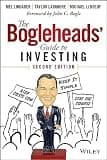
The Bogleheads' Guide to Investing
The friendly community bible of low-cost, buy-and-hold index investing, written by everyday investors rather than salespeople. The core philosophy is timeless for Aussies, just read the tax-advantaged account bits as super.
Girls That Invest
Simran Kaur
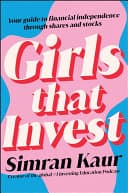
Girls That Invest
A no-jargon crash course from the podcaster behind Girls That Invest that makes the sharemarket feel doable, written especially for women starting out. The perfect first step before you buy your first ETF.
Some links above are affiliate links. If you buy through them, Snowball Invest may earn a small commission at no extra cost to you. We only recommend books we'd suggest anyway.
Sources
- Vanguard Australia, fund pages and fee schedules, vanguard.com.au
- Betashares, fund pages and fee schedules, betashares.com.au
- ASX, ETF pricing and fund data, asx.com.au
- ASIC Moneysmart, ETFs and investing basics, moneysmart.gov.au
General information only, not personal financial advice. Fees and tickers are approximate and change, so always check the current PDS before investing. Consider speaking to a licensed financial adviser about your own situation.
Was this article useful?
Put it to your own numbers
Every calculator runs entirely in your browser, with nothing stored. See what these numbers look like for your own situation.
Explore the calculators →General information only. This article is educational and does not constitute personal financial advice. It does not account for your circumstances. Consider your own situation and seek advice from a licensed adviser before acting. Read our full disclaimer.

Timothy Hirou Gaschereau
Founder of Snowball Invest, not a financial adviser.
I write about what I'm learning myself, because nobody ever taught us how to take control of our own money. It's a skill, not a mystery, and it's never too late to learn it. The best day to start was yesterday, the second best is today.
LinkedIn →Related articles

Is Vanguard a Good Investment?
Is Vanguard a good investment in Australia? We break down Vanguard ETFs, Personal Investor and Super so you can decide what suits you.

Active vs Passive Investing: What the Evidence Actually Says
Active or passive investing? We break down the SPIVA evidence, the fee maths, and the tax rules so you can decide what works for your money in Australia.

BGBL ETF Australia: Betashares' Global Shares Fund Explained
BGBL is Betashares' ultra low cost global shares ETF tracking around 1,000 companies. What it holds, its 0.08% fee, BGBL vs VGS, dividends and tax.