

Active vs Passive Investing: What the Evidence Actually Says
Active or passive investing? We break down the SPIVA evidence, the fee maths, and the tax rules so you can decide what works for your money in Australia.
 By Timothy Hirou GaschereauPublished
 12 min read
Try it yourself
Should you try to beat the market, or just track it? That is the active vs passive question, and it is one of the most consequential decisions you will make as an investor, because it quietly shapes your fees, your tax bill, and your odds over decades.
Here is the honest version, led by the evidence and fair to both sides. If you want the basics first, see our what is an ETF explainer and index funds vs ETFs, then come back.
🎯 The essential: Active investing tries to beat the market (picking stocks, or paying a manager to); passive tracks it via index funds and ETFs at rock-bottom cost. The SPIVA data shows the large majority of active Australian equity managers underperform the ASX 200 over the long run (roughly 87% over 15 years), and the fee gap compounds brutally. For most people a low-cost passive core is the sensible default, with active kept to a small satellite where you have a genuine edge.
What is active investing?
Active investing means trying to beat the market return, either by picking individual stocks yourself or by paying an actively managed fund whose manager selects holdings and tilts the portfolio. The goal is alpha: returns above what the market delivers on its own. Managers charge for this, and not lightly: active Australian equity funds typically run 0.70% to 2%+ a year, sometimes with a performance fee on top. The question is whether the alpha covers the cost. Usually, it does not.
What is passive investing?
Passive investing means tracking an index rather than trying to beat it: you buy the whole market (or a broad slice) via an index fund or ETF and accept the market return minus a tiny fee. Familiar examples are VAS (ASX 300), VGS (global developed markets), and all-in-one funds like VDHG and DHHF. Typical passive ETF fees are 0.04% to 0.20% a year. You are not betting on which companies win; you own all of them, and the index rebalances automatically. One distinction to clear up: active vs passive is not the same as ETF vs managed fund. Active ETFs and index managed funds both exist; the real axis is whether a fund tries to beat or match the market, and what it costs.
What does the evidence say?
The SPIVA Australia Scorecard, published by S&P Dow Jones Indices, is the gold standard for measuring active performance against benchmarks, and it accounts for survivorship bias (failed funds that quietly close). The year-end 2024 results are stark.
Over 10 to 15 years, roughly 87% of active Australian equity managers underperform the ASX 200, and about 85% of global equity managers trail their benchmark. This is not just bad luck. As Nobel laureate William Sharpe pointed out, in aggregate all investors earn the market return, so active investors as a group must earn the market return before costs, and less than it after their higher fees. That is arithmetic, not opinion. The less-efficient corners (small caps, emerging markets) are the exception, where skilled managers fare better.
Why passive tends to win
Three drivers. First, fees, which compound viciously: on $100,000 over 30 years at an 8% gross return, an active fund at 1.5% grows to roughly $661,000 while a passive fund at 0.2% reaches about $951,000, a gap of around $290,000 lost to fees alone. Our fee drag calculator lets you run your own numbers.
Second, tax: active funds trade more, so higher turnover triggers more capital gains distributions (taxable even if you did not sell), whereas index funds rarely trade and are more tax-efficient. Franking credits flow through both, so no edge there. Third, behaviour: passive is boring by design, which makes it easier to hold through downturns, while active tempts performance-chasing and market timing, the two biggest return-killers.
The honest case for active
We are not here to strawman it. Some managers do outperform; the problem is picking them in advance, since past performance is a weak predictor. Active can genuinely add value in less-efficient markets (small caps, emerging markets), can offer downside protection through defensive mandates (which you pay for, and which lag in bull markets), and can access strategies an index cannot easily capture (infrastructure, private assets). And there is nothing wrong with DIY stock picking as a hobby and learning tool, provided you keep it to a small slice and do not confuse a bull market with skill.
It is not binary: core and satellite
Most experienced investors use both. The core-and-satellite approach puts 80% to 90% in a low-cost passive core (VAS, VGS, or an all-in-one like VDHG or DHHF) and keeps a 10% to 20% satellite for active positions, individual stocks or thematic bets. You get the benefits of passive (low cost, diversification, tax efficiency) while leaving room to express a view without betting the whole portfolio.
Active ETFs sit in the middle: cheaper than traditional active managed funds (roughly 0.40% to 1.00%) but dearer than index ETFs. A reasonable compromise for some, but still a bet on beating the market.
Which is right for you?
| Active | Passive | |
|---|---|---|
| Goal | Beat the market | Match the market |
| Typical cost | 0.70%-2%+ | 0.04%-0.20% |
| Tax efficiency | Lower (more turnover) | Higher (low turnover) |
| Effort | High | Low |
| 15-year evidence | ~87% underperform | Earns the market return |
| Best for | Specific edge, small satellite | Most investors, the core |
For most people the answer to "should I pick stocks or index?" is clear: start with the index. Add active positions only when you have a concrete reason, not because you feel you should be doing something. Passive for the core, active only at the edges.
Frequently asked questions
Is active or passive investing better?
+
For most investors, passive wins on the evidence: lower fees, better tax efficiency, and the arithmetic of active management all favour it. Active can add value in less efficient markets like small caps, or for investors with a genuine analytical edge. The honest answer is passive for your core, and active only where you have a specific reason.
What percentage of active funds beat the index in Australia?
+
According to the SPIVA Australia Scorecard (year-end 2024), only about 13% of active Australian equity funds beat the S&P/ASX 200 over 15 years. For international equity funds managed in Australia the number is even lower. Identifying those outperformers in advance is the genuinely hard part.
Is passive investing risky?
+
Yes. Passive investing still means owning shares, and shares go up and down. A passive fund tracking the ASX 200 will fall 30% to 40% in a crash, just like the market. The difference is you are not paying extra for the privilege. Passive is not low-risk, it is low-cost. Risk and cost are separate things.
Can I do both active and passive investing?
+
Absolutely. The core-and-satellite approach uses a large passive core (say 80% to 90%) for broad, cheap market exposure, and a smaller active satellite (10% to 20%) for individual stocks, active funds or thematic bets, as long as the active portion stays small enough that it cannot derail your plan.
Do active fund managers beat the market in Australia?
+
Some do, but most do not, and not consistently. Over 15 years, roughly 87% of active Australian equity managers underperform their benchmark, according to the SPIVA Australia Scorecard. Survivorship bias means the real number is probably higher, because failed funds quietly disappear from the record.
Should I pick stocks or just buy an index fund?
+
For most people, a low-cost index fund or ETF is the better starting point. Stock picking is genuinely hard, even for professionals with research teams. If you enjoy it, allocate a small amount you can afford to lose and treat it as education, and keep the bulk of your money in a diversified, low-cost index fund.
Keep reading
Books worth reading
📚 Recommended reading
The Little Book of Common Sense Investing
John C. Bogle
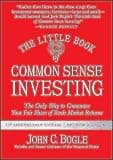
The Little Book of Common Sense Investing
From the man who invented the index fund, this is the short, sharp case for low-cost investing that has aged like fine wine. The maths on fees is universal, just think ETFs and super instead of his US funds.
The Bogleheads' Guide to Investing
Taylor Larimore, Mel Lindauer & Michael LeBoeuf
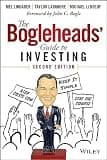
The Bogleheads' Guide to Investing
The friendly community bible of low-cost, buy-and-hold index investing, written by everyday investors rather than salespeople. The core philosophy is timeless for Aussies, just read the tax-advantaged account bits as super.
The Millionaire Teacher
Andrew Hallam
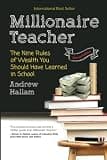
The Millionaire Teacher
A schoolteacher built a seven-figure portfolio on a modest salary, and here he lays out nine plain-English rules for doing the same with low-cost index funds. Refreshingly global, so Aussie readers just swap in super and local ETFs.
Some links above are affiliate links. If you buy through them, Snowball Invest may earn a small commission at no extra cost to you. We only recommend books we'd suggest anyway.
Sources
- SPIVA Australia Scorecard, S&P Dow Jones Indices, spglobal.com/spdji
- ASIC Moneysmart, managed funds and ETFs, moneysmart.gov.au
- Vanguard Australia, active vs passive investing, vanguard.com.au
- Australian Taxation Office, capital gains tax and managed funds, ato.gov.au
- William Sharpe, The Arithmetic of Active Management (1991)
General information only, not personal financial advice. Past performance is not a reliable indicator of future performance. Consider speaking to a licensed financial adviser about your own situation.
Was this article useful?
Put it to your own numbers
Every calculator runs entirely in your browser, with nothing stored. See what these numbers look like for your own situation.
Try the Net Fees calculator →General information only. This article is educational and does not constitute personal financial advice. It does not account for your circumstances. Consider your own situation and seek advice from a licensed adviser before acting. Read our full disclaimer.

Timothy Hirou Gaschereau
Founder of Snowball Invest, not a financial adviser.
I write about what I'm learning myself, because nobody ever taught us how to take control of our own money. It's a skill, not a mystery, and it's never too late to learn it. The best day to start was yesterday, the second best is today.
LinkedIn →Related articles
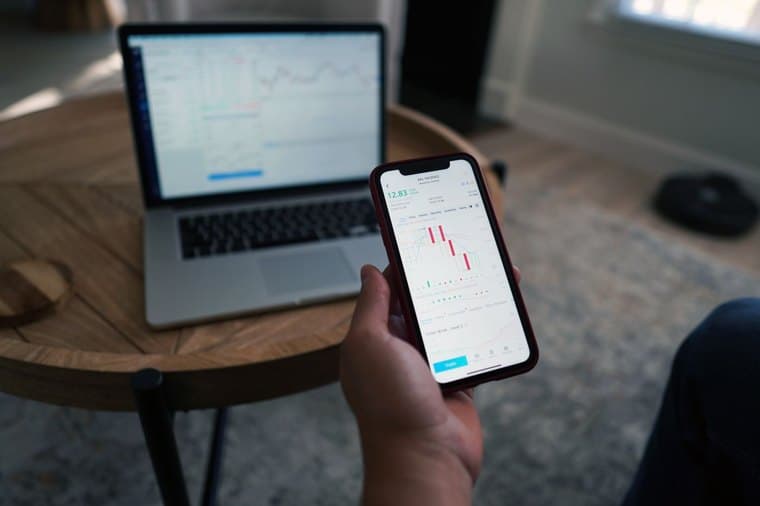
ETF vs Managed Fund: Which Structure Actually Suits You?
ETFs or managed funds? We break down the real differences in cost, tax, flexibility and auto-investing so you can pick the right structure for your money.
What Is a Managed Fund? A Beginner's Guide for Australians
What a managed fund actually is, how it structurally differs from an ETF, active vs passive managed funds, and why fees matter so much over the long run.
How to Invest in Managed Funds in Australia
Want to invest in managed funds in Australia? A plain-English, step-by-step guide covering how to buy, the minimums, the fees and the tax.