
Geared ETFs in Australia: How They Work (and Why They're Not for Everyone)
What is a geared ETF and is it right for you? A plain-English guide to how internally geared ETFs like GEAR, GGUS and GHHF work in Australia, the real risks, and who they suit.
 By Timothy Hirou GaschereauPublished
 13 min read
Try it yourself
The pitch is seductive. The sharemarket goes up over time, so why not borrow a bit extra and ride that wave harder? Double the exposure, double the gains. Sounds reasonable, right?
Here is the honest version: geared ETFs can absolutely supercharge returns over a long bull run. They can also cut your investment in half during a bad year. Both things are true at once, and anyone who only tells you the first part is doing you a disservice. Read this before you buy.
🎯 The essential: A geared ETF borrows inside the fund so your $1 buys roughly $1.50 to $1.65 of market exposure. There are no margin calls and your loss is capped at what you put in, but gains and losses are both amplified: a 10% market move becomes about 15% for you. The Australian options (GEAR, GGUS, GHHF from Betashares) suit a narrow group: long horizon, high risk tolerance, small satellite allocation. They are not for beginners, nervous investors, or money you need within five to seven years.
What is a geared ETF?
A geared ETF borrows money at the institutional level to increase its market exposure beyond what investors put in. In plain English: you invest $1, the fund borrows another $0.50 to $0.65 on top, and it invests the combined $1.50 to $1.65 in the market. That borrowing happens inside the fund, which is what "internally geared" means. You never take out a loan yourself; you just buy units on the ASX like any other ETF.
Why does the "internal" bit matter so much?
- No margin calls. If the market falls sharply, the fund manages the gearing internally. You will not get a phone call demanding you top up within 24 hours.
- Wholesale borrowing rates. The fund borrows at institutional rates, typically lower than a retail investor pays on a personal margin loan.
- Your loss is capped. You cannot lose more than you invested. The fund cannot come after your other assets.
In Australia, Betashares is the primary issuer of geared ETFs. They have run these products since 2014 and publish a detailed Product Disclosure Statement (PDS) and Target Market Determination for each fund.
Australian geared ETFs: the main options
There are three geared ETFs worth knowing on the ASX. All are Betashares products, and all are classified as "hedge funds" under ASX rules, which is the exchange flagging them as complex. ASIC requires a Target Market Determination for each, confirming they are designed for investors with high risk tolerance and long time horizons. That is a genuine filter, not boilerplate.
| Ticker | Exposure | Target gearing | Cost guide |
|---|---|---|---|
| GEAR | Australian shares (ASX 200) | 50-65% LVR | ~0.78% p.a. + gearing costs |
| GGUS | US shares (S&P 500), AUD hedged | 50-65% LVR | ~0.80% p.a. + gearing costs |
| GHHF | Diversified Aus + global shares | 30-40% LVR (milder) | ~0.35% p.a. + gearing costs |
GEAR is the longest-established (since April 2014) and gears the Australian market, so its distributions carry franking credits. GGUS does the same for US large caps with the currency hedged back to AUD, so its distributions are typically unfranked. GHHF is the newer, more moderate option (launched April 2024): lower gearing means less amplification but a smoother ride, on a diversified base similar in spirit to DHHF.
How gearing amplifies gains and losses
Let us do the maths, because this is the section that matters most. Assume GEAR is running at 50% gearing, so for every $1 of your equity the fund holds $1.50 of assets (your $1 plus $0.50 borrowed).
- Market rises 10%: assets grow from $1.50 to $1.65, repay the $0.50 borrowed, your equity is $1.15. A 15% gain on your $1.
- Market falls 10%: assets fall from $1.50 to $1.35, repay the $0.50 borrowed, your equity is $0.85. A 15% loss on your $1.
Then there is volatility drag. Even without gearing, a 10% fall followed by a 10% rise does not get you back to square: $100 x 0.90 x 1.10 = $99. With gearing, that effect is amplified, and the more volatile the market, the more it compounds against you over time. This is not a flaw unique to any issuer, it is the maths of leverage plus compounding.
One structural point in Australia's favour: US "daily reset" leveraged ETFs rebalance their gearing every single day, which creates severe decay and makes them short-term trading tools. GEAR and GGUS instead rebalance only when gearing drifts outside the target range, which reduces (but does not remove) the drag and makes them more suitable for longer holding.
The real risks (read this twice)
- Magnified drawdowns. When the market falls, a geared ETF falls harder. GEAR fell far more than the ASX 200 in the March 2020 COVID crash and again in the 2022 rate-rise drawdown. In a severe bear market a geared fund can lose 40% to 60% even if the index "only" falls 25% to 30%.
- Gearing costs. The fund pays interest on its borrowings, deducted from returns continuously. When the RBA lifted rates aggressively in 2022 and 2023, those costs became a real drag even as markets recovered.
- Volatility drag. Choppy, sideways markets erode geared returns over time through the asymmetry of percentage gains and losses.
- Sequencing risk. A 40% loss needs a 67% gain to recover; a 60% loss needs a 150% gain. Invest a lump sum right before a drawdown and recovery can take years.
- Psychological risk. Watching an investment halve is genuinely hard. Panic-selling at the bottom turns a temporary drawdown into a permanent loss. If you are not certain you can hold through that, a geared ETF is not for you.
The honest case for (if you still want to know)
We have been blunt about the risks. For the right investor, here is the fair case. Over very long periods, geared exposure to quality indices has historically produced higher returns than the ungeared equivalent, with dramatically higher volatility (the key word being "historically"). It suits someone with a genuine 10-plus year horizon and high risk tolerance, who keeps it a small satellite (say 5% to 15%) in an otherwise diversified portfolio.
Think "core and satellite": your core is low-cost, diversified, ungeared ETFs, and a geared ETF (if you use one at all) is a small satellite that adds amplified exposure without putting your whole position at risk. Dollar-cost averaging in, rather than a single lump sum, smooths your entry and softens sequencing risk.
Geared ETF vs ungeared ETF vs DIY margin loan
| Ungeared ETF | Geared ETF | DIY margin loan | |
|---|---|---|---|
| Exposure per $1 | $1.00 | ~$1.50-$1.65 | You choose |
| Margin call risk | None | None (internal) | Yes, can force a sale |
| Borrowing cost | None | Paid in the fund | Paid by you |
| Max loss | Amount invested | Amount invested | Can exceed your capital |
| Complexity | Low | Medium | High |
| Suits | Most investors | High tolerance, 10+ yrs | Experienced only |
The tax treatment in Australia
Distributions are taxed as ordinary income in the year you receive them. GEAR holds Australian shares, so franking credits flow through and the grossed-up yield can be meaningfully higher than the cash yield. GGUS holds US shares, so its distributions are typically unfranked. Standard capital gains tax applies when you sell, with the 50% CGT discount available if you have held for 12 months or more.
One important difference from a DIY margin loan: the interest the fund pays on its borrowings is deducted at the fund level, so you cannot personally claim it as a tax deduction. With your own margin loan the interest may be deductible (subject to ATO rules). That is a genuine trade-off to weigh, and worth running past a registered tax agent for your own situation.
Who geared ETFs suit, and who should avoid them
They may suit you if you have a genuine 10-plus year horizon, genuinely high risk tolerance (you have thought hard about a 40% to 50% drawdown), you keep them a small satellite in a diversified portfolio, and you can commit to holding through downturns without panic-selling.
Avoid them if you have a short horizon or might need the money within five to seven years, you are a nervous investor, you would make them a large chunk of your portfolio, you are a retiree relying on this capital, or you are a beginner who has not yet built a diversified, ungeared foundation. If the return upside is the main thing drawing you in and you have not fully internalised the downside, that is the clearest signal to wait.
Frequently asked questions
What is a geared ETF in Australia?
+
A geared ETF is an exchange-traded fund that borrows money inside the fund to amplify its exposure to the sharemarket. When you invest $1, the fund combines it with borrowed money to invest roughly $1.50 to $1.65 in the market. This amplifies both gains and losses. In Australia, Betashares is the main issuer, with products including GEAR (ASX 200), GGUS (S&P 500) and GHHF (diversified).
Can I lose more than I invest in a geared ETF?
+
No. Because the borrowing is internal to the fund, your maximum loss is limited to the amount you invested. You cannot be asked to repay the fund's debts. This is a key difference from a personal margin loan, where your losses can exceed your initial investment.
What is the difference between GEAR and GGUS?
+
Both are Betashares internally geared ETFs with similar gearing ratios (50% to 65% loan-to-value). GEAR gears Australian shares (ASX 200 equivalent), while GGUS gears US large-cap shares (S&P 500 equivalent) with currency hedging back to AUD. GEAR distributions typically carry franking credits; GGUS distributions are typically unfranked.
Are geared ETFs a good investment?
+
It depends on your situation. For investors with a 10-plus year horizon, high risk tolerance and a small satellite allocation within a diversified portfolio, geared ETFs have historically produced higher long-run returns, but with dramatically higher volatility. For investors with short time horizons or low risk tolerance, they are not a good investment.
How is a geared ETF different from a margin loan?
+
With a margin loan you borrow money personally and face margin calls if your portfolio falls. With an internally geared ETF the borrowing happens inside the fund. There are no margin calls for investors, the interest is deducted at the fund level (so it is not personally tax-deductible), and your maximum loss is limited to your investment.
What happens to a geared ETF in a market crash?
+
It falls significantly more than the underlying index. In a severe bear market a geared fund can lose 40% to 60% or more of its value even if the index falls 25% to 30%. A 60% loss requires a 150% gain just to get back to breakeven, which is why a long time horizon is essential.
Are geared ETFs suitable for beginners?
+
No. Geared ETFs are complex, high-risk products for investors who already understand how shares and ETFs work, have a long horizon and have genuinely high risk tolerance. Beginners are better served building a foundation with low-cost, diversified ungeared ETFs first.
Keep reading
Books worth reading
📚 Recommended reading
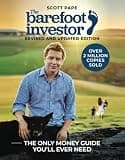
The Barefoot Investor
Scott Pape
The Barefoot Investor
Australia's best-selling money book ever. A simple system for accounts, budgeting, debt and a real emergency fund in one.
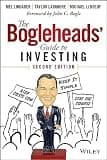
The Bogleheads' Guide to Investing
Taylor Larimore, Mel Lindauer & Michael LeBoeuf
The Bogleheads' Guide to Investing
The friendly community bible of low-cost, buy-and-hold index investing, written by everyday investors rather than salespeople. The core philosophy is timeless for Aussies, just read the tax-advantaged account bits as super.
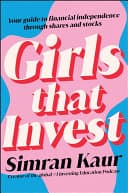
Girls That Invest
Simran Kaur
Girls That Invest
A no-jargon crash course from the podcaster behind Girls That Invest that makes the sharemarket feel doable, written especially for women starting out. The perfect first step before you buy your first ETF.
Some links above are affiliate links. If you buy through them, Snowball Invest may earn a small commission at no extra cost to you. We only recommend books we'd suggest anyway.
Sources
- Betashares, GEAR (Geared Australian Equity) product page and PDS, betashares.com.au
- Betashares, GGUS (Geared US Equity, currency hedged) product page and PDS
- Betashares, GHHF (Wealth Builder Diversified All Growth Geared) product page and PDS
- ASIC Moneysmart, Borrowing to invest, moneysmart.gov.au
- ASX, ETF investor education, asx.com.au
- Australian Taxation Office, Capital gains tax, ato.gov.au
General information only, not personal financial advice. Geared ETFs are very high-risk products. Read the Product Disclosure Statement and Target Market Determination for any product you are considering, and speak to a licensed financial adviser before investing.
Was this article useful?
Put it to your own numbers
Every calculator runs entirely in your browser, with nothing stored. See what these numbers look like for your own situation.
Try the Compound Interest calculator →General information only. This article is educational and does not constitute personal financial advice. It does not account for your circumstances. Consider your own situation and seek advice from a licensed adviser before acting. Read our full disclaimer.

Timothy Hirou Gaschereau
Founder of Snowball Invest, not a financial adviser.
I write about what I'm learning myself, because nobody ever taught us how to take control of our own money. It's a skill, not a mystery, and it's never too late to learn it. The best day to start was yesterday, the second best is today.
LinkedIn →Related articles

CommSec Pocket Fees: What It Costs and How It Compares
A$2 a trade up to A$1,000, then 0.20%, on buys and sells. Plus the separate HIN nobody mentions, and the order size where Pocket costs more than main CommSec.

BGBL ETF Australia: Betashares' Global Shares Fund Explained
BGBL is Betashares' ultra low cost global shares ETF tracking around 1,000 companies. What it holds, its 0.08% fee, BGBL vs VGS, dividends and tax.
VHY ETF Australia: Vanguard's High Yield Fund Explained
VHY is Vanguard's high-yield Australian shares ETF. What it holds, the fees, the franking credits, and how it stacks up against VAS for income investors.