

Is Vanguard a Good Investment?
Is Vanguard a good investment in Australia? We break down Vanguard ETFs, Personal Investor and Super so you can decide what suits you.
 By Timothy Hirou GaschereauPublished
 9 min read
Yes, for most long-term, cost-conscious investors in Australia, Vanguard is a very good option. It is not perfect for everyone, but its mix of ultra-low fees, broad diversification and a genuinely investor-owned structure (profits flow back to investors, not outside shareholders) makes it hard to overlook.
The real question is not whether Vanguard is good in the abstract, but whether it is right for you, given your style, your preferred platform, and what you actually want to own. Let us work through that.
🎯 The essential: Vanguard is one of the world's largest and most respected index fund managers, with a clear low-cost philosophy and an investor-owned structure. Its flagship Australian ETFs (VAS at 0.07%, VGS at 0.18%, VDHG at 0.27%) sit among the cheapest in their categories. Vanguard Personal Investor offers $0 buy brokerage on Vanguard ETFs, and Vanguard Super is a low-fee option. Vanguard suits cost-conscious, long-term index investors more than active traders or those wanting a wide multi-provider range on one platform.
The short answer
Vanguard's combination of rock-bottom fees, broad diversification and investor-owned structure makes it a default choice for index investors. It will not suit everyone, and the rest of this guide is about working out where you sit.
Who is Vanguard?
Vanguard was founded in the United States in 1975 by John C. Bogle, who essentially invented the retail index fund. It opened its first international office in Melbourne in 1996 and has been a fixture of Australian investing ever since, now managing trillions of dollars globally.
The key structural difference is that Vanguard is owned by its funds, which are owned by its investors. There are no outside shareholders to pay, which creates a genuine incentive to keep costs low, and the fee history backs that up. In Australia, Vanguard Investments Australia Ltd holds an AFS Licence and is regulated by ASIC. For transparency: in September 2024 the Federal Court ordered Vanguard to pay a $12.9 million penalty over misleading ESG exclusion claims in one bond fund (a greenwashing case, not its core index products). Vanguard self-reported the issue and cooperated with ASIC, and no investor financial loss was found. A useful reminder to read the PDS rather than the marketing.
Are Vanguard ETFs good?
Short answer: yes, especially for index investing. Vanguard ETFs trade on the ASX like shares and cover Australian shares, international shares, bonds and diversified multi-asset options. The three Australians ask about most are VAS (S&P/ASX 300, 0.07%), VGS (MSCI World ex-Australia, 0.18%) and VDHG (an all-in-one 90% growth, 10% defensive fund, 0.27%). The headline reason they are so popular is cost.
Read our full reviews of VAS, VGS and VDHG, or see how they stack up in our best ETFs in Australia guide.
| Product | What it is | Indicative fee | Good for |
|---|---|---|---|
| VAS | Australian shares (S&P/ASX 300) | 0.07% p.a. | Low-cost home exposure |
| VGS | International shares (MSCI World ex-Aus) | 0.18% p.a. | Global diversification |
| VDHG | All-in-one (90% growth, 10% defensive) | 0.27% p.a. | Set-and-forget beginners |
| Personal Investor | Vanguard's direct platform | $0 buy, $9 sell on Vanguard ETFs | Buy-and-hold, going direct |
| Vanguard Super | Low-cost super fund | ~0.56% p.a. (most options) | Cost-conscious super members |
Vanguard Personal Investor vs using a broker
You have two main ways to buy Vanguard ETFs. Vanguard Personal Investor (Vanguard's own platform) lets you buy Vanguard ETFs with $0 brokerage, with $9 to sell and no account fee on Vanguard holdings. The trade-off is that it is Vanguard-only for ETFs, so you cannot buy Betashares or iShares there. Alternatively, any third-party broker (CommSec, Stake, Pearler, SelfWealth) can buy ASX-listed Vanguard ETFs, with brokerage from around $0 to $20, and lets you mix in other providers.
For a pure Vanguard portfolio with regular buys, Personal Investor's $0 buy brokerage is hard to beat. For a mixed portfolio, a third-party broker makes more sense. Our Vanguard vs Betashares comparison goes deeper.
Vanguard Super
Vanguard launched its super fund in 2022, applying the same low-cost, index-based philosophy to retirement savings. Total fees sit around 0.56% p.a. for most options (administration plus investment fees and a small reserve levy), it cut fees in 2024, and it reported strong FY25 returns. It is not the very cheapest super in Australia (some large industry funds are very competitive), but it is among the lowest-cost, transparent, index-based options. Compare it against your current fund with the government's YourSuper tool before switching.
The pros of investing with Vanguard
- Ultra-low fees. VAS at 0.07% is about $7 a year per $10,000. Over decades, that compounds into real money versus higher-fee options.
- Investor-owned structure. No outside shareholders to satisfy, so the incentive is genuinely to lower costs over time.
- Simplicity. A fund like VDHG is a globally diversified portfolio in one ETF, with automatic rebalancing.
- Broad diversification. Even a two-ETF VAS plus VGS core spans hundreds of companies.
- Trusted, long history. Nearly 50 years of index investing globally, nearly 30 in Australia.
- $0 buy brokerage on Personal Investor. A real saving for regular monthly contributors.
The cons and things to watch
- Limited range on Personal Investor. To hold Betashares, iShares or thematic ETFs alongside Vanguard, you need a separate broker.
- No active management. The core ETFs track indexes and will never beat the market by design (though the evidence for consistent active outperformance is thin).
- Vanguard Super is relatively new. Launched 2022, so a shorter track record than established industry funds. Worth monitoring.
- The 2024 greenwashing penalty. Specific to ESG claims in a bond fund, not the core index range, but a reminder to read the PDS.
- Currency risk on international ETFs. VGS is unhedged, so AUD moves affect your returns both ways.
- Selling on Personal Investor costs $9. Minor, but factor it in if you trade often.
So, is Vanguard right for you?
Vanguard is a strong fit for:
- Long-term buy-and-hold investors who want broad market exposure at minimal cost.
- Beginners who want a simple, diversified starting point (VDHG in particular).
- Regular contributors who benefit from $0 buy brokerage on Personal Investor.
- Super members who want transparent, index-based super with competitive fees.
It is less suited to investors who want to actively trade, hold a wide mix of non-Vanguard products on one platform, or who specifically want active management or thematic ETFs.
Vanguard's investor-owned model is not just marketing. It creates a real, structural incentive to keep fees low, and the decades-long fee history backs it up. For most Australians building long-term wealth through index ETFs, Vanguard belongs on the shortlist. None of this is a recommendation to buy, just an honest read of what the numbers and the structure show.
❓ Frequently asked questions
Is Vanguard safe?
+
Vanguard Investments Australia Ltd holds an Australian Financial Services Licence and is regulated by ASIC. Your ETF holdings sit on the ASX register, separate from Vanguard's own balance sheet, so if Vanguard as a company hit trouble your units would not simply disappear. That said, all investments carry market risk, ETFs rise and fall with the markets they track, and they are not covered by the government's deposit guarantee.
Are Vanguard ETFs good for beginners?
+
Yes, they are among the most beginner-friendly options in Australia. VDHG in particular gives a new investor instant global diversification across shares and bonds in a single ASX trade. VAS and VGS are also straightforward. Low fees, simple structures and no need to actively manage the portfolio make Vanguard ETFs a common starting point.
Is Vanguard cheaper than Betashares?
+
It depends on the product. For core Australian shares, Betashares A200 (0.04% p.a.) is actually slightly cheaper than VAS (0.07% p.a.). For international shares, VGS is competitive with Betashares equivalents. For all-in-one funds, VDHG (0.27%) compares with Betashares DHHF (0.19%). So compare specific products, not brands.
Can I buy Vanguard ETFs through any broker?
+
Yes. VAS, VGS, VDHG and every other ASX-listed Vanguard ETF can be bought through any standard Australian broker, including CommSec, Stake, Pearler and SelfWealth. You do not need to use Vanguard's own platform to access them.
What is Vanguard Personal Investor?
+
Vanguard Personal Investor is Vanguard's direct-to-investor platform in Australia. It offers $0 buy brokerage on Vanguard ETFs, $9 to sell, and no account fee on Vanguard ETF and managed fund holdings. It is designed for straightforward, Vanguard-focused portfolios rather than broad multi-provider investing.
Does Vanguard have a good super fund?
+
Vanguard Super launched in 2022 with total fees around 0.56% p.a. for most options. It cut fees in 2024 and reported strong FY25 returns. It suits members who want low-cost, index-based super with a transparent fee structure. As always, compare it against your current fund using the government's YourSuper tool before switching.
Keep reading
📚 Recommended reading
The Bogleheads' Guide to Investing
Taylor Larimore, Mel Lindauer & Michael LeBoeuf
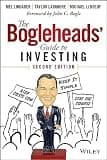
The Bogleheads' Guide to Investing
The friendly community bible of low-cost, buy-and-hold index investing, written by everyday investors rather than salespeople. The core philosophy is timeless for Aussies, just read the tax-advantaged account bits as super.
The Barefoot Investor
Scott Pape
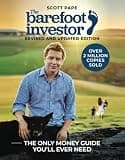
The Barefoot Investor
Australia's best-selling money book ever. A simple system for accounts, budgeting, debt and a real emergency fund in one.
Some links above are affiliate links. If you buy through them, Snowball Invest may earn a small commission at no extra cost to you. We only recommend books we'd suggest anyway.
Sources
This article is general information only, not personal financial advice. It does not take into account your objectives or circumstances. Fees, products and rules change over time, and figures here are indicative as of mid-2026. Always read the current product disclosure statement and consider a licensed adviser before investing. Past performance is not a reliable indicator of future performance.
Was this article useful?
Put it to your own numbers
Every calculator runs entirely in your browser, with nothing stored. See what these numbers look like for your own situation.
Explore the calculators →General information only. This article is educational and does not constitute personal financial advice. It does not account for your circumstances. Consider your own situation and seek advice from a licensed adviser before acting. Read our full disclaimer.

Timothy Hirou Gaschereau
Founder of Snowball Invest, not a financial adviser.
I write about what I'm learning myself, because nobody ever taught us how to take control of our own money. It's a skill, not a mystery, and it's never too late to learn it. The best day to start was yesterday, the second best is today.
LinkedIn →Related articles

Vanguard vs Betashares: Which ETF Provider Should You Choose?
Betashares vs Vanguard, compared on fees, fund range, platforms and safety. Which of Australia's two biggest ETF issuers deserves your money, and when to hold both.
How to Invest in Index Funds in Australia
Want to invest in index funds in Australia? A plain-English, step-by-step guide to what to buy, how to open an account, and what it all costs.

Active vs Passive Investing: What the Evidence Actually Says
Active or passive investing? We break down the SPIVA evidence, the fee maths, and the tax rules so you can decide what works for your money in Australia.