

ETHI ETF Australia: The Complete Ethical Global Shares Guide
ETHI is BetaShares' ethical global shares ETF. What it holds, how its ethical screens work, its 0.59% fee, performance, and how it stacks up against VGS.
 By Timothy Hirou GaschereauPublished
 12 min read
Try it yourself
A lot of people assume that investing ethically means giving up diversification and settling for a narrow thematic fund. ETHI is the counter-example. The BetaShares Global Sustainability Leaders ETF (ASX: ETHI) is a broad global shares fund that applies a genuine set of ethical screens before a company gets in. You own roughly 200 large global companies spread across the US, Japan and Europe, just the ones that pass a sustainability filter.
That makes ETHI a core-style ethical fund, not a satellite bet like HACK or ACDC. It is built to sit at the centre of a portfolio as your global shares allocation, with your values built in. Here is the honest picture.
🎯 The essential: ETHI is BetaShares' ethical global shares ETF, holding around 198 large global companies that pass ESG screens. It excludes fossil fuels, tobacco, weapons, gambling and more, and tilts toward climate leaders. The fee is 0.59% p.a., higher than VGS (0.18%) because of the screening. Because it excludes energy and leans into tech and healthcare, it behaves differently from the broad market: sometimes better, sometimes worse. It can be a genuine core global holding for values-aligned investors, not just a thematic add-on. Always check the current BetaShares PDS before investing.
What is ETHI?
ETHI tracks the Nasdaq Future Global Sustainability Leaders Index, which starts with the global large-cap universe and applies a two-layer process: first exclude companies inconsistent with responsible investment, then tilt toward companies identified as sustainability and climate leaders. The result is around 198 companies (as at August 2026) that are large, globally diversified and have cleared a meaningful ethical bar. It is unhedged, so it is priced in AUD but the underlying holdings sit in USD, EUR, JPY and other currencies, and currency moves affect your return, exactly as with VGS. ETHI is issued by BetaShares, listed since January 2017, sits at roughly $3.8 billion in assets, and is certified by the Responsible Investment Association Australasia (RIAA) under its Sustainable Plus classification. Think of it as the ethical equivalent of VGS: a broad global shares fund, just with a filter applied.
What does ETHI hold?
As at August 2026, the top holdings and sectors looked like this (holdings change; always check the current fact sheet):
| Holding | Sector | Weight |
|---|---|---|
| Visa | Financials | 4.2% |
| Apple | Information Technology | 4.1% |
| Nvidia | Information Technology | 4.0% |
| Mastercard | Financials | 3.9% |
| Broadcom | Information Technology | 3.9% |
| ASML | Information Technology | 3.5% |
| Home Depot | Consumer Discretionary | 3.0% |
| Toyota | Consumer Discretionary | 3.0% |
Notice what is missing: energy is essentially zero. Because fossil fuel companies are excluded entirely, the energy sector simply does not exist in ETHI, and that drives the heavy tilt toward technology and healthcare. The US dominates the country weights (around 70%), just as it does in VGS, but ETHI's US holdings skew toward tech, healthcare and payments rather than energy majors.
The ethical screens explained
The screening works in two layers.
Negative screens (what gets excluded). Companies with direct or significant exposure to any of the following are screened out:
- Fossil fuels (coal, oil, gas extraction and production)
- Tobacco, alcohol, gambling and junk food
- Weapons (controversial and conventional)
- Pornography, payday lending, uranium and nuclear
- Animal cruelty, and human or labour rights violations (child labour, forced labour, bribery, corruption)
- Companies with no women on the board, or contributing to disinformation
Positive screen (the climate-leaders tilt). The fund actively tilts toward companies with low carbon intensity and strong sustainability credentials. A company has to pass both the negative screens and the positive assessment to get in.
Ethical is subjective. These are BetaShares' screens, not a government standard. Two investors with genuine ethical commitments can reasonably disagree about a given company: some pass ETHI's screens but might not pass yours (large tech firms with supply chain or data-privacy concerns, for example). ASIC has flagged greenwashing as a live risk, and the Federal Court penalised Vanguard in September 2024 over misleading ESG claims. The practical takeaway: read the PDS and check the actual screens, do not rely on the fund name alone. Our ethical investing guide covers the wider landscape.
The fee
ETHI's management fee and costs are 0.59% p.a. (a 0.49% management fee plus expenses capped at 0.10%). That compares to VGS at 0.18%. The difference is the cost of the screening research and ongoing monitoring. Whether it is worth it depends entirely on whether ethical alignment matters to you.
| Portfolio | ETHI (0.59%) | VGS (0.18%) | Difference |
|---|---|---|---|
| $10,000 | $59 | $18 | $41 |
| $50,000 | $295 | $90 | $205 |
| $100,000 | $590 | $180 | $410 |
| $250,000 | $1,475 | $450 | $1,025 |
On a $50,000 portfolio you pay roughly $205 more a year for ETHI, and over 20 years compounded that gap is real money. For values-aligned investors it is simply the cost of investing consistently with their principles. For investors indifferent to ESG, it is a premium with no reason to pay it.
Performance and behaviour: the honest picture
ETHI does not try to track the broad market, it tracks an ethical index, so its returns diverge from a broad global benchmark, sometimes significantly, and that divergence is a feature not a bug. Because it excludes energy and many traditional banks and tilts to tech and healthcare, its returns are closely tied to how those sectors do relative to the rest of the market.
- In tech-led markets (2020 to 2021, 2023 to 2024) ETHI has historically outperformed broad global indices. The absence of energy and heavy tech weighting helped.
- In energy and value-led markets (such as 2022, when energy surged and tech sold off) ETHI has historically underperformed. Excluding energy became a headwind.
As at July 2026, BetaShares reported fund returns after fees of about 7.9% (1 year), 12.8% p.a. (3 years), 9.4% p.a. (5 years) and 15.9% p.a. since inception. Past performance is not a reliable indicator of future performance; these numbers illustrate that a values-aligned fund can deliver competitive long-run returns, and that the screening has not been a structural drag over the fund's history. The key point is that the sector concentration cuts both ways.
ETHI vs VGS, side by side
| Feature | ETHI | VGS |
|---|---|---|
| What it holds | ~198 screened global companies | ~1,500 global developed-market companies |
| Ethical screens | Yes (fossil fuels, tobacco, weapons, more) | No |
| MER | 0.59% p.a. | 0.18% p.a. |
| Sector tilt | Heavy tech and health, ~0 energy | Broad market weights |
| Currency | Unhedged AUD | Unhedged AUD |
| Role | Core global ethical holding | Core global holding |
| Suits | Values-aligned investors | Cheapest broad global exposure |
Neither is universally better; they serve different priorities. The ethical equivalent of the classic VGS + VAS two-fund portfolio is ETHI (global ethical) + FAIR (BetaShares' Australian ethical ETF). Unlike thematic funds such as HACK or ACDC, ETHI is designed to be the centre of a portfolio, not a satellite. For a wider comparison, see our best ETFs in Australia guide.
How to buy ETHI, and the tax
You need a standard ASX brokerage account, nothing special: search the ticker ETHI on any broker (CommSec, Pearler, Stake, SelfWealth, Superhero, BetaShares Direct), place your order, and settlement is T+2. A distribution reinvestment plan is available. On tax, distributions are paid semi-annually and taxed as income in the year you receive them, mostly unfranked because global companies do not pay Australian franking credits. Selling units held 12 months or more qualifies for the 50% CGT discount for individuals; selling within 12 months means the full gain is assessable. New to ETFs entirely? Start with what is an ETF.
Frequently asked questions
Is ETHI a good investment?
+
That depends on your values and goals. ETHI is a well-constructed ethical ETF giving broad global exposure with ESG screens applied. It is not better or worse than VGS in absolute terms, just different: higher fee, a sector tilt toward tech and healthcare, and values-aligned screening. If ethical investing matters to you, it is a credible core option. If you are indifferent to ESG, VGS is cheaper and more broadly diversified. General information only, not personal advice.
What does ETHI exclude?
+
ETHI applies negative screens to exclude companies involved in fossil fuels (coal, oil, gas), tobacco, weapons, gambling, alcohol, junk food, pornography, payday lending, uranium, animal cruelty, human rights violations, and companies with no women on the board. It also applies a positive climate-leaders tilt. Check the current BetaShares PDS for the full list and the exact thresholds, as they can change.
Does ETHI pay dividends?
+
Yes. ETHI pays distributions semi-annually, typically around July and January. The 12-month distribution yield was roughly 1.8% as at July 2026. Distributions are mostly unfranked, because global companies do not pay Australian franking credits, though there may be some foreign income tax offsets. A distribution reinvestment plan (DRP) is available.
ETHI vs VGS: which is better?
+
Neither is universally better. VGS is cheaper (0.18% MER), holds around 1,500 companies with no ethical screens, and tracks the broad developed-market index closely. ETHI costs more (0.59% MER), holds around 198 screened companies with a tech and healthcare tilt, and is built for values-aligned investors. If you want the cheapest broad global exposure, VGS wins on fees. If you want ethical screens, ETHI is the more credible option.
What is the ETHI ETF fee?
+
ETHI's management fee and costs are 0.59% per year (a 0.49% management fee plus expenses capped at 0.10%). On a $50,000 investment that is roughly $295 a year, versus about $90 for VGS at 0.18%. The higher fee pays for the ethical screening and research. Always check the current BetaShares fact sheet for the up-to-date figure.
Is ETHI actually ethical?
+
ETHI applies genuine negative screens (excluding fossil fuels, tobacco, weapons, gambling and more) plus a positive climate-leader tilt, and it is RIAA-certified under the Sustainable Plus classification. But ethical is subjective: these are BetaShares' screens, not a universal standard. Some investors may still object to certain holdings, such as large tech firms with supply chain or data concerns. ASIC has flagged greenwashing as a real risk, so read the PDS and check the actual screens rather than relying on the fund name.
Can ETHI replace VGS in my portfolio?
+
For a values-aligned investor, yes. ETHI can serve as your core global shares holding the same way VGS does, just with ethical screens and a higher fee. The key difference is composition: ETHI is heavier in tech and healthcare, lighter in energy, materials and traditional banks. Pair it with FAIR (BetaShares' Australian ethical ETF) for a fuller ethical portfolio covering both global and Australian shares.
Keep reading
Books worth reading
📚 Recommended reading
The Barefoot Investor
Scott Pape
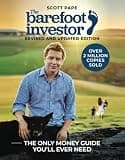
The Barefoot Investor
Australia's best-selling money book ever. A simple system for accounts, budgeting, debt and a real emergency fund in one.
Girls That Invest
Simran Kaur
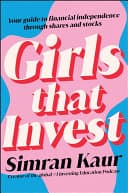
Girls That Invest
A no-jargon crash course from the podcaster behind Girls That Invest that makes the sharemarket feel doable, written especially for women starting out. The perfect first step before you buy your first ETF.
The Simple Path to Wealth
JL Collins
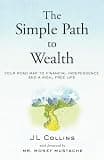
The Simple Path to Wealth
The friendliest on-ramp to index investing there is, born from letters a dad wrote his daughter. It makes 'buy the whole market and chill' feel obvious, just map his US fund picks onto Aussie equivalents and super.
Some links above are affiliate links. If you buy through them, Snowball Invest may earn a small commission at no extra cost to you. We only recommend books we'd suggest anyway.
Sources
- BetaShares, ETHI fund page and PDS
- ASIC Moneysmart, exchange traded funds (ETFs)
- ASIC, how to avoid greenwashing
- ATO, capital gains tax
General information only, not personal financial advice. It does not take your circumstances into account. Holdings, fees and fund details change over time, so always verify current information with the BetaShares fact sheet and PDS before investing. Past performance is not a reliable indicator of future performance.
Was this article useful?
Put it to your own numbers
Every calculator runs entirely in your browser, with nothing stored. See what these numbers look like for your own situation.
Try the Capital Gains Tax calculator →General information only. This article is educational and does not constitute personal financial advice. It does not account for your circumstances. Consider your own situation and seek advice from a licensed adviser before acting. Read our full disclaimer.

Timothy Hirou Gaschereau
Founder of Snowball Invest, not a financial adviser.
I write about what I'm learning myself, because nobody ever taught us how to take control of our own money. It's a skill, not a mystery, and it's never too late to learn it. The best day to start was yesterday, the second best is today.
LinkedIn →Related articles

BGBL ETF Australia: Betashares' Global Shares Fund Explained
BGBL is Betashares' ultra low cost global shares ETF tracking around 1,000 companies. What it holds, its 0.08% fee, BGBL vs VGS, dividends and tax.

IWLD ETF Australia: iShares' Global Equity ETF Explained
IWLD is iShares' low cost global shares ETF on the ASX, with an ESG screen built in. What it holds, its 0.09% fee, IWLD vs VGS, and how to buy.
VGAD ETF Australia: Hedged Global Shares, and Is It Worth It?
VGAD is Vanguard's hedged international shares ETF. How currency hedging works, VGAD vs VGS, the fees, distributions, and where it fits in a portfolio.