

Vanguard S&P 500 ETF Australia: VTS, IVV or V500?
Want S&P 500 exposure in Australia? Compare VTS, IVV and V500, understand the W-8BEN trap and US estate tax, and see which ETF actually suits you.
 By Timothy Hirou GaschereauPublished
 10 min read
Search “Vanguard S&P 500 ETF Australia” and one ticker keeps popping up: VTS. It is Vanguard, it is on the ASX, it is dirt cheap. There is just one problem: VTS is not an S&P 500 ETF. Getting this wrong is the single most common mistake Australian investors make when they go hunting for US exposure.
This guide assumes you already know what an ETF is. Here we focus only on how Australians actually get S&P 500 exposure, and the tax traps that make the “cheapest” option not always the smartest. General information only, not financial advice.
🎯 The essential: VTS tracks the whole US market, not the S&P 500. Vanguard's real S&P 500 ETF for Aussies is V500 (ASX, 0.07%, launched 2026). The other clean option is iShares IVV (ASX, 0.04%). Both are Australian-domiciled: no W-8BEN, no US estate tax headache. VTS is cheaper (0.03%) but US-domiciled, which means a W-8BEN form every 3 years and US estate tax over USD $60,000. The tax structure matters far more than the tiny fee gap.
What the S&P 500 is, and why Australians want it
The S&P 500 is an index of the 500 largest US companies: Apple, Microsoft, Amazon, Nvidia, Alphabet and friends. Over the long run it has delivered roughly 10% average annual returns (before inflation, in USD), though past performance guarantees nothing.
Australians want it because the ASX is tiny: about 2% of global market value, heavily concentrated in banks and miners. An S&P 500 ETF adds the world's largest economy and whole sectors that barely exist on the ASX. The only question is which ETF, and that is where the confusion starts.
The Vanguard confusion: VTS is not an S&P 500 ETF
This is the most important thing to get right before you buy anything. VTS tracks the CRSP US Total Market Index: around 3,900 stocks, from mega-caps down to small-caps. The S&P 500 is roughly 80% of it by weight, so they move together, but VTS is much broader. MER is 0.03%, the cheapest here, but it is US-domiciled (which matters a lot, see below).
Vanguard launched its actual Australian S&P 500 product in 2026: V500 (ASX), Australian-domiciled, tracking the S&P 500, at 0.07% MER, no W-8BEN. So if you want Vanguard and the S&P 500, V500 is the answer. VTS is a different product.
Your main options compared
| ETF (ASX) | Tracks | MER | Domicile | W-8BEN |
|---|---|---|---|---|
| VTS (Vanguard) | Whole US market | 0.03% | US | Yes |
| IVV (iShares) | S&P 500 | 0.04% | Australia | No |
| V500 (Vanguard) | S&P 500 | 0.07% | Australia | No |
| IHVV (iShares, hedged) | S&P 500 (AUD hedged) | 0.10% | Australia | No |
| BGBL (BetaShares) | Global developed ex-AU | 0.08% | Australia | No |
For pure S&P 500 with no tax admin, IVV or V500 are the clean picks. Both are Australian-domiciled and need no US paperwork from you. If IVV is the one you have settled on, our IVV breakdown goes through what is actually inside it and how concentrated it really is. VTS is cheaper, but its domicile baggage can cost more than the fee saving if you are not careful. If you are weighing the S&P 500 against a global fund instead, our IVV vs VGS comparison is the one to read, because VGS is already about three quarters American. Want to go broader than the US? See index funds vs ETFs and how to choose an ETF.
The domicile trap: US vs Australian-domiciled
This is the section most people skip. Do not.
US-domiciled (VTS). Because VTS is a US fund, you need a W-8BEN form on file with your broker. With it, US dividend withholding is 15% under the Australia-US treaty; without it, 30%. It expires every three years and must be renewed. The bigger catch is US estate tax: non-US persons holding US-situs assets face US estate tax on amounts above USD $60,000, at rates up to 40%. US citizens get a multimillion-dollar exemption. Australians get $60,000. Not a typo.
Australian-domiciled (IVV, V500, BGBL, IHVV). No W-8BEN from you, no direct US estate tax exposure (the fund handles the US layer internally), and the fund's US withholding flows through to you as a foreign income tax offset on your Australian return. One note on franking credits: US shares never carry them, so all these ETFs pay unfranked distributions.
Currency and fees
All of these except the hedged versions are unhedged, so your AUD returns move with the AUD/USD rate. A rising Aussie dollar trims returns; a falling one boosts them. Over the long run currency tends to wash out, and many investors prefer unhedged for simplicity. If you want to remove the currency swing, IHVV (0.10%) hedges the S&P 500 back to AUD. Our guide to hedged vs unhedged ETFs digs into the trade-off.
On fees, the gaps are tiny. On a $50,000 portfolio: VTS costs about $15 a year, IVV about $20, V500 about $35. The VTS vs IVV difference is $5 a year. Do not obsess over basis points: the domicile and tax decision matters far more than a 3 to 4 basis point fee gap.
How to buy one, and who suits which
Buying is simple: open a brokerage account, search the ASX code (IVV, V500, VTS, BGBL, IHVV), place a buy order, and if you buy VTS, complete the W-8BEN with your broker before your first distribution and set a three-year renewal reminder. Then hold, reinvest, and try not to check the price daily.
- Cheapest US exposure, tax admin understood: VTS (0.03%, W-8BEN + estate tax apply)
- Pure S&P 500, no admin, lowest MER: IVV (0.04%, Australian-domiciled)
- Vanguard brand, S&P 500, no tax headaches: V500 (0.07%)
- Global diversification beyond the US: BGBL (0.08%)
- Remove currency risk: IHVV (0.10%, hedged)
❓ Frequently asked questions
Is VTS an S&P 500 ETF?
+
No. VTS tracks the CRSP US Total Market Index, which covers the entire US share market, around 3,900 stocks. The S&P 500 makes up roughly 80% of its weight, but VTS is broader. If you want a pure S&P 500 tracker listed on the ASX, look at IVV or V500.
What is the W-8BEN form and do I need it?
+
The W-8BEN is a US tax form that tells the IRS you are not a US person. If you hold a US-domiciled ETF like VTS, you must lodge it with your broker. Without it, the IRS withholds 30% on dividends instead of the treaty rate of 15%. It is valid for three years and needs renewing. If you hold IVV, V500 or BGBL, you do not need it.
What is the US estate tax risk with VTS?
+
Non-US persons holding US-situs assets, including US-domiciled ETFs like VTS, face US estate tax on amounts above USD $60,000, at rates up to 40%. That is very different from the multimillion-dollar exemption US citizens get. For Australians with large VTS holdings this is a genuine estate planning consideration. Australian-domiciled ETFs like IVV, V500 and BGBL do not carry this direct exposure.
Do S&P 500 ETFs pay franking credits?
+
No. US companies pay US tax, not Australian company tax, so their dividends carry no franking credits. All distributions from these ETFs are unfranked. You will typically receive a foreign income tax offset for US withholding tax already paid at the fund level.
Should I choose IVV or V500?
+
Both are Australian-domiciled S&P 500 trackers with no W-8BEN requirement and no direct US estate tax exposure. IVV has a slightly lower MER (0.04% vs 0.07%) and a longer track record. V500 is Vanguard's own product, launched in 2026, for investors who prefer the Vanguard brand. The fee difference on a $50,000 portfolio is about $15 a year. Either works.
Is the S&P 500 a good investment for Australians?
+
That is a question for a licensed financial adviser, not a blog. What we can say: the S&P 500 has historically delivered strong long-run returns, gives Australians access to the world's largest economy, and complements the ASX well given the ASX's heavy concentration in banks and resources. Past performance does not guarantee future results.
Keep reading
📚 Recommended reading
The Barefoot Investor
Scott Pape
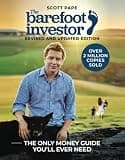
The Barefoot Investor
Australia's best-selling money book ever. A simple system for accounts, budgeting, debt and a real emergency fund in one.
Girls That Invest
Simran Kaur
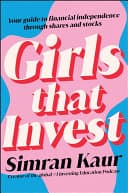
Girls That Invest
A no-jargon crash course from the podcaster behind Girls That Invest that makes the sharemarket feel doable, written especially for women starting out. The perfect first step before you buy your first ETF.
Making Money Made Simple
Noel Whittaker

Making Money Made Simple
Australia's classic, comprehensive money guide covering tax, super and investing, updated for today.
Some links above are affiliate links. If you buy through them, Snowball Invest may earn a small commission at no extra cost to you. We only recommend books we'd suggest anyway.
Sources
This article is general information only, not financial or tax advice. ETF fees, tickers, domicile and tax rules can change, and new products launch often. Check the product disclosure statement, the ATO, the IRS or a licensed adviser before investing.
Was this article useful?
Put it to your own numbers
Every calculator runs entirely in your browser, with nothing stored. See what these numbers look like for your own situation.
Explore the calculators →General information only. This article is educational and does not constitute personal financial advice. It does not account for your circumstances. Consider your own situation and seek advice from a licensed adviser before acting. Read our full disclaimer.

Timothy Hirou Gaschereau
Founder of Snowball Invest, not a financial adviser.
I write about what I'm learning myself, because nobody ever taught us how to take control of our own money. It's a skill, not a mystery, and it's never too late to learn it. The best day to start was yesterday, the second best is today.
LinkedIn →Related articles
VHY ETF Australia: Vanguard's High Yield Fund Explained
VHY is Vanguard's high-yield Australian shares ETF. What it holds, the fees, the franking credits, and how it stacks up against VAS for income investors.

VGAD ETF Australia: Hedged Global Shares, and Is It Worth It?
VGAD is Vanguard's hedged international shares ETF. How currency hedging works, VGAD vs VGS, the fees, distributions, and where it fits in a portfolio.

VDBA ETF Australia: Vanguard's Diversified Balanced Fund Explained
VDBA is Vanguard's 50/50 balanced all in one ETF. Get the asset allocation, 0.27% fee, quarterly distributions, and how VDBA compares to VDHG and VDGR.