
IVV vs VGS: All In on America, or the Whole Developed World?
This is not a fee decision, it is a concentration one. IVV is one country. VGS is 23, and the US is already most of it. How to think it through.
 By Timothy Hirou GaschereauPublished
 11 min read
People treat this as a fee question and it is not one. It is a decision about how much of your money sits in a single country, and the honest version of the question is whether you want all of it in America or most of it. This sits alongside our BGBL vs VGS comparison on Snowball Invest.
This article is general information only, not personal financial advice. It does not recommend either fund. Consider your own circumstances and read the product disclosure statement before investing.
Quick answer
IVV is the S&P 500, so one country. VGS is 23 developed markets, but because the index weights by company size and American companies are the biggest, the United States is already 73.3% of it. So the choice is not America versus the world. It is all of America versus roughly three quarters America, plus a slice of everywhere else.
In this guide
- →Why this is a concentration decision rather than a cost one
- →The fee gap in dollars, on a balance you might actually hold
- →The case for one country and the case against, both put fairly
- →What the non-US slice of VGS actually buys you
🗺️ What each one actually holds
IVV is the iShares S&P 500 ETF, issued by BlackRock and listed on the ASX since 2000. It gives you the five hundred largest listed American companies, weighted by size, which in practice means a portfolio led by the familiar names at the top of the US market.
VGS is the Vanguard MSCI Index International Shares ETF, tracking developed markets outside Australia across 23 countries. As at 31 July 2026 its largest holdings were Nvidia, Apple, Microsoft, Amazon and Alphabet.
Read that list again, because it is the whole point. The top of VGS looks like the top of IVV. The index weights by company size, American companies are the largest in the world, and so America ends up being 73.3% of a global developed markets fund, as at 14 September 2026, without anyone deciding it should be.
💰 Fees side by side
IVV charges 0.04% a year. VGS charges 0.18%. Both are published figures, confirmed in September 2026 on the ASX listing page and Vanguard's own product page.
The 0.14 percentage point gap is roughly $70 a year on a $50,000 holding, and roughly $280 on $200,000. That is real money and it compounds.
It is also not why VGS costs more. Running a fund across twenty three markets is genuinely more expensive than tracking one index in one country. You are paying for the extra machinery, and the question is whether you want what the machinery buys.
🇺🇸 The case for going all in on the US
You hold an actual view. If you think American listed companies will keep leading on scale and innovation, IVV expresses that without dilution. A view you hold on purpose is a legitimate reason to concentrate.
It is simple. One country, one index, the most widely tracked benchmark in the world. You will never be confused about what you own.
It is cheap. At 0.04% a year IVV is among the lowest cost funds on the ASX, and that difference quietly compounds across decades.
It pairs cleanly. IVV next to an Australian fund gives you a two market portfolio that is easy to hold and easy to rebalance.
⚠️ The case against
One country is one country. The United States has had an exceptional stretch. Nothing guarantees the next one, and a long period of American underperformance would land on IVV with nothing to cushion it.
The S&P 500 is itself concentrated. Five hundred companies sounds broad, but size weighting means the largest handful dominate. You are not buying five hundred equal bets.
Currency is part of the bet. IVV is entirely US dollar exposure, so a sustained rise in the Australian dollar drags on your returns regardless of how the underlying companies perform.
🎯 The essential: None of this makes IVV a poor choice. It makes concentration a decision rather than a default. The risk is not choosing it, the risk is choosing it without noticing you have.
🌏 What you give up
The non-American part of VGS is not padding. It is Japan, the United Kingdom, Canada, Switzerland, France, Germany and the rest of the developed world: global exporters, energy majors, pharmaceutical groups, luxury houses, industrial machinery.
These markets do not move in lockstep with American technology. When US tech sells off, European industrials or Japanese exporters sometimes hold up better. That is the entire diversification argument, and it is a modest effect rather than a magic one, because the American weighting is still doing most of the work.
Worth knowing what is still missing: VGS covers developed markets only. China, India, Taiwan and Brazil are not in there. If you want them you need something like an emerging markets fund as well.
💱 You are buying US dollars either way
Both funds are unhedged, so your returns in Australian dollars move with the exchange rate as well as with share prices.
For IVV that is simple: entirely US dollars. For VGS it looks more varied on paper, with yen, pounds, euros and Canadian dollars in the mix, but because America is the large majority of the fund, the US dollar is still the dominant driver.
So the idea that VGS gives you real currency diversification is only partly true. It softens the exposure, it does not remove it. If you want the currency risk taken out, that means a hedged product, which is a different decision with its own costs. Our guide to hedged versus unhedged covers that trade-off.
🤔 Does holding both make sense?
Ask this one honestly. If you hold both, the large majority of your VGS is in the same companies as your IVV. You have not doubled your diversification, you have mostly increased your American weighting and added a modest international slice.
That can still be deliberate. Some people hold IVV as the core and add VGS specifically to pick up Japan, the UK and Europe. If that is the plan, size the two positions on purpose. Holding both without doing that arithmetic is how a portfolio ends up feeling diversified while being a concentrated bet wearing a disguise.
🧩 Next to an Australian ETF
Most Australians already carry a home bias through their super, so the international fund is usually the balancing act.
IVV next to VAS or A200 gives you two markets, Australia and the United States. Cheap, simple, and completely silent on the rest of the world.
VGS next to the same gives you Australia plus twenty three developed markets, for a little more in fees and a little less simplicity.
Neither is wrong. One is a tighter bet held on purpose, the other is a wider net. Our guide to building a simple portfolio walks through choosing the split.
⚖️ Side by side
| IVV | VGS | |
|---|---|---|
| Exposure | United States only | 23 developed markets, 73.3% United States |
| Index | S&P 500 | MSCI World ex-Australia |
| Management fee a year | 0.04% | 0.18% |
| Issuer | BlackRock iShares | Vanguard Australia |
| Holdings | About 500 US companies | 1,314 |
| Emerging markets | No | No |
| Currency | Unhedged, all US dollars | Unhedged, US dollar dominant |
| Domicile | Australia | Australia |
| Listed since | 2000 | November 2014 |
SnowLetter
Australia's money news and our best reads, once a week.
❓ Frequently asked questions
Is IVV or VGS better for a long-term investor?
+
Neither is better in the abstract. IVV gives you the US market at a very low cost. VGS gives you developed markets without picking countries yourself. The right answer depends on how comfortable you are concentrating in one country, not on which has performed better recently. Past returns are a poor guide to the next decade either way.
What is the fee difference in dollars?
+
IVV charges 0.04% a year and VGS charges 0.18%, both confirmed on the ASX and Vanguard pages in September 2026. The gap is 0.14 percentage points. On a $50,000 holding that is roughly $70 a year, and on $200,000 roughly $280. Real, and much smaller than the concentration decision sitting underneath it.
Do I need a W-8BEN form for either fund?
+
No. Both trade on the ASX as Australian domiciled funds, which you can see in IVV's ISIN beginning with AU. That means you hold Australian units rather than US securities directly, so there is no W-8BEN and no exposure to US estate tax on the holding. Buying the US listed versions directly is a different situation.
Does VGS include emerging markets like China or India?
+
No. VGS tracks developed markets only, 23 countries, and emerging markets are excluded by design. If you want China, India, Taiwan or Brazil you need a separate emerging markets fund alongside it. Plenty of Australian investors hold developed markets only and are comfortable with that, but it is worth knowing rather than assuming.
If I hold both, am I properly diversified?
+
Only partly. Because the United States is already the large majority of VGS, adding IVV on top mostly increases your American exposure rather than broadening it. It is not wrong to hold both, but you should size them on purpose rather than assuming two funds means twice the diversification.
Which has the longer track record on the ASX?
+
IVV, by a wide margin. It has been listed since 2000, so its history covers the dot com unwind, the global financial crisis and the 2020 crash. VGS listed in late 2014, so its record sits almost entirely inside a strong run for global shares. Longer history is not the same as better, but it is more tested.
📚 Recommended reading
The Little Book of Common Sense Investing
John C. Bogle
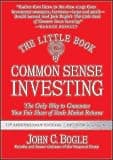
The Little Book of Common Sense Investing
From the man who invented the index fund, this is the short, sharp case for low-cost investing that has aged like fine wine. The maths on fees is universal, just think ETFs and super instead of his US funds.
The Bogleheads' Guide to Investing
Taylor Larimore, Mel Lindauer & Michael LeBoeuf
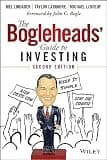
The Bogleheads' Guide to Investing
The friendly community bible of low-cost, buy-and-hold index investing, written by everyday investors rather than salespeople. The core philosophy is timeless for Aussies, just read the tax-advantaged account bits as super.
Motivated Money
Peter Thornhill
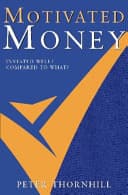
Motivated Money
Peter Thornhill's cult-favourite case for living off fully franked dividends instead of chasing capital gains. A calm, contrarian Aussie take that has quietly built a big following of long-term investors.
Some links above are affiliate links. If you buy through them, Snowball Invest may earn a small commission at no extra cost to you. We only recommend books we'd suggest anyway.
Sources
- 1. IVV listing data, Australian Securities Exchange, showing the 0.04% management fee and the AU domiciled ISIN.
- 2. VGS listing data, Australian Securities Exchange.
- 3. Vanguard MSCI Index International Shares ETF (VGS), Vanguard Australia, showing the 0.18% fee and the 23 country scope.
- 4. iShares S&P 500 ETF (IVV) fact sheet, BlackRock Australia.
- 5. Diversification, Moneysmart, Australian Securities and Investments Commission.
Was this article useful?
Put it to your own numbers
Every calculator runs entirely in your browser, with nothing stored. See what these numbers look like for your own situation.
Explore the calculators →General information only. This article is educational and does not constitute personal financial advice. It does not account for your circumstances. Consider your own situation and seek advice from a licensed adviser before acting. Read our full disclaimer.

Timothy Hirou Gaschereau
Founder of Snowball Invest, not a financial adviser.
I write about what I'm learning myself, because nobody ever taught us how to take control of our own money. It's a skill, not a mystery, and it's never too late to learn it. The best day to start was yesterday, the second best is today.
LinkedIn →Related articles

BGBL vs VGS: Which Global ETF Belongs in Your Portfolio?
BGBL charges 0.08% and holds South Korea. VGS charges 0.18% and does not. What actually separates the two big ASX global ETFs, and how to pick one.

VAS vs A200: Two Ways to Own the Australian Market
VAS holds 325 companies, A200 holds 200, and their top ten are nearly identical. What actually separates the two big Australian equity ETFs.

The Rule of 72: How Long Until Your Money Doubles
Divide 72 by your return and you get the years until your money doubles. Worked Australian examples for super, ETFs, savings accounts and fees.