

How to Choose an ETF: A Beginner's Checklist
A practical, step-by-step checklist for comparing ETFs: what actually matters, what to ignore, and the mistakes that cost beginners the most.
 By Timothy Hirou GaschereauPublished
 11 min read
Try it yourself
There are hundreds of ETFs listed on the ASX, and at first glance a lot of them look basically the same. Once you understand what an ETF actually is, and settled on that structure over an unlisted index fund, the next problem is picking one without it turning into a research project. It doesn't need to be. A handful of checks cover almost everything that actually matters.
This assumes you've already got a brokerage account sorted. If you're still weighing up platforms, our broker checklist covers fees, ownership structure and what else to look for before you open one.
Quick answer
When comparing ETFs, check five things: what it actually tracks, its ongoing fee (MER), its size and trading volume, how closely it's tracked its index historically, and whether it's physical or synthetic. If two ETFs are exposed to virtually the same thing, the cheaper, larger, more liquid one is usually the simpler pick.
In this guide
- →How to narrow hundreds of ETFs down using what you actually need it for
- →How to read a factsheet and spot what really separates two similar funds
- →Why a small fee gap turns into real money over decades
- →Why quoted trading volume understates how liquid a fund really is
- →Physical vs synthetic structures, and hedged vs unhedged
- →The checklist and the mistakes that cost beginners the most
🤔 Why choosing one feels harder than it should
🎯 The essential: Two ETFs can have nearly identical names and still hold meaningfully different things, so the name is a starting point, never the answer.
Part of the problem is naming. Two ETFs can have almost identical names and still hold meaningfully different things, one might screen out certain sectors, weight companies differently, or include assets the other doesn't. The name is a starting point, not the answer.
The other part is that most guides either explain ETFs from scratch, again, or jump straight into comparing specific funds without spelling out what you're actually meant to be looking at. This is the checklist in between.
🎯 Start with what it's for
Before comparing individual ETFs, get clear on the role you want this investment to play. Broad exposure to "the market" as a whole? A tilt toward a specific country, sector or theme? Income through dividends? Bonds to balance out shares? The answer narrows hundreds of ETFs down to a much smaller, relevant shortlist before you've even opened a comparison table.
In practice this usually sorts into a handful of common starting points: someone wanting one fund that covers the whole market without much thought is looking at a broad-market or diversified ETF; someone prioritising income over growth is looking at a dividend-focused ETF; someone who already holds Australian shares through work or family and wants to spread out is looking at an international ETF; someone getting more conservative as they near a goal is looking at bonds. None of these are mutually exclusive, but naming which one you actually are saves a lot of aimless comparing.
🔍 Know exactly what it tracks
Two "Australian shares" ETFs can hold very different things. One might track the ASX 200 (the 200 biggest companies), another might screen for specific factors like value or quality, and a third might be equal-weighted instead of size-weighted. None of that is visible from the name alone.
The fastest way to check is the fund's factsheet or product disclosure statement (PDS), every provider publishes one, and it'll state exactly which index the ETF tracks (or how it selects holdings if it's actively managed), along with a breakdown of sectors, countries and top holdings.
📄 Reading a factsheet
Factsheets look intimidating until you know the shape of one, then they take under a minute to scan. Every provider lays theirs out a little differently, but the same pieces show up on almost all of them:
- Fund objective: a one-line summary of what the ETF is actually trying to do.
- Key facts panel: inception date, MER, fund size, and number of underlying holdings, usually in a small table near the top.
- Top holdings: the biggest individual positions in the fund, useful for spotting concentration in one or two companies.
- Sector and country breakdown: where the money actually sits, often as a pie chart or simple table.
- Performance table: returns over set periods, shown against the index it's meant to be tracking, this is where you'd spot tracking error.
The full detail, including fees, risks and the exact methodology for selecting holdings, lives in the product disclosure statement (PDS), a longer, more formal document the factsheet is a summary of.
💰 Compare the fees
🎯 The essential: When two funds hold virtually the same thing, the fee is quietly doing most of the deciding, whether you looked at it or not.
When two ETFs give you essentially the same exposure, the fee becomes the main thing separating them, and small-looking differences compound into real money over time.
Worked example: two ETFs tracking almost the same index, one charging 0.07% p.a. and the other 0.45% p.a. On $50,000 invested for 30 years at an assumed 7% annual return before fees, that 0.38 percentage point gap works out to roughly $37,000 less by the end, purely from the fee difference, even though both funds are exposed to virtually the same companies.
🧾 See what a fee gap costs you, with your own numbers
Compare two fee rates over your own investment amount and timeframe.
📏 Check its size and liquidity
Two numbers worth glancing at: funds under management (FUM, or AUM), roughly how much money is invested in the fund overall, and average daily trading volume, how many units typically change hands each day. Both point toward the same thing: liquidity, how easily you can buy or sell without moving the price against yourself.
A small, thinly-traded ETF isn't necessarily a bad investment, but the gap between the buy and sell price (the "spread") tends to be wider, which quietly costs you a little more every time you trade it.
🧮 Why the traded volume isn't the whole liquidity story
🎯 The essential: A thinly-traded ETF isn't automatically illiquid, ASIC requires issuers to have a market maker keeping bid/ask spreads within set limits regardless of how much is changing hands that day.
Screen-traded volume is the number beginners fixate on, but it's not actually what determines whether you can get a fair price. ASIC's regulatory guide for exchange traded products (RG 282, updated November 2025) requires every ETF issuer to have at least one market maker under contract, an entity obligated to continuously quote both a buy and sell price within a maximum allowed spread, and to be able to create or redeem units directly with the fund to meet demand that the secondary market alone doesn't supply.
That's why an ETF showing low daily volume can still be traded in large size without moving the price much, the visible volume on screen is only part of the actual liquidity, which ultimately traces back to the liquidity of the underlying holdings the fund can create or redeem against. It's still worth checking volume and typical spread before placing a large order, but a quiet trading day on its own isn't proof a fund is hard to exit.
📈 Look at tracking error
A passively managed ETF is meant to mirror its index, but it rarely does so perfectly. "Tracking error" measures how far the fund's actual return has drifted from its index over time, most providers publish this figure on the fund's factsheet. A consistently small tracking error is a sign the fund is doing its one job well.
🏗️ Physical vs synthetic
Most Australian ETFs are physical, meaning the fund actually buys and holds the underlying shares or bonds. A smaller number are synthetic, meaning the fund instead enters into a contract, usually a swap, with a counterparty who agrees to pay the fund the index's return, without the fund directly owning the underlying assets.
Synthetic structures exist because they can access markets that are impractical to hold directly, and can sometimes track an index more precisely. The trade-off is counterparty risk, if the institution on the other side of the swap ran into serious trouble, that's a risk on top of ordinary market risk. It's usually mitigated through collateral requirements, but it's a genuinely different risk profile to a physical ETF, and worth knowing which one you're holding.
💱 Hedged or unhedged
If an ETF holds international assets, its return in Australian dollars depends on two things: how the underlying investments perform, and how the currency they're priced in moves against the AUD. An unhedged ETF leaves that currency movement in, a falling Australian dollar can boost your return, a rising one can drag on it, on top of whatever the market itself does.
A hedged ETF uses currency contracts to strip most of that effect out, so your return tracks the underlying market more closely, without the currency noise layered on top. Neither option is objectively better, hedging removes one source of volatility but also removes a form of diversification some investors actually want. It's usually stated clearly in the fund's name, "hedged" isn't the default, so an ETF without it in the name is typically unhedged. For the full trade-off with a worked example, see hedged vs unhedged ETFs.
✅ The checklist, all in one place
| Check | Where to find it |
|---|---|
| What it actually tracks | Factsheet or product disclosure statement (PDS) |
| Ongoing fee (MER) | Factsheet, PDS, or the provider's website |
| Fund size (FUM/AUM) | Factsheet or provider's website |
| Average daily trading volume | ASX website or your broker's platform |
| Tracking error | Factsheet, usually shown against its benchmark index |
| Physical or synthetic structure | PDS, under how the fund achieves its exposure |
⚠️ Mistakes that cost beginners the most
- Chasing last year's best performer. Strong recent returns usually mean you're buying in after the gain, not before it.
- Ignoring fees on "basically the same" fund. If two options hold nearly identical things, the fee is doing most of the deciding, whether you paid attention to it or not.
- Buying something you can't explain in a sentence. If you can't say what an ETF holds and why, that's worth fixing before you buy it, not after.
- Collecting near-duplicate ETFs. Owning three different broad-market ETFs doesn't triple your diversification, it mostly just triples your admin.
Choosing an ETF is one decision. Once you've got one, or a few, picked out, the next question is how they fit together, and whether you need more than one at all. That's covered in how to build a simple investment portfolio.
If you're specifically weighing up two of Australia's most popular single-ETF diversified options, our VDHG vs DHHF comparison walks through the fee gap, the bond allocation, and how to pick between them.
What I actually use
Pearler
This is the broker I personally use. Do your own research and form your own opinion, but I genuinely recommend it, it's built for long-term investors rather than day traders, and makes it easy to automate regular investing. Sign up through my link or with the code TIMOTHY269825 and you'll both get a $20 cash bonus once you make your first investment (Pearler's current offer, T&Cs apply).
Sign up to Pearler →This is a referral link. If you sign up through it, I get a bonus too, at no extra cost to you.
SnowLetter
Australia's money news and our best reads, once a week.
❓ Frequently asked questions
Is a bigger ETF always better?
+
Not automatically, but size does matter for liquidity, a larger fund is generally easier to buy and sell at a fair price. It doesn't guarantee lower fees or better tracking though, so check those separately.
Should I pick the ETF with the highest past returns?
+
No. Past performance doesn't predict future returns, and chasing whichever ETF did best last year is one of the most common ways beginners end up buying high, after the gains have already happened.
What's the real difference between two ETFs that track the same index?
+
Usually just the fee and small differences in how closely each fund tracks the index. When the underlying exposure is essentially identical, the cheaper, larger, more liquid option is normally the simpler choice.
How do I actually see what's inside an ETF?
+
Check the product disclosure statement (PDS) or the fund provider's own holdings page, most publish a full, updated list of what the ETF currently owns, along with sector and country breakdowns.
Is it a problem to own multiple ETFs that overlap a lot?
+
It's not dangerous, but it doesn't add real diversification either, you're just paying more complexity for exposure you already have. Worth checking the overlap before adding a new ETF that's very similar to one you own.
Should I choose an ETF based on its distribution yield?
+
Not on its own. A high yield can just mean the fund is concentrated in a handful of dividend-heavy sectors, which changes its risk profile. Look at the whole picture, not just the yield number.
Are synthetic ETFs unsafe?
+
Not inherently, but they carry counterparty risk that physical ETFs don't, since the fund relies on another institution honouring a swap contract rather than owning the underlying assets directly. It's usually mitigated with collateral, but it's a genuinely different risk to be aware of.
Should I pick a hedged or unhedged international ETF?
+
It depends on whether you want currency movements included in your return or stripped out. There's no universally correct answer, hedged reduces one source of volatility, unhedged adds a form of diversification. Check the fund's name, since hedged funds state it explicitly.
The checklist narrows things down, but the fee comparison is the one part worth running with your actual numbers, not just the general example above.
🧾 Net Fees Calculator
See how much a fee difference really costs you over time.
📚 Recommended reading
The Little Book of Common Sense Investing
John C. Bogle
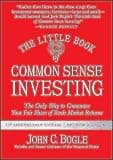
The Little Book of Common Sense Investing
From the man who invented the index fund, this is the short, sharp case for low-cost investing that has aged like fine wine. The maths on fees is universal, just think ETFs and super instead of his US funds.
The Millionaire Teacher
Andrew Hallam

The Millionaire Teacher
A schoolteacher built a seven-figure portfolio on a modest salary, and here he lays out nine plain-English rules for doing the same with low-cost index funds. Refreshingly global, so Aussie readers just swap in super and local ETFs.
The Simple Path to Wealth
JL Collins
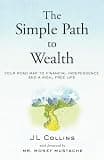
The Simple Path to Wealth
The friendliest on-ramp to index investing there is, born from letters a dad wrote his daughter. It makes 'buy the whole market and chill' feel obvious, just map his US fund picks onto Aussie equivalents and super.
Some links above are affiliate links. If you buy through them, Snowball Invest may earn a small commission at no extra cost to you. We only recommend books we'd suggest anyway.
Sources
Was this article useful?
Put it to your own numbers
Every calculator runs entirely in your browser, with nothing stored. See what these numbers look like for your own situation.
Try the Net Fees calculator →General information only. This article is educational and does not constitute personal financial advice. It does not account for your circumstances. Consider your own situation and seek advice from a licensed adviser before acting. Read our full disclaimer.

Timothy Hirou Gaschereau
Founder of Snowball Invest, not a financial adviser.
I write about what I'm learning myself, because nobody ever taught us how to take control of our own money. It's a skill, not a mystery, and it's never too late to learn it. The best day to start was yesterday, the second best is today.
LinkedIn →Related articles
ETF vs Managed Fund: Which Structure Actually Suits You?
ETFs or managed funds? We break down the real differences in cost, tax, flexibility and auto-investing so you can pick the right structure for your money.
Raiz Review 2026: Is the Micro-Investing App Worth It for Australians?
An honest, balanced Raiz Invest review for 2026. We break down the fees, portfolios, round-ups, tax treatment, and how Raiz compares to Spaceship and buying ETFs directly.

VAS vs VGS: How to Combine Them (and in What Ratio)
VAS and VGS aren't rivals, they're the classic two-ETF core. How franking, home bias and global growth shape the split, with common VAS/VGS ratios and who each suits.