

What is a dividend?
Quick answer
A dividend is a share of a company's profit paid out to its shareholders, usually in cash and usually a couple of times a year. In Australia, dividends often come with franking credits attached, a tax credit that can meaningfully reduce, or even eliminate, the tax you owe on that income.
How a dividend works
When a company turns a profit, it has a choice: reinvest the money back into the business, or hand some of it to the people who own shares. That payout is a dividend. Most ASX companies that pay dividends do so twice a year, an interim dividend after the half-year results and a final dividend after the full year, quoted in cents per share.
Own 1,000 shares in a company that declares a 70 cent per share dividend, and you receive $700 in cash, or new shares if you're enrolled in a dividend reinvestment plan (more on that below).
Franking credits: the Australian twist
Companies pay corporate tax on their profits before anything reaches shareholders, generally 30% for large companies and 25% for smaller ones. Without an adjustment, that profit would effectively be taxed twice, once at the company level, again in your own return. Australia's dividend imputation system fixes this by passing the company tax already paid through to you as a franking credit.
Say you receive a fully franked dividend of $700 cash. Attached to it is a $300 franking credit (representing the 30% company tax already paid on the underlying $1,000 of profit). For tax purposes, your assessable income from that dividend is the full $1,000, cash plus credit, and you get to claim the $300 credit against your tax bill. If your marginal rate is above 30%, you top up the difference. If it's below 30%, for instance if you're retired with modest other income, the ATO refunds you the difference. That refund is real money, and it's one reason Australian shares are known for punchy effective yields.
A dividend can be fully franked (full company tax rate paid, maximum credit), partially franked (only part of it has been through the Australian tax system), or unfranked (no credit at all, common with foreign income). Your dividend statement always shows the franking percentage.
Dividend yield: sizing up the payout
Dividend yield is the annual dividend as a percentage of the current share price: annual dividend per share divided by share price, times 100. A $10 share paying 40 cents a year yields 4%.
The ASX has historically been one of the higher-yielding major sharemarkets globally, in part because franking encourages companies to pay out more profit rather than retain it. Recent figures for the broad ASX 200 index have sat lower than its longer-run average, but a market-wide yield is a moving number that shifts with share prices and bank and mining sector results, not a fixed fact. Check a current data source rather than anchoring to any single number, and remember an index average tells you little about any one stock.
That's the short version. For the full calculation, trailing vs forward yield, and how franking turns a cash yield into a grossed-up yield, see our dedicated dividend yield glossary page.
The 45-day holding rule
You can't buy a share the day before it goes ex-dividend purely to scoop up the franking credit and sell straight after. The ATO generally requires you to hold shares "at risk" for at least 45 days around the ex-dividend date (90 days for some preference shares) to claim the credit. The ex-dividend date is the cut-off, buy on or after it and you miss that dividend, and the share price typically drops by roughly the dividend amount on that day, reflecting the cash leaving the company.
Dividend reinvestment plans
Some companies let you automatically convert your dividend into new shares instead of cash, often at a small discount, called a dividend reinvestment plan (DRP). It's a low-effort way to keep compounding your holding, but you still owe tax on the dividend income even though you never saw the cash, worth factoring into what you set aside at tax time.
Not every company pays one
Growth-focused companies, particularly early-stage tech businesses, often reinvest every dollar rather than pay dividends, that's not a red flag, it just means you're backing capital growth over income. Mature, cash-generative businesses, banks, supermarkets, infrastructure, tend to be the reliable payers many investors build income-focused portfolios around, especially in retirement. Broad index funds simply pass through the dividends and franking credits of everything they hold.
A couple of things worth knowing
A high yield doesn't automatically mean a good investment, if the share price has fallen sharply, the yield can look inflated even as the company struggles, sometimes called a dividend trap. And dividends aren't free money, the share price typically falls by roughly the payout amount on the ex-dividend date, you're receiving your own equity back in cash form, not a bonus on top of it.
📚 Recommended reading
Girls That Invest
Simran Kaur
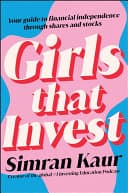
Girls That Invest
A no-jargon crash course from the podcaster behind Girls That Invest that makes the sharemarket feel doable, written especially for women starting out. The perfect first step before you buy your first ETF.
The Intelligent Investor
Benjamin Graham
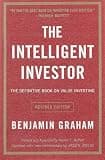
The Intelligent Investor
The value-investing bible Warren Buffett calls the best book on investing ever written. It is old-school and US-flavoured, so read it for the timeless mindset on risk and 'Mr Market', not the specific stock tips.
Some links above are affiliate links. If you buy through them, Snowball Invest may earn a small commission at no extra cost to you. We only recommend books we'd suggest anyway.
Frequently asked questions
When are dividends paid?
Most ASX companies that pay dividends do so twice a year, an interim payment around February to March and a final payment around August to September, though exact timing varies by company.
Do I need to do anything to receive a dividend?
No. If you hold the shares on the record date, the dividend lands in your nominated bank account automatically, or converts to new shares if you're enrolled in a dividend reinvestment plan. You just need to declare the income and any franking credits at tax time.
Can I get a cash refund of franking credits?
Yes. If your franking credits exceed your total tax liability for the year, the ATO refunds the excess. This is particularly relevant for retirees and low-income earners, and is claimed through your annual tax return.
What's the difference between a dividend and a distribution?
A dividend comes from a company. A distribution is the equivalent payment from a trust structure, like a managed fund or ETF, and can include income, capital gains and franking credits bundled together, with tax treatment that can differ slightly.
Are dividends from overseas shares franked?
No. Franking credits only apply to Australian companies that have paid Australian corporate tax. Overseas dividends are unfranked and may carry foreign withholding tax instead.
Disclaimer
This is general information only, not financial or investment advice. Dividend yields, franking rates and market figures change constantly and shouldn't be relied on as current without checking a live source. This isn't a recommendation to buy any particular share.