
How Much Should I Invest in ETFs Each Month?
No magic number exists, but there is a smart framework. Here is how to work out how much to invest in ETFs each month as an Australian investor.
 By Timothy Hirou GaschereauPublished
 12 min read
Try it yourself
There is no magic number. The internet is full of "invest $500 a month!" and "put away 20% of your income!" rules, and while those are decent starting points, the right amount for you depends on your income, your expenses, your goals, and how long you have.
Working out how much to invest in ETFs each month is less about hitting a specific figure and more about building a framework that fits your actual life. That is what this guide gives you, plus the one insight that matters more than the dollar amount.
🎯 The essential: There is no universal right amount: it depends on your income, expenses, goals and timeframe. Sort the foundations first (high-interest debt, a 3 to 6 month emergency fund, and super on track), then aim to invest a slice of the 20% savings portion of your take-home pay. Consistency beats size: $200 a month for 30 years beats $1,000 a month for 5. Automate a transfer on payday so investing happens before lifestyle creep does.
Get the foundations right before you invest a cent in ETFs
This is the part most articles skip. Before putting money into ETFs, three foundations need to be solid.
- High-interest debt paid down first. Carrying a credit card at 20% or a personal loan at 15%? Paying that off is a guaranteed 15% to 20% return, and no ETF reliably beats that.
- Emergency fund of 3 to 6 months of expenses. ETFs are a long-term investment. Without a cash buffer, a busted car or a lost job forces you to sell at the worst time. Build the buffer in a high-interest savings account first. Non-negotiable.
- Super on track. Your employer must pay 12% of your ordinary earnings into super (the rate reached 12% on 1 July 2025). Check your payslip, and consider whether salary sacrificing into super beats investing outside it, especially in a higher tax bracket.
Once those three are in place, you are ready to think about ETF investing.
A budgeting framework: where ETFs fit
The 50/30/20 rule splits your take-home pay into needs (50%), wants (30%) and savings-and-investing (20%). ETFs live in that 20% bucket. But be honest with yourself: in Sydney or Melbourne, housing alone can eat 40% to 50% of take-home pay. The rule is a starting point, not a commandment. If your needs genuinely cost 60%, your wants bucket shrinks, not your savings.
| Scenario | Gross salary | ~Take-home/mo | Realistic monthly ETF amount |
|---|---|---|---|
| Early career | $60,000 | ~$4,200 | $200-$400 |
| Mid career | $90,000 | ~$5,900 | $400-$700 |
| Senior / dual income | $120,000 | ~$7,500 | $600-$1,000 |
Notice the ETF amount is less than the full 20% savings bucket. That bucket also covers emergency-fund top-ups, a house deposit and extra super. ETFs are one slice of the savings pie, not the whole thing.
Consistency beats size: the compounding argument
This is the most important section, so read it twice. The single biggest driver of long-term wealth is not how much you invest in any one month. It is how consistently you invest, and for how long.
| Monthly amount | After 10 yrs | After 20 yrs | After 30 yrs |
|---|---|---|---|
| $200 | ~$36,600 | ~$118,600 | ~$298,100 |
| $500 | ~$91,500 | ~$296,500 | ~$745,200 |
| $1,000 | ~$183,000 | ~$593,000 | ~$1,490,500 |
Look at the numbers: $200 a month for 30 years (about $298,000) beats $1,000 a month for 10 years (about $183,000). Time in market is the lever most people underestimate. Starting with a small, sustainable amount today beats waiting until you can afford a bigger one. You can see this for yourself in our compound interest calculator.
Brokerage efficiency: do not let fees eat your returns
Most Australian brokers charge between $2 and $9.50 a trade (some more). The maths on small purchases gets ugly fast: $9.50 brokerage on a $100 buy is a 9.5% drag before your money does anything. A few rules of thumb:
- If your broker charges brokerage, aim for parcels of at least $500 so the fee stays under 1% to 2% of the trade.
- Investing smaller amounts (under $300 a month)? Batch contributions monthly or quarterly rather than buying weekly.
- Auto-invest platforms let you schedule recurring buys, which helps discipline; just check the fee against your contribution size.
- Monthly is usually the sweet spot: it aligns with pay and limits how often brokerage applies.
If you are weighing platforms, our guide to choosing an investing app and the Raiz review are good next reads.
Dollar-cost averaging: your stress-free entry strategy
Dollar-cost averaging means investing a fixed dollar amount at regular intervals, whatever the market is doing. When prices are high your fixed amount buys fewer units; when they are low it buys more, smoothing your average entry price over time. For most people doing monthly ETF investing, this is simply what happens naturally: you invest your amount on payday and get on with your life.
Lump-sum investing beats dollar-cost averaging about two-thirds of the time (markets tend to rise), but DCA wins on the psychological front by removing the "should I invest now or wait?" paralysis. For contributions from regular income it is the practical default. Our deep dive on dollar-cost averaging covers when each approach makes sense.
Percentage of income vs fixed dollar (and automating it)
There are two ways to frame it. A percentage of income ("I invest 15% of my take-home") scales automatically with pay rises. A fixed dollar amount ("I invest $400 a month") is simple and predictable, but lifestyle creep can shrink it as a share of your growing income. The best approach combines both: pick a percentage target, automate a fixed dollar amount that reflects it today, and revisit it each pay rise.
The most powerful habit in personal finance is not discipline, it is automation. Set up a transfer to your brokerage or investing platform on payday so the money moves before you can spend it. Pay yourself first, live on the rest. No willpower required.
Adjusting your contributions over time
- Pay rises: lift your contribution before lifestyle creep absorbs the extra. Even splitting a raise 50/50 between lifestyle and investing is a real win.
- Life changes: a baby, a house, or reduced income are legitimate reasons to dial contributions down temporarily. Try not to stop entirely; even $50 a month keeps the habit and the compounding clock alive.
- The 5-year rule: do not invest money you will need within five years. Markets can fall 30% to 40% and take years to recover. A deposit you need in two years belongs in savings or a term deposit.
- As your balance grows: a $100,000 portfolio at 8% generates roughly $8,000 a year on its own. Over time your existing balance does more of the heavy lifting than your contributions.
A simple step-by-step to work out your number
- Calculate your monthly take-home pay after tax, Medicare levy and any salary sacrifice.
- List your non-negotiable monthly expenses (rent or mortgage, groceries, utilities, transport, insurance, minimum debt repayments). That is your needs number.
- Pay down high-interest debt first if you have anything above roughly 8% to 10% interest.
- Set your emergency fund target of 3 to 6 months of expenses; you can split savings between building it and starting small ETF contributions.
- Work out your savings surplus: take-home minus needs minus a reasonable wants budget.
- Allocate a portion to ETFs. A sensible start is 10% to 20% of take-home across all goals, with ETFs getting a slice. Start with what you can sustain, not what sounds impressive.
Frequently asked questions
How much should I invest in ETFs as a beginner?
+
Start with whatever you can consistently sustain after covering your foundations: emergency fund, high-interest debt and super. For many beginners, $100 to $300 a month is a realistic and meaningful starting point. The amount matters less than the habit. A $200-a-month habit started at 25 is worth far more than a $1,000-a-month habit started at 40, because of the extra years of compounding.
Is $100 a month enough to invest in ETFs?
+
Yes. $100 a month at 8% a year over 30 years grows to roughly $149,000. It is not a fortune, but it is real money and far better than $0. The key is keeping brokerage proportionate: on a $100 purchase, a $9.50 fee is a 9.5% drag, so batch small amounts up or use a low-brokerage platform. As your income grows, increase the amount.
How much do I need to invest to make $1,000 a month in passive income?
+
At a 4% annual yield (a rough benchmark for a diversified ETF portfolio) you would need about $300,000 to generate $1,000 a month ($12,000 a year) in distributions. At a 3% yield, closer to $400,000. These are rough estimates; actual distributions vary by ETF, market conditions and whether you draw on income only or capital too.
What percentage of my income should I invest in ETFs?
+
A common starting target is 10% to 20% of take-home pay across all your savings and investing goals, with ETFs as one part of that. If you are also saving for a house deposit or building an emergency fund, ETFs might get 5% to 10% while those are in progress. The right percentage is the one you can sustain month after month, year after year.
How often should I invest in ETFs?
+
Monthly is the most practical cadence for most people. It aligns with pay cycles, limits how often brokerage applies if your platform charges per trade, and keeps the habit manageable. On low or no-brokerage platforms, weekly or fortnightly is fine too. The frequency matters less than the consistency.
Should I invest a lump sum or spread it out monthly?
+
Research, including Vanguard's analysis, shows lump-sum investing beats dollar-cost averaging about two-thirds of the time, because markets tend to rise over time. But for most people investing from regular income the question is moot: you invest monthly because that is when you get paid. If you do have a lump sum, investing it promptly generally beats waiting, though splitting it over three to six months is a reasonable compromise if volatility makes you nervous.
Keep reading
Books worth reading
📚 Recommended reading
The Barefoot Investor
Scott Pape
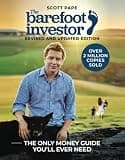
The Barefoot Investor
Australia's best-selling money book ever. A simple system for accounts, budgeting, debt and a real emergency fund in one.
Girls That Invest
Simran Kaur
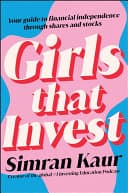
Girls That Invest
A no-jargon crash course from the podcaster behind Girls That Invest that makes the sharemarket feel doable, written especially for women starting out. The perfect first step before you buy your first ETF.
The Bogleheads' Guide to Investing
Taylor Larimore, Mel Lindauer & Michael LeBoeuf
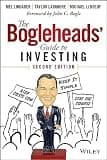
The Bogleheads' Guide to Investing
The friendly community bible of low-cost, buy-and-hold index investing, written by everyday investors rather than salespeople. The core philosophy is timeless for Aussies, just read the tax-advantaged account bits as super.
Some links above are affiliate links. If you buy through them, Snowball Invest may earn a small commission at no extra cost to you. We only recommend books we'd suggest anyway.
Sources
- ASIC Moneysmart, compound interest calculator, moneysmart.gov.au
- ASIC Moneysmart, investing guidance, moneysmart.gov.au
- Australian Taxation Office, super guarantee rates and thresholds, ato.gov.au
- Australian Taxation Office, income tax rates for residents, ato.gov.au
- Vanguard Australia, investment resources, vanguard.com.au
General information only, not personal financial advice. Figures are illustrative and pre-tax; actual returns vary and past performance is not a reliable indicator of future performance. Consider speaking to a licensed financial adviser about your own situation.
Was this article useful?
Put it to your own numbers
Every calculator runs entirely in your browser, with nothing stored. See what these numbers look like for your own situation.
Try the Compound Interest calculator →General information only. This article is educational and does not constitute personal financial advice. It does not account for your circumstances. Consider your own situation and seek advice from a licensed adviser before acting. Read our full disclaimer.

Timothy Hirou Gaschereau
Founder of Snowball Invest, not a financial adviser.
I write about what I'm learning myself, because nobody ever taught us how to take control of our own money. It's a skill, not a mystery, and it's never too late to learn it. The best day to start was yesterday, the second best is today.
LinkedIn →Related articles
What Is Dollar Cost Averaging? A Beginner's Guide for Australians
What dollar cost averaging actually is, the honest truth about DCA vs lump sum investing, and how to set up automatic recurring investing in Australia.

CommSec Pocket Fees: What It Costs and How It Compares
A$2 a trade up to A$1,000, then 0.20%, on buys and sells. Plus the separate HIN nobody mentions, and the order size where Pocket costs more than main CommSec.

BGBL ETF Australia: Betashares' Global Shares Fund Explained
BGBL is Betashares' ultra low cost global shares ETF tracking around 1,000 companies. What it holds, its 0.08% fee, BGBL vs VGS, dividends and tax.