

NDQ ETF: The Complete Guide to Betashares' Nasdaq 100 Fund
A plain-English guide to NDQ, the Betashares Nasdaq 100 ETF: what it holds, the 0.48% fee, the concentration risk, and why it's a tech tilt, not a core holding.
 By Timothy Hirou GaschereauPublished
 13 min read
Try it yourself
NDQ is the ETF Australians reach for when they want a piece of the US tech giants: Apple, Microsoft, Nvidia, Amazon, Meta and the rest. Betashares packages the Nasdaq 100 into a single ASX trade, and its run over the past decade made it one of the most popular ETFs in the country. It is also one of the most misunderstood.
This guide assumes you already know what an ETF is. Here we are honest about what NDQ really is: a concentrated bet on US technology, not a diversified core holding. We cover what it holds, what the 0.48% fee costs, and how it stacks up against IVV, VGS and the hedged NDQH. General information only, not financial advice.
🎯 The essential: NDQ is the Betashares Nasdaq 100 ETF (ASX: NDQ): the 100 largest non-financial companies on the Nasdaq, for a 0.48% fee (high for an index ETF). It is Australian-domiciled (no W-8BEN), unhedged, pays no franking, and is heavily concentrated in US tech (top 10 holdings are ~50% of the fund). Treat it as a satellite tilt on top of a diversified core, not a core holding, and remember it overlaps heavily with any S&P 500 or global ETF you already own.
What NDQ actually is
NDQ is the Betashares Nasdaq 100 ETF, listed on the ASX. It tracks the Nasdaq 100 index: the 100 largest non-financial companies listed on the Nasdaq exchange in the US. It is a one-trade way to own the biggest US tech names through a normal ASX broker.
It is Australian-domiciled (no W-8BEN form, no US estate tax exposure) and unhedged (your returns move with the AUD/USD rate; the hedged version is NDQH). And by index rule it holds no financials: no banks, no insurers. The index is market-cap weighted and rebalanced quarterly, so the biggest companies get the biggest slice.
What it holds, and why it isn't diversified
Let us be blunt: NDQ is not a diversified fund. It is a concentrated bet on US technology and tech-adjacent mega-caps.
The overlap problem: if you already hold VGS or IVV, you already own Apple, Microsoft and Nvidia. Adding NDQ on top does not diversify you, it concentrates you further in exactly the same names. That can be intentional, but go in with your eyes open. We take that apart properly in NDQ vs VGS.
The 0.48% fee, in real dollars
NDQ's fee is about 0.48% a year, high for an index ETF (the all-in figure can reach ~0.50% with transaction costs).
| Portfolio size | Annual cost at 0.48% |
|---|---|
| $10,000 | ~$48 |
| $50,000 | ~$240 |
| $100,000 | ~$480 |
| ETF | Index | MER |
|---|---|---|
| NDQ | Nasdaq 100 | 0.48% |
| VDHG | Multi-asset diversified | 0.27% |
| VGS | World ex-Australia | 0.18% |
| IVV | S&P 500 | 0.04% |
IVV costs roughly one-twelfth of NDQ. Whether the premium is worth it depends entirely on your view of US tech versus the broader market. Our fee calculator shows how that gap compounds.
Performance, honestly
The past decade has been spectacular for US mega-cap tech, and NDQ rode it. But concentration cuts both ways. In 2022, when rising rates hammered growth stocks, NDQ fell roughly 28% in AUD terms for the year while broad-market ETFs held up far better. That is what a concentrated sector bet looks like on the downside: bigger ups, bigger downs. Past performance is not a guide to future returns, and the conditions that drove US tech's dominance may or may not repeat.
Distributions and tax
NDQ pays distributions twice a year (typically January and July), and the yield is low because these are growth companies that reinvest earnings. Key points for Australians: no franking credits (US companies pay US tax, not Australian company tax), no W-8BEN (thanks to the Australian domicile), and unhedged currency exposure. A DRP is available to reinvest distributions with no brokerage.
NDQ vs IVV, VGS and NDQH
| NDQ | IVV | VGS | NDQH | |
|---|---|---|---|---|
| Index | Nasdaq 100 | S&P 500 | World ex-Aus | Nasdaq 100 (hedged) |
| Holdings | 100 | 500 | ~1,400+ | 100 |
| MER | 0.48% | 0.04% | 0.18% | 0.51% |
| Currency | Unhedged | Unhedged | Unhedged | Hedged |
| Financials | No | Yes | Yes | No |
Vs IVV: NDQ is 100 tech-heavy Nasdaq names, IVV is 500 broader S&P 500 names at a fraction of the fee (see our S&P 500 ETF guide). Vs VGS: VGS is far more diversified, ~1,400 companies across 23 markets (see our VGS guide). Vs NDQH: same index, currency hedged. If you hold VGS or IVV, you already own the Nasdaq mega-caps, so stacking NDQ adds concentration, not diversification.
Who NDQ suits: satellite, not core
NDQ suits you if you have a long horizon (10+ years), a genuinely high risk tolerance (comfortable with 25% to 30% drawdowns without selling), and you want a deliberate tech tilt on top of a diversified core, understanding you are adding concentration, not diversification.
Look elsewhere if you want diversification (NDQ provides none), have a lower risk tolerance or shorter horizon, think “Nasdaq” means “all US stocks” (it does not), or are considering NDQ as your main holding without a diversified core underneath.
The satellite framing: NDQ works best as a small slice (say 10% to 20%) sitting alongside a broad core like VGS, DHHF or VDHG, not as the whole portfolio. Using NDQ as your core is a concentrated sector bet dressed up as a strategy.
How to buy NDQ
NDQ trades on the ASX under the ticker NDQ, like any share. Open a broker (CommSec, Pearler, Stake, SelfWealth, Superhero), search “NDQ” and place a buy order. New to this? See how to buy shares in Australia. SMSF investors can buy it directly; some member-direct super options allow ETFs too, check your fund. A DRP is available through the fund's registry.
Common mistakes with NDQ
- Treating NDQ as a core holding. It is 100 stocks in one sector of one country. That is a satellite, not a foundation.
- Doubling up without realising. Buying NDQ on top of IVV or VGS thinking you are diversifying. You are just buying more Apple, Microsoft and Nvidia.
- Chasing recent performance. Buying after a strong tech run and expecting it to continue. Concentration means the downside can be just as sharp.
- Ignoring the fee gap. 0.04% (IVV) vs 0.48% (NDQ) compounds over decades, roughly $440 a year extra on $100,000.
- Misreading “Nasdaq”. The Nasdaq is an exchange. The Nasdaq 100 is just its 100 biggest non-financial names, not “all US stocks” or “all tech”.
❓ Frequently asked questions
Is NDQ ETF safe?
+
No ETF is safe in the short term, and NDQ is higher risk than most. Its concentration in US tech mega-caps means drawdowns can be sharp; in 2022 it fell roughly 28% in AUD terms for the year. It suits investors with a long horizon and genuine high risk tolerance, not those wanting capital preservation.
What index does NDQ track?
+
The Nasdaq 100 Index: the 100 largest non-financial companies listed on the Nasdaq exchange in the US. It is market-cap weighted and rebalanced quarterly.
Does NDQ pay dividends?
+
Yes, but modestly. NDQ pays distributions twice a year (typically January and July), and the yield is low because the underlying companies are growth-focused and reinvest most earnings. There are no franking credits attached.
What is the NDQ ETF fee?
+
The management fee and costs are about 0.48% a year, versus roughly 0.18% for VGS and 0.04% for IVV. Including estimated transaction costs, the all-in figure can reach around 0.50%.
NDQ vs IVV: which is better?
+
Neither is universally better. IVV gives broader US exposure across 500 companies at a much lower fee (0.04%). NDQ gives concentrated Nasdaq 100 tech exposure at 0.48%. For most people building a core, IVV is the more sensible US holding; NDQ suits those who specifically want a tech tilt on top of an existing diversified core.
Is NDQH better than NDQ?
+
NDQH tracks the same Nasdaq 100 index but hedges the AUD/USD currency exposure, at a slightly higher fee (~0.51%). Neither is objectively better: when the AUD falls, unhedged NDQ benefits in AUD terms; when it rises, NDQH holds up better. It is a separate decision about currency, not the index.
Does NDQ include financial stocks?
+
No. The Nasdaq 100 excludes financial companies by construction, so there are no banks, insurers or diversified financials in the fund.
Keep reading
📚 Recommended reading
The Barefoot Investor
Scott Pape

The Barefoot Investor
Australia's best-selling money book ever. A simple system for accounts, budgeting, debt and a real emergency fund in one.
Girls That Invest
Simran Kaur
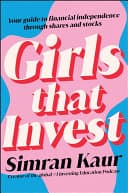
Girls That Invest
A no-jargon crash course from the podcaster behind Girls That Invest that makes the sharemarket feel doable, written especially for women starting out. The perfect first step before you buy your first ETF.
The Bogleheads' Guide to Investing
Taylor Larimore, Mel Lindauer & Michael LeBoeuf
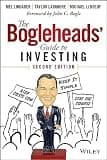
The Bogleheads' Guide to Investing
The friendly community bible of low-cost, buy-and-hold index investing, written by everyday investors rather than salespeople. The core philosophy is timeless for Aussies, just read the tax-advantaged account bits as super.
Some links above are affiliate links. If you buy through them, Snowball Invest may earn a small commission at no extra cost to you. We only recommend books we'd suggest anyway.
Sources
This article is general information only, not financial advice. It does not take your circumstances into account. ETF fees, holdings and index rules change, and figures here are indicative as of mid-2026. Check Betashares' current product disclosure statement, verify the MER on their website, and consider a licensed adviser before investing. Past performance is not a reliable indicator of future performance.
Was this article useful?
Put it to your own numbers
Every calculator runs entirely in your browser, with nothing stored. See what these numbers look like for your own situation.
Try the Compound Interest calculator →General information only. This article is educational and does not constitute personal financial advice. It does not account for your circumstances. Consider your own situation and seek advice from a licensed adviser before acting. Read our full disclaimer.

Timothy Hirou Gaschereau
Founder of Snowball Invest, not a financial adviser.
I write about what I'm learning myself, because nobody ever taught us how to take control of our own money. It's a skill, not a mystery, and it's never too late to learn it. The best day to start was yesterday, the second best is today.
LinkedIn →Related articles

HACK ETF Australia: The Complete Guide to BetaShares Global Cybersecurity ETF
What is the HACK ETF? A plain-English guide to BetaShares' cybersecurity ETF for Australians: what it holds, the 0.67% fee, the risks, and whether it belongs in your portfolio.

BGBL ETF Australia: Betashares' Global Shares Fund Explained
BGBL is Betashares' ultra low cost global shares ETF tracking around 1,000 companies. What it holds, its 0.08% fee, BGBL vs VGS, dividends and tax.
U100 ETF Australia: Global X's US Giants ETF Explained
U100 is Global X's low cost US 100 ETF on the ASX, holding 100 US giants. What it holds, its 0.18% fee, currency risk, and how U100 compares to NDQ.