

Dividend Yield Explained: The Complete Australian Guide
What dividend yield means, how to calculate it, and the crucial Australian grossed-up yield (with franking). Plus the yield trap and what counts as a good yield.
 By Timothy Hirou GaschereauPublished
 12 min read
Try it yourself
Dividend yield is the number you see quoted next to every income share and dividend ETF, and the one most people misread. It looks like a simple interest rate, but in Australia there is a twist (franking) and a trap (a high yield can be a warning, not a reward). This guide makes both clear.
For the basics of what a dividend actually is, see our what is a dividend guide. Here we focus on the yield metric itself: the formula, the Australian grossed-up version, and how to use it without getting burned. General information only, not financial advice.
🎯 The essential: Dividend yield = annual dividend per share divided by the share price, as a percentage. In Australia the number that matters is the grossed-up yield, which adds the value of franking credits and is often meaningfully higher than the cash yield. But yield is not return: total return counts capital growth too, and a very high yield often signals a falling price or a coming cut (the yield trap). Always check the payout ratio and whether the figure is trailing or forecast.
What dividend yield is, in plain English
Dividend yield measures how much income a share pays you right now, relative to what you paid. Think of it like an interest rate on a term deposit, but for shares: a 4% yield means the company pays you $4 in dividends for every $100 of shares you hold.
The formula, worked
Dividend yield = (annual dividend per share / share price) x 100
If a company pays $0.50 per share over the year and trades at $10.00, the yield is ($0.50 / $10.00) x 100 = 5%. On $1,000 invested, that is $50 a year before tax. The “annual dividend” is almost always the sum of the past 12 months of payments, which is the trailing yield.
Trailing vs forward yield
Trailing yield uses dividends already paid over the past 12 months. It is historical, it is what most platforms show, and it is the more reliable because the payments actually happened. Forward yield uses forecast dividends (analyst estimates for the next 12 months), which is useful for planning but less certain. Before you get excited about a yield, check which one it is: a forward yield built on optimistic forecasts can look very different from what gets paid.
Grossed-up yield: the Australian angle
This is the section that matters most for Australians. Under our dividend imputation system, a company that has paid 30% tax can attach franking credits to its dividend, representing tax already paid on your behalf. So a 5% fully franked yield is worth more than a 5% unfranked one. The number that captures the difference is the grossed-up yield.
The maths: grossed-up dividend = cash dividend / (1 minus 0.30) = cash / 0.70. A $10 share paying a fully franked $0.70 dividend has a 7% cash yield but a 10% grossed-up yield: the franking credit is worth an extra $0.30 per share. Always gross up before you compare Australian shares to each other or to anything else.
Yield vs total return
Yield tells you about income, and nothing about what is happening to the value of your shares. Total return = yield plus capital growth (or minus loss). A stock can yield 8% for the year while its price falls 10%, leaving you with a total return of minus 2%: you received income but lost more in value than you earned. Focusing only on yield gives a dangerously incomplete picture. Our dividend ETFs guide digs into this for income portfolios.
The yield trap: when a high yield is a warning
Counterintuitive but crucial: a very high yield can be a red flag, not a reward. Yield is the dividend divided by the price, so if the price falls sharply, the yield rises automatically even if the dividend has not changed.
A company paying $0.50 a share yields 5% at a $10 price. If the price falls to $5 (because the business is struggling), the yield mechanically becomes 10%, right before the board may cut the dividend to zero. If a yield looks unusually high versus the market, ask why. There is usually a reason, and it is often not a good one.
Payout ratio and dividend sustainability
A yield is only as good as the company's ability to keep paying it, which is what the payout ratio shows: dividends paid divided by net profit. Around 50% means half the profit is paid out and half reinvested; 100% means everything is paid out; above 100% means paying out more than it earns, which is not sustainable. Most mature companies sit around 50% to 80%, though REITs and infrastructure run higher by design. A 7% yield with a 120% payout ratio is a very different proposition to a 7% yield at 65%.
What counts as a good yield?
No single answer, but context helps. The ASX 200 has historically yielded around 4% to 4.5% cash, closer to 5% to 7% grossed up, higher than most developed markets thanks to franking. Crucially, compare it to the risk-free rate: when term deposits pay 2%, a 4% franked yield looks great; when they pay 5%, that same yield is far less compelling once you factor in share-price risk. Individual stocks range from 0% (growth companies reinvesting everything) to 8%+ (mature, capital-light businesses or REITs). Verify current figures on the ASX rather than relying on averages.
How franking changes yield value by tax rate
Franking credits are not worth the same to everyone. It depends on your marginal tax rate:
| Marginal tax rate | Effect of franking credits |
|---|---|
| 0% (tax-free threshold) | Full refund of credits. Extremely valuable. |
| 19% | Excess credits refunded. |
| 30% (equals company rate) | Credits exactly offset the tax. No extra tax on the dividend. |
| 37% / 45% (top) | Credits reduce the bill but you still owe the difference. |
| 15% (super, accumulation) | Excess credits refunded. Very valuable for super funds. |
So a fully franked dividend is worth more, after tax, to a retiree or a super fund than to a top-bracket earner. See how dividends are taxed for the full picture.
Common mistakes with dividend yield
- Chasing the highest yield without checking sustainability. A 10% yield is meaningless if it is cut next quarter.
- Comparing yields without grossing up. A 5% franked yield and a 5% unfranked yield are not the same thing.
- Confusing yield with total return. Income is only half the picture; capital growth matters just as much.
- Not checking trailing vs forward. Forward yields are estimates, not guarantees.
- Treating yield as guaranteed income. Dividends can be cut at any time, as many learned in 2020.
❓ Frequently asked questions
What is a good dividend yield in Australia?
+
There is no universal answer, but the ASX 200 has historically averaged around 4% to 4.5% cash, and closer to 5% to 7% grossed up for franking. Whether a specific yield is good depends on interest rates, the company's fundamentals and your tax position. Verify current market yields on the ASX rather than relying on averages.
What is the difference between dividend yield and payout ratio?
+
Yield tells you the income a share pays relative to its price (what you receive). The payout ratio tells you how much of the company's profit is being paid out as dividends (whether that payment is sustainable). Both matter: yield is the reward, payout ratio is the reliability.
What does grossed-up dividend yield mean?
+
It accounts for the value of franking credits on a fully franked dividend, showing the true pre-tax value including the tax the company already paid on your behalf. At a 30% corporate rate, grossed-up dividend = cash dividend / 0.70. It is the number to use when comparing Australian shares.
Is a high dividend yield always good?
+
No. A very high yield can be a warning sign. If a share price has fallen sharply because the business is struggling, the yield rises mechanically even though the dividend hasn't changed, and the dividend may be about to be cut. Always ask why the yield is high before investing.
How do I find a stock's dividend yield?
+
Most broker platforms show it on each stock's summary page, and the ASX dividend search lists dividend history. Sites like CommSec, Sharesight and Market Index show it too. Always check whether the figure is trailing (already paid) or forward (a forecast).
Do ETFs pay a dividend yield?
+
Yes. ETFs pass through the dividends of their underlying holdings as distributions. A broad-market ETF like VAS or A200 roughly tracks the market yield; high-dividend ETFs like VHY aim higher. Note ETF distributions can include dividends, interest and capital gains, so check the annual tax statement breakdown.
Keep reading
📚 Recommended reading
The Barefoot Investor
Scott Pape

The Barefoot Investor
Australia's best-selling money book ever. A simple system for accounts, budgeting, debt and a real emergency fund in one.
Girls That Invest
Simran Kaur
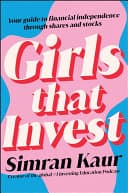
Girls That Invest
A no-jargon crash course from the podcaster behind Girls That Invest that makes the sharemarket feel doable, written especially for women starting out. The perfect first step before you buy your first ETF.
The Bogleheads' Guide to Investing
Taylor Larimore, Mel Lindauer & Michael LeBoeuf
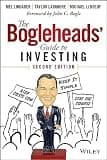
The Bogleheads' Guide to Investing
The friendly community bible of low-cost, buy-and-hold index investing, written by everyday investors rather than salespeople. The core philosophy is timeless for Aussies, just read the tax-advantaged account bits as super.
Some links above are affiliate links. If you buy through them, Snowball Invest may earn a small commission at no extra cost to you. We only recommend books we'd suggest anyway.
Sources
This article is general information only, not financial or tax advice. It does not take your circumstances into account. Yields, tax rates and rules change, and examples here are illustrative round numbers as of mid-2026. Verify current figures on the ASX, check the ATO, and consider a licensed adviser before investing. Past performance is not a reliable indicator of future performance.
Was this article useful?
Put it to your own numbers
Every calculator runs entirely in your browser, with nothing stored. See what these numbers look like for your own situation.
Try the Compound Interest calculator →General information only. This article is educational and does not constitute personal financial advice. It does not account for your circumstances. Consider your own situation and seek advice from a licensed adviser before acting. Read our full disclaimer.

Timothy Hirou Gaschereau
Founder of Snowball Invest, not a financial adviser.
I write about what I'm learning myself, because nobody ever taught us how to take control of our own money. It's a skill, not a mystery, and it's never too late to learn it. The best day to start was yesterday, the second best is today.
LinkedIn →Related articles
What Is a Dividend? A Beginner's Guide for Australian Investors
What a dividend actually is, how dividend yield and the ex-dividend date work, and how it connects to franking credits in Australia.

Ex-Dividend Date Explained
What is the ex-dividend date in Australia? How it works, why the share price drops, and exactly what you need to do to receive your dividend.

How Often Are Dividends Paid in Australia?
Most ASX companies pay dividends twice a year, but ETFs and some shares differ. How dividend timing works and how to find your own schedule.