

How to Invest in Bonds in Australia: The Practical Guide
Exactly how to invest in bonds in Australia, from bond ETFs to government bonds, with real tickers, costs, tax treatment, and how much to hold at every life stage.
 By Timothy Hirou GaschereauPublished
 12 min read
Try it yourself
If you already know what a bond is and you just want to know how to actually buy one in Australia, you are in the right place. For a plain-English refresher on what bonds are and how pricing works, read our what is a bond guide first, then come back here.
This guide is about the mechanics: which route to take, which products actually exist on the ASX, what they cost, how they are taxed, and how much to hold at different stages of life.
🎯 The essential: Most Aussies get bond exposure through cheap, diversified ASX-listed bond ETFs (like VAF or IAF), though you can also buy Australian Government Bonds directly on the ASX. Bond interest is taxed as ordinary income at your marginal rate with no franking credits, and bond prices fall when interest rates rise, so bonds are not risk-free. Their job is ballast: smoothing volatility, most valuable near and in retirement.
Why bother with bonds at all?
The classic 60/40 portfolio (60% growth assets, 40% defensive) has been the default for balanced investors for decades. The logic is simple: bonds tend to move differently to shares, smoothing out the gut-punch moments when equity markets drop hard.
That ballast effect matters most near or in retirement. When you are drawing down a portfolio, a big sharemarket fall in your first few years of retirement can permanently damage your wealth. This is called sequence-of-returns risk, and bonds help cushion it.
That said, 2022 was a brutal reminder that bonds are not a guaranteed hedge. The RBA hiked rates aggressively, and shares and bonds fell hard in the same year. It was the worst year for balanced portfolios in decades. Bonds are not risk-free, and they do not always move opposite to shares. But one bad year does not make them useless. It just means you need to understand what you are buying.
How bonds actually behave
Interest rate risk is the big one. When interest rates rise, bond prices fall. A bond paying a 3% coupon becomes less attractive the moment new bonds are issued paying 4%, so the price of the old bond drops until its effective yield matches the new rate.
How much it drops depends on duration. A bond ETF with a duration of 5 years loses roughly 5% in price for every 1 percentage point rise in rates. Short-duration funds are less sensitive; long-duration funds are more sensitive.
Two more risks worth knowing. Credit risk is the chance the issuer does not pay you back. Australian government bonds carry very low default risk; corporate bonds pay higher yields to compensate for higher risk; most mainstream bond ETFs hold investment-grade bonds only. Inflation risk is the quiet one: a fixed 3% coupon goes backwards in real terms if inflation runs at 5%.
One number to compare funds by: yield to maturity (the total return if you hold to maturity, including any capital gain or loss baked into today's price) is more meaningful than the headline running yield (this year's coupon divided by today's price).
The four realistic ways to invest in bonds
1. Bond ETFs (the main path for most investors). ASX-listed bond ETFs give you instant diversification across dozens or hundreds of individual bonds, low costs, and the ability to buy and sell through any brokerage account, exactly like a share. For most people, this is the answer. More on the specific tickers below.
2. Bond managed funds. Unlisted managed funds (such as the Vanguard Australian Fixed Interest Fund) price once daily, often need a minimum of $5,000 or more, and are accessed directly through the fund manager. For most retail investors the ETF version gets the same exposure with a lower minimum and more flexibility. See our managed fund explainer if you are weighing that up.
3. Australian Government Bonds directly (eTBs on the ASX). Exchange-traded Treasury Bonds (eTBs) and Exchange-traded Treasury Indexed Bonds (eTIBs) are listed on the ASX by the Australian Office of Financial Management. Each has a $100 face value, pays a fixed coupon twice a year, and returns face value at maturity. You get a known maturity date and predictable cash flows, but no diversification, and some maturities trade thinly. For most people, a bond ETF is simpler.
4. Term deposits (a close cousin, not a bond). Term deposits are covered by the government's Financial Claims Scheme up to $250,000 per person per institution, carry no capital risk if held to term, but have lower liquidity (break fees apply). Bond ETFs are not guaranteed and their price fluctuates, but they are diversified and you can sell any trading day. Term deposits suit a capital-preservation-first mindset; bond ETFs suit investors who want a genuine portfolio ballast.
The main bond ETFs on the ASX
These are the products most Australian investors actually use for fixed income. Figures move over time, so confirm the current MER, duration and yield on the issuer's fact sheet before you buy.
| Ticker | What it holds | MER p.a. | Duration |
|---|---|---|---|
| VAF | Aust. govt + investment-grade corporate (Composite index) | ~0.10% | ~5 yrs |
| VGB | Australian government bonds only (federal and state) | ~0.16% | ~5.3 yrs |
| IAF | Aust. govt + investment-grade corporate (Composite index) | ~0.10% | ~5 yrs |
| VBND | Global investment-grade bonds, hedged to AUD | ~0.20% | ~6.6 yrs |
| VCF | International investment-grade corporate, hedged to AUD | ~0.30% | ~5-6 yrs |
One thing to clear up: cash-like ETFs such as BetaShares AAA and iShares BILL often get grouped with bonds in conversation, but they hold ultra-short-term cash instruments, not bonds. They carry almost no duration risk. Useful to know, but a different tool for a different job.
If you want one broad Australian fixed-income holding and cannot decide, VAF and IAF are near-identical composite funds at about 0.10%. Prefer government-only credit quality? VGB. Want global diversification? A currency-hedged global bond ETF like VBND.
Bond ETFs vs direct bonds vs term deposits
| Bond ETF | Direct govt bond | Term deposit | |
|---|---|---|---|
| Minimum | ~$50-$100 | $100 face value | Often $1,000+ |
| Liquidity | High (sell any ASX day) | Moderate | Low (break fees) |
| Diversification | High | None (single bond) | None |
| Effort | Low | Medium | Low |
| Capital risk | Yes (price moves) | Yes if sold early | No (held to term) |
| Govt guarantee | No | No (govt issuer) | Yes (to $250k per ADI) |
The tax treatment of bonds in Australia
Bond interest is taxed as ordinary income at your marginal tax rate, with no franking credits. This trips people up, so it is worth being blunt: franking credits only attach to Australian company dividends, never to bond coupons or bond ETF distributions.
The practical upshot: if you are in the top bracket (45% plus Medicare levy), bond income is taxed heavily. If you are in a lower bracket, or you hold bonds inside super (where earnings are taxed at 15%), bonds become far more tax-efficient. Where you hold your bonds can matter as much as which bonds you hold.
On capital gains: sell a bond ETF for more than you paid and you have a capital gain, with the 50% CGT discount available if you held for more than 12 months. Sell at a loss and that capital loss can offset other capital gains. Bond ETF distributions are mostly interest income but can include a small capital gains component, so use the fund's annual tax statement to categorise everything correctly at tax time.
How much of your portfolio should be in bonds?
The old rule of thumb was to hold your age as a percentage in bonds: a 30-year-old holds 30%, a 60-year-old holds 60%. It is a rough guide, and arguably too conservative for younger investors today. A more practical framework:
- Under 40, long horizon: 0% to 20% bonds (or none, if you can stomach the volatility and have a stable income).
- 40 to 55, accumulation: 10% to 30%, rising as retirement approaches.
- 55+, near retirement: 30% to 50% in bonds and other defensive assets.
- In retirement: 40% to 60% defensive, depending on income needs and risk tolerance.
Check what you already own first. If you hold an all-in-one fund like VDHG (roughly 90% growth, 10% defensive), you already have some bond exposure baked in. By contrast, DHHF is 100% equities with no bonds at all. No point bolting a bond ETF onto a portfolio that already has the allocation you want.
How to actually buy a bond ETF, step by step
- Open a brokerage account. Pearler, Stake, SelfWealth, CommSec or Vanguard Personal Investor all give you access to ASX-listed ETFs. Most take 10 to 15 minutes to set up online. Our broker comparison can help you pick.
- Search the ticker. For example VAF, VGB or IAF. Double-check you have the right code before ordering.
- Read the fund page. Check the current distribution yield, duration and MER on the issuer's fact sheet.
- Place a limit order. For less liquid ETFs, a limit order (a maximum price you will pay) is safer than a market order. For highly liquid funds like VAF or IAF, market orders are generally fine during trading hours.
- Receive distributions. Bond ETFs pay quarterly or semi-annually into your brokerage cash account.
- Declare income at tax time. Use the fund's annual tax statement to categorise interest income and any capital gains in your return.
Common mistakes to avoid
- Thinking bonds are risk-free. Prices fall when rates rise. 2022 proved it at scale.
- Buying long-duration ETFs when rates are climbing. Longer duration means bigger price falls. Shorter-duration funds take less of a hit.
- Ignoring the tax drag. Bond income is taxed at your marginal rate. For high earners, holding bonds inside super (15%) can make far more sense than in your personal name.
- Confusing term deposits with bonds. Different risk, liquidity and guarantees. They are not interchangeable.
- Over-allocating too early. A 25-year-old with a 35-year horizon rarely needs 40% in bonds. Time horizon is the key variable.
- Panic-selling in a downturn. Selling after a rate-driven price fall locks in the loss and removes the ballast exactly when you might need it.
Frequently asked questions
What is the easiest way to invest in bonds in Australia?
+
The easiest route is buying an ASX-listed bond ETF through any standard brokerage account. Popular options include VAF (Vanguard Australian Fixed Interest) and IAF (iShares Core Composite Bond). You buy one unit, pay brokerage of $0 to $9.50, and you instantly hold a diversified portfolio of Australian government and corporate bonds.
Can I buy Australian Government Bonds directly?
+
Yes. Exchange-traded Treasury Bonds (eTBs) are listed on the ASX and can be bought through any ASX broker. They are issued by the AOFM, pay a fixed semi-annual coupon, and return $100 face value at maturity. The AOFM site at australiangovernmentbonds.gov.au lists the bonds currently available.
Are bond ETFs safe?
+
Bond ETFs are lower-risk than share ETFs, but they are not risk-free. The main risks are interest rate risk (prices fall when rates rise) and, for corporate bond ETFs, credit risk. Australian government bond ETFs carry very low credit risk but still have interest rate risk. No investment is completely safe.
How is bond income taxed in Australia?
+
Interest income from bonds and bond ETF distributions is taxed as ordinary income at your marginal tax rate. There are no franking credits. If you sell a bond ETF at a profit after holding it for more than 12 months, the 50% CGT discount applies. Declare bond income in your tax return under interest income.
What is the difference between VAF and VGB?
+
Both are Vanguard bond ETFs on the ASX. VAF holds a mix of Australian government bonds and investment-grade corporate bonds. VGB holds only Australian government bonds, federal and state. VGB has slightly lower credit risk; VAF has slightly higher yield potential. Both have a management fee around 0.10% to 0.16% a year and a duration of roughly 5 years.
Should I hold bonds if I'm young?
+
Probably not much, if any. A long investment horizon means you have time to ride out sharemarket volatility, so the ballast effect of bonds is less critical. That said, if holding some bonds helps you stay invested during a crash rather than panic-selling, a small allocation of 10% to 15% can be worth it psychologically. There is no single right answer.
What happened to bonds in 2022?
+
In 2022 the RBA raised the cash rate from 0.10% to 3.10% in one of the fastest hiking cycles in Australian history. Because bond prices move inversely to interest rates, existing bond prices fell sharply. Australian bond ETFs like VAF and VGB posted negative returns for the year, at the same time as the sharemarket also fell. The lesson: bonds reduce volatility over the long run, but they are not immune to short-term losses, especially when rates are rising.
Keep reading
Books worth reading
📚 Recommended reading
The Barefoot Investor
Scott Pape
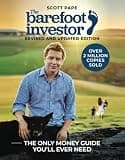
The Barefoot Investor
Australia's best-selling money book ever. A simple system for accounts, budgeting, debt and a real emergency fund in one.
The Bogleheads' Guide to Investing
Taylor Larimore, Mel Lindauer & Michael LeBoeuf
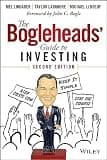
The Bogleheads' Guide to Investing
The friendly community bible of low-cost, buy-and-hold index investing, written by everyday investors rather than salespeople. The core philosophy is timeless for Aussies, just read the tax-advantaged account bits as super.
Girls That Invest
Simran Kaur
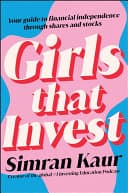
Girls That Invest
A no-jargon crash course from the podcaster behind Girls That Invest that makes the sharemarket feel doable, written especially for women starting out. The perfect first step before you buy your first ETF.
Some links above are affiliate links. If you buy through them, Snowball Invest may earn a small commission at no extra cost to you. We only recommend books we'd suggest anyway.
Sources
- Vanguard Australia, fund pages for VAF, VGB and VBND, vanguard.com.au
- iShares Australia (BlackRock), iShares Core Composite Bond ETF (IAF) fund page
- ASX, Exchange-traded Australian Government Bonds, asx.com.au
- Australian Office of Financial Management, australiangovernmentbonds.gov.au
- Australian Taxation Office, income from bonds and debentures, ato.gov.au
- ASIC Moneysmart, Bonds, moneysmart.gov.au
General information only, not personal financial advice. Bonds and bond ETFs carry investment risk, including the possible loss of capital. Consider speaking to a licensed financial adviser about your own situation.
Was this article useful?
Put it to your own numbers
Every calculator runs entirely in your browser, with nothing stored. See what these numbers look like for your own situation.
Try the Compound Interest calculator →General information only. This article is educational and does not constitute personal financial advice. It does not account for your circumstances. Consider your own situation and seek advice from a licensed adviser before acting. Read our full disclaimer.

Timothy Hirou Gaschereau
Founder of Snowball Invest, not a financial adviser.
I write about what I'm learning myself, because nobody ever taught us how to take control of our own money. It's a skill, not a mystery, and it's never too late to learn it. The best day to start was yesterday, the second best is today.
LinkedIn →Related articles
What Is a Bond? A Beginner's Guide for Australians
What a bond actually is, how bond pricing and yield work, Australian Government Bonds explained, and how to access bonds via ETFs.
SUBD ETF Australia: VanEck's Subordinated Debt ETF Explained
SUBD is VanEck's subordinated bond ETF, paying monthly income with a running yield near 5.75% and a 0.29% fee. What it holds, the risks, and how to buy.

VDBA ETF Australia: Vanguard's Diversified Balanced Fund Explained
VDBA is Vanguard's 50/50 balanced all in one ETF. Get the asset allocation, 0.27% fee, quarterly distributions, and how VDBA compares to VDHG and VDGR.