

SUBD ETF Australia: VanEck's Subordinated Debt ETF Explained
SUBD is VanEck's subordinated bond ETF, paying monthly income with a running yield near 5.75% and a 0.29% fee. What it holds, the risks, and how to buy.
 By Timothy Hirou GaschereauPublished
 8 min read
SUBD is one of the more popular ways for Australians to earn a bit more income than a government bond fund, without taking on the full risk of shares or bank hybrids. It is a bond ETF, so it is deliberately on the boring, defensive side. Here is what it holds, the yield, the real risks, and how it compares. This is part of our wider getting started with investing guide on Snowball Invest. General information only, not personal financial advice, and past performance is not a guide to the future. Figures are from VanEck and the ASX and are subject to change.
Quick answer
SUBD is the VanEck Australian Subordinated Debt ETF (ASX: SUBD). It holds around 37 investment-grade subordinated bonds, mostly issued by Australian banks, pays distributions monthly, and charges about 0.29% a year. The running yield is roughly 5.75% at the time of writing (subject to change). It is a defensive income holding, not a term deposit, so capital is not guaranteed.
In this guide
- →What SUBD is and the index it tracks
- →What subordinated debt actually means, in plain English
- →The yield, the monthly income and the fee
- →The real risks, laid out honestly
- →How SUBD compares to bonds, term deposits and hybrids
🏦 What is SUBD?
🎯 The essential: SUBD is the VanEck Australian Subordinated Debt ETF, listed on the ASX. It holds around 37 investment-grade subordinated bonds, mostly issued by Australian banks and financial institutions, and tracks the iBoxx AUD Investment Grade Subordinated Debt Index.
It launched in 2019 and has grown into the largest subordinated bond ETF in Australia, at several billion dollars in assets (source: VanEck, subject to change). Most of the bonds are floating rate, so the coupon resets with short-term rates, which keeps the fund's interest rate sensitivity relatively low.
🪜 What is subordinated debt?
Subordinated debt sits in the middle of a bank's capital structure. If a bank ran into serious trouble and could not repay everyone, the order of who gets paid matters. Senior debt is paid first. Subordinated bondholders come next. Hybrids and shareholders are further back in the queue.
Because subordinated bondholders accept that lower priority, they earn a higher yield than senior bond investors. Importantly, the bonds in SUBD are all investment-grade, issued by regulated banks and insurers as Tier 2 Capital. These are not junk bonds.
🪙 How SUBD pays income
SUBD pays distributions monthly, with a running yield near 5.75% and a yield to worst around 5.64% at the time of writing (source: VanEck fact sheet, subject to change). Distributions are not guaranteed, and the yield moves with interest rates and credit spreads.
That monthly cadence is a genuine practical advantage for investors who want regular income landing in their account rather than waiting for quarterly or annual payments. Just remember the yield figures are point-in-time snapshots, so check the current fact sheet before deciding anything.
🏷️ The management fee
SUBD charges a management fee of roughly 0.29% a year (source: VanEck, subject to change). That is competitive for an actively managed fixed income ETF, where fees often run between 0.20% and 0.50%. Other costs may apply, so check the Product Disclosure Statement for the full schedule.
⚠️ The risks, honestly
SUBD is not a term deposit and not a savings account. The real risks: subordinated ranking risk (in a bank failure you rank behind senior creditors), credit risk (a bond can be downgraded), interest rate and spread risk (the unit price can fall even if the cash rate holds), and liquidity risk (spreads can widen in stress). Capital is not guaranteed, and unlike a term deposit it is not covered by the Government's Financial Claims Scheme. Past performance is not a guide to the future.
🥊 SUBD vs the alternatives
This is general information only, not a recommendation. Each of these does a different job on the risk and return spectrum.
| SUBD | Government bond ETF | Term deposit | Bank hybrids | |
|---|---|---|---|---|
| Risk level | Medium | Low to medium | Low | Medium to high |
| Capital guarantee | No | No | Yes (to $250k) | No |
| Income | Monthly | Quarterly | At maturity | Quarterly |
| Liquidity | High (ASX) | High (ASX) | Low | Medium |
A government bond ETF carries less credit risk but usually a lower yield. A term deposit protects your capital but locks it up. Bank hybrids sit below subordinated debt in the structure, so they carry more risk, though they often come with franking credits. For the broader bond picture, see our guide to investing in bonds.
📈 Compound Interest Calculator
Model how a steady 5% or so of monthly income compounds if you reinvest it, versus taking it as cash.
🧩 Where SUBD fits
SUBD is designed as a defensive income sleeve in a diversified portfolio, for investors who want more yield than a government bond ETF but less risk than shares or hybrids, and who are comfortable with monthly income that is not guaranteed over at least a 3 year horizon. It is not a replacement for an emergency fund. A common approach is to pair it with broad equity ETFs, where the shares drive long-term growth and SUBD adds steadier income.
🧾 How SUBD is taxed
SUBD distributions are generally taxed as income at your marginal rate. Each year VanEck issues an annual tax (AMMA) statement breaking down the components, including any tax-deferred amounts that can affect your cost base. The tax treatment can be complex, so talk to a registered tax agent about your own situation.
🛒 How to buy SUBD
You buy SUBD through any ASX broker, such as CommSec, Pearler, Stake or SelfWealth. Search the ticker SUBD and place a buy order like any share. Standard brokerage applies. Like all ETFs it trades with a bid and ask spread, usually tight but wider in volatile markets, so check the live spread before a large order.
SnowLetter
Australia's money news and our best reads, once a week.
❓ Frequently asked questions
Is SUBD a good investment?
+
It depends on your goals, risk tolerance and existing portfolio. SUBD offers monthly income, a competitive yield, and investment-grade credit quality, but the unit price can fall, distributions are not guaranteed, and capital is not protected. This is general information only, not a recommendation.
What is SUBD's yield?
+
At the time of writing the running yield is roughly 5.75% and the yield to worst around 5.64% (source: VanEck fact sheet, subject to change). These figures move with interest rates and market conditions, so always check the current VanEck fact sheet.
Does SUBD pay monthly distributions?
+
Yes, SUBD pays distributions monthly (source: VanEck, subject to change). Distributions are not guaranteed and can vary in size. You can also reinvest them through VanEck's Dividend Reinvestment Plan.
Is SUBD safe?
+
No investment is completely safe. SUBD holds investment-grade subordinated bonds, lower risk than shares or hybrids but higher risk than government bonds or term deposits. Capital is not guaranteed, and it is not covered by the Government's Financial Claims Scheme. The unit price can fall.
SUBD vs term deposit: which is better?
+
Neither is universally better. A term deposit protects capital up to $250,000 via the Financial Claims Scheme with a fixed return. SUBD offers a higher potential yield, monthly income and ASX liquidity, but no capital guarantee and a variable yield. It comes down to your risk tolerance and horizon.
What is subordinated debt?
+
Subordinated debt is a bond that ranks below senior debt but above hybrids and equity if the issuer becomes insolvent. Because holders accept a lower priority claim, they receive a higher yield than senior bond investors. SUBD's bonds are all investment-grade, issued mainly by Australian banks as Tier 2 Capital.
📚 Recommended reading
The Barefoot Investor
Scott Pape

The Barefoot Investor
Australia's best-selling money book ever. A simple system for accounts, budgeting, debt and a real emergency fund in one.
The Simple Path to Wealth
JL Collins
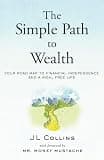
The Simple Path to Wealth
The friendliest on-ramp to index investing there is, born from letters a dad wrote his daughter. It makes 'buy the whole market and chill' feel obvious, just map his US fund picks onto Aussie equivalents and super.
The Little Book of Common Sense Investing
John C. Bogle
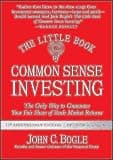
The Little Book of Common Sense Investing
From the man who invented the index fund, this is the short, sharp case for low-cost investing that has aged like fine wine. The maths on fees is universal, just think ETFs and super instead of his US funds.
Some links above are affiliate links. If you buy through them, Snowball Invest may earn a small commission at no extra cost to you. We only recommend books we'd suggest anyway.
Sources
Was this article useful?
Put it to your own numbers
Every calculator runs entirely in your browser, with nothing stored. See what these numbers look like for your own situation.
Explore the calculators →General information only. This article is educational and does not constitute personal financial advice. It does not account for your circumstances. Consider your own situation and seek advice from a licensed adviser before acting. Read our full disclaimer.

Timothy Hirou Gaschereau
Founder of Snowball Invest, not a financial adviser.
I write about what I'm learning myself, because nobody ever taught us how to take control of our own money. It's a skill, not a mystery, and it's never too late to learn it. The best day to start was yesterday, the second best is today.
LinkedIn →Related articles

VHY ETF Australia: Vanguard's High Yield Fund Explained
VHY is Vanguard's high-yield Australian shares ETF. What it holds, the fees, the franking credits, and how it stacks up against VAS for income investors.

VDBA ETF Australia: Vanguard's Diversified Balanced Fund Explained
VDBA is Vanguard's 50/50 balanced all in one ETF. Get the asset allocation, 0.27% fee, quarterly distributions, and how VDBA compares to VDHG and VDGR.

How to Invest in Bonds in Australia: The Practical Guide
Exactly how to invest in bonds in Australia, from bond ETFs to government bonds, with real tickers, costs, tax treatment, and how much to hold at every life stage.