

QUAL ETF Australia: VanEck MSCI International Quality Guide
The QUAL ETF fact sheet in plain English: what VanEck's quality-factor fund holds, its 0.40% fee, the hedged sibling QHAL, and how it stacks up against VGS.
 By Timothy Hirou GaschereauPublished
 12 min read
Try it yourself
QUAL is the VanEck MSCI International Quality ETF, and it sits in the top handful of ETFs by size on the ASX. It has a devoted following among investors who like the idea of owning only the highest-quality companies in the world. But what does "quality" actually mean, and is QUAL just a pricier version of a plain global index like VGS?
Here is the honest answer to both, with no jargon dumps and no hype: what QUAL is, how the quality screen works, what it holds, how it compares to VGS, the tax, and the real case for and against the quality factor. New to ETFs? Start with what is an ETF.
🎯 The essential: QUAL tracks the MSCI World ex-Australia Quality Index: roughly 300 international companies screened for high return on equity, stable earnings, and low debt. The fee is 0.40% p.a., more than double VGS (0.18%). It is Australian-domiciled (no W-8BEN), unhedged, and pays quarterly unfranked distributions. Two honest caveats: despite the screen it still ends up heavily US tech, so it is less different from VGS than you might hope; and factor investing can underperform a plain index for years at a time. QHAL is the AUD-hedged sibling.
What is QUAL?
QUAL is the VanEck MSCI International Quality ETF, listed on the ASX since October 2014, one of the longer-running factor ETFs available here. It tracks the MSCI World ex-Australia Quality Index, a rules-based index that screens developed-market companies on three financial-quality characteristics (ex-Australia means Australian shares are excluded, so it is a pure international play). It holds around 300 companies, charges 0.40% p.a., pays quarterly unfranked distributions, and has grown to roughly $8.7 billion in assets. Because it is Australian-domiciled you avoid the W-8BEN form and US estate-tax exposure that come with holding US-domiciled ETFs directly.
What is the quality factor?
Factor investing means tilting toward companies with characteristics that have historically delivered better long-run returns, rather than just buying the whole market by size. QUAL's quality screen uses three metrics: high return on equity (the business efficiently turns capital into profit), stable earnings growth (predictable profits, not wild swings), and low financial leverage (not dependent on cheap debt to survive a downturn).
Put those filters together and you get a portfolio tilted toward profitable, financially stable, predictable businesses: less highly leveraged property developer, more Apple. A plain market-cap index like VGS does not care whether a company is profitable or how much debt it carries; the quality screen deliberately drops the financially weak, cyclical and earnings-volatile names.
What does QUAL actually hold?
QUAL holds about 300 companies (versus roughly 1,500 in VGS), so it is a far more concentrated, deliberately selective portfolio. It is heavily US-weighted (around 70 to 75%), and the top holdings are the usual mega-cap suspects: Microsoft, Apple, Nvidia, Broadcom, Meta, Eli Lilly, ASML, Visa, Alphabet and Johnson & Johnson. Technology dominates, followed by healthcare and financials. Worth flagging clearly: QUAL ends up looking a lot like a tech-tilted global fund even though "buy tech" is not the goal, because the quality screen selects for traits that US mega-cap tech happens to have in abundance. If you expect it to look radically different from a Nasdaq fund or VGS, you may be surprised.
QUAL vs VGS
| Feature | QUAL | VGS |
|---|---|---|
| Method | Quality factor screen | Market-cap weighted |
| Holdings | ~300 | ~1,500 |
| MER | 0.40% | 0.18% |
| Factor tilt | ROE + stable earnings + low debt | None |
| Currency | Unhedged AUD | Unhedged AUD |
| Distributions | Quarterly, unfranked | Quarterly, unfranked |
| Best for | A quality tilt | Broad global core |
Neither is better in absolute terms. VGS gives the broadest developed-market exposure at the lowest cost; QUAL gives a quality-screened, more concentrated version for more than double the fee (about $220 a year extra on $100,000). The quality screen mainly earns its keep by excluding weaker, more leveraged companies, which tends to help in a downturn. Whether that justifies the fee comes down to genuine conviction in the factor. Compare the field in our best ETFs guide.
QHAL: the hedged version
QHAL tracks the same quality index as QUAL but hedges the currency back to AUD, at a slightly higher 0.43% fee. Hedging matters when the Australian dollar rises against the US dollar: unhedged holdings like QUAL lose value in AUD terms even if the underlying shares rise, and QHAL removes that. The flip side is that when the AUD falls, unhedged QUAL gets a boost that QHAL gives up. Most long-term Australian investors prefer unhedged global equities (currency tends to average out over long periods and adds diversification), but if you are closer to retirement or sensitive to short-term swings, hedging has merit. Our hedged vs unhedged guide walks through the trade-off.
How the quality factor performs: honest expectations
The academic case is solid: decades of research (including the Fama-French five-factor model) find that profitable, financially stable companies tend to outperform over long periods, and the intuition makes sense. But factors do not deliver smooth, consistent outperformance. They lag a plain market-cap index for extended stretches, sometimes years. In 2022, when rising rates hammered leveraged growth stocks, QUAL's defensive traits helped it hold up better; in 2020 to 2021, when cheap money flooded into speculative, leveraged growth names, QUAL lagged, because the very companies it screens out were flying.
The honest framing: quality is a reasonable long-term tilt for investors who genuinely understand what they are signing up for. If two years of underperformance would tempt you to bail to VGS, QUAL is probably not for you. If you can hold through a rough patch with conviction, the long-run case is credible, but the premium is not guaranteed. Past performance is not a reliable indicator of future returns.
How to buy QUAL, and the tax
QUAL trades on the ASX through any standard broker (Pearler, Stake, SelfWealth, CommSec). The minimum is one unit, there is no minimum holding period, and a DRP may be available. On tax: distributions are quarterly and unfranked (foreign income), but you may get a Foreign Income Tax Offset shown on VanEck's annual AMMA statement, and selling units held 12 months or more qualifies for the 50% CGT discount. Because QUAL is Australian-domiciled, there is no W-8BEN and no US estate-tax exposure. If you would rather keep things simple and cheap, a broad core like VGS or an all-in-one fund like DHHF is the lower-effort path.
Frequently asked questions
What does QUAL ETF invest in?
+
QUAL invests in roughly 300 international companies (excluding Australia) that pass a quality screen based on three criteria: high return on equity, stable earnings growth, and low financial leverage. It is heavily US-weighted (around 70 to 75%) and dominated by large-cap technology and healthcare, with top holdings like Microsoft, Apple, Nvidia, Meta and Eli Lilly.
What is the quality factor in investing?
+
The quality factor tilts a portfolio toward companies with high profitability, stable earnings, and low debt. Backed by decades of research (including the Fama-French five-factor model), the idea is that financially strong, stable businesses tend to outperform over the long run. Quality is one of several factors, alongside value, momentum and size.
How does QUAL compare to VGS?
+
Both are Australian-domiciled global ETFs that exclude Australian shares. QUAL applies a quality screen and holds about 300 companies at a 0.40% fee; VGS tracks the full market-cap index with around 1,500 companies at 0.18%. Both end up heavily weighted to US tech. The real difference is what QUAL excludes: financially weaker, more leveraged, earnings-volatile companies that VGS keeps.
What is QHAL and how is it different from QUAL?
+
QHAL is the AUD-hedged version of QUAL. It tracks the same MSCI World ex-Australia Quality index but hedges currency to reduce the impact of AUD/USD moves, at a slightly higher 0.43% fee. Choose QHAL to dampen currency volatility; choose QUAL if you are comfortable with unhedged exposure and want the upside when the AUD weakens.
Does QUAL pay franking credits?
+
No. QUAL's distributions are primarily foreign income and are unfranked, because the underlying companies are not Australian. However, you may be entitled to a Foreign Income Tax Offset (FITO) to reduce double taxation on foreign dividends. Check the annual AMMA tax statement from VanEck for the specific amount.
Is QUAL a good ETF for beginners?
+
It is a solid, well-established fund, but the quality factor adds complexity: you need to understand what the factor is and why it will sometimes underperform for years. For most beginners, a simpler and cheaper broad market ETF like VGS or BGBL is a better starting point. QUAL becomes a reasonable complement once you understand index investing.
What is the fee for QUAL and is it worth it?
+
QUAL's MER is 0.40% p.a. Whether it is worth it depends on whether you believe the quality factor will out-earn the extra 0.22% p.a. versus VGS (0.18%) over your horizon. The academic evidence is credible but the premium is not guaranteed and can vanish for long stretches. With genuine conviction and a 10-year-plus horizon the case is reasonable; if unsure, VGS is the simpler, cheaper choice.
Keep reading
Books worth reading
📚 Recommended reading
The Barefoot Investor
Scott Pape
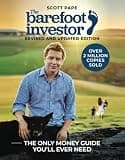
The Barefoot Investor
Australia's best-selling money book ever. A simple system for accounts, budgeting, debt and a real emergency fund in one.
The Four Pillars of Investing
William J. Bernstein
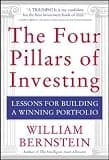
The Four Pillars of Investing
A neurologist-turned-investor breaks portfolio building into four pillars: theory, history, psychology and the business of investing. Meatier than most, and the lessons on market history and human folly are universal.
The Millionaire Teacher
Andrew Hallam
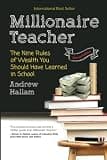
The Millionaire Teacher
A schoolteacher built a seven-figure portfolio on a modest salary, and here he lays out nine plain-English rules for doing the same with low-cost index funds. Refreshingly global, so Aussie readers just swap in super and local ETFs.
Some links above are affiliate links. If you buy through them, Snowball Invest may earn a small commission at no extra cost to you. We only recommend books we'd suggest anyway.
Sources
General information only, not personal financial advice. It does not take your circumstances into account. Factor investing carries the risk of underperforming a plain market index for extended periods. Fees and holdings change, so verify current figures with the VanEck fact sheet and PDS before investing. Past performance is not a reliable indicator of future performance.
Was this article useful?
Put it to your own numbers
Every calculator runs entirely in your browser, with nothing stored. See what these numbers look like for your own situation.
Try the Capital Gains Tax calculator →General information only. This article is educational and does not constitute personal financial advice. It does not account for your circumstances. Consider your own situation and seek advice from a licensed adviser before acting. Read our full disclaimer.

Timothy Hirou Gaschereau
Founder of Snowball Invest, not a financial adviser.
I write about what I'm learning myself, because nobody ever taught us how to take control of our own money. It's a skill, not a mystery, and it's never too late to learn it. The best day to start was yesterday, the second best is today.
LinkedIn →Related articles

BGBL ETF Australia: Betashares' Global Shares Fund Explained
BGBL is Betashares' ultra low cost global shares ETF tracking around 1,000 companies. What it holds, its 0.08% fee, BGBL vs VGS, dividends and tax.
VGAD ETF Australia: Hedged Global Shares, and Is It Worth It?
VGAD is Vanguard's hedged international shares ETF. How currency hedging works, VGAD vs VGS, the fees, distributions, and where it fits in a portfolio.
U100 ETF Australia: Global X's US Giants ETF Explained
U100 is Global X's low cost US 100 ETF on the ASX, holding 100 US giants. What it holds, its 0.18% fee, currency risk, and how U100 compares to NDQ.