

What is GST?
Quick answer
GST (Goods and Services Tax) is a 10% tax on most goods and services sold in Australia. Businesses collect it on the ATO's behalf and remit it through their Business Activity Statement, but as the end consumer, you're the one who ultimately pays it.
How GST works
When a GST-registered business sells something, it adds 10% to the price and collects that extra amount from the customer. That money isn't the business's to keep, it gets passed on to the ATO.
Businesses add 10% GST to taxable sales, collect it from customers, and remit it via their BAS, usually lodged quarterly. They can also claim back GST they paid on their own business purchases, called input tax credits, so they only ever pass on the net amount. The end consumer bears the final cost, which is what makes GST a consumption tax.
Quick maths: to add GST to a price, multiply by 1.1. To find the GST hiding inside a GST-inclusive price, divide by 11. To strip GST out of a price entirely, divide by 1.1.
What's GST-free
Not everything attracts GST. The ATO designates some supplies as GST-free, meaning the seller charges 0% and can still claim input tax credits on related purchases (that's different to "input-taxed" supplies like residential rent, where no GST is charged and no credits can be claimed either).
- Basic fresh food, raw meat, fruit, vegetables, bread, milk, eggs, cheese. Restaurant meals, hot takeaway and confectionery aren't GST-free.
- Most medical and health services, GP visits, hospital care, many allied health services.
- Education, school fees, university tuition, most accredited course materials.
- Exports, goods and services sold to overseas customers, generally taxed at 0% to keep Australian exports competitive.
- Residential rent, landlords don't charge GST on it, and can't claim input tax credits on related expenses either.
GST-free doesn't mean tax-free altogether, some of these categories attract other taxes instead, stamp duty on insurance, for example, or income tax on investment earnings.
Who needs to register for GST
You must register for GST if your business has a GST turnover of $75,000 or more a year. For not-for-profit organisations, the threshold is $150,000. Taxi and rideshare drivers must register regardless of turnover, even on a single dollar of income.
Voluntary registration is available below the threshold too, worth considering if you want to claim input tax credits on business purchases. Once registered, you need to charge GST on taxable sales, issue tax invoices, and lodge a BAS, typically quarterly, though businesses with turnover of $20 million or more must lodge monthly. GST turnover is based on gross income from taxable and GST-free sales, not your profit, so if you're approaching the threshold, track it carefully.
A quick example
A plumber charges $1,000 for a job. Because they're GST-registered, the customer pays $1,100, the extra $100 is GST. The plumber also bought $220 worth of parts for the job, which included $20 of GST, and because they're registered, they can claim that $20 back as an input tax credit. Net GST payable to the ATO: $100 minus $20, or $80. That's the system working as intended, GST is collected at each step, but businesses only remit the net amount, so it isn't stacked on top of itself along the supply chain.
GST for consumers
As a shopper, GST is already baked into the price you see, advertised prices in Australia are required to be GST-inclusive. A couple of things worth knowing: you can't claim GST back unless you're a GST-registered business using the purchase for business purposes, and if you're travelling overseas, you may be able to claim a GST refund on purchases of $300 or more from a single retailer through the Tourist Refund Scheme, administered by the Australian Border Force. Goods generally need to be bought within 60 days of departure and carried with you when you leave.
📚 Recommended reading
Making Money Made Simple
Noel Whittaker

Making Money Made Simple
Australia's classic, comprehensive money guide covering tax, super and investing, updated for today.
Rich Dad Poor Dad
Robert Kiyosaki
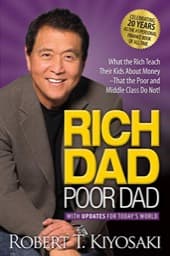
Rich Dad Poor Dad
The book that got millions of people thinking differently about assets, income and building wealth.
Some links above are affiliate links. If you buy through them, Snowball Invest may earn a small commission at no extra cost to you. We only recommend books we'd suggest anyway.
🧾 GST Calculator
Add or remove GST from a price in seconds.
The GST registration threshold, in full
How GST turnover is calculated, the 21-day rule, late registration, and registering voluntarily below $75,000.
Frequently asked questions
What is the GST rate in Australia?
10% on most taxable goods and services. It's been 10% since GST was introduced on 1 July 2000 and hasn't changed since.
Is GST included in the price I see?
Yes. Australian law requires businesses to display GST-inclusive prices, so the price on the tag or menu is what you pay. If you want to work out the GST component of a price, divide the total by 11.
What items are exempt from GST in Australia?
The main GST-free categories are basic fresh food (groceries, not restaurant meals or hot takeaway), most medical and health services, education courses and tuition, exports, and residential rent. Some financial supplies are input-taxed rather than GST-free, a slightly different treatment. The ATO publishes a detailed list of GST-free food and services on its website.
Do I need to register for GST?
You must register if your GST turnover is $75,000 or more a year, or $150,000 for not-for-profits. Taxi and rideshare drivers must register regardless of turnover. Below the threshold, registration is optional, but it can be worth doing if you want to claim input tax credits on business expenses.
Disclaimer
This is general information only, not tax advice. GST rules, thresholds and exempt categories can change, confirm the current position at ato.gov.au or with a registered tax agent for your specific situation.