

Girls Just Wanna Have Funds by Molly Benjamin: An Honest Review
Our honest Girls Just Wanna Have Funds review: Molly Benjamin's women-focused Aussie money guide, its strengths, its limits, and who should read it.
 By Timothy Hirou GaschereauPublished
 9 min read
Short version: a solid, genuinely Australian beginner finance book written squarely for women who feel money is complicated, scary, or the exclusive domain of people who read the Financial Review over breakfast. If that's you, it's a lovely place to start. If you already invest regularly, it'll feel thin. It's part of our personal finance book reviews on Snowball Invest.
Quick answer
A friendly, jargon-free introduction to money and investing that actually speaks to Australian women's financial reality. Best for beginners and anyone who feels intimidated by money or traditional finance culture. Skip it if you already invest regularly and want advanced portfolio strategy. Our rating: 4 out of 5.
Want to read Girls Just Wanna Have Funds?
Molly Benjamin makes money feel fun and doable: budgeting, investing and confidence in one friendly, Aussie package.
In this guide
- →What the book covers: mindset, investing basics, super, property and the gender gap
- →The genuine strengths and the honest weaknesses
- →Who it's for, and who's better off elsewhere
- →What critics and readers say
- →The Australian angle: the ASX, super and the gender super gap
📖 What is Girls Just Wanna Have Funds about?
Girls Just Wanna Have Funds (Affirm Press, 2023) is a personal finance guide by Molly Benjamin, founder of the Ladies Finance Club. The premise is simple: money doesn't have to be complicated, scary, or reserved for finance types. Molly's background is in financial services communications rather than accounting, and she's a qualified money coach, not a licensed financial adviser. That matters for context: this is a motivational and educational book, not a personalised plan.
The Ladies Finance Club origin story gives the book its heart. Molly started the club in London in 2018 after realising she and her friends, despite working in and around financial services, were largely clueless about their own money. It began as living-room events with a money expert, some friends and a bottle of prosecco, then she launched the Australian chapter in 2019, and tens of thousands of women have since attended an event, masterclass or workshop. Core topics in the book span money mindset, budgeting, salary negotiation, investing basics (shares and ETFs), property, superannuation and retirement, ethical investing, money conversations with partners, and teaching kids about money. It's a broad sweep for a slim book, which is both a strength and a limitation.
⚖️ Strengths and weaknesses
What it gets right
- ✓Genuinely Australian: the ASX, super and Australian government property schemes are referenced in context, not a US book with local paint.
- ✓Beginner-friendly from page one: no jargon, no assumed knowledge, no condescension.
- ✓Honest about the gender angle: it addresses the gender pay gap and gender super gap directly.
- ✓Practical takeaways built in: chapter summaries and action steps turn ideas into next steps.
- ✓Breadth in one volume: mindset through to investing, property and family finances in a single readable book.
- ✓Molly's personal story lands, giving the book a warmth most finance titles lack.
Where it falls short
- ✕Depth is limited: covering a huge range in a slim book means each area gets relatively light treatment.
- ✕Some readers wanted more practicalities: if you expect a step-by-step technical guide, it can feel short.
- ✕Not a licensed adviser: motivational and educational, but not a structured, personalised plan.
- ✕The sustainable investing chapter is a starting point rather than a deep dive.
- ✕The prosecco-and-champagne framing is fun and on-brand, but not to everyone's taste.
👤 Who should read it, and who should skip it?
Read it if you
- ✓Feel intimidated by money and want a friendly, jargon-free starting point.
- ✓Want an Australian-specific guide, not a US-centric book that doesn't apply here.
- ✓Want to understand the gender super gap and what to actually do about it.
- ✓Learn well from community and conversation (it's designed to be read with a friend or group).
Skip it if you
- ✕Already invest regularly and want advanced portfolio strategy.
- ✕Want deep dives into tax optimisation, franking credits or complex property strategy.
- ✕Are after a licensed financial adviser's structured plan.
🔍 What do critics say?
Formal media coverage of the book has been limited, which is normal for Australian personal finance titles aimed at a general audience. It's positioned as a companion to the Ladies Finance Club community rather than a standalone bestseller competing directly with The Barefoot Investor. Molly Benjamin's growing profile in Australian financial education, including her podcast and community work, adds credibility: the book is part of a broader ecosystem, not a one-off publication.
💬 What do readers say?
On Goodreads it holds around 3.6 out of 5, with most readers landing in the three and four-star range. The most consistent praise: it's easy to follow, flows well, and is genuinely beginner-friendly. The most consistent criticism: some readers felt it was short and light on practical detail, which is exactly what you'd expect from a broad-scope book at this length.
The book's audience engages primarily through the Ladies Finance Club community rather than finance forums, so you'll find more discussion in that ecosystem than in the usual r/AusFinance threads. If you value an ongoing support network beyond the final page, that community dimension is part of the appeal.
🇦🇺 The Australian angle
The gender super gap in Australia is well-documented and structural. Australian women retire with significantly less superannuation than men on average, driven by the gender pay gap, career breaks for caregiving and part-time work patterns. Girls Just Wanna Have Funds addresses this directly, which sets it apart from most US-centric personal finance books that simply don't engage with how super works or why it matters.
The book covers ASX and ETF investing in an Australian context, with no references to Roth IRAs or 401(k)s, and points to Australian government property schemes for readers thinking about getting onto the property ladder. If you'd like more women-focused reads to pair with it, our Girls That Invest review and She's on the Money review cover similar territory.
💰 The verdict
Girls Just Wanna Have Funds earns its place as one of the better Australian-specific beginner finance books for women. It won't replace a financial adviser and it won't satisfy experienced investors, but that's not what it's trying to do. For its target audience, women who feel overwhelmed or excluded by traditional finance culture, it delivers: warm, practical, locally relevant and honest about the structural barriers women face. The Ladies Finance Club community around it adds ongoing value, and for anyone who's been putting off learning about money because every other resource felt like it was written for someone else, this is a genuinely good place to start. Our rating: 4 out of 5.
Want to read Girls Just Wanna Have Funds?
Been avoiding money because it all felt intimidating? This is a warm, jargon-free place to begin.
SnowLetter
Australia's money news and our best reads, once a week.
❓ Frequently asked questions
Is Girls Just Wanna Have Funds worth reading?
+
Yes, for beginners. If you feel overwhelmed by money or have been avoiding the topic, it's a friendly, accessible entry point covering budgeting, investing, super and property in plain English. Experienced investors will find it too light, but that's not the audience it's written for.
Who is Molly Benjamin?
+
Molly Benjamin is the founder of Ladies Finance Club, a financial education community she started in London in 2018 and launched in Australia in 2019. She has a background in financial services communications and is a qualified money coach. She is not a licensed financial adviser, so the book is educational rather than personalised advice.
Is the book relevant for Australian readers?
+
Very much so. Unlike many popular finance books written for a US audience, this one is specifically written for Australian women. It covers the ASX, Australian superannuation, the gender super gap and Australian government property schemes. No Roth IRAs in sight.
Is it suitable for complete beginners?
+
Yes. It starts from absolute zero and builds gently, with no assumed financial knowledge and no jargon left unexplained. The tone is conversational rather than textbook-style, which makes it one of the more beginner-friendly finance books for women in Australia.
Does the book give financial advice?
+
No. Molly Benjamin is a money coach and educator, not a licensed financial adviser or accountant. The book is educational and motivational. It helps you understand concepts and build confidence, but it's not a substitute for personalised advice from a qualified professional.
How does it compare to The Barefoot Investor?
+
The Barefoot Investor is more prescriptive and goes deeper on specific strategies like bucket accounts and debt elimination. Girls Just Wanna Have Funds is broader and more explicitly focused on women's financial experiences, including the gender pay gap and gender super gap. Barefoot is a structured plan; this is a confidence-building starting point with an Australian women's lens.
📚 Get the book (and two women-focused companions)
Girls Just Wanna Have Funds
Molly Benjamin

Girls Just Wanna Have Funds
Molly Benjamin, founder of Australia's Ladies Finance Club, makes money feel fun and doable, covering budgeting, investing and confidence in one friendly package. Perfect if you want to sort your finances without the jargon or the guilt.
Girls That Invest
Simran Kaur
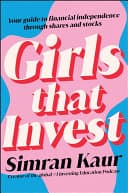
Girls That Invest
A no-jargon crash course from the podcaster behind Girls That Invest that makes the sharemarket feel doable, written especially for women starting out. The perfect first step before you buy your first ETF.
She's on the Money
Victoria Devine
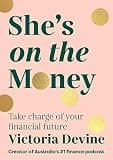
She's on the Money
Written for millennials, walks through budgeting, clearing debt, saving, investing and buying property with real stories.
Some links above are affiliate links. If you buy through them, Snowball Invest may earn a small commission at no extra cost to you. We only recommend books we'd suggest anyway.
Sources
Was this article useful?
Put it to your own numbers
Every calculator runs entirely in your browser, with nothing stored. See what these numbers look like for your own situation.
Explore the calculators →General information only. This article is educational and does not constitute personal financial advice. It does not account for your circumstances. Consider your own situation and seek advice from a licensed adviser before acting. Read our full disclaimer.

Timothy Hirou Gaschereau
Founder of Snowball Invest, not a financial adviser.
I write about what I'm learning myself, because nobody ever taught us how to take control of our own money. It's a skill, not a mystery, and it's never too late to learn it. The best day to start was yesterday, the second best is today.
LinkedIn →Related articles

On Your Own Two Feet by Helen Baker: An Honest Review
Our honest On Your Own Two Feet review: Helen Baker's guide to financial independence for Australian women, its strengths, its limits, and who should read it.

Financial Feminist by Tori Dunlap: An Honest Review
Our honest Financial Feminist review for Australians: Tori Dunlap's shame-free money framework, the salary-negotiation gold, what's US-only, and how it maps here.

The Joy of Money by McCallum & Newbould: An Honest Review
Our honest Joy of Money review: Kate McCallum and Julia Newbould's Australian women's guide to financial independence across every life stage, and who it's for.