

The Joy of Money by McCallum & Newbould: An Honest Review
Our honest Joy of Money review: Kate McCallum and Julia Newbould's Australian women's guide to financial independence across every life stage, and who it's for.
 By Timothy Hirou GaschereauPublished
 9 min read
If you've been searching for a practical, jargon-free money guide that actually speaks to the Australian experience, The Joy of Money is one of the strongest contenders on the shelf. Short verdict: a genuinely useful handbook for Australian women at any life stage, not the deepest dive on investing, but one of the most complete guides to the full financial life cycle you'll find here. It's part of our personal finance book reviews on Snowball Invest.
Quick answer
A genuinely useful, Australian-specific guide covering the full financial life cycle, from budgeting and super to relationships, divorce and retirement. Best for Australian women at any life stage who want a practical, jargon-free money handbook. Not the deepest dive on investing mechanics, but an excellent starting point. Our rating: 4 out of 5.
Want to read The Joy of Money?
Kate McCallum and Julia Newbould map out financial independence for Australian women, from super and investing to insurance and estate planning.
In this guide
- →What the book covers: the full financial life cycle for Australian women
- →The genuine strengths and the honest weaknesses
- →Who it's for, and who's better off elsewhere
- →What critics and readers say
- →The Australian angle: the gender super gap, the Age Pension and estate planning
📖 What is The Joy of Money about?
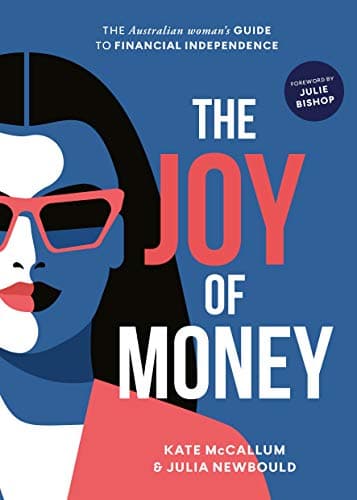
The Joy of Money: The Australian Woman's Guide to Financial Independence was published in 2020 by Are Media, co-authored by two women with serious Australian finance credentials. Kate McCallum is a financial adviser and the founder of Multiforte Financial Services, with decades of experience across major institutions. Julia Newbould is a financial journalist and editor with a long career in Australian financial media, including editing Money magazine. Together they bring a rare combination of hands-on advice and clear financial communication.
The book's core thesis is simple and powerful: money isn't just about money, it's about security and choices, the freedom to live your life the way you want. This isn't a spreadsheet book; it's about connecting your money to your values, goals and life priorities, not unlike our own guide to how to set financial goals. Topics span personal financial foundations (values, goals, priorities), money-management systems, career and human capital, family and relationships, investing, super, insurance, wills and estate planning, retirement and the Age Pension, and the hard stuff most books skip: separation, widowhood and end-of-life planning. Real-person case studies and step-by-step guides run throughout (including a detailed post-separation financial checklist), and it's designed to be read cover-to-cover or dipped into by chapter as life changes.
⚖️ Strengths and weaknesses
What it gets right
- ✓Genuinely Australian: the gender super gap, Australian insurance, estate planning under local law, the Age Pension and tax context are all baked in.
- ✓Covers the chapters most books skip: career and human capital, relationships and money, and the 'dark days' of separation and death.
- ✓A human-centred approach: designed around your life, not spreadsheets, which readers consistently appreciate.
- ✓Jargon-free by design, from authors passionate about making finance accessible.
- ✓Practical from page one: real case studies, values-and-goals exercises and step-by-step guides.
- ✓Readable handbook format you can finish in a weekend and return to as life changes.
Where it falls short
- ✕Some figures will be out of date: published in 2020, so verify super caps, Age Pension rates and tax thresholds with the ATO and Services Australia.
- ✕Investing mechanics are introductory: no deep dive on ETF selection or portfolio construction.
- ✕May feel more relevant to established households: some examples skew toward higher-earning, middle-aged women.
- ✕Broad rather than deep: each topic gets a solid introduction rather than an exhaustive treatment.
👤 Who should read it, and who should skip it?
Read it if you
- ✓Are an Australian woman who wants a single, practical reference covering the full money life cycle.
- ✓Are going through a major life transition: new job, new relationship, separation or approaching retirement.
- ✓Want to get financially organised without wading through jargon.
- ✓Are after one of the better finance books for women written with genuine Australian context.
Skip it if you
- ✕Are already financially confident and want deep investment strategy or ETF mechanics.
- ✕Are looking for current super caps or tax rates (check the ATO and Services Australia).
- ✕Want a book focused exclusively on building wealth through shares or property.
🔍 What do critics say?
The book was well received in Australian finance circles and picked up recognition in Australian book awards, a meaningful signal that the local finance community took it seriously. Reviewers describe it as entertaining and instructive, a culturally aware guide to financial wellness, and credit it with helping to de-jargonise money for a broad audience. The authors have spoken about deliberately designing it to be human-centred rather than money-centred, aiming to create a comfortable place where readers can take one small step that has a big impact, and that intent comes through on the page.
💬 What do readers say? Goodreads and Reddit
On Goodreads it holds around 3.8 out of 5 from a modest number of ratings. Positive themes: practical money information, easy to read and comprehend, and readers recommending it to family members and adult children. Critical themes: some felt it didn't quite live up to expectations, and that the examples skewed toward higher-earning, middle-aged women with older children and larger homes, so a 24-year-old in a share house may find some case studies a step removed.
A useful outside perspective comes from a male FIRE-community reviewer well outside the target audience, who still praised it as a comprehensive, all-encompassing life-stage guide and singled out the relationships, career and "dark days" chapters as what sets it apart. The demographic framing on the cover shouldn't put anyone off.
🇦🇺 The Australian angle
This is where the book earns its keep. The gender super gap in Australia is a well-documented, serious problem: women retire with significantly less super than men on average, driven by the gender pay gap, career breaks for caring responsibilities, and higher rates of part-time work. The book addresses this directly, with Australian-specific context on how super works and how to close the gap where possible. Super is a core topic, not an afterthought, the Age Pension features properly in the retirement chapter, and insurance and estate planning are covered with Australian legal and financial context (life insurance, income protection, wills, powers of attorney).
Where it really distinguishes itself is relationships and money: financial compatibility, what to discuss before moving in together, and a genuinely practical step-by-step guide to sorting your finances after a separation, the kind of content most money books skip entirely. For another adviser-written Australian take on women's financial independence, our On Your Own Two Feet review is a strong companion, and our Barefoot Investor review covers the broader single-system approach.
💰 The verdict
The Joy of Money is one of the most comprehensive Australian personal finance books written specifically for women. It is not the book for deep investment strategy. It is the book for getting your whole financial life in order, understanding the gender super gap, and building a money system that connects to what you actually care about. Best used as a handbook: read it once, then return to relevant chapters as life changes (getting married, approaching retirement, going through a separation). Pair it with dedicated investing resources and always check current super caps and tax rates with the ATO before acting on any specific figures. Our rating: 4 out of 5.
Want to read The Joy of Money?
Want your whole financial life mapped out, Australian-woman-first? Grab a copy and keep it as a reference.
SnowLetter
Australia's money news and our best reads, once a week.
❓ Frequently asked questions
Who are Kate McCallum and Julia Newbould?
+
Kate McCallum is an Australian financial adviser and the founder of advisory firm Multiforte Financial Services, with decades of experience across major institutions and an industry advice award to her name. Julia Newbould is a financial journalist and editor with a long career in Australian financial media, including editing Money magazine. Together they bring hands-on advice experience and clear financial communication.
Is it relevant for younger women, not just those near retirement?
+
Mostly yes, with caveats. The early chapters on values, goals, money-management systems and career apply at any age. Some readers noted certain examples skew toward women with established households and older children. But the life-stage structure means you can read the chapters most relevant to you now and return to others later. Younger readers get the most from the foundations, career and relationships chapters.
How does the book address the gender super gap?
+
Directly, with Australian-specific context on how super works, how career breaks and part-time work affect balances, and practical strategies for making the most of contributions. The Workplace Gender Equality Agency publishes detailed data on the superannuation gap by age group if you want the numbers.
Is the financial information still current?
+
The core concepts and frameworks are timeless. But specific figures around super caps, Age Pension rates and tax thresholds will have changed since the 2020 publication, so always verify current numbers with the ATO and Services Australia before acting on anything.
How does it compare to The Barefoot Investor?
+
Both are practical, jargon-free Australian finance books, but they serve different purposes. The Barefoot Investor is primarily a step-by-step budgeting and debt-reduction system. The Joy of Money covers a broader life cycle: super, insurance, estate planning, relationships and money, separation and retirement. Start with Barefoot for a single system; reach for The Joy of Money for a comprehensive reference with women's specific challenges front and centre.
Where can I buy The Joy of Money?
+
It's available on Amazon AU and through major Australian booksellers in paperback.
📚 Get the book (and two women-focused companions)
The Joy of Money
Kate McCallum & Julia Newbould
The Joy of Money
Kate McCallum and Julia Newbould map out financial independence for Australian women, from super and investing to insurance and estate planning. Practical, warm and refreshingly free of finance-bro energy.
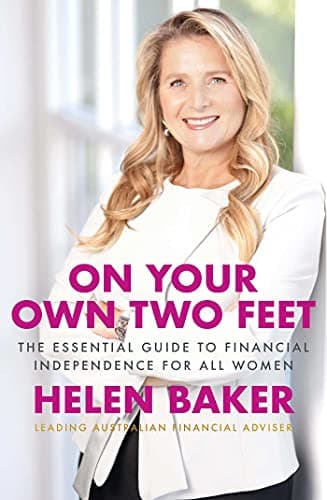
On Your Own Two Feet
Helen Baker
On Your Own Two Feet
An Aussie financial planner's essential guide to money independence for women, covering every life stage from single to separated. Warm, practical and genuinely on your side.
She's on the Money
Victoria Devine
She's on the Money
Written for millennials, walks through budgeting, clearing debt, saving, investing and buying property with real stories.
Some links above are affiliate links. If you buy through them, Snowball Invest may earn a small commission at no extra cost to you. We only recommend books we'd suggest anyway.
Sources
Was this article useful?
Put it to your own numbers
Every calculator runs entirely in your browser, with nothing stored. See what these numbers look like for your own situation.
Explore the calculators →General information only. This article is educational and does not constitute personal financial advice. It does not account for your circumstances. Consider your own situation and seek advice from a licensed adviser before acting. Read our full disclaimer.

Timothy Hirou Gaschereau
Founder of Snowball Invest, not a financial adviser.
I write about what I'm learning myself, because nobody ever taught us how to take control of our own money. It's a skill, not a mystery, and it's never too late to learn it. The best day to start was yesterday, the second best is today.
LinkedIn →Related articles

On Your Own Two Feet by Helen Baker: An Honest Review
Our honest On Your Own Two Feet review: Helen Baker's guide to financial independence for Australian women, its strengths, its limits, and who should read it.

She's on the Money Review: Honest and Actually Useful
Our honest She's on the Money book review: what Victoria Devine gets right, where it falls short, and whether it's worth your time as an Australian reader.

Girls That Invest Book Review: An Honest Australian Take
Our honest Girls That Invest book review: what Simran Kaur's beginner guide does well, where it falls short, and what Australian readers need to know first.