

Financial Feminist by Tori Dunlap: An Honest Review
Our honest Financial Feminist review for Australians: Tori Dunlap's shame-free money framework, the salary-negotiation gold, what's US-only, and how it maps here.
 By Timothy Hirou GaschereauPublished
 10 min read
Financial Feminist is one of the most talked-about personal finance books of the past few years, and for good reason. Here's the honest take, including what Australian readers need to know before picking it up: the mindset and salary-negotiation content is genuinely great, the US-specific tax and account chapters need translation. It's part of our personal finance book reviews on Snowball Invest.
Quick answer
A genuinely empowering money starter kit that tackles the emotional and systemic side of personal finance, not just the spreadsheets. Best for women (and anyone who identifies with the barriers women face) at the start of their money journey who want a structured, shame-free framework. Skip it if you already have a solid foundation, want Australian super or tax guidance, or want deep investment strategy. Our rating: 4 out of 5.
Want to read Financial Feminist?
A warm, funny guide to money aimed at women: killing shame around spending, negotiating pay, and starting to invest.
In this guide
- →What the book covers: mindset, systemic barriers, the Financial Game Plan
- →The genuine strengths and the honest weaknesses
- →Who it's for, and who's better off elsewhere
- →What critics and readers say
- →The Australian angle: super, the gender super gap and salary negotiation
📖 What is Financial Feminist about?
Financial Feminist is the 2022 debut book from Tori Dunlap, founder of Her First 100K and host of the Financial Feminist podcast. Dunlap's origin story is central to the book's credibility: she saved $100,000 by age 25 while working a corporate marketing job, then built Her First 100K into a financial education brand with a large following.
The core argument: women aren't bad with money, the system is stacked against them. The gender pay gap, the investing confidence gap, career breaks for caregiving, and a financial industry that historically ignored women are structural problems, not personal failures. Dunlap's answer is her "Financial Game Plan": a step-by-step framework covering emergency funds, debt payoff, salary negotiation and getting started with low-cost index funds, all wrapped in a values-based spending philosophy that asks you to spend on what actually matters rather than following a rigid budget. The investing content is introductory by design, and there are journalling prompts throughout (useful or a bit much, depending on your tolerance).
⚖️ Strengths and weaknesses
What it gets right
- ✓Tackles the emotional and systemic side of money, which makes the practical advice land differently.
- ✓The Financial Game Plan is genuinely actionable: clear steps in a clear order, exactly what a beginner needs.
- ✓Accessible, conversational writing: direct, warm and occasionally sweary, an easy read even if money books usually bore you.
- ✓Strong on salary negotiation, and crucially those tactics aren't US-specific: they work the same in Sydney as in Seattle.
- ✓Validates women's financial experiences without turning into a manifesto; the focus stays on what you can do.
- ✓Built on years of real community feedback, which shows in the practical sections.
Where it falls short
- ✕Heavily US-centric: 401(k)s, Roth IRAs, HSAs and US tax rules throughout, none of which exist in Australia.
- ✕The investing section is introductory only, with nothing beyond 'start with index funds'.
- ✕Some find the feminist framing repetitive, recurring throughout even once you're on board with the premise.
- ✕Limited depth for intermediate or advanced investors: it's a starting point.
- ✕Podcast listeners may find a fair chunk of the material familiar.
👤 Who should read it, and who should skip it?
Read it if you
- ✓Feel stuck, ashamed or overwhelmed about money and want a shame-free starting point.
- ✓Want a structured framework to follow rather than a pile of unordered tips.
- ✓Are a complete beginner to investing and want a plain-English intro to index funds.
- ✓Want salary negotiation tactics you can use in your next performance review.
Skip it if you
- ✕Already have a solid foundation, an emergency fund and a diversified portfolio.
- ✕Want Australian-specific guidance on super, tax or ASX investing.
- ✕Want deep investment strategy beyond 'start with index funds'.
- ✕Find the feminist framing more marketing than substance and prefer a purely tactical approach.
🔍 What do critics say?
Financial Feminist is a New York Times bestseller, and mainstream coverage has treated Dunlap as a genuine disruptor in the personal finance space. Formal literary reviews are limited, but independent reviewers are broadly positive, consistently praising the accessible tone and the mindset-first approach. The most common criticism from international reviewers is the same one we'd flag for Australians: the US-centric content is a real limitation if you're not American.
💬 What do readers say? Goodreads and Reddit
On Goodreads it holds around 4.1 out of 5 from thousands of ratings, a notably top-heavy distribution that suggests it's genuinely connecting with its target audience. Readers praise the accessible tone, the validation of women's financial experiences and the clarity of the Game Plan steps. Podcast followers sometimes note it covers familiar ground.
Reddit sentiment is more mixed. Some readers find it genuinely empowering, particularly those who felt shut out of money conversations before; others find the "girl-boss feminism" branding grating and the feminist framing more marketing than substance. Both reactions are fair, and which camp you land in probably depends on how much the systemic critique resonates with your own experience.
🇦🇺 The Australian angle
Here's what you actually need to know as an Australian reader:
- The US account content needs translation. The Australian equivalent of a 401(k) is superannuation: a compulsory system where your employer contributes a percentage of your salary (12% as of 1 July 2025). Concessional (pre-tax) super contributions are taxed at 15%, lower than most people's marginal rate, making extra contributions a useful strategy for many. When Dunlap talks about index funds inside a retirement account, the Australian version is: check your super fund's investment options.
- The investing section translates well in spirit. The US index funds map to ASX ETFs like VAS (Australian shares) and VGS (international shares), the kind of low-cost, diversified options MoneySmart flags as a starting point for new investors.
- The gender super gap is very real here. Australian women retire with significantly less super than men on average, driven by the same forces Dunlap identifies: career breaks for caregiving, part-time work and the gender pay gap.
- The gender pay gap is real here too (the WGEA tracks a persistent national gap), which makes Dunlap's salary negotiation chapter directly applicable.
- Mindset and emotional money work is completely universal. The shame, the avoidance, the feeling that money is "not for you", none of that has a postcode.
Treat the US-specific chapters as a framework and apply the Australian equivalents: super instead of 401(k), ASX ETFs instead of US index funds. For more women-focused Australian reads, our Girls Just Wanna Have Funds review and On Your Own Two Feet review cover the gender super gap with local specifics.
💰 The verdict
Financial Feminist is a solid starting point for women who feel overwhelmed or shut out of the financial system. The mindset work is genuinely useful, the salary negotiation chapter is practical and directly applicable in Australia, and the Financial Game Plan gives beginners a clear sequence to follow (more valuable than it sounds when you're starting from zero). The main limitation for Australian readers is the US-specific content: you'll need to do some translation, and the super and tax chapters won't map directly. But the core philosophy is sound, and the structural critique of why women face unique financial challenges is as relevant in Melbourne as in Manhattan. Our rating: 4 out of 5.
Want to read Financial Feminist?
Starting your money journey and want the mindset sorted too? Grab a copy and read the negotiation chapter first.
SnowLetter
Australia's money news and our best reads, once a week.
❓ Frequently asked questions
Is Financial Feminist worth reading for Australians?
+
Yes, with caveats. The mindset work, salary negotiation tactics and Financial Game Plan framework are all directly applicable here. The US-specific content (401k, Roth IRA, HSA) doesn't translate, so map those to Australian equivalents: super, ASX ETFs and ASIC MoneySmart resources. Go in knowing that and you'll get a lot out of it.
Who is Tori Dunlap?
+
Tori Dunlap is an American personal finance educator and the founder of Her First 100K, which she started after saving $100,000 by age 25 while working a corporate marketing job. She hosts the Financial Feminist podcast and has a large social media following. Financial Feminist is her debut book, published in 2022, and a New York Times bestseller.
Is Financial Feminist only for women?
+
Not strictly. It's written with women as the primary audience, and the systemic critique is specifically about the barriers women face. But anyone who wants to understand those barriers, or who connects with the shame-free, values-based approach, will find value. The Game Plan steps and salary negotiation tactics are useful regardless of gender.
How does it compare to The Barefoot Investor?
+
They solve different problems. The Barefoot Investor is Australia-specific and focused on a clear bucket system for managing money, better for local context (super, Australian accounts, tax). Financial Feminist is more focused on the emotional and systemic side of money for women, and US-centric in its specifics. For an Australian woman starting from scratch, reading both isn't a bad idea: Barefoot for the mechanics, Financial Feminist for the mindset and negotiation.
Does it cover investing in detail?
+
No. The investing section is introductory: why investing matters, the basics of index funds and the importance of starting early. Enough to point a complete beginner in the right direction, but not a deep dive into portfolio construction or tax-efficient investing. For Australian-specific investing guidance, ASIC's MoneySmart is a good next step.
What is the Financial Game Plan?
+
Dunlap's step-by-step framework: build an emergency fund first, then tackle high-interest debt, then negotiate your salary to raise your income, and finally start investing in low-cost index funds. The order matters, and the logic translates directly to the Australian context.
📚 Get the book (and two women-focused companions)
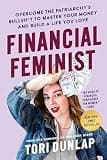
Financial Feminist
Tori Dunlap
Financial Feminist
A warm, funny guide to money aimed at women, covering everything from killing shame around spending to negotiating pay and starting to invest. The mindset and salary chapters land hard, just apply an Australian lens.
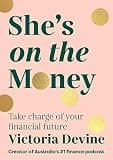
She's on the Money
Victoria Devine
She's on the Money
Written for millennials, walks through budgeting, clearing debt, saving, investing and buying property with real stories.
Girls Just Wanna Have Funds
Molly Benjamin

Girls Just Wanna Have Funds
Molly Benjamin, founder of Australia's Ladies Finance Club, makes money feel fun and doable, covering budgeting, investing and confidence in one friendly package. Perfect if you want to sort your finances without the jargon or the guilt.
Some links above are affiliate links. If you buy through them, Snowball Invest may earn a small commission at no extra cost to you. We only recommend books we'd suggest anyway.
Sources
Was this article useful?
Put it to your own numbers
Every calculator runs entirely in your browser, with nothing stored. See what these numbers look like for your own situation.
Explore the calculators →General information only. This article is educational and does not constitute personal financial advice. It does not account for your circumstances. Consider your own situation and seek advice from a licensed adviser before acting. Read our full disclaimer.

Timothy Hirou Gaschereau
Founder of Snowball Invest, not a financial adviser.
I write about what I'm learning myself, because nobody ever taught us how to take control of our own money. It's a skill, not a mystery, and it's never too late to learn it. The best day to start was yesterday, the second best is today.
LinkedIn →Related articles

Girls Just Wanna Have Funds by Molly Benjamin: An Honest Review
Our honest Girls Just Wanna Have Funds review: Molly Benjamin's women-focused Aussie money guide, its strengths, its limits, and who should read it.

On Your Own Two Feet by Helen Baker: An Honest Review
Our honest On Your Own Two Feet review: Helen Baker's guide to financial independence for Australian women, its strengths, its limits, and who should read it.

The Joy of Money by McCallum & Newbould: An Honest Review
Our honest Joy of Money review: Kate McCallum and Julia Newbould's Australian women's guide to financial independence across every life stage, and who it's for.