
Market Order vs Limit Order: Which One Should You Use?
One fills fast at whatever the market charges. The other names your price and might never fill. When each is right, and where the spread quietly costs you.
 By Timothy Hirou GaschereauPublished
 10 min read
This is the screen where a lot of first trades go slightly wrong. You have picked what to buy, you have funded the account, and then the broker asks a question you were not expecting. The choice costs nothing extra when you get it right, and can quietly cost a surprising amount when you get it wrong on the wrong stock. If you have not placed a trade at all yet, start with how to buy shares in Australia.
This article is general information only, not personal financial advice. Consider your own circumstances before investing.
Quick answer
A market order buys at the next available price, so it fills quickly but you do not control what you pay. A limit order sets your price, so you control the cost but it may never fill. For big ETFs the difference is usually noise. For small, thinly traded companies it is the most expensive decision on the screen.
In this guide
- →What each order type actually instructs your broker to do
- →The bid-ask spread, and why a market order always pays it
- →Slippage, and when it stops being trivial
- →Day orders versus good till cancelled, and the trap in the second one
⚡ What a market order does
A market order tells your broker to trade now, at whatever the market is currently offering. Moneysmart describes it as buying “at the next available price”, and notes that “usually, the trade will go through quickly”.
That speed is the whole appeal. You click, it fills, you move on. The trade-off is that you hand over price control completely. Whatever the market wants to charge at that exact moment is what you pay.
🎯 What a limit order does
A limit order lets you name your price. In Moneysmart’s words, you “set the most you will pay (if buying) or the least you will accept (if selling)”, and “the trade only goes through if the market reaches your price”.
So if a share is trading around $5.20 and you set a buy limit at $5.10, your order joins the queue and waits. It fills if the price comes to you. It does nothing if the price never does.
🎯 The essential: One is an instruction about speed. The other is an instruction about price. You cannot have a guarantee of both at once, and that is the entire decision.
📏 The bid-ask spread, made visible
Every share has two prices at any moment, and your price screen usually shows you only one.
- The bid is the highest price a buyer is currently willing to pay.
- The ask, also called the offer, is the lowest price a seller will accept.
- The gap between them is the spread.
This matters because a market order always buys at the ask and sells at the bid. You cross the spread every time, and you pay it whether you noticed it or not.
On a big ETF that spread might be a single cent, which is genuinely irrelevant. On a small company quoted at 48 cents bid and 53 cents ask, crossing it costs you about a tenth of your money before anything has happened.
🪤 Slippage, the market order trap
Slippage is the gap between the price you expected and the price you actually got. You see a share quoted at $3.00, you send a market order, and by the time it reaches the exchange the price is $3.08. That eight cents is slippage.
On large, liquid stocks it is usually trivial, because there are plenty of orders sitting at nearby prices. It becomes real in two situations: when a stock is thinly traded, so your order eats through the few available sellers and climbs the queue, and when the market is moving fast, such as just after a surprise announcement.
Market orders and thin or fast-moving markets are a bad combination. That single sentence covers most of what can go wrong here.
⏳ The limit order that never fills
The opposite failure is quieter and easier to live with. You want a stock at $4.80, it is trading at $4.95, you set your limit and wait. It never comes back to $4.80 and runs to $5.50 instead. You own nothing.
That is not necessarily a bad outcome. You held your discipline and did not overpay. But if you genuinely wanted to own the thing, a limit set too far below the market can leave you watching from the sidelines for a very long time.
📅 What happens at the end of the day
When you place a limit order your broker will ask how long it should live. Broadly:
- A day order is active for that trading day only. The ASX closes at 4pm Sydney time, and anything unfilled is cancelled automatically.
- Good till cancelled keeps the order in the queue until it fills or you cancel it. Brokers cap how long that can run, and the cap varies between them, so check yours.
The trap is in the second one. Forget about an open order, have the stock drop to your price weeks later on news you have not seen, and you get filled at a moment you would not have chosen. It is worth reviewing your open orders occasionally.
🧭 Which one should you use
| Market order | Limit order | |
|---|---|---|
| What it controls | Speed | Price |
| Will it fill? | Almost always | Only at your price |
| Main risk | Slippage | Never filling |
| Suits | Liquid shares and big ETFs | Small caps, wide spreads, fast markets |
| Brokerage | Same | Same |
| Settlement | T+2 | T+2 |
For most people buying diversified ETFs on a regular schedule, a market order is perfectly fine and the simplicity is a real advantage. Once you start buying individual companies, particularly smaller ones, the limit order stops being optional fussiness and starts being the sensible default.
❓ Frequently asked questions
Which order type is safer for a beginner?+
It depends on what you are buying rather than on your experience. For a large, heavily traded ETF the spread is often a cent or two, so a market order fills at essentially the price on your screen. For an individual small company the spread can be a meaningful share of the price, and a limit order protects you from paying far more than you intended. Neither is universally safer.
Does the order type change my brokerage fee?+
No. Your broker charges the same either way. Moneysmart notes that online brokerage is often around $20 or less for smaller trades, then a percentage above that, with some brokers keeping a flat fee whatever the size. What changes your total cost is slippage on a market order, or missing the trade entirely with a limit order, not the fee itself.
What happens if my limit order never fills?+
Nothing. No trade, no brokerage charged, no consequence. If you placed it as a day order it simply expires at the close. If you placed it as a good till cancelled order it stays in the queue until it fills or you cancel it. You can always come back and adjust your price if you decide you are willing to pay more.
Can a limit order fill at a better price than I set?+
Yes. Your limit is a ceiling when buying and a floor when selling, not a fixed price. If you set a buy limit at $5.00 and the best available offer is $4.95, you get $4.95. This catches people out because they expect to pay exactly their limit price.
Should I use a limit order for ETFs like VAS or VGS?+
You can, though it matters less. These trade in large volumes with spreads often around a cent, so a market order during normal trading hours fills close to the screen price. Some investors still set a limit a cent or two above the current offer, which usually fills straight away while capping the worst case. It is a reasonable habit rather than a necessity.
When does settlement happen?+
Two business days after the trade, regardless of which order type you used. Moneysmart puts it plainly: the money is sent to your brokerage account two business days after the trade day, which is called a T+2 settlement period. If a large order fills in parcels across different days, each fill starts its own two day clock.
🔗 Sources
- How to buy and sell shares, Moneysmart, Australian Securities and Investments Commission, updated 18 June 2026.
- How to buy and sell investments, Australian Securities Exchange.
- Order controls, ASX equities trading, Australian Securities Exchange.
- Shares, Moneysmart, Australian Securities and Investments Commission.
📚 Recommended reading
The Little Book of Common Sense Investing
John C. Bogle
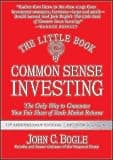
The Little Book of Common Sense Investing
From the man who invented the index fund, this is the short, sharp case for low-cost investing that has aged like fine wine. The maths on fees is universal, just think ETFs and super instead of his US funds.
Motivated Money
Peter Thornhill
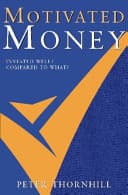
Motivated Money
Peter Thornhill's cult-favourite case for living off fully franked dividends instead of chasing capital gains. A calm, contrarian Aussie take that has quietly built a big following of long-term investors.
Some links above are affiliate links. If you buy through them, Snowball Invest may earn a small commission at no extra cost to you. We only recommend books we'd suggest anyway.
SnowLetter
Australia's money news and our best reads, once a week.
Was this article useful?
Put it to your own numbers
Every calculator runs entirely in your browser, with nothing stored. See what these numbers look like for your own situation.
Explore the calculators →General information only. This article is educational and does not constitute personal financial advice. It does not account for your circumstances. Consider your own situation and seek advice from a licensed adviser before acting. Read our full disclaimer.

Timothy Hirou Gaschereau
Founder of Snowball Invest, not a financial adviser.
I write about what I'm learning myself, because nobody ever taught us how to take control of our own money. It's a skill, not a mystery, and it's never too late to learn it. The best day to start was yesterday, the second best is today.
LinkedIn →Related articles

ASX Settlement: What T+2 Actually Means
Sell on Wednesday and the cash is not yours on Wednesday. How the two business days are counted, why it decides who gets the dividend, and whether T+1 is coming.

CHESS Sponsorship: HIN, SRN, and Why Your Broker Model Matters
A number starting with X means the shares are in your name. No number at all means someone else holds them for you. What that difference costs if your broker fails.

BGBL vs VGS: Which Global ETF Belongs in Your Portfolio?
BGBL charges 0.08% and holds South Korea. VGS charges 0.18% and does not. What actually separates the two big ASX global ETFs, and how to pick one.