

How to Buy CBA Shares (and the Exposure You Already Have)
The mechanics take ten minutes. The part worth reading is why you may already own plenty of CBA through your ETF and your super without realising it.
 By Timothy Hirou GaschereauPublished
 11 min read
The mechanical part of this takes about ten minutes once your account is open, and most guides stop there. The more useful question is the one nobody asks first: how much of this bank do you already own without having bought a single share?
This article is general information only, not personal financial advice, and it is not a recommendation to buy or sell CBA or any other investment. Consider your own circumstances before investing.
Quick answer
Open a brokerage account, fund it, search the ticker CBA, choose a market or limit order, confirm, and keep the contract note for tax. That is the whole process. The part worth thinking about is that if you hold an Australian shares ETF, or you have a default super option, you almost certainly own this bank already.
In this guide
- →What you need before you can place a trade at all
- →The six steps, including the order type decision
- →How dividends, franking and reinvestment actually work
- →The three places your money is probably already exposed to this one company
📋 What you need first
Four things, and none of them are difficult.
- A brokerage account. You cannot buy ASX shares without one. Our broker comparison covers what actually differs between them.
- A linked bank account to fund it. Most brokers want the money in place before you can place a buy order.
- Your tax file number. You are not obliged to provide it, but without it tax is withheld from investment income at the top rate, so there is no upside to withholding it.
- Identification. Licensed brokers have to verify who you are under anti money laundering rules. A licence or passport is standard.
🪜 The six steps
- Choose a broker, and check whether it is CHESS sponsored or uses a custodian, because that decides whose name the shares are registered in. Our CHESS sponsorship guide explains what rides on the answer.
- Open and verify the account, which is mostly digital and can take anywhere from minutes to a couple of business days depending on identity checks.
- Search the ticker CBA, three letters, and confirm the name that comes up is Commonwealth Bank of Australia before going further.
- Choose your order type. A market order buys at the next available price. A limit order sets your maximum and only fills if the market reaches it.
- Review and confirm: ticker, number of units, order type, and the brokerage shown on screen.
- Keep the contract note. It records what you paid including brokerage, which is your cost base when you eventually sell and calculate capital gains.
🎯 The essential: Enter the number of units, not a dollar amount. If the price is around $180 and you want to invest roughly $1,800, you are buying 10 units. Brokers that let you enter dollars are usually the fractional, custodian kind.
📄 Your holding statement
A couple of business days after the trade, it settles and you get a holding statement. If your broker is CHESS sponsored, that statement carries your Holder Identification Number, which starts with X and belongs to you rather than to the broker.
That is the practical value of CHESS sponsorship: the shares are registered in your name, so a broker failing does not put them in question. The settlement timing is covered in what T+2 actually means.
💰 Dividends and franking
A dividend is a share of profit paid out in cash, and Australian banks have historically been regular payers, though any dividend is at the company’s discretion and can be cut.
Four dates matter, in this order:
- Declaration: the company announces the dividend.
- Ex-dividend: the cut-off. Buy on or after this date and the seller keeps the payment.
- Record: the company checks who is on the register.
- Payment: the cash arrives, or new shares are issued if you have elected to reinvest.
Franking credits represent company tax already paid on those profits. You declare the cash and the credits, then claim the credits as an offset, so the same profit is not taxed twice. A minimum holding period applies before you can claim the offset, which matters if you are buying just before an ex-dividend date, so check the current ATO position rather than assuming. Our guide to the ex-dividend date sets out the sequence.
🔁 Reinvesting instead of taking cash
A dividend reinvestment plan issues you new shares instead of paying cash. You elect into it through the company’s share registry rather than through your broker, and the registry details are on the company’s own investor relations pages.
Two things to know before you tick the box. Each reinvested parcel has its own cost base for capital gains purposes, so years of reinvesting means years of parcels to keep records for. And reinvesting automatically buys more of the same company, which compounds your position and your concentration at the same time.
⚠️ The exposure you already have
This is the part worth slowing down for, because it is the bit that surprises people.
If you hold a broad Australian shares ETF, you already own this bank. Those funds weight by company size, and the big banks sit near the top. Buying the shares directly does not add a new holding, it doubles an existing one.
Then there is your super. Default options carry a meaningful allocation to Australian shares, and that allocation holds the same large companies for the same reason.
None of this makes buying the shares wrong. It makes it a decision you should take with the total picture in front of you rather than one line of it. Open the top ten holdings of whatever Australian fund you own and look, before you add a third layer.
The broader point about owning one company versus many is covered in building a simple portfolio.
❓ Frequently asked questions
How much money do I need to start?+
Less than most people assume. There is no wealth test and no qualification required. The practical floor is the cost of the shares plus brokerage, and the thing to watch is that a fixed brokerage fee eats proportionally more of a small trade than a large one. Your broker will also have its own minimum, so check that before you plan the amount.
What order type should I use?+
For a company that trades in large volume, a market order during normal trading hours fills close to the price on your screen. A limit order lets you name your maximum instead, at the cost of possibly not filling at all. Our guide to market orders versus limit orders goes through when each one is the better choice.
When do I actually own the shares?+
You have a binding contract when the trade is matched, and registered ownership when it settles two business days later. That is the T+2 settlement cycle, and it is also why your name does not appear on the register the same day you buy.
How do franking credits work on a bank dividend?+
Australian companies pay tax on profits before distributing them, and franked dividends carry credits representing that tax. You declare the cash and the credits as income, then claim the credits as an offset, so the same profit is not taxed twice. A minimum holding period applies before you can claim the offset, so check the current ATO rules before buying close to an ex-dividend date.
What is a dividend reinvestment plan?+
Instead of cash, you receive new shares. You elect into it through the company's share registry rather than through your broker. The catch worth knowing is that every reinvested parcel has its own cost base for capital gains purposes, so a decade of reinvesting leaves you with a decade of parcels to keep records for.
Is buying one bank the same as investing in the Australian market?+
No, and the gap is larger than it looks. One company is one company, however large. A broad Australian index fund spreads across hundreds of businesses in banking, mining, healthcare, retail and more. The irony is that such a fund already holds this bank as one of its biggest positions, which is the part most people miss.
🔗 Sources
- How to buy and sell shares, Moneysmart, Australian Securities and Investments Commission, updated 18 June 2026.
- Start investing, Australian Securities Exchange.
- Imputation, Australian Taxation Office, on how franking credits work.
- Diversification, Moneysmart, Australian Securities and Investments Commission.
📚 Recommended reading
Motivated Money
Peter Thornhill
Motivated Money
Peter Thornhill's cult-favourite case for living off fully franked dividends instead of chasing capital gains. A calm, contrarian Aussie take that has quietly built a big following of long-term investors.
The Little Book of Common Sense Investing
John C. Bogle
The Little Book of Common Sense Investing
From the man who invented the index fund, this is the short, sharp case for low-cost investing that has aged like fine wine. The maths on fees is universal, just think ETFs and super instead of his US funds.
Some links above are affiliate links. If you buy through them, Snowball Invest may earn a small commission at no extra cost to you. We only recommend books we'd suggest anyway.
SnowLetter
Australia's money news and our best reads, once a week.
Was this article useful?
Put it to your own numbers
Every calculator runs entirely in your browser, with nothing stored. See what these numbers look like for your own situation.
Explore the calculators →General information only. This article is educational and does not constitute personal financial advice. It does not account for your circumstances. Consider your own situation and seek advice from a licensed adviser before acting. Read our full disclaimer.

Timothy Hirou Gaschereau
Founder of Snowball Invest, not a financial adviser.
I write about what I'm learning myself, because nobody ever taught us how to take control of our own money. It's a skill, not a mystery, and it's never too late to learn it. The best day to start was yesterday, the second best is today.
LinkedIn →Related articles

ASX Settlement: What T+2 Actually Means
Sell on Wednesday and the cash is not yours on Wednesday. How the two business days are counted, why it decides who gets the dividend, and whether T+1 is coming.

VAS vs A200: Two Ways to Own the Australian Market
VAS holds 325 companies, A200 holds 200, and their top ten are nearly identical. What actually separates the two big Australian equity ETFs.
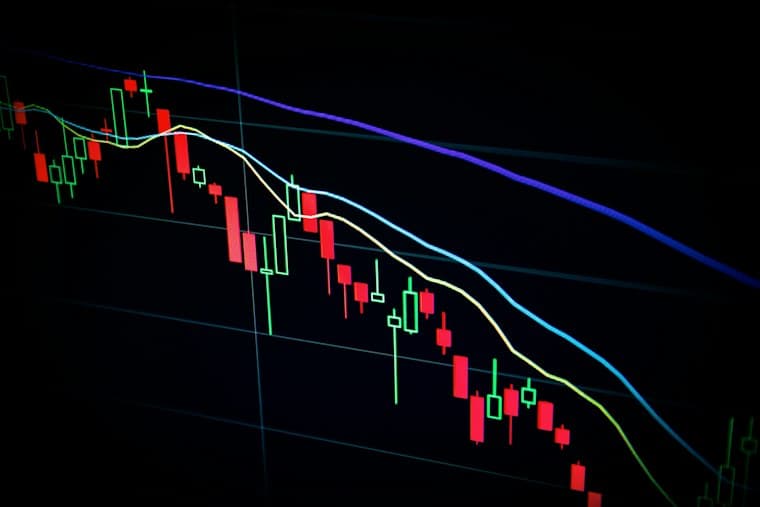
Market Order vs Limit Order: Which One Should You Use?
One fills fast at whatever the market charges. The other names your price and might never fill. When each is right, and where the spread quietly costs you.