

What is stamp duty?
Quick answer
Stamp duty, officially transfer duty in most states, is a state government tax charged whenever a property changes hands. It's calculated on the purchase price or market value, whichever is higher, it's paid at settlement, and it's one of the biggest upfront costs of buying property in Australia.
How stamp duty is calculated
Stamp duty works a bit like income tax brackets, progressive rates that increase as the purchase price rises, so the more expensive the property, the higher the effective rate on the upper portion of the price. A few rules apply everywhere: it's calculated on the contract price or market value, whichever is higher (you can't deflate the price to reduce your duty), it's a state tax, not federal, so each of Australia's eight states and territories sets its own rates and thresholds, and owner-occupiers often pay less than investors in states that offer a home concession rate.
The gap between states is real and can be large. On an established home priced around $600,000, for example, an owner-occupier buyer in Queensland typically pays roughly $13,000 in duty thanks to that state's home concession rate, while the same purchase in Victoria can run north of $30,000. Treat any figure you see quoted, including this one, as a rough guide rather than gospel, rates and thresholds move often. Our Stamp Duty Calculator has each state's current figures modelled for an exact number based on your purchase price, state and buyer type.
First home buyer concessions
Most states offer meaningful stamp duty relief for first home buyers, often worth tens of thousands of dollars, so this is one of the most important things to check before assuming what you'll owe. The shape of the concession varies a lot: some states offer a full exemption up to a set price with a taper above it (NSW, for instance, exempts first home buyers entirely up to $800,000, tapering out by $1,000,000; Victoria exempts up to $600,000, tapering out by $750,000), others restrict the concession to new builds or off-the-plan purchases, and a couple have been phasing stamp duty out for first home buyers altogether in recent years.
Eligibility conditions typically require you to buy as an owner-occupier rather than an investor, move in within a set period and live there for a minimum time, meet citizenship or residency requirements, and not have owned residential property anywhere in Australia before. Because thresholds, price caps and even whether established homes qualify (some states limit new-build and off-the-plan purchases to the full concession) change from state to state and are revised fairly regularly, check your state's current settings through our Stamp Duty Calculator or directly with your state or territory revenue office rather than relying on a number you saw somewhere else, including a figure that was accurate a year or two ago.
When stamp duty is paid
Generally, stamp duty is due at settlement, the day ownership legally transfers to you. In some states you technically have a window of time after signing the contract, but in practice your conveyancer handles payment on settlement day.
The important thing to understand: stamp duty isn't part of your home loan. Lenders almost never roll it into the mortgage, which means it comes straight out of your savings, on top of your deposit. That directly reduces the cash you have available and can affect your borrowing power, so it's worth factoring stamp duty into your savings target from day one, not as an afterthought once you've found a place.
What stamp duty doesn't cover
Stamp duty is the big one, but it's not the only government cost at settlement. A mortgage registration fee and a transfer fee are both small, usually under a few hundred dollars each. Lenders Mortgage Insurance (LMI) is a separate and much bigger cost again if your deposit is under 20% of the purchase price, it can run into the thousands or tens of thousands and has nothing to do with stamp duty. Budget for all of these separately.
And if you're buying an investment property, stamp duty is a one-off cost at purchase, but it isn't the last state tax you'll see. Investors also need to budget for land tax, an ongoing annual tax on the land you hold, which is a completely separate cost that keeps recurring every year you own the property.
Is stamp duty tax-deductible?
For owner-occupiers, no, it's a personal cost with no tax benefit, and if the property is your home, it's likely covered by the main residence exemption when you eventually sell anyway, so there's no capital gain to worry about. For investment properties, stamp duty isn't immediately deductible either, instead it's added to the property's cost base for Capital Gains Tax purposes, which reduces your taxable gain when you eventually sell. It's a future benefit rather than an immediate one, worth discussing with your accountant for how it applies to your situation.
📚 Recommended reading
The Armchair Guide to Property Investing
Ben Kingsley & Bryce Holdaway
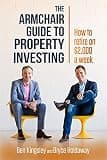
The Armchair Guide to Property Investing
Two of Australia's most trusted property voices lay out a plain-English roadmap to building a portfolio on an average income. Practical, local, and refreshingly free of get-rich-quick hype.
The Barefoot Investor
Scott Pape

The Barefoot Investor
Australia's best-selling money book ever. A simple system for accounts, budgeting, debt and a real emergency fund in one.
Some links above are affiliate links. If you buy through them, Snowball Invest may earn a small commission at no extra cost to you. We only recommend books we'd suggest anyway.
🏠 Stamp Duty Calculator
Get an exact estimate for your state, purchase price and buyer type.
Stamp Duty in Australia, State by State
The full state-by-state breakdown, including exact rates and first home buyer eligibility rules.
Frequently asked questions
How much is stamp duty in Australia?
It depends heavily on the state and the purchase price. Rates are progressive, similar to income tax brackets, so the effective rate rises as the price rises, and each state sets its own scale. On an identical purchase, the difference between the cheapest and most expensive state can easily run into the tens of thousands. Use our Stamp Duty Calculator for a figure specific to your state, price and buyer type.
Do first home buyers pay stamp duty?
Often not, or considerably less than the standard rate. Most states and territories offer some form of exemption or concession for eligible first home buyers, but the thresholds, eligibility rules and even the shape of the concession vary a lot by state and change fairly often. Check current settings for your state through our calculator or the relevant state revenue office before assuming what you'll owe.
When do you pay stamp duty?
Generally at settlement, the day you take legal ownership. In some states you technically have a window of time from contract signing, but in practice your conveyancer or solicitor handles it as part of the settlement process.
Is stamp duty included in the purchase price?
No. It's a separate government tax on top of the purchase price, paid to the state revenue office, not the seller. A property listed at $700,000 will cost you $700,000 plus stamp duty, plus other settlement costs.
Can stamp duty be added to my mortgage?
Generally, no. Most lenders won't roll stamp duty into your home loan, it needs to come from your own savings, on top of your deposit. This is one reason saving for a home purchase takes longer than people expect, and it's worth budgeting for from the start rather than as an afterthought.
Sources
Disclaimer
This is general information only, not financial or legal advice. Stamp duty rates, thresholds and first home buyer concessions vary by state, change regularly, and are not fully covered here, confirm the current figures with our Stamp Duty Calculator, your state or territory revenue office, or a conveyancer before making a purchase decision.