

Stamp Duty Australia: The Complete State-by-State Guide
How stamp duty (transfer duty) works across every Australian state and territory: rates, first home buyer exemptions, a worked example, and upfront cost tips.
 By Timothy Hirou GaschereauPublished
 13 min read
Try it yourself
This one pairs with our how much deposit you need guide, together they cover the two biggest upfront costs of buying a home. For an exact figure, use our Stamp Duty Calculator, it covers every state and territory.
Quick answer
Stamp duty (officially "transfer duty" in most states) is a state government tax on property purchases, paid by the buyer. The amount depends on your state, the purchase price, and whether you qualify for a first home buyer exemption or concession. Rates are progressive, the higher the price, the higher the percentage. First home buyers can pay $0 in several states, and it's typically due at or before settlement, in cash, not added to your mortgage.
In this guide
- →What stamp duty actually is, and how the progressive bracket system works
- →A worked example comparing the same purchase price in NSW and VIC
- →First home buyer concessions in every state and territory
- →How stamp duty fits into your total upfront home-buying costs
- →When it's due, and how off-the-plan purchases can reduce it
🏠 What is stamp duty (and why does it exist)?
🎯 The essential: Stamp duty isn't one number, it's eight different state and territory systems, each with its own rates, thresholds and concessions.
Stamp duty is a state and territory government tax charged when ownership of property transfers from one person to another. Most states now officially call it transfer duty, but "stamp duty" is still the term everyone uses, both mean the same thing.
It's calculated on the dutiable value of the property, the higher of the purchase price or the market value. If you pay below market value in a related-party deal, you're still taxed on what the property is actually worth.
🧮 How stamp duty is calculated
The key concept is the progressive bracket system. It works like income tax, you pay a different rate on each slice of the purchase price, not one flat rate on the whole amount. If a state charges 3.5% on one slice and 4.5% on the next, a purchase straddling both brackets doesn't attract the higher rate on the full amount, only on the portion above that threshold.
Your conveyancer or solicitor works out the exact figure, but our Stamp Duty Calculator lets you run the numbers yourself before you get to that stage.
💡 Worked example: $750,000 in NSW vs VIC
Same purchase price, very different bills.
NSW, standard buyer: $750,000 falls in the $387,001-$1,290,000 bracket. Base $11,602, plus 4.50% of ($750,000 − $387,000) = $16,335. Total: $27,937.
NSW standard buyer, $750,000 purchase
Top slice
$387k to $750k
Base slice
First $387,000
The higher 4.50% rate only hits the slice above the threshold, not the whole price.
NSW, first home buyer: $750,000 is under the $800,000 threshold for the First Home Buyers Assistance Scheme. Total duty: $0, a $27,937 saving.
VIC, standard buyer: above $550,000 the owner-occupier concessional rate no longer applies, the general rate kicks in at $130,001-$960,000. Base $2,870, plus 6% of ($750,000 − $130,000) = $37,200. Total: $40,070.
VIC, first home buyer: VIC's exemption applies in full up to $600,000 and tapers off between $600,001 and $750,000, at exactly $750,000 you're at the very edge of the taper, check sro.vic.gov.au for the exact remaining concession at this boundary price.
The gap between NSW and VIC for a standard buyer at this price is over $12,000. That's a real number affecting your budget, and it's why running your specific state and price through the calculator matters more than any general rule of thumb.
🗺️ First home buyer concessions by state
Rates below are current as of August 2026. Thresholds are indexed or revised periodically, always verify with the relevant revenue office before exchanging contracts.
| State/Territory | Full exemption threshold | Established homes eligible? |
|---|---|---|
| NSW | Up to $800,000 | Yes |
| VIC | Up to $600,000 (tapers to $750,000) | Yes |
| QLD | Up to $700,000 (existing); no cap for new homes, contracts from 1 May 2025 | Yes |
| SA | No cap, but new homes/off-the-plan/vacant land only, contracts from 6 June 2024 | No |
| WA | Up to $600,000, effective 7 May 2026 | Yes |
| TAS | Exemption for established homes up to $750,000 ended 30 June 2026, check current status | Check current status |
| ACT | Up to $1,020,000 for 2025-26; full abolition for first home buyers from 1 July 2026 | Yes |
| NT | No general first home buyer concession, HomeGrown Territory Grant ($50,000) instead | No general concession |
Two of these are worth calling out specifically. Queensland's new-home and vacant land concessions genuinely have no price cap for contracts from 1 May 2025, a first home buyer purchasing a brand-new $1.2 million home in Queensland pays $0 in transfer duty. And the ACT confirmed in its 2026-27 Budget that it will abolish stamp duty entirely for first home buyer owner-occupiers from 1 July 2026, no income or property-value cap, the first Australian jurisdiction to do so. Until that date, the current Home Buyer Concession Scheme thresholds above still apply. Queensland first home buyers can also stack this concession with the $30,000 First Home Owner Grant on a new home, they're separate benefits with separate rules.
Tasmania's 100% duty exemption for established homes valued at $750,000 or less applied to settlements between 18 February 2024 and 30 June 2026, and has now ended, no successor scheme has been confirmed at time of writing. If you're buying an established home in Tasmania, check sro.tas.gov.au directly for current first home buyer support.
🧮 Stamp Duty Calculator
Get an exact figure for your state, price and buyer type in under 30 seconds.
💸 How stamp duty fits into your total upfront costs
Stamp duty is the biggest single upfront cost after your deposit, but it's not the only one. For a $750,000 home in NSW as a standard buyer:
| Cost | Estimated amount |
|---|---|
| Stamp duty (NSW, standard) | ~$27,937 |
| Conveyancing / legal fees | $1,500-$3,000 |
| Building and pest inspection | $400-$700 |
| Lenders Mortgage Insurance (if under 20% deposit) | $5,000-$20,000+ |
| Loan application fees | $0-$600 |
| Moving costs | $1,000-$3,000 |
That's roughly $36,000 to $55,000+ in upfront costs beyond the deposit itself, part of why housing affordability has become such a live issue. Stamp duty alone can represent 3-4% of the purchase price for a standard buyer, money you need in cash, it generally can't be rolled into your home loan. For the full picture on the deposit side, see our how much deposit you need guide.
🛠️ When it's due, and off-the-plan purchases
Timing varies by state. In NSW, duty is assessed and paid before or at settlement via your conveyancer's electronic lodgement. In Queensland, documents must be lodged within 30 days of the contract date, not settlement. In VIC, SA, WA, TAS, ACT and NT, it's generally due at or before settlement. In practice, your conveyancer manages the process, just make sure the funds are available well before settlement day.
Off-the-plan purchases can reduce your stamp duty bill in several states, the dutiable value may be calculated on the land value only at the time of contract, rather than the completed building value. Victoria and WA both have off-the-plan concessions, rules are complex and change frequently, confirm current settings with your conveyancer and the relevant revenue office. If you're weighing up an off-the-plan purchase, our buying off the plan guide covers the stamp duty upside alongside the real risks, valuation shortfalls and sunset clauses among them, worth reading before you sign.
SnowLetter
Australia's money news and our best reads, once a week.
❓ Frequently asked questions
Is stamp duty the same as transfer duty?
+
Yes. "Stamp duty" is the old name, most states now officially call it "transfer duty." The ACT calls it "conveyance duty." They all refer to the same state government tax on property transfers.
When do you pay stamp duty?
+
Generally at or before settlement. In Queensland, the liability technically arises at the contract date, and documents must be lodged within 30 days of that date. Your conveyancer will tell you exactly when the funds need to be ready.
Can you add stamp duty to your mortgage?
+
Not usually. Stamp duty is an upfront cash cost. Some lenders will allow you to capitalise it into your loan if you have sufficient equity, but this isn't standard practice, budget for it as a cash expense on top of your deposit.
Do investors pay stamp duty?
+
Yes, investors pay the full standard rate with no first home buyer concession, in any state or territory. In Victoria, investors pay the general (non-PPR) rate, which is higher than the owner-occupier rate for properties between $130,001 and $550,000.
Does stamp duty apply to vacant land?
+
Yes. First home buyers can access concessions on vacant land in most states, but the thresholds are typically lower than for homes. In NSW, for example, the full exemption on vacant land applies up to $350,000, compared to $800,000 for a home.
What about off-the-plan purchases?
+
Off-the-plan purchases can attract reduced stamp duty in several states, since the dutiable value may be calculated on the contract price minus the value of construction not yet completed. Rules are complex and change frequently, check with your conveyancer and the relevant state revenue office.
What if I'm buying with someone who has owned property before?
+
In most states, if one buyer has previously owned property, neither buyer qualifies for the first home buyer concession, even if the other buyer is a genuine first home buyer. Queensland is more nuanced, check the eligibility rules with your conveyancer.
📚 Recommended reading
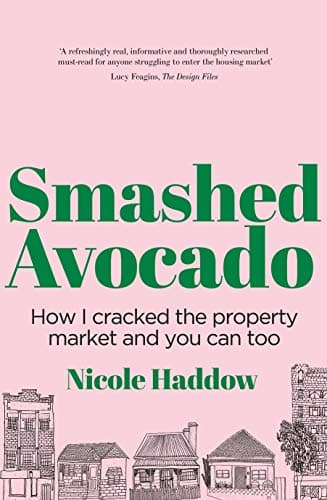
Smashed Avocado
Nicole Haddow
Smashed Avocado
A millennial who ditched the rent trap and cracked the property market by 30, told with honesty and humour. If you have ever been told your brunch is why you cannot buy a home, this Aussie story is your comeback.
The Barefoot Investor
Scott Pape

The Barefoot Investor
Australia's best-selling money book ever. A simple system for accounts, budgeting, debt and a real emergency fund in one.
The Armchair Guide to Property Investing
Ben Kingsley & Bryce Holdaway
The Armchair Guide to Property Investing
Two of Australia's most trusted property voices lay out a plain-English roadmap to building a portfolio on an average income. Practical, local, and refreshingly free of get-rich-quick hype.
Some links above are affiliate links. If you buy through them, Snowball Invest may earn a small commission at no extra cost to you. We only recommend books we'd suggest anyway.
Sources
- 1. Transfer duty, Revenue NSW
- 2. Land transfer (stamp) duty, State Revenue Office Victoria
- 3. Transfer duty, Queensland Revenue Office
- 4. Stamp duties, real property, RevenueSA
- 5. Transfer duty, WA Department of Treasury and Finance
- 6. Property transfer duties, State Revenue Office Tasmania
- 7. Conveyance duty, ACT Revenue Office
- 8. Stamp duty, Northern Territory Government
- 9. Buying a house, Moneysmart, Australian Securities and Investments Commission
Was this article useful?
Put it to your own numbers
Every calculator runs entirely in your browser, with nothing stored. See what these numbers look like for your own situation.
Try the Stamp Duty calculator →General information only. This article is educational and does not constitute personal financial advice. It does not account for your circumstances. Consider your own situation and seek advice from a licensed adviser before acting. Read our full disclaimer.

Timothy Hirou Gaschereau
Founder of Snowball Invest, not a financial adviser.
I write about what I'm learning myself, because nobody ever taught us how to take control of our own money. It's a skill, not a mystery, and it's never too late to learn it. The best day to start was yesterday, the second best is today.
LinkedIn →Related articles

Stamp Duty Concessions for First Home Buyers in Australia
Stamp duty concessions for first home buyers can save tens of thousands in Australia. See how each state works and check your eligibility.

First Home Owners Grant SA: What You Get and How to Claim
The SA First Home Owner Grant is $15,000 with no property value cap on new homes. Eligibility, the stamp duty abolition, and how to apply for 2025-26.

First Home Owners Grant WA: What You Get and How to Claim
The WA First Home Owner Grant is $10,000 for a new home. Eligibility, the 26th parallel value caps, the stamp duty concession, and how to apply for 2025-26.