

What is land tax?
Quick answer
Land tax is an annual state government tax on the unimproved value of land you own above a set threshold. It applies to investment properties, holiday homes and vacant land, but generally not your home.
What it actually is
Land tax is an annual state tax, not a federal one. Every state sets its own rules, thresholds and rates, there's no single national land tax. It's calculated on the unimproved, or site, value of the land only, not the building sitting on it. A $1.5 million house on a block with a site value of $600,000 is taxed on that $600,000 figure, not the full property value.
It's assessed annually against a snapshot date, 31 December in NSW and Victoria, 30 June in Queensland, and applies to the total taxable value of all land you own in that state above the threshold, not each property individually.
Land tax vs stamp duty vs council rates
Three costs that get mixed up constantly, all different. Stamp duty is a one-off tax paid at settlement when you buy. Land tax is an ongoing annual tax on land you continue to hold, both can apply to the same property, stamp duty once at purchase and land tax every year afterwards, and it adds up over a long hold. Council rates are a separate local government charge for local services like rubbish collection, roads, parks and libraries. Land tax is a state tax on land ownership value. Different levels of government, different purposes, both can apply to the same property at the same time, and neither cancels the other out.
Who pays
Generally investors, not owner-occupiers. You're liable if you own investment properties, holiday homes or vacant land. Your principal place of residence, the home you own and live in, is exempt in every state and territory that levies land tax, this is the big exemption most homeowners never think about because it never applies to them.
Trusts and companies often face different, sometimes lower or nonexistent, thresholds. In NSW, special and discretionary trusts don't get the general threshold and pay land tax from the first dollar. Victoria applies a separate trust surcharge rate on top of the standard scale. Foreign owners face additional surcharges in most states too, NSW charges a 5% surcharge on top of regular land tax for foreign persons from 2025, and Victoria and Queensland run their own absentee or foreign owner surcharge regimes.
How it's calculated
Each state's valuer-general determines the unimproved or site value of your land every year. Your taxable value is the combined total of all your taxable land in that state, excluding your home. If that total exceeds the tax-free threshold, tax applies on the amount above it using a tiered rate scale, similar in structure to income tax brackets. NSW uses a three-year rolling average of land values when assessing, which smooths out sudden spikes, though past increases can keep pushing your bill up even after a single bad valuation year has passed.
A worked example (illustrative only)
Figures below are illustrative only and change regularly, always check Revenue NSW for the current rates before relying on a number. Say you own an investment property in NSW with a land value of $1,400,000, above the general threshold of $1,075,000. The taxable amount above the threshold is $1,400,000 − $1,075,000 = $325,000. At a rate of $100 plus 1.6% of the excess, that works out to $100 + (1.6% × $325,000) = $100 + $5,200 = $5,300 for the year. This is annual, every year, and a second investment property's land value stacks on top of the first.
State-by-state overview
These figures change annually, always verify current numbers with the relevant state revenue office before making a decision.
| State | Threshold | Rate above threshold | Assessed |
|---|---|---|---|
| NSW | $1,075,000 | $100 + 1.6% (2% above $6,571,000 premium threshold) | 31 December |
| VIC | $50,000 | Tiered flat amounts from $500, up to 2.65% above $3m | 31 December |
| QLD | $600,000 | $500 + 1c per $1, tiered up to 2.25c above $10m | 30 June |
Your home is exempt in all three states above. Worth noting: NSW froze its thresholds from 1 January 2025, so they won't automatically rise with property values the way they used to. South Australia, Western Australia, Tasmania and the ACT also levy land tax with their own rules, check the relevant state revenue office for those.
The principal place of residence exemption
Your primary home is generally exempt in every state that levies land tax, but you typically need to both own and occupy it as your main residence. Investment properties, holiday homes, vacant land and properties held in certain trust structures are not exempt. A catch many investors miss: if you move out of your home and start renting it out, you may lose the exemption from that point onward. Timing and notification rules differ by state, check with your state revenue office before changing how a property is used.
Three misconceptions worth clearing up
- It's not based on market value. Land tax is calculated on unimproved or site value only, excluding the building and any improvements, often significantly lower than the property's full market value.
- Your home isn't included, in most states. Only investment properties, holiday homes and vacant land count toward your taxable total.
- It's not a one-off cost like stamp duty. It's an annual, recurring tax. On a $1.5 million investment property held for 15 years, even a modest $5,000 to $8,000 annual bill adds up to $75,000 to $120,000 over the hold, it needs to be in your cash flow modelling from day one, alongside costs like interest and other deductible holding costs.
📚 Recommended reading
The Armchair Guide to Property Investing
Ben Kingsley & Bryce Holdaway
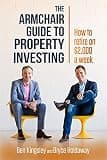
The Armchair Guide to Property Investing
Two of Australia's most trusted property voices lay out a plain-English roadmap to building a portfolio on an average income. Practical, local, and refreshingly free of get-rich-quick hype.
Rethink Property Investing
Scott O'Neill & Mina O'Neill
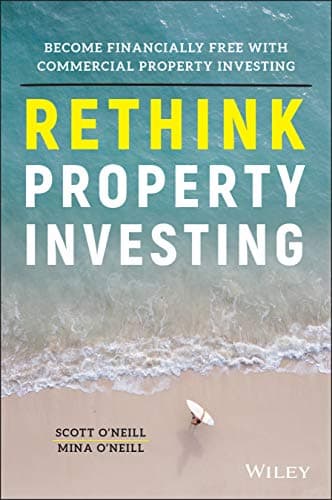
Rethink Property Investing
A practical playbook for building a commercial and residential portfolio that actually pays you cashflow, written by two Aussies who retired in their early 30s. Straight talk, real numbers, no fluff.
Some links above are affiliate links. If you buy through them, Snowball Invest may earn a small commission at no extra cost to you. We only recommend books we'd suggest anyway.
Frequently asked questions
Does land tax apply to my home?
Generally no. Every state and territory that levies land tax exempts your principal place of residence, the home you own and live in.
Is land tax deductible?
Yes, for investment properties it's generally tax-deductible as a holding cost, reducing your taxable rental income. Trust and company structures can have different treatment, so check with an accountant if that applies to you.
What happens if I own property in multiple states?
Each state assesses land tax separately, there's no combined national threshold. You could owe land tax in more than one state at once, each with its own threshold and rate scale.
Can I pass land tax on to my tenants?
In some states, like Queensland, landlords can pass land tax on to commercial tenants under a lease agreement. It's generally not permitted for residential tenants, check your state's tenancy laws and the terms of your lease.
Do I need to register for land tax?
In most states you need to register once your taxable land value exceeds the threshold. Some states contact you automatically, others expect you to self-register, don't wait to be contacted, check with your state revenue office.
Related terms
Sources
- 1. Revenue NSW, Land tax
- 2. Revenue NSW, Land tax thresholds and rates
- 3. State Revenue Office Victoria, Land tax
- 4. State Revenue Office Victoria, Current land tax rates
- 5. Queensland Revenue Office, Land tax
- 6. Queensland Revenue Office, Land tax rates for individuals
- 7. ATO, Rental properties and tax deductions
Disclaimer
This page is general information only, not tax advice. Land tax thresholds, rates and exemptions change annually and vary significantly by state. Always verify current figures with the relevant state revenue office and speak to a registered tax agent or accountant before making an investment decision.