

What is the Main Residence Exemption?
Quick answer
When you sell your home, you generally pay no CGT. The main residence exemption covers the full capital gain, provided you've lived there the whole time you owned it and haven't used it to produce income.
What it is
Under section 118-110 of the ITAA 1997, if a property was genuinely your home for the whole time you owned it, the ATO doesn't tax the profit when you sell it. It applies to any dwelling under s 118-115, a house, unit, apartment, caravan, houseboat or mobile home, plus the land immediately underneath it. See capital gains tax for how a gain is worked out when this exemption doesn't apply.
This exemption only deals with CGT on sale, it has nothing to do with the upfront costs of buying, like stamp duty, which you pay regardless of whether the property later qualifies as your main residence.
Conditions for a full exemption
All of the following generally need to be true for the exemption to cover the entire gain:
- The property was your main residence for your entire ownership period, not just most of it.
- You were an Australian tax resident at the time you sold it.
- It was never used to produce assessable income, at any point during your ownership.
- The land is 2 hectares or less. On a bigger block you can choose which 2 hectares to claim, as long as it includes the land under the dwelling, the rest is subject to CGT.
- Your interest in the property didn't pass to you from a deceased estate (a separate set of rules applies then, see the FAQs).
The 6-year rule
If you move out of your home and rent it out, section 118-145 lets you keep treating it as your main residence for up to six years. Sell within that window and there's no CGT on the gain that accrued during the rental period. Move out and don't rent it, in fact earn no income from it at all, and the absence can be indefinite, there's no time limit. The clock resets if you move back in and then move out again later. You generally can't treat another property as your main residence for the same overlapping period.
Partial exemption for income-producing use
Rent out a room or run a business from home and you'll typically only get a partial exemption. The taxable portion is calculated as the total capital gain, multiplied by the floor area used to produce income as a percentage of the whole property, multiplied again by the number of days it was used that way as a proportion of your total ownership period. There's also a cost base reset: the moment your home first starts producing income, its cost base resets to its market value at that point, which can reduce your taxable gain if the property had already grown in value before the income-producing use began.
Two homes at once
You can only have one main residence at a time, but the rules allow a limited 6-month overlap when you buy a new home before you've sold your old one. After six months, you need to choose which property is nominated as your main residence, the other one is subject to CGT for whatever period wasn't covered.
The foreign resident trap
This catches a lot of people out. Since 1 July 2020, foreign residents for tax purposes generally can't claim the main residence exemption at all, under the Treasury Laws Amendment (Reducing Pressure on Housing Affordability Measures No. 1) Act 2019. What matters is your residency status at the time you sell, not when you bought the property or how long you lived in it. An expat who lived in a home for ten years, then moved overseas and later sold it while a foreign resident, could face CGT on the entire gain, not just the portion since they left.
There's a narrow "life events" exception: you need to have been a foreign resident for six continuous years or less, and one of the following needs to apply, a terminal medical condition affecting you, your spouse or a child under 18, the death of your spouse or a child under 18, or a CGT event arising from a formal agreement following a relationship breakdown. A transitional rule also applied to properties acquired before 9 May 2017, 7:30pm AEST and disposed of by 30 June 2020, but that window has now closed.
Worked example
Priya bought her Sydney home in 2015 for $700,000 and lived in it as her main residence from 2015 to 2021. She then moved overseas for work and rented the property out, but remained an Australian tax resident the whole time. She sold it in 2024 for $1,100,000, a capital gain of $400,000. The rental period, 2021 to 2024, was three years, within the 6-year limit. Because she stayed an Australian resident and sold within the window, her CGT payable is $0. Had she become a foreign resident before selling instead, the outcome would likely have been very different, potentially the full $400,000 gain being assessable.
Three common misconceptions
First, there's no 12-month minimum ownership period for this exemption, that's a different CGT concept, the CGT discount. What actually matters here is that the property was your main residence for the entire ownership period, partial use elsewhere generally only gets you a partial exemption. Second, you can't rent a home out for six years, then buy a second investment property and keep the exemption running on both, the moment you treat a new property as your main residence, the 6-year clock on the old one stops, you can only have one main residence at a time. Third, years spent living in the home don't protect expats since 1 July 2020, what matters is your residency status at the time of sale, not how many years you lived there beforehand.
📚 Recommended reading
The Armchair Guide to Property Investing
Ben Kingsley & Bryce Holdaway
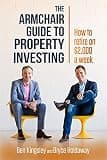
The Armchair Guide to Property Investing
Two of Australia's most trusted property voices lay out a plain-English roadmap to building a portfolio on an average income. Practical, local, and refreshingly free of get-rich-quick hype.
Making Money Made Simple
Noel Whittaker

Making Money Made Simple
Australia's classic, comprehensive money guide covering tax, super and investing, updated for today.
Some links above are affiliate links. If you buy through them, Snowball Invest may earn a small commission at no extra cost to you. We only recommend books we'd suggest anyway.
Frequently asked questions
Does the exemption apply automatically?
No, the ATO doesn't automatically apply it. You assess your own eligibility when you lodge your tax return, and it's worth getting a registered tax agent to check the details, especially if any part of your ownership period is complicated.
Can I claim it on a holiday home?
Generally no. The exemption only applies to the dwelling you actually live in as your main residence, not a second property you own but don't live in day to day.
What if I inherited the property?
Special rules apply under s 118-195 of the ITAA 1997. Broadly, you may be able to claim the exemption if the deceased was eligible for it and you sell within two years of their death, though it gets more nuanced if the deceased was a foreign resident or the property was used to produce income.
Does it apply to units and apartments?
Yes, the exemption covers any dwelling type, including units, apartments, houseboats, caravans and mobile homes. What matters is how you used the property, not what kind of property it is.
What if I built on vacant land?
You may be able to treat the land as your main residence from the date you acquired it, provided you build and move in within four years, and the completed home then actually becomes your main residence.
What if my spouse and I have different main residences?
As a couple you can only claim the exemption for one property between you for any period where you each treat a different home as your main residence, you'll need to choose which one.
Sources
- 1. Eligibility for main residence exemption, Australian Taxation Office
- 2. Treating your former home as your main residence, the 6-year rule, Australian Taxation Office
- 3. Main residence exemption for foreign residents, Australian Taxation Office
- 4. Using your home for rental or business, Australian Taxation Office
Disclaimer
This page is general information only, not tax advice. Tax rules can change and individual circumstances vary a lot with property, so speak with a registered tax agent or accountant for advice specific to your situation.