

The Millionaire Next Door Review: Timeless or Dated?
Our honest Millionaire Next Door review: the PAW vs UAW framework, the real strengths, the survivorship-bias criticism, and what it means for Australians.
 By Timothy Hirou GaschereauPublished
 11 min read
The Millionaire Next Door has one big, counterintuitive idea: most real millionaires don't look rich. They live in ordinary suburbs, drive used cars, and quietly build wealth while their flashier neighbours spend everything. Here's an honest review of what still holds up, what doesn't, and what it means for an Australian reader. It's part of our personal finance book reviews on Snowball Invest.
Quick answer
A genuinely useful book with one big idea: real wealth comes from living below your means, not from looking wealthy. The research is dated, the writing is repetitive, and the US tax detail is irrelevant to Australians. But the core mindset shift is still worth your time. Our rating: 4 out of 5.
Want to read The Millionaire Next Door?
A mindset reset about what wealth actually looks like. Cheap, quick, and it sticks.
In this guide
- →What the book is actually about: PAWs vs UAWs and 'big hat, no cattle'
- →Genuine strengths and the real criticisms, side by side
- →Who it's for, and who should skip it
- →What critics (including Taleb) and readers say
- →The Australian angle: what applies, and what to swap for super
📖 What is The Millionaire Next Door about?
Stanley and Danko spent years surveying American millionaires, and the finding surprised even them: most millionaires don't live in mansions or drive Ferraris. They live in ordinary suburbs and quietly accumulate wealth. The book's most useful concept is the split between PAWs (Prodigious Accumulators of Wealth) and UAWs (Under Accumulators of Wealth), based on a simple benchmark.
Expected net worth = your age times your annual pre-tax income, divided by 10. So a 40 year old earning $120,000 should have around $480,000 as a baseline. A PAW has roughly twice that or more. A UAW has half or less. The book's point: plenty of high-income doctors and lawyers are UAWs because they spend to match their status.
Around that framework sit the seven traits of wealth builders (they live well below their means, value financial independence over status, don't bankroll their adult kids, and so on) and the book's most memorable phrase: "big hat, no cattle." The hat is the luxury car and the prestige suburb. The cattle is actual net worth. As the authors put it, wealth is what you accumulate, not what you spend.
⚖️ Strengths and weaknesses
A flawed but genuinely valuable book. People praise the message and criticise the delivery, and both are fair.
What it gets right
- ✓The core insight is powerful: income and wealth are not the same thing, and the research makes it visceral.
- ✓It's research-backed, not just opinion, which grounds it more than most money books.
- ✓The PAW/UAW formula is immediately usable, you can run it on yourself in 30 seconds.
- ✓It permanently reframes how you see a luxury car or a prestige postcode.
- ✓The 'economic outpatient care' finding on bankrolled adult kids is genuinely thought-provoking.
- ✓It aligns perfectly with FIRE values: frugality, high savings rates, no lifestyle inflation.
Where it falls short
- ✕The data is from 1996, so the dollar figures and examples feel dated.
- ✕Survivorship bias: it studies people who got rich and credits frugality, ignoring the equally frugal who didn't.
- ✕The research ran during a huge US bull market, so some 'wealth' was the market, not discipline.
- ✕It's repetitive, the same point across 200 pages of case studies and tables.
- ✕Almost no investing depth: it says save and invest wisely but barely says how.
- ✕Self-reported, non-random survey data, so treat it as a snapshot, not a proven formula.
👤 Who should read it, and who should skip it?
Read it if you
- ✓Are new to personal finance and want a mindset reset.
- ✓Tend to equate income with wealth and want that challenged.
- ✓Find yourself spending to keep up with the people around you.
- ✓Are in your 20s or early 30s and want to see what wealth actually looks like before lifestyle inflation sets in.
Skip it or skim it if you
- ✕Already live below your means and invest consistently.
- ✕Want Australia-specific guidance on super, tax or investment structures.
- ✕Want a book on how to invest, not just how to save.
- ✕Have already read it once and are after new ideas.
🔍 What do critics say about The Millionaire Next Door?
The most substantive critique comes from Nassim Nicholas Taleb in Fooled by Randomness, and it's a clean one: the book is built on survivorship bias. Stanley and Danko looked at people who became millionaires and identified their common traits, but they didn't look at the far larger group who were equally frugal, disciplined and hardworking and didn't end up wealthy. Without that comparison group you can't claim frugality causes wealth, only that it's common among the wealthy people studied. Taleb also flagged the timing: the survey ran during one of the strongest bull markets in US history, so some of the wealth observed was simply the market doing the work. Critics have added three more concerns: a neighbourhood-based sample that skews toward self-made frugal millionaires, the self-reporting limits of questionnaire research, and no peer review. None of this makes the book useless. It means you should treat it as a descriptive snapshot of one group of 1990s American millionaires, not a proven formula.
💬 What do readers say? Goodreads and Reddit
On Goodreads the book holds around 4.05 out of 5 from more than 130,000 ratings, a strong result for a nearly 30-year-old finance book. The pattern is consistent: readers praise the core message (most real millionaires live quietly, and the PAW/UAW self-assessment is practical) and criticise the delivery (repetitive, dated examples, dry, and light on investing).
On r/personalfinance the verdict is "worth reading, but borrow it from the library." On r/financialindependence the reception is warmer given the frugality focus. On r/AusFinance the tone is more measured, one popular thread called it "a depressing view on wealth accumulation," and the community notes it's US-centric and less tailored to Australian conditions.
🇦🇺 The Australian angle
The core principle applies perfectly. Living below your means, avoiding status spending and building net worth steadily all translate directly, and "big hat, no cattle" is alive and well here in the obsession with property upgrades, luxury SUVs and renovations that are more about impressing the street than building security, a textbook case of lifestyle creep. A heavily mortgaged home in a prestige suburb can look like wealth while being the opposite of it.
The specific mechanics don't translate. The book spends real time on 401k accounts and IRAs, which have no Australian equivalent, so substitute superannuation (similar in principle, different in practice), and adjust the dollar figures for Australian wages. You can still run the PAW/UAW formula on your own age and pre-tax income for a useful directional benchmark, ideally alongside tracking your super balance and total net worth. And because the book predates modern index investing, it tells you to invest wisely without a framework for doing so, so pair it with our guides to passive investing in Australia and compound interest.
💰 The verdict
A flawed but genuinely valuable book. The research is dated, the writing is repetitive, and Taleb's survivorship-bias critique is a legitimate concern. But the central idea, that real wealth is built quietly through discipline and frugality rather than displayed through status spending, is as relevant now as it was in 1996. For Australians in their 20s and 30s: read it once, take the mindset shift seriously, then supplement it with more current resources on index investing, super and the Australian tax environment. Don't expect it to tell you how to invest. Do expect it to change how you think about what wealth actually is. Our rating is 4 out of 5.
Want to read The Millionaire Next Door?
Ready to stop confusing the hat for the cattle? Grab a copy.
SnowLetter
Australia's money news and our best reads, once a week.
❓ Frequently asked questions
Is The Millionaire Next Door worth reading?
+
Yes, with caveats. The core message about living below your means and building net worth over time is timeless. The specific data, dollar figures and US tax references are dated. If you're new to personal finance, it's worth reading. If you already follow a disciplined savings and investing approach, you'll likely find it covers ground you already know.
What is a PAW in The Millionaire Next Door?
+
PAW stands for Prodigious Accumulator of Wealth: someone whose net worth is roughly twice the expected benchmark for their age and income. The formula is Age times Annual Pre-Tax Income divided by 10. A PAW has about twice that figure, and a UAW (Under Accumulator of Wealth) has about half.
What is the main message of The Millionaire Next Door?
+
Wealth and income are not the same thing. Many high-income earners are UAWs because they spend to match their status, and many ordinary-income earners are PAWs because they live below their means and invest consistently. The core argument is that frugality, not income, is the cornerstone of wealth building.
Does The Millionaire Next Door apply to Australians?
+
The core principles apply directly. The specific mechanics don't. References to 401k accounts and IRAs are irrelevant to Australians, who should think in terms of superannuation instead. The PAW/UAW framework can be applied using Australian income figures, though the benchmarks won't be perfectly calibrated. The 'big hat, no cattle' concept is very recognisable in Australian property and consumer culture.
What are the main criticisms of The Millionaire Next Door?
+
The most significant is Nassim Taleb's survivorship-bias critique: the book studies millionaires but ignores the equally frugal people who didn't become wealthy, so it can't claim frugality causes wealth. Other criticisms include the macroeconomic timing bias (the data came from a major US bull market), the repetitive writing, the lack of investing guidance, and the self-reporting limits of the survey.
Is it relevant in 2026?
+
The mindset is relevant, the specifics are dated. The 1995 to 1996 survey data, the US-centric tax advice and the 1990s dollar figures all need to be read in historical context. But the behavioural principles, avoiding lifestyle inflation, not confusing status spending with wealth, and building net worth steadily, hold up well.
📚 Get the book (and two worthy next reads)
The Millionaire Next Door
Thomas J. Stanley
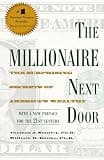
The Millionaire Next Door
The eye-opening research proving most real millionaires drive boring cars and skip the flashy stuff. A brilliant kick in the pants about living below your means that works in any currency.
The Psychology of Money
Morgan Housel
The Psychology of Money
19 short stories on how people actually think and feel about money, not just the maths of it.
The Barefoot Investor
Scott Pape
The Barefoot Investor
Australia's best-selling money book ever. A simple system for accounts, budgeting, debt and a real emergency fund in one.
Some links above are affiliate links. If you buy through them, Snowball Invest may earn a small commission at no extra cost to you. We only recommend books we'd suggest anyway.
Sources
Was this article useful?
Put it to your own numbers
Every calculator runs entirely in your browser, with nothing stored. See what these numbers look like for your own situation.
Explore the calculators →General information only. This article is educational and does not constitute personal financial advice. It does not account for your circumstances. Consider your own situation and seek advice from a licensed adviser before acting. Read our full disclaimer.

Timothy Hirou Gaschereau
Founder of Snowball Invest, not a financial adviser.
I write about what I'm learning myself, because nobody ever taught us how to take control of our own money. It's a skill, not a mystery, and it's never too late to learn it. The best day to start was yesterday, the second best is today.
LinkedIn →Related articles

Think and Grow Rich by Napoleon Hill: An Honest Review
Our honest Think and Grow Rich review: the mindset wins, the law-of-attraction baggage, the credibility questions around Napoleon Hill, and who it's for.

The Intelligent Investor Review: Is Graham's Classic Worth It?
Our honest Intelligent Investor review: what Benjamin Graham's classic teaches, its real strengths and weaknesses, and what Australian investors should know first.

Your Money or Your Life Review: The FIRE Classic, Aussie Take
Our honest Your Money or Your Life review: the life energy concept, the 9-step program, and exactly what Australian readers need to know before buying.