

Lifestyle Creep: What It Is and How to Actually Stop It
Why spending quietly rises to match income, the hedonic adaptation psychology behind it, real Australian statistics, and the one habit that actually stops it.
 By Timothy Hirou GaschereauPublished
 8 min read
Try it yourself
Lifestyle creep is the rare financial problem that shows up as everything going right, a pay rise, a promotion, a good year, which is exactly why it's so easy to miss while it's happening. This is part of a wider guide to saving and budgeting on Snowball Invest.
Quick answer
Lifestyle creep is when spending rises to match, or exceed, a rise in income, so a pay increase never actually improves your savings rate. It happens gradually, one slightly nicer version of an existing expense at a time, which is why the fix is automating a portion of every pay rise into savings before it has a chance to be absorbed.
In this guide
- →What lifestyle creep actually is, and the psychology behind why it happens
- →How common it actually is in Australia, at every income level
- →The real cost, in dollars, of a pay rise quietly absorbed instead of invested
- →How to spot it in your own spending, and the single most reliable fix
- →Why this isn't about never upgrading anything
📈 What lifestyle creep actually is
🎯 The essential: Lifestyle creep is the rare financial problem that shows up as everything going right, which is exactly why it's easy to miss while it's happening.
Every time income rises, whether from a raise, a promotion, or a new higher-paying job, spending has a tendency to rise alongside it, often by roughly the same amount or more. The result is someone earning considerably more than they did five years ago, saving no larger a share of their income than they were back then, because the extra income has quietly funded a slightly nicer version of the same lifestyle rather than a genuinely bigger gap between income and spending.
$60k income
5 years ago
$85k income
Today
The income grew by $25k, but the savings slice held at 10%. That extra pay quietly funded a nicer lifestyle, not a bigger gap.
🧠 Why it happens: hedonic adaptation
🎯 The essential: People adapt back toward the same baseline satisfaction after almost any positive change, a finding first shown starkly by comparing lottery winners to ordinary people.
Behavioural economists tie this to hedonic adaptation, the well-documented tendency for people to quickly get used to a new comfort or upgrade and return to roughly the same baseline level of satisfaction they had before it. A nicer apartment, a newer car, or eating out more often all feel exciting briefly, then become the new normal, at which point maintaining that same level of satisfaction requires another upgrade, not a return to the previous spending level.
The classic demonstration of this comes from a 1978 study by psychologists Philip Brickman, Dan Coates and Ronnie Janoff-Bulman, published in the same journal as much of the research underpinning hedonic adaptation theory. Comparing major lottery winners against a matched control group, they found winners rated their everyday pleasures, watching TV, chatting with a friend, eating breakfast, as less enjoyable than the control group did, and were not significantly happier overall despite the windfall. The proposed mechanism was contrast: the intensity of the win made ordinary pleasures feel comparatively dull, the same dynamic that makes a slightly nicer lifestyle eventually feel like the unremarkable baseline rather than something to still be grateful for.
Social comparison compounds the effect. Seeing peers upgrade their own lifestyle, especially visibly on social media, adds a second pressure on top of hedonic adaptation itself, making a rising spending baseline feel normal rather than like a choice actively being made.
🇦🇺 How common it actually is in Australia
It isn't just a lower-income problem. A recent survey found more than a third of Australians earning $200,000 or more describe themselves as living paycheck to paycheck, despite an income well above the national average. ABS National Accounts data tells the same story at a national level: the household saving ratio fell to a low of just 0.9% of disposable income in early 2024, before partially recovering to around 6% more recently, still well below the roughly 24% peak recorded during the pandemic, when spending options were temporarily restricted and saving happened almost by default rather than by decision.
💰 The real cost, in dollars
The cost isn't just the spending itself, it's what that money could have become instead. Directing an extra $200 a month, roughly what a modest pay rise might add, into an investment earning a 7% average annual return instead of absorbing it into lifestyle spending grows to around $104,000 after 20 years, from $48,000 actually contributed, purely from staying invested rather than being spent as it arrived.
📈 What Is Compound Interest?
The mechanism that makes an unspent pay rise worth far more than its face value over time.
🔍 Spotting it in your own spending
Lifestyle creep rarely shows up as one big purchase, it's the accumulation of several small upgrades: a slightly larger rent or mortgage than strictly necessary, more frequent dining out, a subscription tier bumped up, a car upgraded sooner than needed. Comparing spending by category today against spending from two or three years ago, alongside how much income has changed over the same period, is usually the fastest way to see whether a raise actually improved the numbers or just the surroundings.
It's worth distinguishing this from a single unplanned purchase in the moment, which is impulse buying rather than lifestyle creep. Our guide to stopping impulse buying covers that pattern specifically, since the fix looks a little different.
🛑 How to actually stop it
The most reliable fix is deciding what happens to a pay rise before it arrives, not after. Automatically directing a fixed share, half is a common starting point, of any raise straight into savings or investing, increasing that automatic transfer the moment the raise lands, means the money never sits in an everyday account where it's available to be gradually absorbed into slightly nicer versions of existing spending. Our budget calculator makes it easy to see what a raise actually does to your numbers once it's split properly, rather than just absorbed.
🪜 How to Budget: A Step-by-Step Guide
Where a growing income actually gets allocated deliberately, rather than absorbed by default.
🎯 It's not about never upgrading anything
None of this means every upgrade is a mistake. The distinction that actually matters is between a deliberate choice, upgrading something specific because it genuinely adds value, and a default, spending simply rising because it's available and everyone around you is doing the same. The first is a normal, healthy use of a higher income. The second is the pattern worth interrupting.
Telling the two apart is really a psychology question more than a budgeting one, which is why it's worth understanding the beliefs driving your spending in the first place. Our Money Mindset guide digs into that side of things. If the hedonic adaptation angle resonated, our guide to underconsumption core covers the same psychology from the other direction, the trend built around deliberately interrupting that loop rather than quietly upgrading your way through it. And for a deeper look at why the upgrades feel so necessary in the first place, from the hedonic treadmill to identity-driven spending, see our guide to the psychology of lifestyle inflation.
SnowLetter
Australia's money news and our best reads, once a week.
Wondering what your money personality is? Take the 2-minute quiz.
❓ Frequently asked questions
Is lifestyle creep the same as lifestyle inflation?
+
They're used interchangeably in most everyday writing, both describe spending rising to match or exceed a rise in income. Some finance writers draw a subtle distinction, inflation as the broader pattern, creep as the gradual, easy-to-miss version of it, but the practical advice for dealing with either is identical.
Is it ever fine to increase spending after a pay rise?
+
Yes, the goal isn't never spending more, it's spending deliberately. Choosing to upgrade something specific because it genuinely improves your life is different from a rising income being silently absorbed into slightly-more-expensive versions of everything without any of it being an active decision.
Why do higher earners still feel like they're not getting ahead?
+
Surveys have found more than a third of Australians earning $200,000 or more describe living paycheck to paycheck, a clear sign that spending has risen in step with, or ahead of, income at every level, not just lower incomes. Feeling financially comfortable depends more on the gap between income and spending than on income alone.
What's the single best defence against lifestyle creep?
+
Automating a fixed percentage of any pay rise straight into savings or investing before it reaches your everyday account, the same logic as paying yourself first, so the increase never becomes available to be gradually absorbed into everyday spending in the first place.
📚 Recommended reading
Your Money or Your Life
Vicki Robin
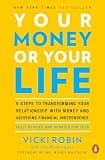
Your Money or Your Life
The book that basically kicked off the FIRE movement, reframing money as 'life energy' you trade your hours for. The nine-step program is pure gold, just swap the US retirement-account chapter for super.
Sort Your Money Out and Get Invested
Glen James
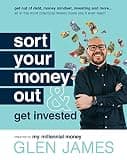
Sort Your Money Out and Get Invested
From the host of the my millennial money podcast, a step-by-step Aussie plan to fix your spending, clear debt and actually start investing. Practical and refreshingly free of finance-bro nonsense.
I Will Teach You to Be Rich
Ramit Sethi
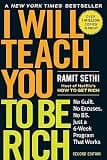
I Will Teach You to Be Rich
A funny, no-guilt six-week plan for automating your money and spending on what you love. The automation and psychology are spot on, just ignore the US Roth IRA bits and use super and Aussie ETFs.
Some links above are affiliate links. If you buy through them, Snowball Invest may earn a small commission at no extra cost to you. We only recommend books we'd suggest anyway.
Sources
- 1. $1 million cost of 'lifestyle creep' revealed as Aussies struggle to get ahead, Yahoo Finance Australia
- 2. Hedonic Adaptation: Why More Money Won't Always Make You Happier, Dorset Wealth Management
- 3. Lottery winners and accident victims: Is happiness relative?, Brickman, Coates & Janoff-Bulman, Journal of Personality and Social Psychology
- 4. Australian National Accounts: National Income, Expenditure and Product, Australian Bureau of Statistics
Was this article useful?
Put it to your own numbers
Every calculator runs entirely in your browser, with nothing stored. See what these numbers look like for your own situation.
Try the Budget Planner calculator →General information only. This article is educational and does not constitute personal financial advice. It does not account for your circumstances. Consider your own situation and seek advice from a licensed adviser before acting. Read our full disclaimer.

Timothy Hirou Gaschereau
Founder of Snowball Invest, not a financial adviser.
I write about what I'm learning myself, because nobody ever taught us how to take control of our own money. It's a skill, not a mystery, and it's never too late to learn it. The best day to start was yesterday, the second best is today.
LinkedIn →Related articles

The Diderot Effect: Why One Purchase Always Leads to Another
One new purchase triggers a spiral of more. Here's what the Diderot effect is, why it happens, and how to stop it before it wrecks your budget.

How to Track Your Spending in Australia (And Stick With It)
Learn how to track your spending in Australia with a simple four-step method, easy categories and habit tips that actually stick past the two-week mark.
The No-Spend Challenge: How It Works and Whether It's Worth Trying
How to set up a no-spend challenge that actually survives a real month, what it genuinely teaches you, and the common ways these challenges fall apart.