

Money Comparison Anxiety: Why You Keep Comparing Your Finances (and How to Stop)
Comparing your finances to friends or social media? Learn why money comparison anxiety is rising in Australia and how to break the cycle.
 By Timothy Hirou GaschereauPublished
 10 min read
You scroll past a colleague's house purchase announcement, a friend's Santorini holiday, an influencer's investment win, and something in your chest drops. Nothing about your own finances changed in that moment, but it suddenly feels like they did. That reaction has a name, money comparison anxiety, and it's becoming a defining feature of how Australians relate to their finances. This is part of a wider guide to money mindset on Snowball Invest.
This article is general information only, not personal financial or medical advice. If you're concerned about your financial situation or your mental health, please speak with a qualified professional.
Quick answer
Money comparison anxiety is the psychological discomfort that comes from measuring your income, savings, property or lifestyle against others, and concluding you're falling behind. It's not a clinical diagnosis, but it's a well-documented pattern with real consequences for your financial decisions and mental health. Australia's cost-of-living crisis has made the conditions for it worse than they've been in a decade, with 66% of Australians now experiencing some degree of financial stress (AMP, 2024), and social media amplifies the problem by exposing you to a curated highlight reel of other people's wealth on a scale that wasn't possible before.
In this guide
- →What money comparison anxiety actually is, and where the theory comes from
- →Why Australia's cost-of-living crisis and housing market make it worse right now
- →How social media turns ordinary envy into a financial anxiety loop
- →The real financial decisions comparison anxiety damages, not just how it feels
- →The five-step RESET framework for breaking the comparison cycle
🔍 What is money comparison anxiety?
Money comparison anxiety is the psychological discomfort that comes from comparing your financial situation, whether that's your income, savings, property, investments or general lifestyle, to others, and concluding that you're falling behind.
The psychological foundation goes back to 1954. Psychologist Leon Festinger published "A Theory of Social Comparison Processes" in Human Relations, arguing that people have a fundamental drive to evaluate their own abilities and opinions. When objective standards aren't available, we use other people as our measuring stick.
Festinger identified two directions this comparison can go. Upward social comparison is when you compare yourself to someone who appears better off, the colleague who just bought a house, the friend posting holiday photos, the influencer showing off their investment portfolio. Downward social comparison is the reverse, comparing yourself to someone who appears worse off, which can temporarily boost your sense of security. Research consistently finds that upward comparisons produce stronger and more reliable negative effects than downward comparisons produce positive ones, and upward comparison is the dominant mode in most social settings, especially on social media.
| Upward comparison | Downward comparison | |
|---|---|---|
| What it means | Comparing yourself to someone who seems better off | Comparing yourself to someone who seems worse off |
| Typical trigger | A colleague's house, a friend's holiday, an influencer's portfolio | Hearing about someone else's harder situation |
| Typical effect | Lower self-esteem, financial anxiety, a sense of falling behind | A temporary, often short-lived boost in security |
| How common online | The dominant mode, social feeds skew toward highlights | Less common, rarely what gets posted or shared |
It's worth being clear: money comparison anxiety is not a clinical diagnosis. You won't find it in the DSM. But it's a recognised psychological pattern with measurable effects on wellbeing and, critically, on the financial decisions people actually make.
🇦🇺 Why comparison anxiety is hitting harder right now
The AMP Financial Wellness Report 2024, based on a survey of 2,475 Australians conducted in July 2024, found that 66% of Australians are experiencing some degree of financial stress, the highest level recorded since the report began in 2014. More than six million Australians are moderately or severely financially stressed. Only 34% feel financially secure.
The ANZ Roy Morgan Financial Wellbeing Indicator found that by March 2024, 20.8% of Australians were in the "struggling" segment, nearly double the 10.5% recorded in January 2019. Renters are disproportionately affected, with 33% in the struggling category.
For younger Australians, the numbers are even more confronting. The MLC Financial Freedom Report 2024, which surveyed 2,507 Australians, found that 49% of Gen Z worry about their finances "all the time" or "often," compared with 44% of millennials and just 26% of Baby Boomers. ASIC Moneysmart's 2024 research found that 82% of Gen Z felt financially stressed due to the rising cost of living. Among Gen Z women, that figure climbed to 87%, compared with 77% of Gen Z men.
Research commissioned by Beyond Blue and ASIC in 2022 found that 46% of Australians named financial pressure as a key factor in their distress. People experiencing financial challenges are twice as likely to experience mental health issues.
Housing is Australia's sharpest comparison trigger. No financial topic generates more comparison anxiety in Australia than property. The ANZ/CoreLogic Housing Affordability Report, November 2024, found that the median dwelling value had reached approximately 8 times median household income, a record high. Saving a 20% deposit now takes an estimated 10.6 years for a median-income household. Median rent requires 33% of pre-tax income, the highest proportion since CoreLogic began tracking rental affordability.
These aren't just economic statistics. They're comparison triggers. Property ownership is deeply embedded in Australian cultural identity, which is part of the same broader pressure our guide to tall poppy syndrome and money digs into, the flip side, feeling awkward about visible success, rather than envious of someone else's. When homeownership becomes structurally out of reach for a growing share of the population, watching friends buy homes while you're renting isn't just financially stressful. It feels like falling behind in a race everyone else seems to be winning.
📱 How social media turns normal envy into a financial anxiety loop
Social media shows you a curated highlight reel of other people's financial lives: the house purchase announcement, the business class seat, the renovation reveal, the crypto win. What you don't see is the debt behind the renovation, the parental help with the deposit, or the job that pays twice what it appears to.
Yan et al. (2025), publishing in Cyberpsychology: Journal of Psychosocial Research on Cyberspace, conducted three studies examining how visual wealth exposure on social media increases relative deprivation. They found a significantly positive relationship between seeing wealth imagery (luxury cars, designer goods, travel, expensive hotels) and feeling deprived relative to others. Upward social comparison mediated the relationship.
Johnson and Estelami (2026), publishing in Accounting and Finance Research, found a strong correlation between heavy social media use and financial anxiety (r = 0.68, p<.01) in a sample of 744 consumers. Social media intensity was the strongest predictor of financial anxiety in their regression model (β = 0.709, p<.01), outperforming all other variables including age and financial literacy.
Vogel et al. (2014), in Psychology of Popular Media Culture, found that more frequent Facebook use was associated with lower self-esteem, and that this relationship was mediated by greater upward social comparison. Steers et al. (2014), in the Journal of Social and Clinical Psychology, found that more Facebook use was linked to more depressive symptoms, again mediated by social comparison.
Financial FOMO is the anxiety of missing out on wealth. Przybylski et al. (2013), in Computers in Human Behavior, defined FOMO as "a pervasive apprehension that others might be having rewarding experiences from which one is absent," and linked it to anxiety, emotional tension and reduced wellbeing. Bartosiak et al. (2022), in the Consumer Interests Annual, found that social media use was positively associated with both difficulty making ends meet and lacking emergency savings, and that FOMO mediated both relationships.
The passive versus active use distinction matters here. Passive scrolling triggers more upward comparison and produces worse wellbeing outcomes than active use, and most of us spend the majority of our social media time passively scrolling. According to DataReportal 2024, 78.3% of Australians use social media, totalling 20.8 million users. Australians aged 16 to 64 spend an average of 1 hour 51 minutes per day on social media platforms. TikTok users average 42 hours 13 minutes per month.
💸 The real-world damage: how comparison anxiety affects your financial decisions
Lifestyle inflation driven by comparison is one of the most common outcomes. When your reference group appears to be spending at a certain level, there's social pressure to match it. Dittmar et al. (2014), in a meta-analysis published in the Journal of Personality and Social Psychology drawing on 753 effect sizes from 259 independent samples, found that materialism is consistently associated with lower personal wellbeing. Social network site use strengthens materialistic values, partly through reduced self-control. If spending to keep pace with what everyone else appears to be doing feels familiar, our guide to doom spending covers the closely related pattern of spending as a coping response to economic anxiety, without judgment.
Impulsive investment decisions are another documented consequence. Financial FOMO pushes people to buy assets at peaks because peers appear to be winning, chasing a trade because everyone else seems to already be up on it, rather than because the decision holds up on its own terms.
Avoidance and social withdrawal compound the problem in a different direction. The AMP 2024 data found that 50% of moderately or severely financially stressed Australians socialise less often with friends due to financial stress. 27% of Australians have a financial worry or secret they haven't shared with anyone, with embarrassment (48%) and guilt (37%) cited as the main reasons. The same data found that 89% of moderately or severely stressed Australians say their finances stop them from developing or growing as a person, and 88% say financial stress affects their work productivity.
🪞 Recognising money comparison anxiety in yourself
Signs to watch for:
- You feel deflated or unsettled after scrolling Instagram or TikTok, even when nothing specific happened.
- You feel "behind" after conversations about property prices, salaries or investment returns.
- You've made purchases to keep up with what peers appear to be doing, rather than because you genuinely wanted or needed the thing.
- You avoid financial conversations out of shame or embarrassment about where you're at.
- Your savings never feel like enough, regardless of how much you've actually accumulated.
- You check other people's apparent lifestyle and feel inadequate about your own, even when your situation is objectively stable.
- You've made investment decisions based on what friends or influencers are doing, rather than your own research.
- You feel anxious or ashamed about your finances even when you're meeting your commitments and making progress.
- You've declined social invitations because you couldn't afford to match what others were spending, and felt embarrassed about that.
- You spend significant time thinking about how your financial situation compares to others, rather than focusing on your own goals.
If several of these feel familiar and the underlying feeling is more free-floating dread than a specific comparison trigger, our guide to financial anxiety covers the broader pattern and what helps.
🔄 A practical framework for breaking the comparison cycle
Here's a five-step framework we call RESET.
Recognise
Notice when and where the deflated, “behind” feeling hits you
Edit
Audit your feed, unfollow accounts that trigger comparison
Set
Write down three financial goals that are yours alone
Evaluate
Measure net worth against your past self, not a leaderboard
Talk
Normalise honest money conversations with people you trust
Five small, repeatable steps for interrupting the comparison cycle, not a one-off fix.
1. Recognise the trigger. You can't interrupt a pattern you haven't identified. Start by noticing when and where comparison anxiety hits you hardest. Keep a simple note on your phone for one week. Every time you notice that deflated, anxious or "behind" feeling, write down what triggered it.
2. Edit your environment. Your social media feed is not a neutral window onto the world. Audit your feeds. Unfollow or mute accounts that consistently trigger comparison. Replace that content with accounts aligned with your actual goals. If you're going to use social media, engage actively rather than just scrolling.
3. Set your own financial north star. Write down three specific financial goals that are tied to your own values and life circumstances. Not "own a house because everyone else does." Your goals. Maybe that's building a six-month emergency fund. Maybe it's paying off a specific debt.
4. Evaluate net worth as a personal metric, not a competition. Net worth is a snapshot of your own progress over time. It is not a leaderboard. The only financially meaningful comparison is you versus your past self. Self-compassion research, including Neff's foundational 2003 work, shows that treating yourself with the same kindness you'd extend to a friend is associated with lower anxiety and lower dependence on social comparison for self-evaluation.
5. Talk about money honestly. Financial shame thrives in silence. The AMP 2024 data found that 27% of Australians are carrying a financial worry or secret they haven't shared with anyone. Start normalising honest money conversations with people you trust.
🎯 The essential: Australian resources. National Debt Helpline 1800 007 007 (free financial counselling). Beyond Blue 1300 22 4636. ASIC Moneysmart: moneysmart.gov.au.
🤝 When to seek help
If you're taking on debt to maintain a lifestyle driven by comparison, if you're making investment decisions based on FOMO rather than research, or if financial anxiety is affecting your work, your relationships or your ability to sleep, that warrants professional support.
A financial counsellor focuses on the practical: budgeting, debt management, negotiating with creditors. The National Debt Helpline (1800 007 007) connects you with free, confidential financial counselling. A psychologist or therapist focuses on the psychological patterns driving the anxiety. Both can be necessary, and they work well together.
Beyond Blue (1300 22 4636, or beyondblue.org.au/mental-health/ financial-wellbeing) has specific resources on the intersection of financial stress and mental health. ASIC Moneysmart (moneysmart.gov.au) offers free tools, calculators and guidance on finding financial help. If what you're feeling looks less like a reaction to comparison and more like a settled belief that saving and planning are pointless altogether, our guide to financial anxiety covers what that looks like and what helps.
🎯 The bottom line
Comparing your finances to other people is a normal human tendency, not a personal failing. What's changed is the scale and the distortion, social media puts a highlight reel of other people's wealth in front of you constantly, and Australia's housing market and cost-of-living pressure make the comparisons sting more than they used to. None of that means your own progress doesn't count. Recognising your triggers, editing your environment, setting goals that are actually yours, measuring yourself against your past self, and talking about money honestly won't fix the housing market. It will change your relationship with your own numbers, which is the part that's actually within your control.
SnowLetter
Australia's money news and our best reads, once a week.
❓ Frequently asked questions
What is money comparison anxiety?
+
Money comparison anxiety is the psychological discomfort that arises when you compare your financial situation to others, and feel that you're falling behind. It's rooted in social comparison theory, first described by psychologist Leon Festinger in 1954. It's not a clinical diagnosis, but it's a well-documented pattern with real effects on both mental health and financial behaviour.
Is it normal to compare your finances to others?
+
Yes, completely. Social comparison is a fundamental human tendency. The problem isn't that you compare at all, it's when comparison becomes the primary lens through which you evaluate your own financial situation, and when it consistently leads you to feel inadequate, make decisions driven by social pressure, or withdraw from the people and activities that matter to you.
How does social media make financial comparison anxiety worse?
+
Social media creates a distorted picture of other people's financial lives by showing you curated highlights without the context. Research by Yan et al. (2025) found that visual wealth exposure on social media increases relative deprivation through upward social comparison. Johnson and Estelami (2026) found a strong correlation (r = 0.68) between heavy social media use and financial anxiety. Passive scrolling is particularly damaging.
Why is housing such a big comparison trigger in Australia?
+
Because property ownership is deeply embedded in Australian cultural identity. With the median dwelling costing roughly 8 times median household income (ANZ/CoreLogic, November 2024) and it taking over 10 years to save a 20% deposit, a growing number of Australians are structurally locked out of a milestone that previous generations could reasonably expect to reach.
Can comparison anxiety actually hurt your finances?
+
Yes. Comparison anxiety drives lifestyle inflation, spending to match perceived peer standards rather than personal goals. It drives FOMO-based investment decisions, buying assets at peaks because others appear to be winning. It drives avoidance and social withdrawal. Dittmar et al.'s (2014) meta-analysis found that materialism is consistently associated with lower personal wellbeing.
How do I stop comparing my finances to others?
+
Start by recognising your specific triggers. Then edit your environment by auditing your social media feeds. Set three specific financial goals tied to your own values. Reframe net worth as a personal metric, comparing yourself to your past self. And talk about money honestly with people you trust. If comparison anxiety is significantly affecting your decisions or wellbeing, a financial counsellor (National Debt Helpline: 1800 007 007) or psychologist can help.
📚 Recommended reading
The Psychology of Money
Morgan Housel
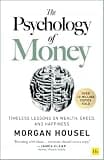
The Psychology of Money
19 short stories on how people actually think and feel about money, not just the maths of it.
Your Money or Your Life
Vicki Robin
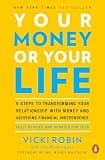
Your Money or Your Life
The book that basically kicked off the FIRE movement, reframing money as 'life energy' you trade your hours for. The nine-step program is pure gold, just swap the US retirement-account chapter for super.
Atomic Habits
James Clear
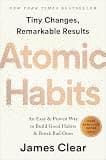
Atomic Habits
Tiny changes, remarkable results. Clear shows how 1 percent improvements compound, and the same system that fixes your gym routine works on your saving habits too.
Some links above are affiliate links. If you buy through them, Snowball Invest may earn a small commission at no extra cost to you. We only recommend books we'd suggest anyway.
Sources
- 1. Festinger, L. (1954). A theory of social comparison processes. Human Relations, 7(2), 117-140
- 2. AMP Financial Wellness Report 2024
- 3. ANZ Roy Morgan Financial Wellbeing Quarterly Report, June 2024
- 4. MLC Financial Freedom Report 2024
- 5. ASIC Moneysmart Gen Z Research 2024
- 6. ANZ/CoreLogic Housing Affordability Report, November 2024
- 7. Beyond Blue & ASIC Money and Mental Health Research 2022
- 8. Yan, X., Fu, Y., Yang, F., & Han, Y. (2025). How visual wealth exposure on social media increases relative deprivation. Cyberpsychology, 19(2)
- 9. Johnson, B., & Estelami, H. (2026). Effects of social media use on financial anxiety. Accounting and Finance Research, 15(1)
- 10. Vogel, E. A., Rose, J. P., Roberts, L. R., & Eckles, K. (2014). Social comparison, social media, and self-esteem. Psychology of Popular Media Culture, 3(4), 206-222
- 11. Steers, M. L. N., Wickham, R. E., & Acitelli, L. K. (2014). Seeing everyone else's highlight reels. Journal of Social and Clinical Psychology, 33(8), 701-731
- 12. Przybylski, A. K., Murayama, K., DeHaan, C. R., & Gladwell, V. (2013). Fear of missing out. Computers in Human Behavior, 29(4), 1841-1848
- 13. Bartosiak, A., Loibl, C., Zhang, H., & Roll, S. (2022). Social media use and financial hardship. Consumer Interests Annual, 68
- 14. Dittmar, H., Bond, R., Hurst, M., & Kasser, T. (2014). Materialism and personal well-being: A meta-analysis. Journal of Personality and Social Psychology, 107(5), 879-924
- 15. Neff, K. D. (2003). The development and validation of a scale to measure self-compassion. Self and Identity
- 16. DataReportal Australia 2024
- 17. ASIC Moneysmart
- 18. Beyond Blue: Financial Wellbeing
- 19. National Debt Helpline, Financial Counselling Australia
Was this article useful?
Put it to your own numbers
Every calculator runs entirely in your browser, with nothing stored. See what these numbers look like for your own situation.
Explore the calculators →General information only. This article is educational and does not constitute personal financial advice. It does not account for your circumstances. Consider your own situation and seek advice from a licensed adviser before acting. Read our full disclaimer.

Timothy Hirou Gaschereau
Founder of Snowball Invest, not a financial adviser.
I write about what I'm learning myself, because nobody ever taught us how to take control of our own money. It's a skill, not a mystery, and it's never too late to learn it. The best day to start was yesterday, the second best is today.
LinkedIn →Related articles

The Psychology of Lifestyle Inflation: Why More Money Rarely Feels Like Enough
Explore the psychology of lifestyle inflation: why Australians upgrade spending as income rises, from hedonic adaptation to identity-driven consumption. Backed by research.

Loss Aversion: Why Losing $100 Hurts More Than Gaining $100 Feels Good
Losing $100 feels about twice as bad as gaining $100 feels good. How loss aversion quietly shapes Australian money decisions, and how to work with it.

Anchoring Bias: Why the First Number You Hear Decides What You Pay
The first number you hear sets the price you think is fair, from auction guides to salary talks. How anchoring works in Australia, and how to beat it.