
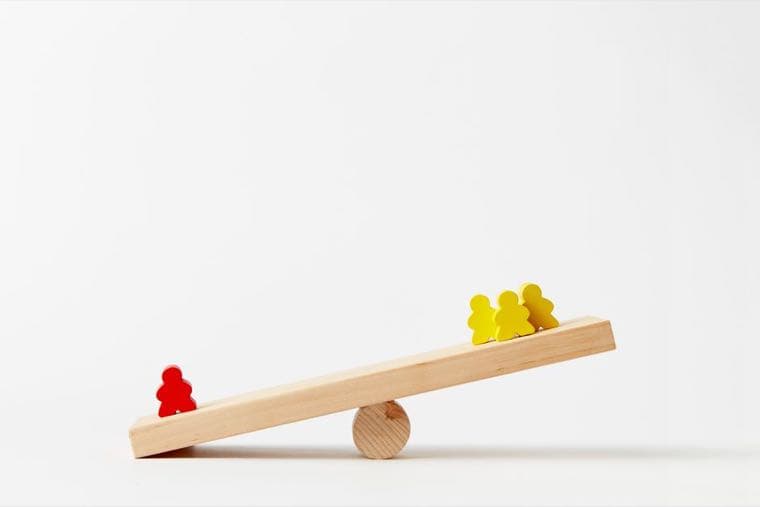
Loss Aversion: Why Losing $100 Hurts More Than Gaining $100 Feels Good
Losing $100 feels about twice as bad as gaining $100 feels good. How loss aversion quietly shapes Australian money decisions, and how to work with it.
 By Timothy Hirou GaschereauPublished
 9 min read
Find $100 in an old jacket and you will be pleased for about an hour. Lose $100 out of your wallet and you will think about it for a week. Same amount, wildly different weight, and that imbalance quietly steers almost every money decision you make. This is part of our wider guide to money mindset on Snowball Invest.
This article is general information only, not personal financial advice. Consider your own circumstances before making investment or selling decisions.
Quick answer
Loss aversion is the well documented tendency to feel a loss roughly twice as intensely as an equivalent gain. Losing $100 hurts about twice as much as gaining $100 feels good. It shows up in your super, your share portfolio, your insurance excess and your property decisions, and you beat it with rules set in advance rather than willpower in the moment.
In this guide
- →What loss aversion is, and the research behind the 2 to 1 ratio
- →Why it makes you hold losing shares and sell your winners early
- →What happened to Australians who switched their super to cash in 2020
- →Six practical ways to stop it making your decisions for you
🧠 What is loss aversion?
In 1979, psychologists Daniel Kahneman and Amos Tversky published a paper in Econometrica called Prospect Theory: An Analysis of Decision under Risk. It changed how economists think about human behaviour.
Before it, the standard assumption was that people weigh gains and losses symmetrically. If you stand to win $200 or lose $100, a rational actor just compares the numbers. Kahneman and Tversky showed that is not how the brain works. People judge outcomes relative to a reference point, usually wherever they happen to be standing right now, rather than in absolute terms.
The curve is shallow for gains, so each extra dollar you win feels slightly less exciting than the last. It is steeper for losses, so each dollar you lose bites harder than the same dollar gained felt good. Follow-up research put the ratio at roughly 2 to 2.5, which is where the rule of thumb comes from.
This is not a character flaw. It is close to universal, and it almost certainly evolved for good reason. Losing your food supply was catastrophic. Gaining a bit extra was nice. The asymmetry made sense. In a modern financial context it leads you astray constantly.
☕ Where it shows up every day
You do not need to own a single share to feel this. It is in the mundane stuff.
Coffee loyalty cards. Retailers worked out long ago that a card needing ten stamps works better when it arrives with two already stamped. You are no longer gaining a free coffee, you are avoiding the loss of progress you have already made. Same deal, different frame, different behaviour.
Sale pricing. Was $199, now $149 works because your brain reads the $50 as a loss you are dodging rather than a gain you are making. The product has not changed. You have just been handed a reference point.
The subscription you stopped using. Ever kept a streaming service running for three months after you stopped watching? Cancelling feels like losing something you have, even though keeping it means losing money every month.
Pay negotiations. People fight considerably harder to avoid a pay cut than to win an equivalent pay rise. The dollars are identical. The emotional weight is not. Worth remembering next time you are negotiating a pay rise.
📉 Why you hold losing shares too long
Here is where it gets expensive. The disposition effect is the tendency to sell shares that have gone up, because locking in a gain feels good, and hold shares that have gone down, because realising a loss feels bad.
Picture it. You buy into an ASX company at $8.00. It falls to $5.50. The only question that actually matters is: would I buy this company today at $5.50? If the answer is no, you should probably sell. But selling makes the loss real, and as long as you hold you can tell yourself it is only on paper.
The sunk cost fallacy compounds it. The $2.50 is gone whatever you do next. Your decision should rest entirely on where that company goes from here, not on what you paid. Knowing that intellectually does almost nothing to make it feel true.
The practical result is a portfolio stuffed with underperformers you cannot bring yourself to sell, while the winners got sold early. That is the exact opposite of what you were aiming for.
💸 Why loss aversion keeps you in cash
Cash feels safe. You can see it, and it does not go red on a Tuesday morning. But sitting in cash has a cost, and loss aversion makes that cost very hard to see, because losing purchasing power to inflation never shows up as a red number on a screen.
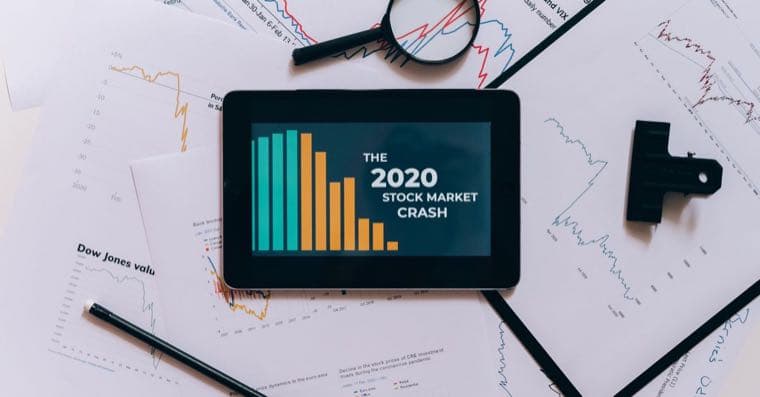
The 2020 crash is the clearest recent example at national scale. When markets fell sharply in March 2020, a lot of Australians switched their super to cash. The Reserve Bank found that around half the increase in super funds' cash holdings over that quarter came from members choosing to switch out of higher-risk options, and that the switching was driven by a relatively small pool of members who were generally closer to retirement with larger balances.
Switching after a fall is the problem. It converts a paper loss into a real one, and it takes you out of the market for the recovery. Markets rebounded strongly through the rest of 2020, and members sitting in cash did not come with them.
Your super is a decades-long vehicle. The Super Guarantee is 12% of your ordinary time earnings, going in every pay cycle whether you look at the balance or not. Letting a bad fortnight pick your investment option can cost years of compounding.
🛡️ Loss aversion and your insurance excess
Insurance is interesting here, because the entire pitch is a loss-aversion play: pay a small certain amount now to avoid a large uncertain loss later. It works, because a big loss is frightening even when it is unlikely.
Where it costs you is the excess. Plenty of Australians pick the lowest excess available, which means a higher premium every single year, to avoid the pain of a large out-of-pocket cost that may never arrive. If you have a savings buffer that could absorb the higher excess, the maths often favours taking it. The feeling does not.
The same pull leads to over-insuring, stacking on optional extras for scenarios so unlikely you will almost certainly never claim. None of this makes insurance bad, it is an essential tool. It is worth asking whether your excess reflects your actual financial position or your fear.
🏠 Property and the purchase price anchor
Property is where this hits Australians hardest, because the emotional stakes are so much higher.
Say you bought an investment property for $650,000 and the market has softened to $610,000. Selling at $610,000 feels like losing $40,000, even if holding is costing you money every month in repayments, rates and maintenance. The purchase price has become a psychological anchor, and you will not go below it.
It bites harder here than it does with shares because property carries cultural weight that shares simply do not. Selling a losing share is uncomfortable. Selling a house below what you paid can feel like a personal failure. So investors hold underperforming properties for years longer than they should, wearing the negative cash flow and the opportunity cost, and owners routinely knock back fair offers because the number is below what they need to feel whole.
🛠️ How to work with it, not against it
You cannot delete loss aversion. It is hardwired. What you can do is build systems so it stops making the decisions.
- Automate your investing. Set contributions to leave on payday. When the decision is made before the money ever feels like yours, loss aversion has nothing to grab.
- Set your sell rule before you buy. Write down the price at which you will sell if it falls, before you own it. A rule made calmly beats a decision made at the worst possible moment.
- Check your portfolio less often. The more you look, the more short-term losses you see, and the more often the alarm goes off. Daily checking is a reliable way to talk yourself into reactive decisions.
- Turn the frame around. Instead of investing to grow your wealth, think of it as avoiding the loss of purchasing power that inflation causes every year. Same action, and now loss aversion is working for you instead of against you.
- Pre-commit in writing. A one-page note recording your goals, your allocation and the conditions under which you will change it. When panic arrives, you read the note rather than place a trade.
- Separate the money you watch from the money you do not touch. If your super is invested for thirty years, treat it like a locked box rather than a scoreboard.
🎯 The essential: Every fix on that list does the same thing. It moves the decision to a calm moment, so the frightened version of you is not the one holding the pen.
⚖️ The same decision, two frames
How you frame a choice changes how it feels, even when the numbers are identical. Notice that every row below is one situation described two truthful ways.
| Decision | Loss frame | Gain frame | What usually happens |
|---|---|---|---|
| Switching super to cash in a downturn | I am protecting myself from further falls | I am locking in this loss and missing the recovery | Loss frame wins, people switch |
| Choosing a higher insurance excess | I might have to find $1,500 after a claim | I save on premiums every year, buffer builds | Loss frame wins, people take the low excess |
| Selling a property below purchase price | I am losing $40,000 on what I paid | I am freeing up capital for something better | Loss frame wins, people hold too long |
| Selling a share that has run up | If I hold, I might give these gains back | The company still looks strong from here | Loss frame wins, winners get sold early |
SnowLetter
Australia's money news and our best reads, once a week.
❓ Frequently asked questions
What is loss aversion in simple terms?
+
Loss aversion is the tendency to feel the pain of a loss more intensely than the pleasure of an equivalent gain. Losing $100 feels roughly twice as bad as gaining $100 feels good. It was first described by psychologists Daniel Kahneman and Amos Tversky in their 1979 prospect theory paper, and it is one of the most replicated findings in behavioural economics.
Is loss aversion always a bad thing?
+
Not always. It can stop you taking reckless financial risks, and it is a reasonable response to genuine uncertainty. The problem is when it fires on short-term market noise, on paper losses you have not actually realised, or on framing that makes a neutral situation look like a loss. That is when it leads to holding bad investments too long or avoiding investing altogether.
How does loss aversion affect superannuation?
+
It can push members to switch to cash when markets fall, locking in losses and missing the recovery. The Reserve Bank found that around half the increase in super funds' cash holdings over the March 2020 quarter came from members switching out of higher-risk options. With the Super Guarantee at 12%, your balance grows every pay cycle, so letting short-term fear pick your investment option can cost years of compounding.
What is the disposition effect?
+
The disposition effect is the investing behaviour that flows straight out of loss aversion. It is the tendency to sell shares that have gone up, locking in the gain, and hold shares that have gone down, avoiding realising the loss. It tends to leave you with a portfolio heavy on underperformers and light on winners, which is the opposite of what most investors intend.
How is loss aversion different from risk aversion?
+
Risk aversion is a preference for certainty over uncertainty, even when the expected value is identical. Loss aversion is specifically about the asymmetric emotional weight of losses against gains. You can be loss averse without being especially risk averse, and the other way round. Prospect theory describes both, but loss aversion is the steeper slope on the loss side of the curve.
Can loss aversion be overcome?
+
You cannot switch it off, but you can design around it. Automating contributions, setting sell rules before you are emotionally involved, checking your portfolio less often, and writing down a plan all help. The goal is not to stop feeling it. The goal is to stop the feeling from making the decision.
📚 Recommended reading
Thinking, Fast and Slow
Daniel Kahneman
Thinking, Fast and Slow
The Nobel laureate's classic on the two systems driving how we think, and why our fast, intuitive brain makes such expensive money mistakes. It explains the behavioural traps behind nearly every bad investing decision.
Misbehaving
Richard H. Thaler
Misbehaving
Nobel winner Richard Thaler shows why real humans are messy, emotional money-spenders, not the cool robots economics assumes. Understanding your own bias is the first step to calmer decisions with your cash and your super.
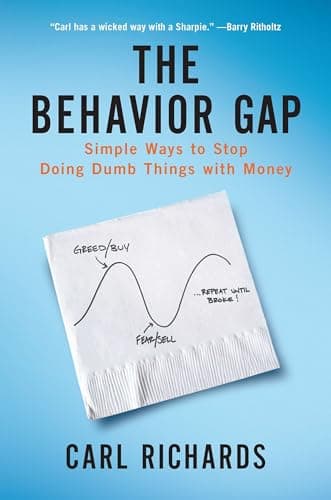
The Behavior Gap
Carl Richards
The Behavior Gap
Carl Richards uses simple napkin sketches to explain why we buy high, sell low, and generally get in our own way. Closing the gap between smart plans and messy human behaviour is worth more than any hot stock tip.
Some links above are affiliate links. If you buy through them, Snowball Invest may earn a small commission at no extra cost to you. We only recommend books we'd suggest anyway.
Sources
- 1. Kahneman, D. and Tversky, A. (1979). Prospect Theory: An Analysis of Decision under Risk. Econometrica, 47(2), 263 to 291.
- 2. Box C: What Did 2020 Reveal About Liquidity Challenges Facing Superannuation Funds? Financial Stability Review, Reserve Bank of Australia (April 2021).
- 3. Quarterly superannuation statistics, Australian Prudential Regulation Authority.
- 4. Grow your super, Moneysmart, Australian Securities and Investments Commission.
- 5. How to invest, Moneysmart, Australian Securities and Investments Commission.
- 6. Report 230: Financial Literacy and Behavioural Change, Australian Securities and Investments Commission.
Was this article useful?
Put it to your own numbers
Every calculator runs entirely in your browser, with nothing stored. See what these numbers look like for your own situation.
Explore the calculators →General information only. This article is educational and does not constitute personal financial advice. It does not account for your circumstances. Consider your own situation and seek advice from a licensed adviser before acting. Read our full disclaimer.

Timothy Hirou Gaschereau
Founder of Snowball Invest, not a financial adviser.
I write about what I'm learning myself, because nobody ever taught us how to take control of our own money. It's a skill, not a mystery, and it's never too late to learn it. The best day to start was yesterday, the second best is today.
LinkedIn →Related articles
The Sunk Cost Fallacy: Why You Hold On to Losing Investments
The sunk cost fallacy keeps Australians in losing shares, bad funds and money-pit renovations. How to spot it, and the one question that breaks it.

The Endowment Effect: Why You Think Your Stuff Is Worth More Than It Is
The endowment effect makes you overvalue what you own. How it costs Australians money in investing, selling and everyday choices, and how to beat it.

Anchoring Bias: Why the First Number You Hear Decides What You Pay
The first number you hear sets the price you think is fair, from auction guides to salary talks. How anchoring works in Australia, and how to beat it.